

Illustrative conversation about an interim tooth repair and the next appointment
Restorative Dentistry

Temporary Dental Restorations in Milton

Leave the chair knowing what is in your tooth today, why it is there, and what still has to happen. We explain interim fillings and crowns plainly, close to home in Milton.

What you leave the chair with

A placeholder with a job to do

Most people notice the word temporary on the way out of an appointment, often while still numb. It refers to an interim repair placed for one stage of care: a filling that seals a tooth between visits, a crown covering a tooth that has been shaped, or another provisional piece within a larger plan. You should know which one you have before you go.

These repairs matter even though they are not meant to last. One may shield a prepared surface, another may keep the tooth in a shape you can use, and another may simply bridge the weeks while the next step is booked. Each also has limits, and how long it should stay depends on the material, the tooth and the reason it went in.

Living in Milton makes a return visit easy to fit in, but the plan still needs to be spelled out. Ask us what was finished today, what remains, how to clean the area, and which changes are worth a phone call. If someone else placed your temporary, bring what details you have so we can look at it and work out the intended next step.

Ask about your interim repair
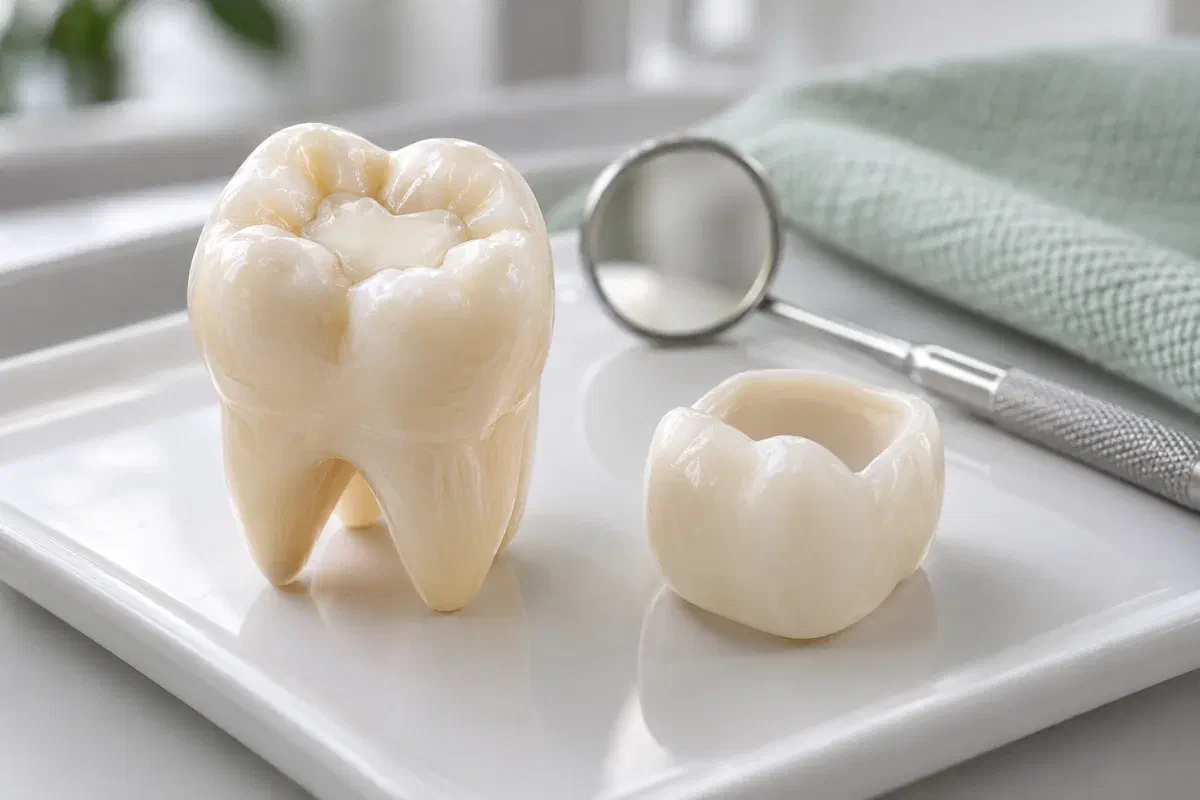
Illustrative molar model with a temporary filling beside a separate temporary crown
Situations worth a clear answer

Feeling fine is not the same as being finished.

People end up with temporary restorations for quite different reasons. Share what treatment you had and anything you were told about the repair, even if it seemed minor.

Patched during an urgent appointment

A visit for a toothache or a broken cusp may cover the problem quickly without completing treatment. Ask what the patch was meant to do and whether a diagnosis or a lasting restoration is still to come. Easing the pain does not by itself mean the work is done.

Waiting on a crown or bridge

While the final crown or bridge is being made, a provisional one can cover the prepared teeth. Note the date of the fitting and how to eat and clean in the meantime. Mention holidays, shift changes or anything else that might push that date back.

Midway through work inside the tooth

Between root canal visits, or before the permanent filling goes in, a temporary filling often seals the opening. Find out whether the canals are still being treated or whether that part is complete. The answer tells you who to call and what the next appointment covers.

Not sure whether a repair is temporary or permanent? Ask the clinic that placed it. How it looks or feels is not a dependable guide.

Why the interim step helps

Staged care, with the tooth looked after in between

When a temporary restoration is planned, treatment can move forward in steps while the tooth stays managed between them. What it does for you depends on why it was placed. It may cover shaped surfaces, close an opening made to reach the inside of the tooth, or give you a working form for chewing and appearance. Ask which applies.

This stage can also tell the dentist something. Your impressions of the bite, how easily you can clean the area, and how the tooth looks may help shape the final restoration where they are relevant. Still, a temporary piece is not always built to copy every detail of the finished result, so ask what it is meant to show.

Patient information: Leeds Teaching Hospitals — temporary protection during crown treatment

Protection that comes with boundaries

Find out what foods, pressures or habits the temporary should be spared, and how long it is expected to stay. Materials chosen for short-term use may not cope with an open-ended wait. Knowing those boundaries lets you use the tooth sensibly until the next visit.

A next visit with a stated purpose

Check whether the coming appointment is a review, a continuation of treatment, or the day the final restoration is placed. These are different visits. You should be able to say in your own words what is left to do, without decoding clinical shorthand.

Someone to call when things shift

Ask who to contact if the temporary loosens or a symptom comes back, particularly when more than one office is involved. Keep the booking details and phone numbers in one place. That makes it simpler to arrange a check before the issue throws off the next stage.

How the interim visit unfolds

From the first look to a booked return

The details change with the tooth and the stage of treatment. Ask to hear how the temporary restoration fits into the whole plan, including any separate visits or estimates.

  1. Work out why interim care is needed

    The dentist looks at the tooth, your symptoms and any work already done. Tell us about an earlier temporary and whether it has changed. This review shows what needs protecting, or what needs a closer look, before treatment can move on.

  2. Talk through what the repair will do

    We cover the material or design, how you can use the tooth, its limits and how long it should last. Ask whether it is there for comfort, to protect shaped tooth structure, or to seal an opening. Be clear on which parts of treatment remain.

  3. Place it and check the fit

    The temporary filling, crown or other provisional repair goes in as the situation calls for. Shape, contact with neighbouring teeth and the bite are checked. Say so before you leave if a spot feels high or an edge catches your tongue.

  4. Book the next step and go over instructions

    Confirm when the tooth will be reviewed or permanently restored. Ask for eating, cleaning and contact advice that suits this repair. If a specialist or a dental laboratory is part of the next stage, settle how that appointment will be arranged.

The weeks in between

Go gently and keep it clean

Follow the instructions given for your own repair. A temporary filling and a provisional crown are not always handled or cleaned the same way.

Let it be

Wait until the numbness has worn off before you chew, and stick to the food advice you were given. Resist biting on hard or sticky things to see whether it holds. If normal chewing feels awkward, tell the clinic instead of pressing on the same spot.

Learn the cleaning method for that tooth

Keep brushing and cleaning the rest of your mouth, using the approach shown for the temporary area. Some provisional crowns and bridges need a particular technique between the teeth. If floss snags or an edge shifts, stop tugging and call for advice.

Hold on to the completion appointment

If you need to move the date, call so the tooth’s interim protection can be taken into account. Do not leave the temporary in place indefinitely just because it is comfortable. Ask whether a check is needed if the gap grows longer than planned.

Patient information: CDA — stages of root canal care and restoration

Where the plan goes next

Three ways forward from a temporary

Ask which route suits the tooth as it is now. The next step may be finishing treatment, taking another look, or changing the plan if something new turns up.

When more time is still needed

Keep the interim stage going

The current repair may stay suitable until the scheduled next step, or it may need adjusting or replacing. Confirm why it is staying and when it will be reviewed. Carrying on with a temporary should be a deliberate plan, not a guess based on the tooth feeling fine.

When the tooth is ready

Place the final restoration

A filling, crown, bridge or another agreed restoration may close out this stage. Ask what tells the dentist the tooth is ready and what checks happen before it goes in. The choice depends on how much tooth remains and what treatment has already been done.

When something new changes the picture

Pause and take another look

Ongoing discomfort, a crack or an unexpected finding may call for more investigation before the final repair. The clinician can explain what changed and how the tooth will be looked after meanwhile. Swapping in fresh temporary material does not fix every underlying cause.

Common questions in Milton

Clear answers for the in-between stage

It is fine to ask for instructions a second time, especially after an urgent or stressful visit. We can walk you through where your treatment stands.

(905) 876-4488
Why was a temporary placed instead of a permanent filling today?
Often the tooth needs more than one visit. A crown may need to be made by a laboratory, a root canal may not be finished, or the dentist may want to see how the tooth settles before committing to a final repair. Ask which reason applies to you.
Is it normal for a temporary filling to feel slightly rough?
Interim materials can have a different texture from a finished filling, and a small amount of roughness may not be a concern. A sharp edge, a high spot or anything that catches your cheek or tongue is worth mentioning, because it can often be smoothed.
Can I chew gum while I have a provisional crown?
Sticky foods, including gum and chewy sweets, can pull a provisional crown loose, so many people are advised to avoid them on that side. Follow the specific instructions you were given, and ask if you are unsure what counts as sticky.
My temporary has a faint taste. Should I worry?
Some interim materials have a mild taste at first. A taste that grows stronger, an unpleasant smell, or a gap you can feel may mean the seal has changed. Call so the clinic can decide whether the repair should be checked.
Does a pain-free temporary mean I can cancel the follow-up?
No. Comfort tells you the repair is doing its interim job, not that treatment is complete. The tooth may still need a root canal finished or a permanent restoration. Keep the appointment or call to rebook.
Can you take over care if my temporary was placed at another office?
We can assess the tooth, but it helps to know what was done. Ask the other office for records or treatment notes and tell us about any symptoms. After reviewing the tooth, we will explain the options and an estimate before going further.
Interim repairs reviewed in Milton

Bring the tooth in and we will map out what is left.

Come to our Bronte Street practice to have a temporary repair checked or to plan the visit that completes your treatment. Bring any records you have so we can look at the tooth, explain what is protecting it now, and talk through the next step.

Phone us if a temporary comes out or the tooth starts to hurt. Online requests are meant for routine, non-urgent booking.

Visit Milton Dental Clinic
Unit 1, 342 Bronte St. S, Milton, ON L9T 5B7
Get directions Clinic hours
Monday–Thursday
11am–7pm
Friday–Sunday
By appointment only

Areas we serve

  • Milton
  • Oakville
  • Mississauga
  • Georgetown
  • Halton Hills
  • Acton
  • Campbellville
  • Brampton
  • Burlington
  • Puslinch
  • Rockwood
  • Erin
  • Caledon
  • Etobicoke
  • Old Milton
  • Bronte Meadows
  • Timberlea
  • Dorset Park
  • Dempsey
  • Clarke
  • Beaty
  • Coates
  • Harrison
  • Scott
  • Willmott
  • Ford
  • Bowes
  • Cobden
  • Walker
  • Mountain View
  • Milton Heights
  • Hawthorne Village
  • Valley View
  • Fallingbrook
  • Nassagaweya
  • Trafalgar
  • Esquesing
  • Nelson
  • Brookville
  • Moffat
  • Glen Williams
  • Norval
  • Limehouse
  • Stewarttown
  • Ashgrove
  • Hornby
  • Silver Creek
  • Speyside
  • Scotch Block
  • North Oakville
  • River Oaks
  • Glen Abbey
  • West Oak Trails
  • Palermo
  • Bronte Creek
  • College Park
  • Joshua Creek
  • Uptown Core
  • Preserve
  • Iroquois Ridge
  • Lisgar
  • Meadowvale
  • Meadowvale Village
  • Churchill Meadows
  • Erin Mills
  • Central Erin Mills
  • Streetsville
  • East Credit
  • Creditview
  • Heartland
  • Sheridan
  • Mount Pleasant
  • Credit Valley
  • Huttonville
  • Churchville
  • Springbrook
  • Northwest Brampton
  • Bram West
  • Fletcher's Meadow
  • Fletcher's Creek South
  • Alton Village
  • Orchard
  • Millcroft
  • Headon Forest
  • Tansley
  • Brant Hills
  • Tyandaga
  • Kilbride
  • Lowville
  • Aberfoyle
  • Morriston
  • Arkell
  • Hillsburgh
  • Freelton
  • Carlisle
  • Waterdown
  • Flamborough
  • Mountsberg

How can we help?

Milton Dental Clinic

Have a question about your smile? Choose the option that works best for you.

For urgent dental concerns, please call.
Messages are reviewed during clinic hours.