

Illustrative conversation about an interim tooth repair and the next appointment
Restorative Dentistry

Temporary Dental Restorations in Old Milton

Has a temporary filling quietly stayed put for months? From Old Milton, have it checked, learn what it was meant to cover, and plan the step that properly completes the tooth.

When temporary turns into a habit

How long has that interim repair been there?

Life gets busy, the tooth stops bothering you, and a repair that was meant to last a few weeks is still there next season. That happens often. A temporary restoration is built for a defined stage of care, whether it seals a tooth between visits, covers a tooth shaped for a crown, or holds a place within a longer plan.

None of that makes it a throwaway. While it lasts, it can guard the tooth, keep a usable chewing surface and buy time while the next stage is organised. But interim materials are chosen with an end date in mind, and the right length of stay depends on the material, the tooth involved and why the repair was placed.

For anyone in Old Milton, our Bronte Street practice is close by, so a check need not wait for a crisis. Tell us roughly when the temporary went in and what you remember being told. If another clinic placed it, bring any notes you can find, and we will look at its condition and work out what the original plan was.

Have an older temporary checked
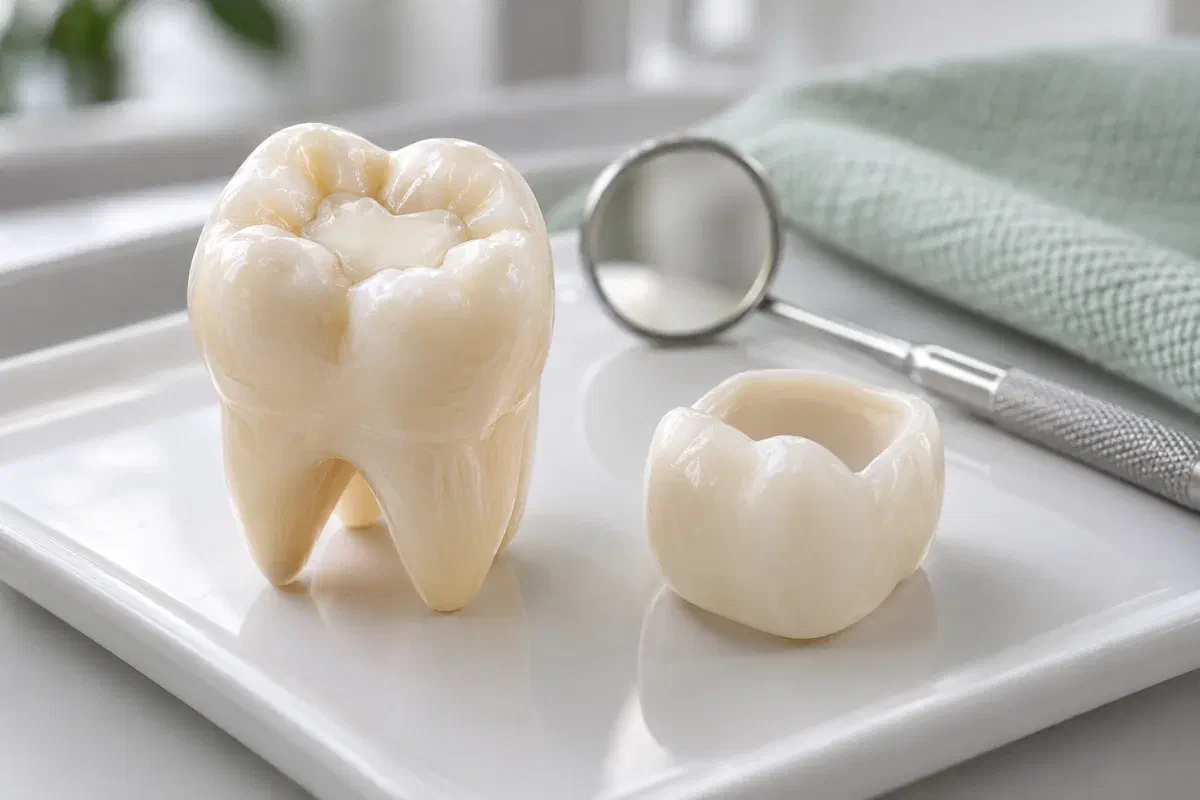
Illustrative molar model with a temporary filling beside a separate temporary crown
Clues in your own history

Try to recall why it went in

Temporary repairs arrive by different routes. Even a rough memory of the visit, the symptoms and what the dentist said can help us sort out where the tooth stands.

It started with an emergency

Many interim fillings are placed on a day someone came in with pain or a broken edge. That visit may have dealt with the immediate problem and nothing more. If no follow-up ever happened, the tooth may still need diagnosis or a lasting restoration, however settled it feels.

A crown was in the works

Perhaps a tooth was prepared, a provisional crown was fitted and the final appointment slipped. Provisional crowns are meant to cover that waiting period, not replace the finished crown. Let us know if you think a fitting visit was missed or postponed.

Root canal treatment was started

A temporary filling often closes a tooth between root canal visits or before the permanent filling. If you are not sure whether the canals were finished, say so. That detail shapes which clinician should see it and what the next visit needs to achieve.

Colour, feel and comfort cannot tell you whether a repair is interim or permanent. The clinic that placed it, or a fresh examination, is the reliable way to find out.

Its real value

A bridge between stages, not a destination

A planned temporary lets treatment happen in sensible steps, with the tooth managed in the gap. It might cover prepared surfaces, seal the access opening from root canal work, or give you a provisional shape for chewing and appearance. Knowing which job yours is doing explains how much it can be trusted.

The interim period can also be informative. How the bite feels, whether you can keep it clean, and how it looks beside your other teeth can help guide the final restoration when those details matter. That said, a temporary is not always designed to mirror every aspect of the finished work.

Patient information: Leeds Teaching Hospitals — temporary protection during crown treatment

Sensible limits

Ask which foods and habits the repair should be kept away from and how long it was meant to stay. Short-term materials may wear, leak or loosen when the wait becomes open-ended. Understanding the limits helps you look after the tooth until it is completed.

A purpose for every visit

The next appointment might be a review, the continuation of treatment or the fitting of the final restoration. Ask which one it is. You should come away able to explain the remaining work in plain words rather than piecing it together from clinical notes.

One place to turn

Know whom to call if the temporary loosens or a symptom returns, particularly if two offices have been involved. Keeping appointment cards and contact numbers together saves confusion later. Early contact makes it easier to fit in a check before the next stage is disrupted.

Reviewing a long-standing temporary

Four steps to pick up where things left off

Each tooth is different, and so is each stage of treatment. Ask how the interim repair fits into the complete plan, including any additional visits or estimates.

  1. Look closely at the tooth

    The dentist examines the temporary, the tooth around it and any symptoms you mention, and reviews whatever records are available. This shows whether the seal and shape are holding and whether anything needs investigating before treatment resumes.

  2. Rebuild the plan

    Together we work out what the repair was for, what material it seems to be and whether it is still doing that job. Ask what treatment is outstanding and whether the original plan still makes sense or needs updating.

  3. Refresh or adjust if needed

    Where an interval is still required, the temporary may be smoothed, repaired or replaced, and the bite and contacts are checked. Speak up straight away if something feels high, rough or uncomfortable before you leave.

  4. Set the completion date

    Agree when the tooth will be reviewed or permanently restored, and get eating and cleaning advice for the interim. If a specialist or laboratory is part of the next stage, we will explain how the timing will be coordinated.

Until it is finished

Small habits that help a temporary hold

Your instructions depend on what was placed. A provisional crown and a temporary filling can need different care, so follow the advice given for yours.

Chew with some caution

Once the numbness has gone, chew gently and follow any food guidance from the visit. There is no need to test the repair against nuts, hard crusts or toffee. If ordinary meals feel awkward on that side, mention it rather than pressing on.

Clean around it the way you were shown

Keep up normal brushing and use the method demonstrated for the temporary area. Some provisional crowns and bridges need floss slid out sideways instead of lifted. Should floss catch or an edge move, stop and ask before carrying on.

Do not let the date drift again

If you must reschedule, call so the interim protection can be considered when choosing a new date. Feeling comfortable is not a reason to leave a temporary in place without end. Ask about a review if the wait is going to be longer than planned.

Patient information: CDA — stages of root canal care and restoration

Choosing what happens now

Finish it, extend it, or look again?

The right route depends on what the tooth shows today. Completion, a further review or a revised plan are all possible after a careful look.

When more time is genuinely needed

Extend the interim stage

If the next step cannot happen yet, the temporary may be kept, refreshed or replaced. Agree the reason and a review date. Extending interim care should be a decision you make with the dentist, not something that happens because no one followed up.

When the tooth is ready to be completed

Move to the permanent restoration

A filling, crown, bridge or other agreed restoration may close this chapter. Ask what shows the tooth is ready and what will be checked beforehand. The final choice reflects the remaining tooth structure and the treatment already carried out.

When something has changed

Investigate before deciding

Lingering discomfort, a crack or an unexpected finding can mean more assessment is needed first. The clinician will explain what has changed and how the tooth will be protected meanwhile. A new layer of temporary material does not settle every underlying issue.

Questions we hear in Old Milton

Sorting out an interim repair that has lingered

There is no need to feel awkward about a temporary that stayed too long. Ask anything, and we will help you understand the treatment stage.

(905) 876-4488
My temporary filling has lasted over a year. Is that a problem?
It may still be intact, but interim materials are not generally intended for that length of time and can wear or leak without obvious symptoms. An examination can show whether the tooth underneath needs attention and what should come next.
How would I know if a temporary seal has started to leak?
You might not. Some people notice a bad taste, food catching, sensitivity or a dip in the surface, but a seal can also break down quietly. That is one reason a planned review matters more than waiting for signs.
I no longer have records from the dentist who placed it. Can you still help?
Yes. We can examine the tooth and take any images the dentist considers necessary to understand what is there. Any details you remember, such as root canal visits or a crown preparation, help fill the gaps.
Will the tooth need to be redone from the start?
Not necessarily. It depends on what was completed, the condition of the tooth and whether anything has changed. After the assessment, the dentist will explain what can carry on from the earlier work and what may need revisiting.
Does a temporary crown that looks different from my other teeth matter?
Provisional crowns often use materials with appearance limits, so a mismatch is common. Mention any concerns, and ask which features of the final crown, such as shade and shape, will be planned before it is made.
Is it worth booking a check if the tooth feels completely normal?
Yes. A temporary that feels fine may still be covering unfinished treatment. Booking a review lets the dentist confirm whether it is still protecting the tooth and plan the restoration that completes the work.
Near Old Milton, on Bronte Street

Pick the thread back up.

Our Bronte Street practice can review a temporary repair, however long ago it was placed, and plan the visit that finishes the job. Bring what records you have so we can assess the tooth and explain what comes next.

Call if a temporary restoration comes out or the tooth becomes painful. Online booking is for non-urgent planning.

Visit Milton Dental Clinic
Unit 1, 342 Bronte St. S, Milton, ON L9T 5B7
Get directions Clinic hours
Monday–Thursday
11am–7pm
Friday–Sunday
By appointment only

Areas we serve

  • Milton
  • Oakville
  • Mississauga
  • Georgetown
  • Halton Hills
  • Acton
  • Campbellville
  • Brampton
  • Burlington
  • Puslinch
  • Rockwood
  • Erin
  • Caledon
  • Etobicoke
  • Old Milton
  • Bronte Meadows
  • Timberlea
  • Dorset Park
  • Dempsey
  • Clarke
  • Beaty
  • Coates
  • Harrison
  • Scott
  • Willmott
  • Ford
  • Bowes
  • Cobden
  • Walker
  • Mountain View
  • Milton Heights
  • Hawthorne Village
  • Valley View
  • Fallingbrook
  • Nassagaweya
  • Trafalgar
  • Esquesing
  • Nelson
  • Brookville
  • Moffat
  • Glen Williams
  • Norval
  • Limehouse
  • Stewarttown
  • Ashgrove
  • Hornby
  • Silver Creek
  • Speyside
  • Scotch Block
  • North Oakville
  • River Oaks
  • Glen Abbey
  • West Oak Trails
  • Palermo
  • Bronte Creek
  • College Park
  • Joshua Creek
  • Uptown Core
  • Preserve
  • Iroquois Ridge
  • Lisgar
  • Meadowvale
  • Meadowvale Village
  • Churchill Meadows
  • Erin Mills
  • Central Erin Mills
  • Streetsville
  • East Credit
  • Creditview
  • Heartland
  • Sheridan
  • Mount Pleasant
  • Credit Valley
  • Huttonville
  • Churchville
  • Springbrook
  • Northwest Brampton
  • Bram West
  • Fletcher's Meadow
  • Fletcher's Creek South
  • Alton Village
  • Orchard
  • Millcroft
  • Headon Forest
  • Tansley
  • Brant Hills
  • Tyandaga
  • Kilbride
  • Lowville
  • Aberfoyle
  • Morriston
  • Arkell
  • Hillsburgh
  • Freelton
  • Carlisle
  • Waterdown
  • Flamborough
  • Mountsberg

How can we help?

Milton Dental Clinic

Have a question about your smile? Choose the option that works best for you.

For urgent dental concerns, please call.
Messages are reviewed during clinic hours.