

Illustrative conversation about the appearance of a tooth-coloured repair
Restorative Dentistry

Tooth-Coloured Dental Fillings in Erin

Planning a filling day around farm chores, school runs or work? From Erin or Hillsburgh, learn what a tooth-coloured filling visit involves, how to prepare, and what the hours afterwards look like.

Planning the day

One appointment, well prepared

In a rural household, a dental visit is rarely just the appointment. There is the drive, the chores that need covering, perhaps another family member booked alongside you. Knowing what a filling day involves makes it easier to plan, and easier to sit back in the chair once you arrive.

The repair itself uses a tooth-coloured material to rebuild damaged tooth structure so that it resembles the enamel around it. Composite resin is typical, and other tooth-coloured materials serve particular needs. What suits your tooth depends on its position, how much damage there is, and how the area will be cleaned.

When you call from Erin, describe the tooth and any symptoms so a suitable length of appointment can be arranged. At the visit, the dentist explains the findings, what a direct filling can achieve, and when a different restoration would be wiser, all before preparation starts and with time for your questions.

Plan a filling appointment
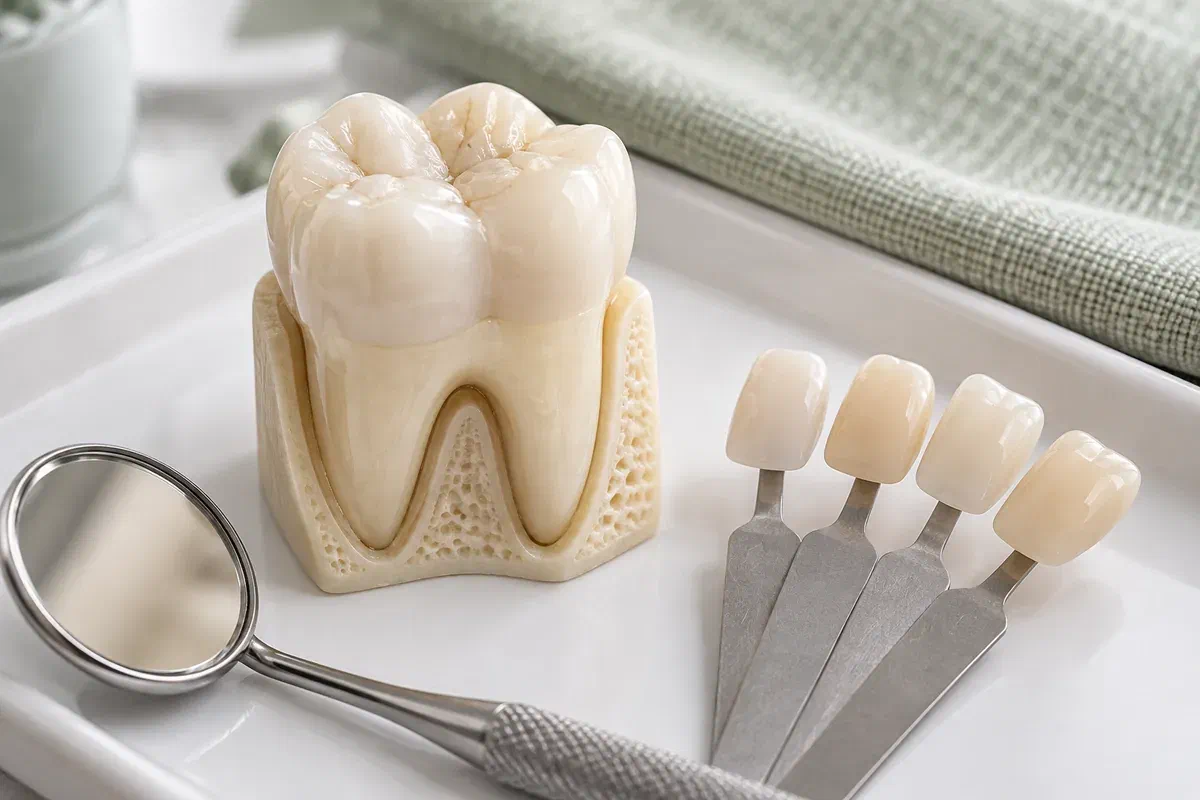
Illustrative molar model beside dental shade samples and a mirror
What may need repair

From a cavity to a worn old filling

Something you notice in the mirror or feel while eating is a clue rather than a diagnosis. Let us know when it started and whether it affects chewing, cleaning, or how you feel smiling.

A cavity in a tooth that shows

Decay that requires a filling may be restored with tooth-coloured material, once the dentist has checked its depth and confirmed the tooth can be rebuilt predictably. If the change is early and has not formed a cavity, prevention and monitoring may be all that is needed.

A chipped corner

Bonding can often repair a small chip, but the cause matters. Mention any knock while working, a pattern of chipping, or habits like holding nails or wire between your teeth. Deeper cracks or larger breaks may need another approach.

An older filling that looks wrong

Stain, a change in the material's colour, and a breaking margin each look a little different and need different answers. The dentist advises whether to monitor, polish, repair or replace. A dull colour alone is not proof of failure.

Before setting out, call us if a tooth hurts on its own, the ache lingers, or there is swelling. Those symptoms may need a different kind of care, and we can advise whether to come in or seek help closer to home.

What a white filling offers

A repair that fits into everyday life

Composite is shade-matched and shaped on the tooth in a single sitting, so a suitable repair does not usually need a return trip for the filling itself. It works for appropriately sized repairs on visible teeth and on selected back teeth, after the dentist considers chewing forces and remaining tooth structure.

There are limits to keep in mind. The area must stay dry during bonding, deeper or less accessible repairs are more demanding, and a broad filling on a hard-working tooth may need a different design that takes more than one visit. Ask why the material suits your tooth.

Patient information: American Dental Association — tooth-coloured fillings

A natural shade

Teeth are seldom one uniform colour, and translucency varies too. Talk about which areas show when you talk and smile, and what match is realistic for the size and location of the repair.

Comfortable to chew on

The finished shape affects your bite and how food and floss pass between teeth. Mention food catching before treatment, so the contact with the neighbouring tooth can be assessed as the filling is shaped.

Treatment kept to the damage

A direct filling can often fix a localized problem without covering the whole tooth. Preparation depends on the damage and the material rather than an aim of making all teeth look identical.

On the day

What happens once you arrive

Tell us about nervousness, past sensitivity, reactions to dental materials, or plans to whiten. These details shape the conversation and how treatment is arranged.

  1. Check and confirm

    The dentist examines the tooth, nearby restorations and surrounding area. An X-ray may be suggested if it would answer a specific question. You can confirm whether a filling is needed, hear the alternatives, and understand the expected fee before anything begins.

  2. Freeze and prepare

    Local anaesthetic is often used. If composite suits the tooth, a shade is chosen and the damaged part is removed. The surface is then isolated and kept dry, because the bonding technique depends on it.

  3. Fill and set

    Composite goes in a little at a time, each layer hardened by a curing light. Other tooth-coloured materials are placed in their own way. The dentist shapes the filling to fit the tooth and its neighbour.

  4. Polish and plan ahead

    After polishing, the bite is checked; tell us if a tooth seems to meet first. You will get advice for the rest of the day on eating and cleaning, and on which symptoms are worth a call from home.

The rest of the day

Getting home and getting back to normal

Once home, the filled tooth needs ordinary daily care: brushing and cleaning between teeth. Follow any instructions for your material, and phone the clinic if discomfort lingers instead of simply waiting.

Plan meals around the freezing

If you were numbed, eat something before the appointment and wait to chew afterwards until feeling returns. Be careful with hot drinks. Ask whether other food limits apply. Do not judge your bite until your lip and cheek feel normal.

Notice any sensitivity

A tooth can be sensitive for a while after a filling. Note whether cold, pressure or something else triggers it and how quickly it fades. Call if the tooth feels high, pain builds, or symptoms do not settle, rather than testing it repeatedly.

Back to the routine

Brush with fluoride toothpaste and floss daily. Keep regular exams so the filling's edges can be checked. Mention clenching, chips or wear, because a filling that is replaced without addressing heavy forces may run into the same trouble.

Material choices

Which repair, and how many visits?

Ask the dentist to name the proposed material and its purpose, and how many appointments it will need. Compare benefits, limitations, upkeep and cost for this tooth, not just appearance.

Usually one visit

Direct composite

Composite can give a natural-looking surface for many suitably sized defects and is typically completed at one appointment. Cavity size, moisture control and bite forces affect whether it is appropriate for a given tooth.

For particular clinical needs

Glass ionomer or similar

Another direct material may be suggested in selected cases. These differ from composite in strength and finish. Ask what problem the material addresses and whether it is meant as a temporary step or a lasting repair.

Often more than one visit

Inlay, onlay or crown

When a direct filling cannot adequately manage the damage or the tooth's structure, an indirect restoration may be considered. It usually takes more appointments and has a different design and fee, and it should be justified by the tooth's condition.

Patient information: FDA — treatment options and restorative materials

Practical questions

Before you head out the door

Every answer depends on the shade, the material and the condition of the tooth. Tell us about past fillings that did not go well, so we can explain this one against that experience.

(905) 876-4488
Can I eat before my filling appointment?
Yes, a light meal beforehand is usually a good idea, especially if you may be numb for a while afterwards. Brush before you come if you can. Let us know about any medical conditions that affect eating or medication.
Is it safe to drive myself home after local anaesthetic?
Local anaesthetic numbs the mouth and does not usually affect your ability to drive. If you are given anything else for anxiety, the advice may differ, so ask beforehand and arrange a driver if needed.
Can two people from the same household book back to back?
Often, yes. Mention it when you call, and the clinic can try to arrange consecutive appointments. Grouping visits can save a trip for families coming from Erin or Hillsburgh. It helps to say what each person needs, such as a checkup or a filling, so enough time is set aside for everyone.
What if the numbness has not worn off by evening?
Freezing often lasts a few hours, but timing varies. Until it fades, avoid chewing on that side so you do not bite your lip or cheek. If numbness persists well beyond what you were told to expect, or you notice anything unusual, call the clinic for advice.
Do sound silver fillings need replacing while I'm in for another tooth?
Not unless they have a problem. Removing intact amalgam takes away healthy tooth, and the FDA does not recommend routine removal of sound amalgam without decay unless medically necessary. Ask if you have a specific concern.
Should I check coverage before the appointment?
It is a good idea. Coverage depends on your plan and the procedure submitted, not the material’s colour. Ask for an estimate, confirm limits with your benefits provider, and ask us to clarify anything on the plan.

Patient information: FDA — decisions about existing amalgam fillings

Booking from Erin

Let us help you plan the visit

Our Bronte Street practice in Milton is ready to assess a cavity, chip or older filling. Tell us what you notice and feel, and whether anyone else in the household needs a visit. The dentist will explain the findings and a repair that suits both the tooth and your schedule.

Pick up the phone, rather than the online form, for severe pain, swelling or a filling that has broken painfully. Online requests are best for routine bookings.

Visit Milton Dental Clinic
Unit 1, 342 Bronte St. S, Milton, ON L9T 5B7
Get directions Clinic hours
Monday–Thursday
11am–7pm
Friday–Sunday
By appointment only

Areas we serve

  • Milton
  • Oakville
  • Mississauga
  • Georgetown
  • Halton Hills
  • Acton
  • Campbellville
  • Brampton
  • Burlington
  • Puslinch
  • Rockwood
  • Erin
  • Caledon
  • Etobicoke
  • Old Milton
  • Bronte Meadows
  • Timberlea
  • Dorset Park
  • Dempsey
  • Clarke
  • Beaty
  • Coates
  • Harrison
  • Scott
  • Willmott
  • Ford
  • Bowes
  • Cobden
  • Walker
  • Mountain View
  • Milton Heights
  • Hawthorne Village
  • Valley View
  • Fallingbrook
  • Nassagaweya
  • Trafalgar
  • Esquesing
  • Nelson
  • Brookville
  • Moffat
  • Glen Williams
  • Norval
  • Limehouse
  • Stewarttown
  • Ashgrove
  • Hornby
  • Silver Creek
  • Speyside
  • Scotch Block
  • North Oakville
  • River Oaks
  • Glen Abbey
  • West Oak Trails
  • Palermo
  • Bronte Creek
  • College Park
  • Joshua Creek
  • Uptown Core
  • Preserve
  • Iroquois Ridge
  • Lisgar
  • Meadowvale
  • Meadowvale Village
  • Churchill Meadows
  • Erin Mills
  • Central Erin Mills
  • Streetsville
  • East Credit
  • Creditview
  • Heartland
  • Sheridan
  • Mount Pleasant
  • Credit Valley
  • Huttonville
  • Churchville
  • Springbrook
  • Northwest Brampton
  • Bram West
  • Fletcher's Meadow
  • Fletcher's Creek South
  • Alton Village
  • Orchard
  • Millcroft
  • Headon Forest
  • Tansley
  • Brant Hills
  • Tyandaga
  • Kilbride
  • Lowville
  • Aberfoyle
  • Morriston
  • Arkell
  • Hillsburgh
  • Freelton
  • Carlisle
  • Waterdown
  • Flamborough
  • Mountsberg

How can we help?

Milton Dental Clinic

Have a question about your smile? Choose the option that works best for you.

For urgent dental concerns, please call.
Messages are reviewed during clinic hours.