

Illustrative conversation about the appearance of a tooth-coloured repair
Restorative Dentistry

Tooth-Coloured Dental Fillings in Etobicoke

More than one tooth needs attention, and you would rather not make the trip from Etobicoke every week. Plan tooth-coloured fillings in well-organised visits, with urgent problems handled first.

Planning several repairs

Fewer trips, a clearer plan

An exam turns up two or three cavities, maybe an older filling with a worn edge, and the question becomes practical: how many appointments, and in what order? For people travelling in from the west end of Toronto, that matters. A well-sequenced plan can group work sensibly without rushing decisions about the teeth.

Each repair is still judged on its own. A tooth-coloured filling restores damaged structure with material made to look like enamel, most often composite resin, with other materials for particular cases. The right choice depends on where the tooth sits, how large the damage is, and how the result can be cleaned and maintained.

Tell the dentist which teeth bother you most and how often you can realistically visit from Etobicoke. Together you can rank what needs care soonest, what can be monitored, and where a direct filling will do the job or a different restoration deserves thought, all agreed before work begins.

Ask about planning several fillings
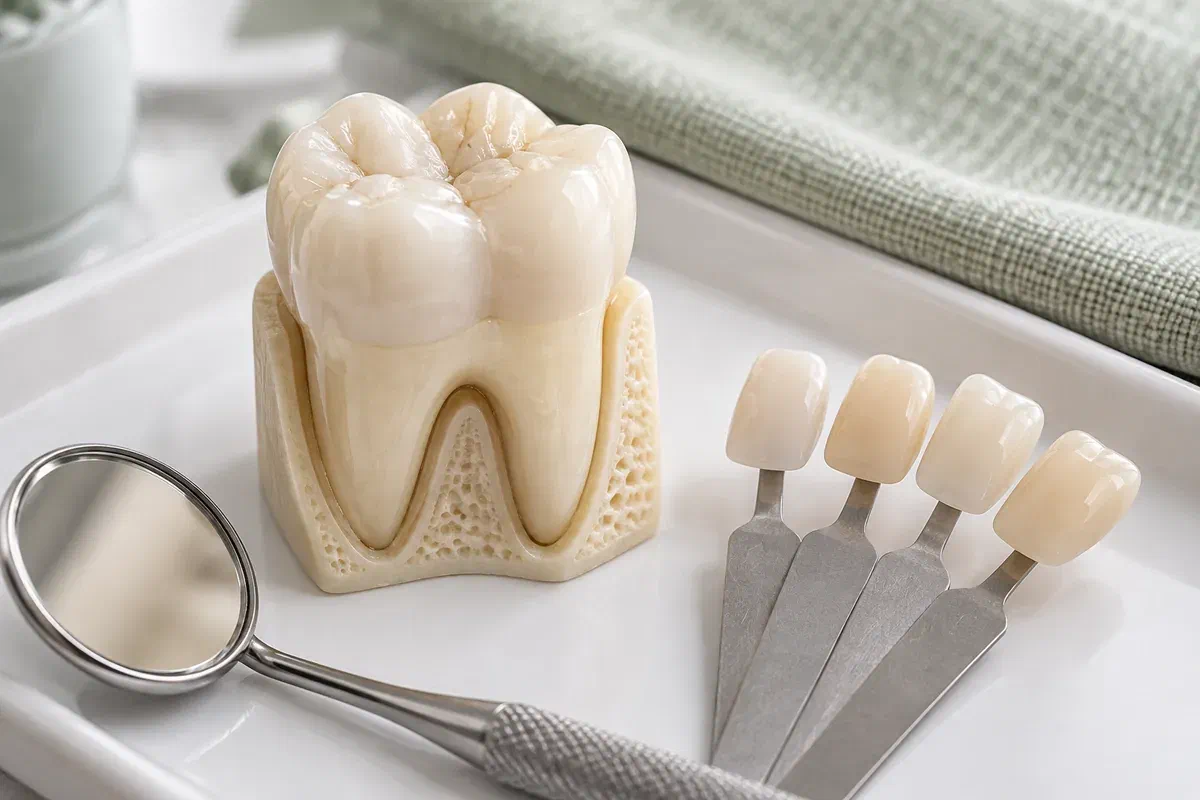
Illustrative molar model beside dental shade samples and a mirror
What may be on the list

Sorting the urgent from the routine

Not every finding needs the same speed of response. Describe when each change began and whether it affects chewing, cleaning or confidence, so priorities can be set.

Cavities that need restoring

A tooth-coloured material is often considered for decay that requires a filling. The dentist judges the depth of each cavity and whether the tooth can be repaired predictably. Some early changes do not need drilling at all and can be managed with prevention and review.

A chip from an old injury

A small chip can frequently be bonded, but knowing how it happened helps. Mention any fall, recurring breakage, or a habit of biting hard objects. Deeper cracks or larger missing pieces may move that tooth into a different category of treatment.

Fillings that look tired

An older restoration may be stained, discoloured or breaking down at the edge. Those findings are not interchangeable. The dentist advises whether to monitor, polish, repair or replace, and a colour change alone does not prove a filling has failed.

A tooth that hurts on its own, pain that lingers, or swelling should not wait for a planned visit. Call us, and if you cannot reach us quickly, seek urgent dental or medical care closer to home.

Why composite is often chosen

Repairs that blend in and work hard

Composite is matched in shade to the surrounding tooth and shaped directly during the appointment, which suits suitably sized repairs on visible teeth. On selected back teeth it is also an option, provided chewing pressure and the amount of remaining structure are judged acceptable by the dentist.

Limits apply to every material. Successful bonding needs a dry field, and depth and access can complicate placement. A broad filling on a heavily loaded tooth may need a sturdier design. When several teeth are involved, it is worth asking why each one is getting the material proposed.

Patient information: American Dental Association — tooth-coloured fillings

Shades chosen tooth by tooth

Neighbouring teeth can differ in colour and translucency. Talk through which areas show when you speak or smile and what blend is realistic for each repair, especially where a filling covers a larger visible surface.

Contacts that clean well

Each filling's shape affects your bite and how floss moves between teeth. Let us know where food has been catching, so the contacts with neighbouring teeth are checked while each repair is shaped.

Treatment that stays targeted

A direct filling can often fix a localized defect without covering the entire tooth. Preparation follows the damage and the material, not a wish for every tooth to look the same.

How visits can be organised

One plan, carried out in sensible steps

Share any anxiety about dental work, past sensitivity, reactions to materials, or whitening plans. These details influence both the conversation and how appointments are grouped.

  1. Map out what needs work

    The dentist examines each tooth, existing fillings and surrounding areas, and may suggest X-rays if they would answer a clinical question. You can discuss which teeth need fillings, the alternatives, and the expected fees, then agree on an order.

  2. Group the work sensibly

    Where it is clinically reasonable, fillings on the same side of the mouth may be done together. A shade is selected for composite, freezing may be used, and each tooth is prepared and kept dry enough for the material to bond.

  3. Restore each tooth

    Composite is built up in layers and set with a curing light, while some other materials are placed differently. Each filling is shaped to its tooth, including the contact with the next tooth along.

  4. Review before you leave

    Fillings are polished and your bite is checked, so mention any tooth that meets too early. You will get guidance on eating, cleaning and which symptoms to report, which matters more when your next visit is some time away.

Between appointments

Know what is normal and what needs a call

Treated teeth still rely on everyday brushing and cleaning between them. Follow the advice for your material, and do not simply put up with discomfort that keeps going.

Before the freezing wears off

Avoid chewing until normal sensation returns, and take care with hot drinks on the way home. Ask whether any other food limits apply. Do not judge the bite while you are still numb; reassess once feeling is back.

Sensitivity worth noting

Mild sensitivity after a filling is fairly common. Notice whether cold or biting triggers it and how quickly it fades. A tooth that feels high, pain that keeps building, or symptoms that will not settle should be reported rather than waited out until the next visit.

Daily care for every repair

Use a fluoride toothpaste and clean between teeth as you have been shown. Keep up with exams so margins can be checked. Mention clenching, chips or wear, because replacing fillings without considering heavy forces may not solve the cause.

Comparing materials

Which repair suits each tooth?

With several teeth involved, ask what material is proposed for each and why. Weigh benefits, limitations, upkeep and cost tooth by tooth, rather than choosing on appearance.

For many bonded repairs

Direct composite

Placed in a single visit, composite can give a natural look for a wide range of suitable defects. Cavity size, moisture control and biting forces all decide whether it fits. It does not guarantee that every tooth on your list can be repaired this way.

For specific clinical situations

Another direct filling

Glass ionomer or a related material may be proposed in some cases. These vary in strength, looks and how they are placed. Ask what the material is for and whether it is meant as interim or long-term treatment.

For teeth needing more support

An inlay, onlay or crown

Where a filling placed directly will not adequately handle the damage or the tooth's strength, an indirect restoration may be suggested. It often involves more than one visit, a different design and a different fee, and should follow the tooth's condition.

Patient information: FDA — treatment options and restorative materials

Planning questions

Making the most of each appointment

The answers depend on the shade, the material and the condition of each tooth. Tell us about earlier fillings that gave you trouble, so this plan can be set against your experience.

(905) 876-4488
Can several white fillings be done at one appointment?
Often, yes, particularly when the teeth are on the same side of the mouth. It depends on how many teeth are involved, how extensive each repair is, and your comfort. The dentist can suggest a sensible grouping once the examination is complete.
Which filling should be done first if there are a few?
Usually the tooth with the deepest decay or symptoms comes first, followed by repairs that are less pressing. Some early changes may simply be monitored. Ask the dentist to explain the reasoning so you understand the sequence.
What should I do if a filling problem flares up between visits?
Call us first and describe what is happening. For severe pain, swelling or signs of infection, do not wait for your planned visit from Etobicoke; get urgent dental or medical care near you if we cannot see you promptly.
Does having more fillings at once mean more sensitivity afterward?
Not necessarily, but each treated tooth can respond in its own way. Keep track of which tooth reacts and to what, so it is easier to describe. Persistent or worsening symptoms in any tooth should be reported.
While I'm there, should my old silver fillings be changed too?
Not unless there is a problem with them. Taking out sound amalgam removes more tooth, and the FDA does not recommend routinely removing intact amalgam with no decay beneath unless medically necessary. Mention any concern so the trade-offs can be explained.
Will my plan cover several fillings in the same year?
That depends on your plan’s annual maximum and any limits, as well as the procedures and surfaces submitted. Ask for an estimate covering the whole plan, then check details with your benefits provider before you schedule.

Patient information: FDA — decisions about existing amalgam fillings

Visiting from Etobicoke

Plan your fillings with us

Book an assessment at our Bronte Street practice in Milton to review cavities, chips or older fillings. Tell us how often you can come in and what you notice when you smile and chew, and we will explain the findings and a practical sequence of care.

Call if you have significant pain, swelling, or a painful broken filling. Online requests are for non-urgent care.

Visit Milton Dental Clinic
Unit 1, 342 Bronte St. S, Milton, ON L9T 5B7
Get directions Clinic hours
Monday–Thursday
11am–7pm
Friday–Sunday
By appointment only

Areas we serve

  • Milton
  • Oakville
  • Mississauga
  • Georgetown
  • Halton Hills
  • Acton
  • Campbellville
  • Brampton
  • Burlington
  • Puslinch
  • Rockwood
  • Erin
  • Caledon
  • Etobicoke
  • Old Milton
  • Bronte Meadows
  • Timberlea
  • Dorset Park
  • Dempsey
  • Clarke
  • Beaty
  • Coates
  • Harrison
  • Scott
  • Willmott
  • Ford
  • Bowes
  • Cobden
  • Walker
  • Mountain View
  • Milton Heights
  • Hawthorne Village
  • Valley View
  • Fallingbrook
  • Nassagaweya
  • Trafalgar
  • Esquesing
  • Nelson
  • Brookville
  • Moffat
  • Glen Williams
  • Norval
  • Limehouse
  • Stewarttown
  • Ashgrove
  • Hornby
  • Silver Creek
  • Speyside
  • Scotch Block
  • North Oakville
  • River Oaks
  • Glen Abbey
  • West Oak Trails
  • Palermo
  • Bronte Creek
  • College Park
  • Joshua Creek
  • Uptown Core
  • Preserve
  • Iroquois Ridge
  • Lisgar
  • Meadowvale
  • Meadowvale Village
  • Churchill Meadows
  • Erin Mills
  • Central Erin Mills
  • Streetsville
  • East Credit
  • Creditview
  • Heartland
  • Sheridan
  • Mount Pleasant
  • Credit Valley
  • Huttonville
  • Churchville
  • Springbrook
  • Northwest Brampton
  • Bram West
  • Fletcher's Meadow
  • Fletcher's Creek South
  • Alton Village
  • Orchard
  • Millcroft
  • Headon Forest
  • Tansley
  • Brant Hills
  • Tyandaga
  • Kilbride
  • Lowville
  • Aberfoyle
  • Morriston
  • Arkell
  • Hillsburgh
  • Freelton
  • Carlisle
  • Waterdown
  • Flamborough
  • Mountsberg

How can we help?

Milton Dental Clinic

Have a question about your smile? Choose the option that works best for you.

For urgent dental concerns, please call.
Messages are reviewed during clinic hours.