

Illustrative conversation about the appearance of a tooth-coloured repair
Restorative Dentistry

Tooth-Coloured Dental Fillings in Old Milton

Older silver fillings, a cracked edge, or a wish for a repair that looks like enamel: in Old Milton, the first step is checking what each tooth needs before any material is chosen.

Old fillings, new decisions

Is it the filling, or just the colour of it?

Many mouths in Old Milton hold restorations placed decades ago. Some are still doing their job; others have cracked edges or decay creeping in underneath. A tooth-coloured filling rebuilds a damaged area with a material designed to resemble enamel, most often composite resin, with other materials kept for particular situations.

The key distinction is between a filling you would like to look different and one that actually has a problem. Those lead to quite different conversations. During an exam, the dentist checks margins, cracks and the tooth around each restoration, then explains which ones, if any, need treatment and what a white repair could realistically offer.

If you have lived in Old Milton for years, your dental history is useful: when the fillings went in, which have been redone, and which show when you laugh. With that, the dentist can talk through whether a direct filling fits, when something broader is wiser, and how the result may compare with neighbouring teeth.

Have your existing fillings reviewed
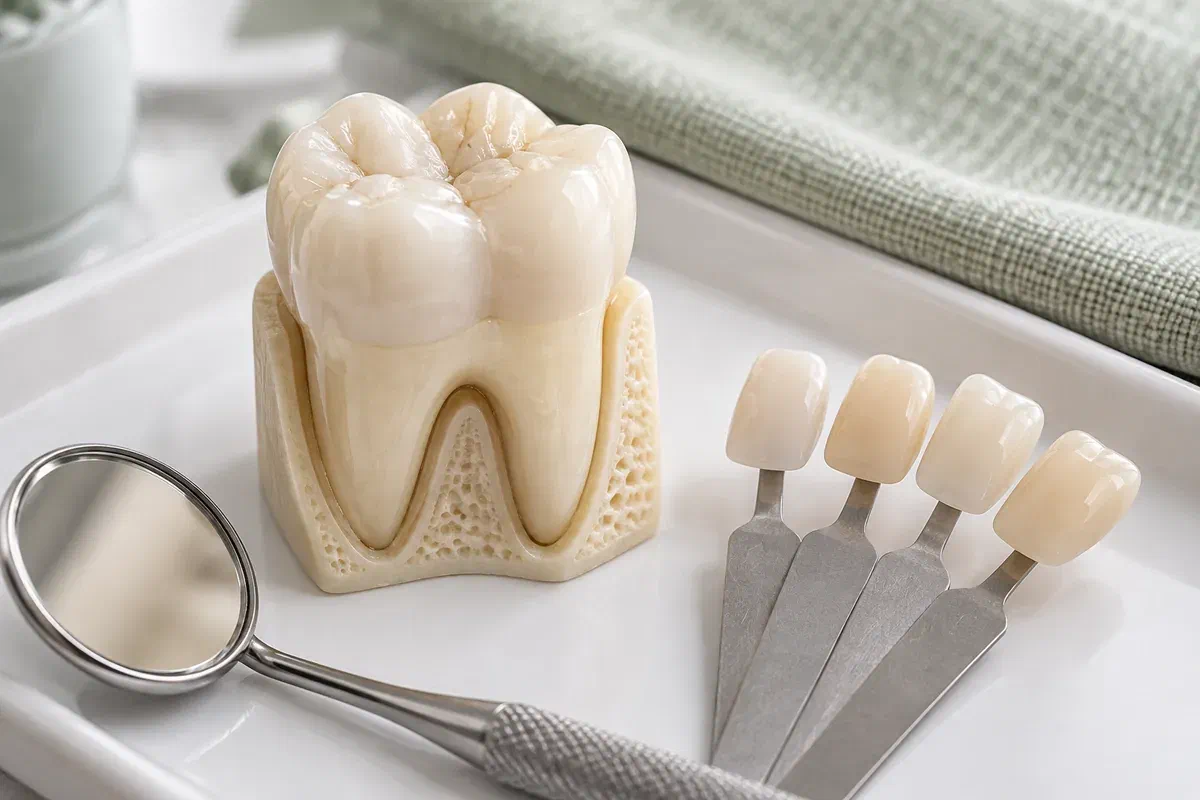
Illustrative molar model beside dental shade samples and a mirror
Signs to mention

Something looks or feels different

A dark patch, a rough spot or a twinge is a clue, not a verdict. Note roughly when it started and whether it changes how you chew, floss or feel about your smile.

Fresh decay where you can see it

Decay that needs repair may be restored with a tooth-coloured material, depending on how far it reaches and whether the tooth can be rebuilt reliably. Very early softening without a cavity is sometimes better managed with prevention and follow-up checks.

A chipped biting edge

Limited chips can often be bonded, though the reason behind them deserves attention. Share any knock to the mouth, repeated chipping, or a habit like opening packages with your teeth. A deeper fracture or a larger loss may lead to another recommendation.

An aging restoration

A filling can look darker, carry surface stain, or have an edge that is breaking down. These are separate findings. The dentist decides whether to watch, polish, repair or replace it, and an unflattering colour is not proof of failure.

Call rather than wait if a tooth throbs without a trigger, aches long after cold or heat, or the gum nearby swells. Those signs point to problems a new shade cannot address.

Why white repairs are considered

Natural colour, with the tooth's strength in mind

Because composite can be tinted to suit neighbouring enamel and sculpted right on the tooth, it is a frequent choice for moderately sized repairs where appearance counts. On a back tooth it may still be suitable, provided the dentist is satisfied with the chewing load and the amount of sound structure left.

Every material has boundaries. Placement depends on keeping the area dry, on how deep the repair runs, and on how easily it can be reached. A large filling under strong biting pressure might call for a different approach altogether. Asking why a material suits your tooth is always reasonable.

Patient information: American Dental Association — tooth-coloured fillings

Colour with depth

Enamel is layered and slightly translucent, and few teeth are uniform. Discuss which surfaces are on show during conversation and how close a match is achievable, particularly when the repair covers a broad visible area.

A shape that works

How the filling is contoured affects chewing and cleaning between teeth. Mention any food trapping beforehand, since the point where the repair meets the adjacent tooth is worth checking while the filling is shaped.

Repair sized to the problem

A direct filling can often fix one defined area and leave the rest of the tooth alone. Preparation is guided by the damage and the material selected, not by a desire for perfectly matching teeth.

Step by step

From exam to polish

Mention anxiety about dental work, earlier sensitivity, any reaction to materials, or plans for whitening. That information affects both the discussion and the sequence of treatment.

  1. Review the tooth and its history

    The dentist assesses the tooth, older restorations, and the surrounding gum and teeth. An X-ray may be advised if it would clarify something specific. You can talk over whether a filling is warranted, what other options exist, and an estimate of the fee before deciding.

  2. Choose a shade and prepare

    Where composite is the right choice, a shade is matched and the tooth is prepared. Freezing may be used. The dentist deals with the damaged area and keeps the surface clean and dry enough for the material to bond.

  3. Layer and set

    Composite is typically built up in increments, each hardened with a curing light; other tooth-coloured materials have different steps. The filling is shaped to the tooth, including its contact with the tooth beside it.

  4. Polish and bite check

    The dentist refines and polishes the surface, then checks how your teeth come together. Say so if one tooth seems to land early. You will leave with guidance on eating, cleaning, and symptoms worth reporting if they continue or worsen.

Once you're home

A filled tooth still needs everyday care

The repair is now part of the tooth, and that tooth still depends on brushing and cleaning between teeth. Follow the instructions for your material, and let the clinic know if discomfort lasts.

Let the freezing wear off

Avoid chewing on that side until normal feeling is back, and sip hot drinks with care. Check whether any extra food precautions apply to your restoration. Judging the bite while your lip is still numb can be misleading.

Pay attention to sensitivity

Some sensitivity after a filling is common. Notice whether cold, pressure or something else brings it on, and whether it fades fast. A tooth that feels tall, pain that is building, or symptoms that linger should be seen, not tested again and again.

Protect the margins

Brush with fluoride toothpaste and clean between teeth as recommended. Keep up with exams so the edges of the filling can be checked. Let us know about clenching, chipping or wear, since replacing a filling without addressing heavy forces may not solve the problem.

Which tooth-coloured material?

Several materials share the same label

Ask the dentist to name the material being proposed and its purpose. Weigh the benefits, limitations, care and cost for this particular tooth, rather than its appearance alone.

For a suitable bonded repair

Composite placed directly

Composite is applied and shaped chairside and can look natural for many appropriate defects. Its use depends on cavity size, how dry the area can be kept, and bite forces. It does not guarantee that every damaged tooth can be fixed the same way.

Where different properties help

Glass ionomer or another direct material

In selected cases, a glass ionomer or similar material may be raised. These vary in strength, look and handling. Ask what problem the choice is meant to solve and whether it is planned as interim or lasting care.

For more extensive damage

Inlay, onlay or crown

When a direct filling cannot adequately manage the damage or support the tooth, an indirect restoration may be considered. It involves a different design and fee, and it should be justified by the tooth's condition, not its colour.

Patient information: FDA — treatment options and restorative materials

Common questions

Weighing old fillings against new ones

Material, shade and the state of the tooth all shape the answer. Tell us about earlier fillings that bothered you, so the plan can be explained against your own experience.

(905) 876-4488
My silver fillings are decades old. Does age alone mean they should go?
Age by itself is not a reason. The dentist looks for cracks, decay at the edges, and how the tooth around the filling is holding up. Many older restorations can simply be monitored, while one showing a specific problem may need repair or replacement.
What happens to the tooth if a sound amalgam is drilled out?
Removing an intact filling usually takes away some additional tooth structure. For that reason, the FDA advises against routinely removing sound amalgam with no decay beneath it unless it is medically necessary. Explain what is prompting the question and the pros and cons can be discussed.
Can a white filling sit right beside an older silver one?
Yes, teeth often hold a mix of materials. The dentist considers how the new repair will meet the existing restoration and the neighbouring tooth, and whether the older filling should be assessed at the same time.
Can a crack beside an old filling be fixed with composite?
Sometimes, but it depends on where the crack runs and how much tooth is affected. A shallow surface line differs from a fracture that weakens a cusp. The dentist explains the findings and whether a filling, an onlay or a crown is more appropriate for that tooth.
There's a grey shadow around an old white filling. Is it decay?
It might be stain, a thin edge showing through, or a breakdown at the margin. An examination helps sort out which, and the answer may be monitoring, refinishing, repair or replacement. The colour alone cannot settle it, and neither can a photo.
Can all of my existing fillings be reviewed at one appointment?
Yes. Mention when booking that you would like your restorations looked at, and the dentist can review them during your examination. If several need work, you can agree on a sensible order, starting with anything that needs attention soonest.

Patient information: FDA — decisions about existing amalgam fillings

Visit from Old Milton

Bring the fillings you've been wondering about

Our Bronte Street practice is close to Milton's historic downtown. Book a visit to have a cavity, chip or older restoration examined, describe what you notice when you smile and chew, and we will explain the findings and a repair that balances looks with the tooth's needs.

Phone us for significant pain, swelling, or a broken filling that hurts. Please keep online requests for non-urgent visits.

Visit Milton Dental Clinic
Unit 1, 342 Bronte St. S, Milton, ON L9T 5B7
Get directions Clinic hours
Monday–Thursday
11am–7pm
Friday–Sunday
By appointment only

Areas we serve

  • Milton
  • Oakville
  • Mississauga
  • Georgetown
  • Halton Hills
  • Acton
  • Campbellville
  • Brampton
  • Burlington
  • Puslinch
  • Rockwood
  • Erin
  • Caledon
  • Etobicoke
  • Old Milton
  • Bronte Meadows
  • Timberlea
  • Dorset Park
  • Dempsey
  • Clarke
  • Beaty
  • Coates
  • Harrison
  • Scott
  • Willmott
  • Ford
  • Bowes
  • Cobden
  • Walker
  • Mountain View
  • Milton Heights
  • Hawthorne Village
  • Valley View
  • Fallingbrook
  • Nassagaweya
  • Trafalgar
  • Esquesing
  • Nelson
  • Brookville
  • Moffat
  • Glen Williams
  • Norval
  • Limehouse
  • Stewarttown
  • Ashgrove
  • Hornby
  • Silver Creek
  • Speyside
  • Scotch Block
  • North Oakville
  • River Oaks
  • Glen Abbey
  • West Oak Trails
  • Palermo
  • Bronte Creek
  • College Park
  • Joshua Creek
  • Uptown Core
  • Preserve
  • Iroquois Ridge
  • Lisgar
  • Meadowvale
  • Meadowvale Village
  • Churchill Meadows
  • Erin Mills
  • Central Erin Mills
  • Streetsville
  • East Credit
  • Creditview
  • Heartland
  • Sheridan
  • Mount Pleasant
  • Credit Valley
  • Huttonville
  • Churchville
  • Springbrook
  • Northwest Brampton
  • Bram West
  • Fletcher's Meadow
  • Fletcher's Creek South
  • Alton Village
  • Orchard
  • Millcroft
  • Headon Forest
  • Tansley
  • Brant Hills
  • Tyandaga
  • Kilbride
  • Lowville
  • Aberfoyle
  • Morriston
  • Arkell
  • Hillsburgh
  • Freelton
  • Carlisle
  • Waterdown
  • Flamborough
  • Mountsberg

How can we help?

Milton Dental Clinic

Have a question about your smile? Choose the option that works best for you.

For urgent dental concerns, please call.
Messages are reviewed during clinic hours.