

Illustrative conversation about the appearance of a tooth-coloured repair
Restorative Dentistry

Tooth-Coloured Dental Fillings in Rockwood

The same white filling has chipped twice, or your front edges keep wearing. Book from Rockwood to look at the forces behind it, not only the repair, before another tooth-coloured filling goes in.

A repair that keeps breaking

Why does this filling keep chipping?

Frustration is understandable when a repair you paid for fails again. Often the material is not the whole story. Clenching at night, grinding during stressful stretches, biting habits, or the way particular teeth meet can concentrate force on one spot until something gives.

A tooth-coloured filling restores damaged structure with a material designed to look like enamel. Composite resin is the most common choice, and other tooth-coloured materials have specific roles. Whether one will hold up depends on the tooth's position, the size of the repair, and the load it has to carry every day.

Before the drive in from Rockwood, jot down the pattern you have noticed: which tooth, how often, and whether you wake with a tired jaw. From that, the dentist can explain whether another direct filling makes sense, when a stronger restoration deserves thought, and whether protecting the teeth at night should be part of the plan.

Ask about a filling that keeps failing
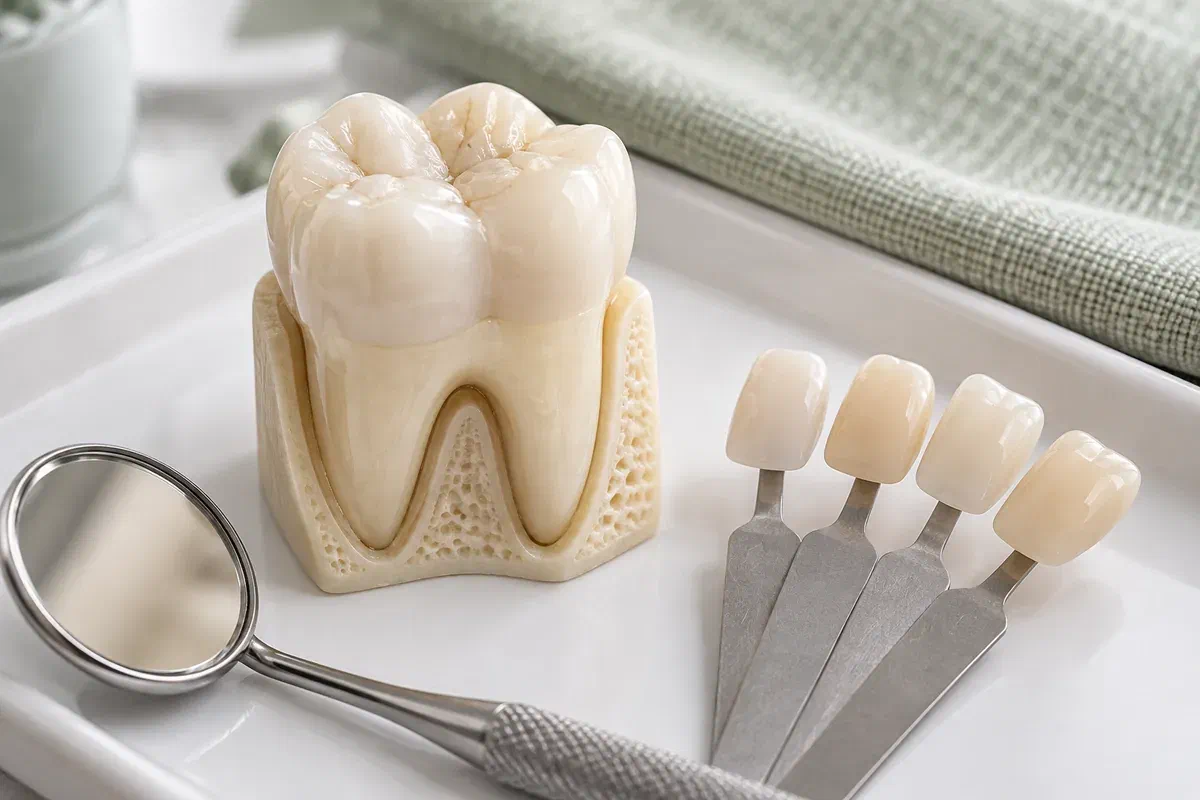
Illustrative molar model beside dental shade samples and a mirror
Patterns to describe

Wear, chips and repeat repairs

A single chip and a recurring one tell different stories. Tell us when the problem started, how often it happens, and whether it affects chewing, cleaning or your smile.

New decay on a visible tooth

Decay still needs ruling in or out, even when force seems the main issue. If a cavity requires repair, tooth-coloured material may be suitable once its depth is known and the tooth can be restored reliably. Early changes may only need prevention.

Edges that chip repeatedly

A bonded repair can fix a small chip, but if chips keep returning, the cause needs attention. Mention grinding, clenching, nail biting or chewing ice. A deeper crack or larger loss may point to a sturdier restoration.

A filling that has worn down

An older restoration may be stained, discoloured, flattened by wear, or breaking at its margin. Examination shows whether monitoring, polishing, repair or replacement is appropriate. A colour change is not proof that the filling has failed.

A cracked tooth can sometimes cause sharp pain on biting or lingering sensitivity. If pain starts on its own, lingers, or comes with swelling, call us rather than waiting for a routine visit.

Composite under pressure

Looks are easy. Load is the real test.

Composite can be matched to the shade of the surrounding tooth and sculpted directly, making it a good option for appropriately sized repairs on visible teeth. On selected back teeth it can also work, but the dentist pays close attention to chewing forces and the amount of sound tooth around the repair.

Heavy loading changes the calculation. Bonding needs a dry field, deeper repairs are more demanding, and a broad filling on a tooth that takes a lot of force may chip or wear. In those cases, another design may be more durable. Ask how your bite was factored into the choice.

Patient information: American Dental Association — tooth-coloured fillings

Shade with an eye on wear

Natural teeth vary in colour and translucency, and worn edges can look different from the rest. Discuss what shows when you talk or smile and what match is realistic, especially across a larger visible area.

Contour shaped for your bite

The filling's shape affects how teeth meet and how easily you clean between them. Mention food trapping before treatment, and expect the dentist to check how the repair behaves when you close and slide your jaw.

Fixing the defect, then the cause

A suitable direct filling can repair a localized area without covering the whole tooth. Preparation follows the damage and the material, while separate steps such as a night guard may address the forces involved.

Assessment and repair

Looking beyond the broken spot

Share any dental anxiety, earlier sensitivity, reactions to dental materials, or whitening plans. Also mention jaw soreness or headaches on waking, because they may relate to clenching.

  1. Examine the tooth and bite

    The dentist checks the tooth, existing repairs, neighbouring teeth and signs of wear, and may suggest X-rays if they would answer a question. You can discuss whether a filling is the right step, the alternatives, and the expected fee before proceeding.

  2. Prepare for bonding

    If composite is appropriate, a shade is selected and the area prepared, with local anaesthetic if needed. Any loose or damaged material is removed, and the surface is kept free of moisture so the new material bonds properly.

  3. Rebuild with the bite in mind

    Composite is placed in layers and hardened with a light, while other materials need their own handling. The dentist shapes the repair to the tooth and its neighbour and considers how opposing teeth will strike it.

  4. Test the movements

    After polishing, your bite is checked as you close, slide forward and move side to side. Mention any point that feels high. You will be told how to eat and clean, and which symptoms to report if they persist or grow.

Making it last

Protect the repair from the forces that broke it

A filled tooth still needs daily brushing and cleaning between teeth. Follow the advice for your material, and get in touch about discomfort that persists rather than tolerating it.

Wait before you chew

If you were numbed, avoid chewing until feeling returns and be careful with hot drinks. Ask whether there are other short-term eating limits. Judge the bite only once full sensation is back, not while your cheek is still frozen.

Notice sensitivity and soreness

Some teeth are tender to cold or biting after a repair. Track what triggers it and whether it fades. A tooth that feels high, pain that worsens, or symptoms that do not settle should be looked at, not repeatedly tested.

Ease the load

Use fluoride toothpaste and clean between teeth daily. If a night guard is recommended, wear it as advised. Avoid using teeth as tools, and mention new chips or wear at exams, since a replacement alone may not stop the cycle.

Choices for a high-load tooth

When a filling may not be enough

Ask which material is proposed and how it will cope with your bite. Compare benefits, limitations, maintenance and cost for this tooth rather than choosing on looks alone.

For a suitable bonded repair

Composite, done directly

Composite can give a natural finish to many defects of the right size. Cavity size, moisture control and bite force all influence whether it will hold up, and it is not a guarantee that every damaged tooth suits the same repair.

For specific needs

A different direct material

Glass ionomer or another material may be proposed in selected cases, though these are usually not chosen for heavy biting areas. Ask what the material is intended to do and whether it is interim or definitive.

For teeth under heavy load

Onlay, inlay or crown

When a direct filling cannot adequately handle the damage or the forces on the tooth, an indirect restoration may be discussed. It involves a different design and fee, and the tooth's condition should be what justifies it.

Patient information: FDA — treatment options and restorative materials

Questions about wear and grinding

Repairs that need to stand up to force

Shade, material and the condition of the tooth all shape the answers. Tell us about fillings that chipped or wore quickly, so the plan can be explained with that history in mind.

(905) 876-4488
Can grinding my teeth break a white filling?
It can contribute. Repeated grinding or clenching puts extra force on teeth and restorations, which can chip or wear composite over time. The dentist looks for signs of wear on your teeth and existing repairs, asks about jaw tiredness or headaches, and can discuss ways to reduce the load so a new filling is not placed under the same strain.
Would a night guard protect my new filling?
If you grind or clench at night, a custom night guard may help protect teeth and restorations. Whether it suits you depends on the examination. Ask the dentist whether the wear pattern suggests one would be useful.
Why did my filling chip but the tooth beside it is fine?
Forces are not spread evenly. One tooth may take more load because of how your teeth meet, a habit such as biting thread, or how much natural tooth supports the filling. The dentist examines the bite and the tooth’s structure to find out which of these is at work.
Is composite strong enough for front teeth that wear?
Often, for repairs of a suitable size. Where edges are heavily worn or chipping is frequent, the dentist may discuss addressing the cause first, or another restoration that better withstands the forces involved.
Would an amalgam hold up better than composite on my molar?
Different materials have different properties, and the dentist can explain the options for your tooth. Replacing an existing sound amalgam is a separate question; the FDA does not recommend routine removal of intact amalgam with no decay unless medically necessary.
Does a filling that keeps chipping mean I need a crown?
Not automatically. Sometimes adjusting the design, the bite or the forces is enough. If much of the tooth is involved or it has cracked, an onlay or crown may be suggested. The dentist explains the reasoning.

Patient information: FDA — decisions about existing amalgam fillings

Booking from Rockwood

Tell us how often it has happened

People from Rockwood can book a visit to our Bronte Street practice to have a chipped filling, cavity or worn edge examined. Mention how often repairs have failed and any jaw soreness. After the exam, you will hear what the dentist found and which repair suits your tooth and your bite.

If you have serious pain, swelling, or a broken filling that hurts, please call. Online requests are for routine, non-urgent visits.

Visit Milton Dental Clinic
Unit 1, 342 Bronte St. S, Milton, ON L9T 5B7
Get directions Clinic hours
Monday–Thursday
11am–7pm
Friday–Sunday
By appointment only

Areas we serve

  • Milton
  • Oakville
  • Mississauga
  • Georgetown
  • Halton Hills
  • Acton
  • Campbellville
  • Brampton
  • Burlington
  • Puslinch
  • Rockwood
  • Erin
  • Caledon
  • Etobicoke
  • Old Milton
  • Bronte Meadows
  • Timberlea
  • Dorset Park
  • Dempsey
  • Clarke
  • Beaty
  • Coates
  • Harrison
  • Scott
  • Willmott
  • Ford
  • Bowes
  • Cobden
  • Walker
  • Mountain View
  • Milton Heights
  • Hawthorne Village
  • Valley View
  • Fallingbrook
  • Nassagaweya
  • Trafalgar
  • Esquesing
  • Nelson
  • Brookville
  • Moffat
  • Glen Williams
  • Norval
  • Limehouse
  • Stewarttown
  • Ashgrove
  • Hornby
  • Silver Creek
  • Speyside
  • Scotch Block
  • North Oakville
  • River Oaks
  • Glen Abbey
  • West Oak Trails
  • Palermo
  • Bronte Creek
  • College Park
  • Joshua Creek
  • Uptown Core
  • Preserve
  • Iroquois Ridge
  • Lisgar
  • Meadowvale
  • Meadowvale Village
  • Churchill Meadows
  • Erin Mills
  • Central Erin Mills
  • Streetsville
  • East Credit
  • Creditview
  • Heartland
  • Sheridan
  • Mount Pleasant
  • Credit Valley
  • Huttonville
  • Churchville
  • Springbrook
  • Northwest Brampton
  • Bram West
  • Fletcher's Meadow
  • Fletcher's Creek South
  • Alton Village
  • Orchard
  • Millcroft
  • Headon Forest
  • Tansley
  • Brant Hills
  • Tyandaga
  • Kilbride
  • Lowville
  • Aberfoyle
  • Morriston
  • Arkell
  • Hillsburgh
  • Freelton
  • Carlisle
  • Waterdown
  • Flamborough
  • Mountsberg

How can we help?

Milton Dental Clinic

Have a question about your smile? Choose the option that works best for you.

For urgent dental concerns, please call.
Messages are reviewed during clinic hours.