

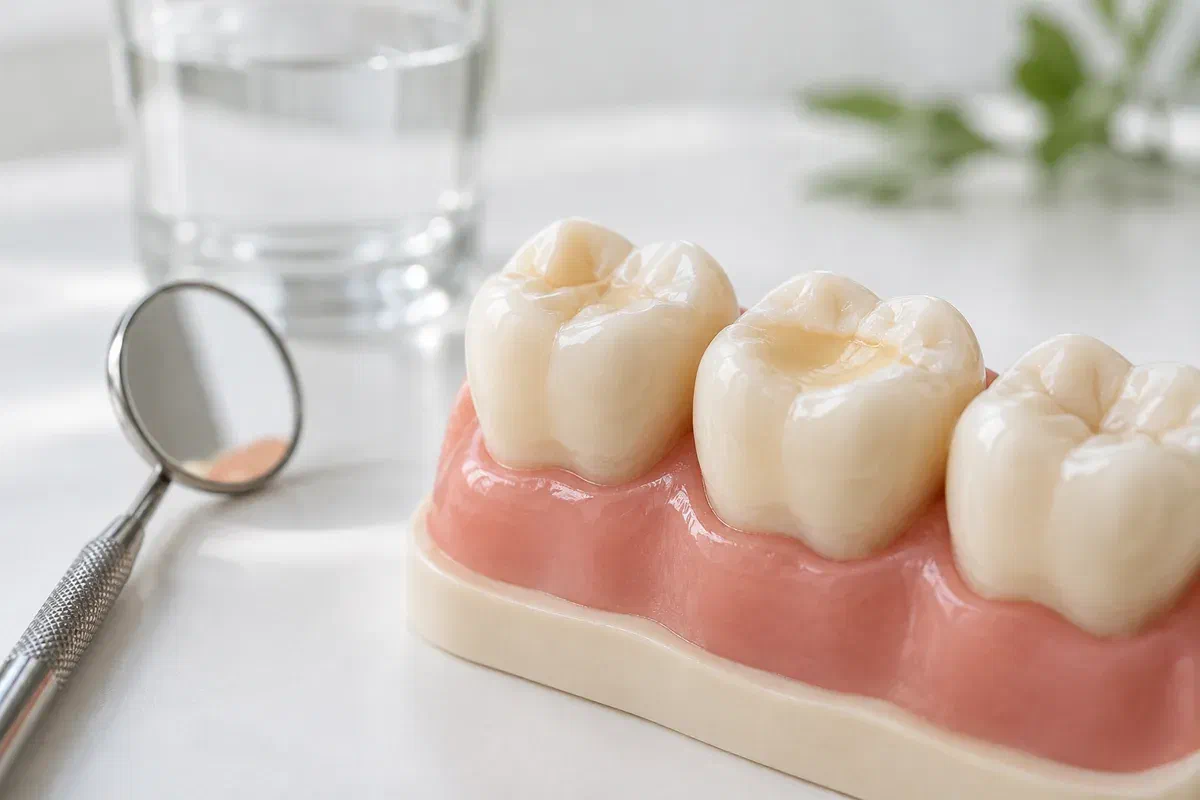
Illustrative dental discussion about daily habits and enamel protection
Restorative Dentistry

Tooth Erosion Treatment in Brampton

Training sessions, tournaments and a sports drink always within reach can take a toll on enamel. For active people in Brampton, we assess acid wear and build protection around the way you move.

Erosion and an active life

The bottle in the gym bag.

Hard exercise and sport bring plenty of good things. They can also bring a pattern dentists sometimes notice: frequent sips of sports or energy drinks, heavy mouth-breathing that dries the teeth, and long sessions where saliva has little chance to do its protective work. Together, these may contribute to erosion, the wearing of teeth by acids that bacteria did not produce.

That is a different problem from decay, although an athlete can certainly have both. Clenching under effort, a stiff brush and older fillings can add marks of their own, and the combination can be hard to untangle by eye. Rather than assume one cause, we look at where the wear sits and how it lines up with your habits and health.

People who make the trip from Brampton often fit appointments around practice schedules and shift work, so we try to make a first visit count. Expect questions about training, drinks, meals, reflux, medicines and general health, each with a reason given. Private topics can be raised one-on-one. Then we decide together whether to protect, observe or repair.

Arrange an erosion assessment
Illustrative dental teaching model with a shallow depression on a molar surface
Things athletes and active adults notice

Do any of these sound familiar?

Mention roughly when the change began and if the pace seems to be picking up. Team photos or older dental records can add useful history, but only a proper examination can explain what they show.

Edges look sheer or chewing teeth look flat

Front teeth can look thin at the tips and back teeth may develop shallow dips. The dentist charts which surfaces are involved and compares them with the rest of your mouth. A snapshot of appearance cannot reveal how fast the wear formed or whether it continues.

A post-workout drink makes teeth ache

Cold fluids, sweet snacks or citrus can trigger discomfort for many reasons. Note what brings it on, how long it lasts and where you feel it. Sensitivity does not measure lost enamel, and one tooth with sharp, lingering pain may need checking for a different issue.

Acid shows up around training

Sports drinks, gels, energy drinks, reflux during exertion or episodes of vomiting can all matter. Share what you feel comfortable sharing. We weigh dental protection and whether a doctor should look into an exposure that dental care alone will not settle.

Please do not stop prescribed medicines or change your training nutrition drastically on your own. A current list of medicines and any health details you think relevant let advice be coordinated with your doctor, dietitian or other health professional.

What a good plan protects

Keep training. Protect the enamel you still have.

Enamel lost to acid does not regrow, and placing a filling over a worn area leaves the sipping habit or reflux untouched. A sensible plan starts by finding the exposures that matter most and reducing them in ways that respect your sport. Sensitivity is eased at the same time, and repair is weighed only where it is needed.

A worn surface may never require restoration. Depth, comfort, chewing function, appearance and signs of progression all shape the call. Ask what the dentist will monitor and what result would shift the recommendation. With agreed checkpoints, a follow-up visit gives you real information rather than a shrug.

Patient information: American Dental Association — dental erosion

An explanation that fits your routine

Relating the affected surfaces to your training and diet can show which exposures are most likely involved. Often there is more than one, and we will tell you when the picture is mixed.

Prevention you can keep up in season

Advice has to work with practice times, competition days, work and family. Tell us what seems unrealistic so the plan can be adjusted into steps you can actually maintain.

Repairs chosen for a reason

If a restoration is advised, ask whether it will shield an exposed area, calm sensitivity, rebuild a worn edge or support your bite. No repair should be placed only to make every tooth match.

What to expect

Four stages, from first questions to review.

Arrive without a theory if you like. If a symptom note or a sample day of food and drink is requested, include training days as they really are. Honest detail helps more than a perfect record.

  1. Go over training, symptoms and health

    We ask about what you have noticed, your exercise and hydration habits, medical conditions and medicines. Reflux, vomiting and dry mouth may come up. Tell us if you would prefer to cover anything privately.

  2. Examine teeth and set a reference

    Teeth, fillings and the way your bite comes together are assessed. Notes, photographs or other suitable records document today’s starting point. Further tests are only proposed when they would answer a particular question.

  3. Agree on what to tackle first

    We discuss which exposures can be reduced, how to manage sensitivity and whether any surface needs rebuilding. Where medical or nutrition advice is involved, we can coordinate with it. Ask about stages and estimated costs before any restorative work begins.

  4. Return and compare

    Later, we look at symptoms, how the plan has fitted around your sport and whether the teeth have changed. The interval depends on what we found. If concerns continue or wear progresses, the plan may need further investigation or change.

Brampton game days and practice nights

Small swaps that travel well.

Follow advice built around your own exposures. Enamel care should sit alongside good fuelling and hydration for your sport, not compete with them.

Make water your default between efforts

If sports or energy drinks seem to contribute, talk about when they are truly needed and how to drink them in fewer, quicker sittings. Avoid swishing them around the mouth. Plain water works well the rest of the time.

Brush gently with fluoride

Keep brushing with a suitable fluoride toothpaste, and avoid abrasive products or scrubbing hard after a session. Ask which technique and brush suit you. A specialised toothpaste can help, but it does not deal with the acid itself.

Get reflux or vomiting checked

See a doctor if reflux during exercise, heartburn or vomiting happens repeatedly, and mention lasting dry mouth. Do not change medication on your own. After vomiting, rinsing with water may help clear acid; ask us about care if episodes recur.

Patient information: UK oral health guidance — managing and monitoring tooth wear

Treatment choices

From prevention alone to planned rebuilding.

Protective habits continue whether or not a tooth is restored. Ask how each step connects to the overall pattern, and which decisions can be reviewed before anything larger begins.

If repair is not needed yet

Prevent and track

Wear can be observed while exposures drop and sensitivity is managed. Ask what will be recorded and which findings would tip the balance toward treatment. Tracking should be a clear plan with dates, and your concern deserves a real answer, not a brush-off.

For a clearly defined area

Bond a single worn spot

Composite resin, or another suitable material, may rebuild one damaged surface. We talk through the likely benefit, upkeep and limits. Clenching under effort and continuing acid exposure affect how a repair performs, so both are considered in the plan.

When many teeth are involved

Stage care for wider wear

Extensive wear may need detailed planning, phased treatment or a specialist’s view. Ask how tooth structure will be preserved, what alternatives are available and what each one commits you to. Crowns across many teeth are not the default response to erosion.

Sport, drinks and enamel

Questions from the sidelines.

Active people often ask about drinks, gear and timing. We answer with your own wear pattern, sport and health in mind.

(905) 876-4488
Can teenagers who play sports show signs of erosion?
Yes, erosion is not limited to adults. Frequent acidic drinks and other exposures can affect young people’s teeth too. If a teen in your household has sensitive or thinning-looking teeth, mention it so an examination can look at the pattern and possible contributors.
Is it worth rinsing with water after a sports drink?
A mouthful of plain water after an acidic drink can help wash it away and is an easy habit to build. It does not cancel the exposure, and how often you drink still matters most. Ask whether other small changes would help in your case.
Why do my teeth feel worse after a long training session?
Heavy breathing and fluid loss can leave the mouth drier, and saliva helps protect teeth from acid. Repeated sips of acidic drinks add to that. Sensitivity can have other causes too, so describe when it happens and how long it lasts.
Does a sports mouthguard protect teeth from acid wear?
A mouthguard is designed to reduce injury from impact, not to prevent erosion. It is still important for contact sports. If you use one, keep it clean and ask whether there is anything to consider given the wear seen in your mouth.
How fast does tooth erosion progress?
It varies widely between people and over time. Some wear remains stable for long periods, while some advances more quickly when exposures continue. Comparing baseline records with later findings is the most reliable way to tell, which is why follow-up matters.
Can a bonded repair wear down as well?
Bonded materials can wear, chip or stain over time, especially with clenching or continuing acid exposure. They need checking and sometimes maintenance. Ask how long a repair might reasonably be expected to last and what would affect it.
Planning a visit from Brampton

Book one well-organised assessment and leave with a plan.

Arrange an appointment at our Bronte Street practice for sensitive teeth, worn edges or surfaces that look different. Bring details of your training routine, drinks and any relevant medical history. We will explain what we find and recommend how to protect, and if needed rebuild, your teeth.

Pain that is severe or swelling should be phoned in to the clinic. Online requests are for non-urgent appointments only.

Visit Milton Dental Clinic
Unit 1, 342 Bronte St. S, Milton, ON L9T 5B7
Get directions Clinic hours
Monday–Thursday
11am–7pm
Friday–Sunday
By appointment only

Areas we serve

  • Milton
  • Oakville
  • Mississauga
  • Georgetown
  • Halton Hills
  • Acton
  • Campbellville
  • Brampton
  • Burlington
  • Puslinch
  • Rockwood
  • Erin
  • Caledon
  • Etobicoke
  • Old Milton
  • Bronte Meadows
  • Timberlea
  • Dorset Park
  • Dempsey
  • Clarke
  • Beaty
  • Coates
  • Harrison
  • Scott
  • Willmott
  • Ford
  • Bowes
  • Cobden
  • Walker
  • Mountain View
  • Milton Heights
  • Hawthorne Village
  • Valley View
  • Fallingbrook
  • Nassagaweya
  • Trafalgar
  • Esquesing
  • Nelson
  • Brookville
  • Moffat
  • Glen Williams
  • Norval
  • Limehouse
  • Stewarttown
  • Ashgrove
  • Hornby
  • Silver Creek
  • Speyside
  • Scotch Block
  • North Oakville
  • River Oaks
  • Glen Abbey
  • West Oak Trails
  • Palermo
  • Bronte Creek
  • College Park
  • Joshua Creek
  • Uptown Core
  • Preserve
  • Iroquois Ridge
  • Lisgar
  • Meadowvale
  • Meadowvale Village
  • Churchill Meadows
  • Erin Mills
  • Central Erin Mills
  • Streetsville
  • East Credit
  • Creditview
  • Heartland
  • Sheridan
  • Mount Pleasant
  • Credit Valley
  • Huttonville
  • Churchville
  • Springbrook
  • Northwest Brampton
  • Bram West
  • Fletcher's Meadow
  • Fletcher's Creek South
  • Alton Village
  • Orchard
  • Millcroft
  • Headon Forest
  • Tansley
  • Brant Hills
  • Tyandaga
  • Kilbride
  • Lowville
  • Aberfoyle
  • Morriston
  • Arkell
  • Hillsburgh
  • Freelton
  • Carlisle
  • Waterdown
  • Flamborough
  • Mountsberg

How can we help?

Milton Dental Clinic

Have a question about your smile? Choose the option that works best for you.

For urgent dental concerns, please call.
Messages are reviewed during clinic hours.