

Illustrative dental discussion about daily habits and enamel protection
Restorative Dentistry

Tooth Erosion Treatment in Campbellville

Brushing harder to keep teeth clean can make acid wear worse, not better. For households in Campbellville, we look at how acid and brushing combine, and plan simple protection you can keep up.

Campbellville · acid meets the toothbrush

Softened enamel, a firm brush, and a worn tooth.

Here is a pattern dentists see often. Someone notices their teeth looking dull or feeling rough, decides they need a better clean, and starts brushing harder with a firmer brush or a gritty whitening paste. The effort is well meant. But if acid has been softening the enamel, that extra scrubbing can wear it faster.

Erosion is the chemical side of this story: acid from drinks, foods or the stomach dissolving tooth structure, with no bacteria involved. That makes it different from decay. Abrasion is the mechanical side, from brushing or other friction. Grinding adds a third. Most worn mouths show some blend, and working out the mix shapes what will actually help.

Households in rural Campbellville often like to keep appointments organised, so we aim to cover the essentials in one visit. We ask about drinks, food, brushing habits, reflux and health, and explain the purpose of each question. Anything sensitive can be talked about privately. Then we agree whether the teeth need protecting, watching or rebuilding.

Ask about a wear assessment
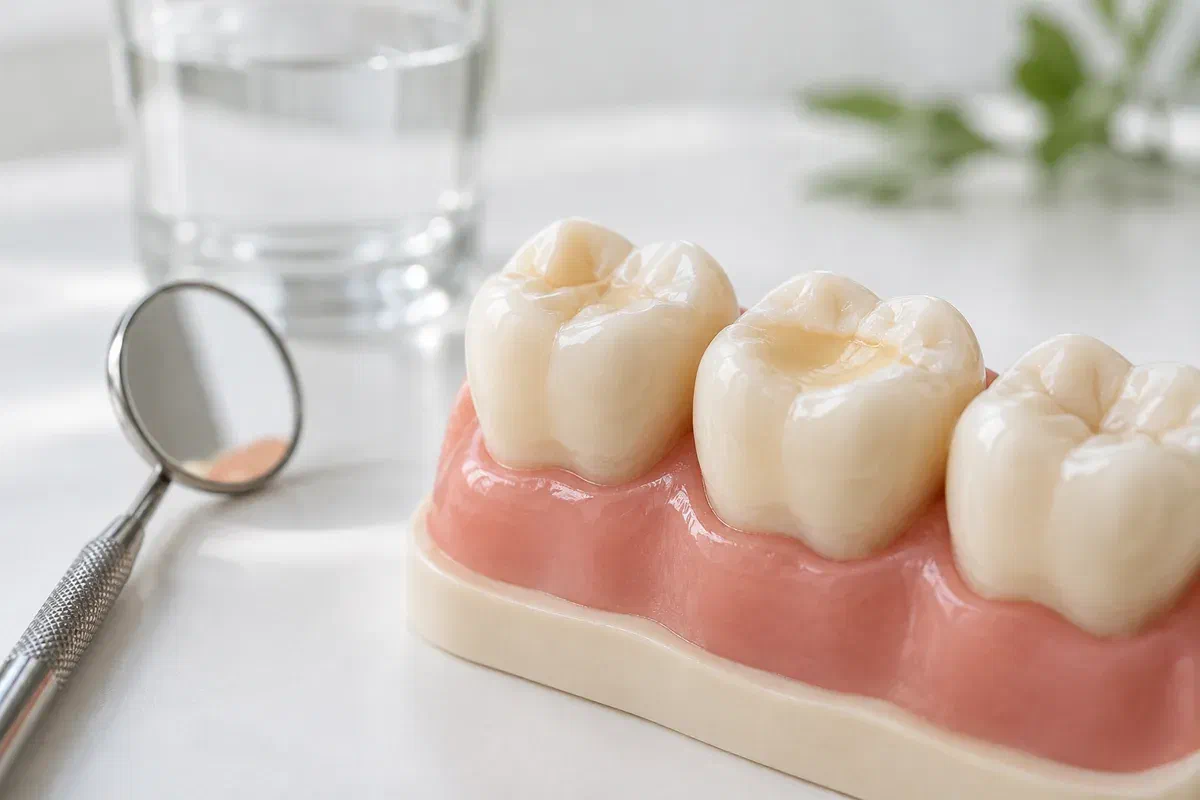
Illustrative dental teaching model with a shallow depression on a molar surface
Signs to point out

Rough, notched or glassy? Tell us.

Try to remember when you first noticed a change and whether it is getting worse. Old photographs or dental notes may help, but an examination is what makes sense of them.

Notches, dips and smooth patches

You may see shallow notches near the gums, smooth shiny areas, or scooped chewing surfaces. Each pattern can hint at different forces. The dentist charts their location and compares them with other findings, though appearance alone cannot show whether the change is active.

Teeth that complain after brushing

Twinges from brushing, cold water or sweet foods can arise for several reasons. Note when they happen, how long they last and where. Sensitivity does not reveal how much enamel is gone, and one very sore tooth may point to another issue.

Acid in the daily rhythm

Regular acidic drinks, a habit of brushing right after them, reflux or repeated vomiting can all be relevant. Share what you are comfortable sharing. We look at dental protection and whether a doctor’s input would help with an acid source dentistry alone cannot remove.

Do not stop prescribed medicines or overhaul your diet without advice. Bring your medication list and relevant health details so dental guidance can be coordinated with your physician or other provider.

What we are trying to achieve

Less acid, gentler brushing, fewer repairs.

Worn enamel cannot regrow, and a restoration over a damaged area leaves the acid and brushing habits unchanged. That is why we begin by understanding the forces at work and reducing the ones you can control. Comfort is improved along the way, and rebuilding is considered only where it clearly helps.

A worn tooth is not automatically a tooth to fill. The decision depends on depth, comfort, function, appearance and evidence that the wear is continuing. Ask what will be measured at your next visit and what result would change the plan. That makes each review a check with a point.

Patient information: American Dental Association — dental erosion

Untangling acid, brushing and grinding

The location and shape of wear can suggest which forces are most involved. Combining that with your habits produces a clearer explanation, and we will say when several factors overlap.

Routines that suit a busy household

Farm chores, commutes, school and work shape what is realistic. Let us know which changes seem hard so the advice can be adapted into steps the whole household can manage.

Repairs with a specific job

If restoration is suggested, ask whether it will protect a notch, ease sensitivity, rebuild shape or support the bite. Each repair should solve a defined problem rather than make every tooth uniform.

During your visit

We will also want to watch how you brush.

There is no need to diagnose yourself. If we ask for a rough note of symptoms or a typical day of food and drink, a simple, truthful version is ideal. You are welcome to bring the toothbrush and toothpaste you use.

  1. Discuss habits, symptoms and health

    We cover changes you have noticed, brushing routine, health conditions and medicines. Reflux, vomiting and a dry mouth may be part of the conversation. If you prefer to cover something privately, just let us know.

  2. Examine and document the wear

    The dentist checks teeth, gums, fillings and bite, looking at the shape and location of each worn area. Notes and photographs record a baseline. Extra investigations are suggested only to answer a particular question.

  3. Agree on practical changes

    We talk through reducing acid exposure, adjusting brushing technique and managing sensitivity, and whether any surface needs repair. Medical input can be coordinated if relevant. Ask for stages and an estimate of costs before starting restorative work.

  4. Check back in

    At follow-up we compare symptoms, how the new routine has gone and whether surfaces have changed. The timing depends on what we found. If wear continues or concerns remain, the plan can be investigated further or adjusted.

Gentle habits at home

Clean thoroughly without scrubbing your enamel away.

Use the guidance chosen for your own risks. Enamel care should support a balanced diet and good health, rather than leave you nervous about meals or your toothbrush.

Cut back on acid frequency

If a drink or habit is contributing, discuss enjoying it less often and with food. Avoid swishing acidic drinks around the mouth. Water between meals is easy to keep on hand at home, at work or in the truck.

Switch to a softer approach

Use a soft brush, light pressure and a fluoride toothpaste that is not highly abrasive. Ask us to show you a technique that cleans well without scrubbing. Specialised toothpastes can help, but they do not remove the acid source.

Follow up on health issues

Talk to your doctor about recurring heartburn, reflux or vomiting, and mention a persistently dry mouth. Do not stop or change medication yourself. Rinsing with water after vomiting may help; ask us before brushing if this happens often.

Patient information: UK oral health guidance — managing and monitoring tooth wear

Care options

Simple steps first, bigger ones only if needed.

Prevention continues regardless of what else is chosen. Ask how each recommendation fits the overall pattern and which decisions can be reviewed before more extensive care.

When no repair is needed yet

New habits and close monitoring

Many worn areas can be observed while acid exposure and brushing force come down. Ask what will be recorded and which changes would justify treatment. Monitoring is a defined plan with follow-up, and it should never feel like your concern was waved away.

For a specific damaged area

Cover a notch or worn patch

Tooth-coloured bonding or another suitable material may protect a notch near the gum or rebuild a worn surface. We explain benefits, upkeep and limits. If brushing or acid habits continue unchanged, the repair can wear too, so those are addressed together.

For widespread or complex wear

Broader planning

Wear across many teeth may need careful planning, staged care or specialist advice. Ask how natural tooth will be kept, what the other routes are and what each would require. Full-coverage crowns on many teeth should not be the assumed default.

Brushing and wear

Questions about cleaning worn teeth.

When acid and brushing combine, people often ask about brushes, pastes and technique. We answer with your own teeth and habits in mind.

(905) 876-4488
Can brushing too hard make erosion worse?
Firm brushing does not cause erosion, but it can add mechanical wear to enamel that acid has softened. The combination can wear teeth faster than either alone. A gentle technique with a soft brush is usually recommended; ask us to check yours.
Is an electric toothbrush better for worn enamel?
Some electric brushes have pressure sensors that help people avoid scrubbing too hard. A manual brush can work just as well with the right technique. The best choice is the one you use gently and consistently, so ask what suits you.
Is whitening toothpaste too harsh for eroded teeth?
Some whitening toothpastes are more abrasive than standard pastes. For worn enamel, a less abrasive fluoride toothpaste is often preferred. Ask before switching products so the choice matches your teeth.
What causes the small notches near my gumline?
Notches near the gums can result from brushing abrasion, acid, biting forces or a combination. They may also leave roots exposed and sensitive. An examination looks at the shape and location to understand what has been involved.
Should I brush right after drinking something acidic?
Enamel may be softer right after an acid exposure, so many dentists suggest waiting a while or rinsing with water first. Ask us about timing that fits your routine, especially if acidic drinks or reflux are frequent.
Can several people in our household be booked on the same day?
Ask when you call. We will try to arrange appointments close together where the schedule allows, which can help rural households limit trips. Each person still receives their own assessment and plan.
Wear assessments for Campbellville

Bring your toothbrush. We will bring a plan.

Book a visit at our Bronte Street practice for teeth that feel rough, look notched or have become sensitive. Bring your usual toothbrush and toothpaste, a medication list and any questions about daily habits. We will explain what we find and how to protect and, where needed, restore your teeth.

Call us about severe pain or swelling. Online requests are for appointments that are not urgent.

Visit Milton Dental Clinic
Unit 1, 342 Bronte St. S, Milton, ON L9T 5B7
Get directions Clinic hours
Monday–Thursday
11am–7pm
Friday–Sunday
By appointment only

Areas we serve

  • Milton
  • Oakville
  • Mississauga
  • Georgetown
  • Halton Hills
  • Acton
  • Campbellville
  • Brampton
  • Burlington
  • Puslinch
  • Rockwood
  • Erin
  • Caledon
  • Etobicoke
  • Old Milton
  • Bronte Meadows
  • Timberlea
  • Dorset Park
  • Dempsey
  • Clarke
  • Beaty
  • Coates
  • Harrison
  • Scott
  • Willmott
  • Ford
  • Bowes
  • Cobden
  • Walker
  • Mountain View
  • Milton Heights
  • Hawthorne Village
  • Valley View
  • Fallingbrook
  • Nassagaweya
  • Trafalgar
  • Esquesing
  • Nelson
  • Brookville
  • Moffat
  • Glen Williams
  • Norval
  • Limehouse
  • Stewarttown
  • Ashgrove
  • Hornby
  • Silver Creek
  • Speyside
  • Scotch Block
  • North Oakville
  • River Oaks
  • Glen Abbey
  • West Oak Trails
  • Palermo
  • Bronte Creek
  • College Park
  • Joshua Creek
  • Uptown Core
  • Preserve
  • Iroquois Ridge
  • Lisgar
  • Meadowvale
  • Meadowvale Village
  • Churchill Meadows
  • Erin Mills
  • Central Erin Mills
  • Streetsville
  • East Credit
  • Creditview
  • Heartland
  • Sheridan
  • Mount Pleasant
  • Credit Valley
  • Huttonville
  • Churchville
  • Springbrook
  • Northwest Brampton
  • Bram West
  • Fletcher's Meadow
  • Fletcher's Creek South
  • Alton Village
  • Orchard
  • Millcroft
  • Headon Forest
  • Tansley
  • Brant Hills
  • Tyandaga
  • Kilbride
  • Lowville
  • Aberfoyle
  • Morriston
  • Arkell
  • Hillsburgh
  • Freelton
  • Carlisle
  • Waterdown
  • Flamborough
  • Mountsberg

How can we help?

Milton Dental Clinic

Have a question about your smile? Choose the option that works best for you.

For urgent dental concerns, please call.
Messages are reviewed during clinic hours.