Illustrative dental discussion about daily habits and enamel protection
Restorative Dentistry

Tooth Erosion Treatment in Erin

Most erosion care happens at your own sink, not in the dental chair. For anyone coming from Erin or Hillsburgh, we assess the wear and then help you shape a daily routine that genuinely protects enamel.

Erin · erosion care starts at home

From the morning coffee to the last brush at night.

Think about an ordinary day. Orange juice at breakfast, a quick brush straight afterwards, a sour snack mid-afternoon, a glass of wine with dinner, a rinse with mouthwash right after brushing at bedtime. Each step seems harmless. Taken together, the timing and frequency of acid contact, and what you do next, can make a real difference to how enamel holds up.

Erosion is the slow loss of tooth structure to acid from food, drink or the stomach, with no bacteria involved. That separates it from a cavity, though one mouth can show both. Brushing habits, grinding and existing fillings leave marks of their own, which is why the dentist reads the whole pattern before deciding what is driving the wear.

When you come to see us from Erin, we look at your teeth and then walk through your day with you: drinks, meals, snacks, brushing, health and medicines. Each question has a purpose, and anything sensitive can be discussed privately. The outcome is a routine you can actually follow, plus a clear view on whether any tooth needs repair.


Book an erosion and home-care visit
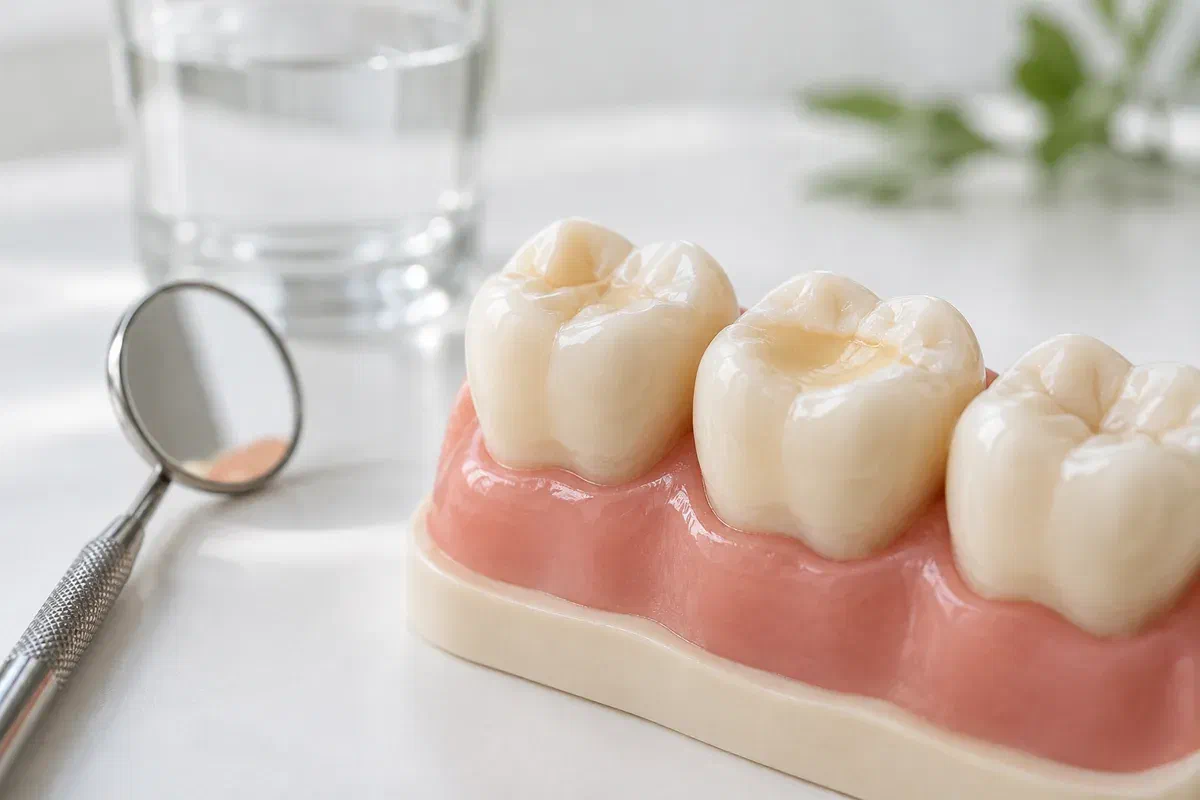
Illustrative dental teaching model with a shallow depression on a molar surface
Signs to mention

Small clues from everyday life.

Note when you first spotted a change and if it has grown since. Old dental notes or photographs may help us understand the timeline, alongside a careful examination.

Teeth that look different in the mirror

You may see smooth, shiny patches, thinner front edges or little cups on back teeth. The dentist charts where these appear and how they fit with other findings. A tooth’s look today cannot reveal how quickly it changed, or whether the change has stopped.

Twinges during your routine

Perhaps cold water while brushing, or a sour snack, makes teeth twinge. Note the trigger, how long the feeling lasts and where it is. Sensitivity is not a gauge of lost enamel, and one tooth with strong or lasting pain may have another problem.

Acid woven through the day

Juice, wine, sour sweets, soft drinks, reflux or repeated vomiting can all be relevant. Share what you can comfortably share. We look at how to protect your teeth and whether a doctor should be involved in an exposure that dental care cannot remove.

Keep taking any prescribed medicine, and hold off on big dietary changes until we have talked. A list of your medicines and relevant health details helps us coordinate dental advice with your doctor.

What good home care achieves

Daily habits do most of the protecting.

Enamel that acid has removed does not grow back, and a restoration cannot change what happens at breakfast or bedtime. That is why a home routine sits at the heart of erosion care. Adjusting when acidic foods and drinks appear, how you brush and which products you use can slow further wear and help with sensitivity.

A worn area may need nothing more than that routine and a periodic check. Repair becomes more likely when wear is deep, uncomfortable, affects chewing or appearance, or is clearly progressing. Ask what the dentist will look at next time and what would change the advice. Then you will know what your efforts at home are aiming for.

Patient information: American Dental Association — dental erosion

Knowing which habits matter most

Matching the location of wear with your daily routine shows which changes are likely to help. Often several habits contribute, and we explain which are worth tackling first.

A routine built for your household

Rural schedules, early starts, work and family meals all shape what is practical. Tell us which steps feel hard to keep, and we will adapt them so they slot into your real day.

Repairs only where home care is not enough

If a restoration is recommended, ask whether it will protect an exposed area, ease sensitivity, rebuild shape or support chewing. Each one should address something routine alone cannot fix.

How the appointment runs

Exam first, then a walk through your day.

You do not need to arrive with answers. If we suggest noting what you eat and drink on a typical day, or when sensitivity strikes, a rough sketch is ideal. Honest beats perfect.

  1. Hear about your routine and health

    We ask what you have noticed, your daily habits, health conditions and medicines. Reflux, vomiting, a dry mouth and diet may come up. If anything feels private, let us know and we will talk one-on-one.

  2. Examine and record a baseline

    The dentist checks teeth, existing fillings and bite, and records the wear with notes and photographs or other suitable records. We only add tests if there is a real question they could resolve.

  3. Shape a home plan and priorities

    We go through practical changes to timing, brushing and products, how sensitivity will be managed, and whether any tooth needs repair. If your doctor is involved, dental advice can be aligned. Ask for stages and an estimate of costs before restorative work.

  4. Compare at review

    Later we look at symptoms, how the routine has worked for you and whether the teeth have changed. Timing depends on findings. If wear continues or the routine is not working, we refine the plan or look further.

Your enamel-friendly day

Timing, technique and the right toothpaste.

Follow the advice chosen for your own risks. A protective routine should support a balanced diet and good health, and still leave room for the foods you enjoy.

Keep acidic items to mealtimes

If juice, wine or sour snacks seem to contribute, consider having them less often and as part of a meal rather than through the day. Do not swish acidic drinks. Choose plain water or milk between meals.

Brush gently, then spit

Use a fluoride toothpaste suited to you, a soft brush and light pressure. Spitting out excess paste without rinsing leaves more fluoride on the teeth. Ask about timing brushing around acidic meals; special toothpastes help but do not remove acid.

Keep an eye on health symptoms

See a doctor about ongoing heartburn, reflux or vomiting, and let us know if your mouth is often dry. Do not change medication yourself. After being sick, rinse with water; ask us about tailored care if this happens regularly.

Patient information: UK oral health guidance — managing and monitoring tooth wear

Levels of care

Routine first, with repair added only if needed.

Home prevention continues regardless of what else is decided. Ask how each option fits your overall picture and which choices stay open before larger treatment.

When no repair is needed yet

Home care and periodic checks

Worn areas may be monitored while your new routine reduces exposure and calms sensitivity. Ask what will be compared at review and what would make a repair worthwhile. Monitoring is a real plan with dates, not a polite way of setting a concern aside.

For one specific worn area

A small bonded repair

Composite resin matched to your tooth colour, or another fitting material, may rebuild a damaged surface. We explain the likely benefit, maintenance and limits. Your bite and daily habits affect how the repair holds up, so the home routine still matters after it is placed.

When many teeth are involved

A wider restorative plan

Extensive wear may need detailed planning, staged care or a specialist opinion. Ask how much natural tooth each approach keeps and what the alternatives would mean for you. Widespread crowns are not the automatic answer to erosion.

Home-care questions

Getting the daily details right.

Most questions about erosion come down to everyday habits. We answer with your own teeth and routine in mind.

(905) 876-4488
Is it better to brush before breakfast or after?
If breakfast includes acidic foods or drinks, some people find brushing beforehand works well, since enamel may be softer just after acid. Others prefer to wait a while afterwards. Ask us which approach suits your routine and teeth.
Should I rinse with water after brushing?
Spitting out excess toothpaste without rinsing leaves more fluoride on the teeth, which may help protect enamel. If you use a mouthwash, ask whether to use it at a different time of day from brushing.
Is a fluoride mouthwash useful for worn enamel?
A fluoride rinse may add protection for some people. Whether it helps depends on your risks and routine. Ask before adding one, and check that the product suits sensitive or eroded teeth.
Do sour candies count as an acid exposure?
Yes. Many sour sweets are very acidic, and sucking them slowly keeps acid in contact with the teeth. If they are a regular treat, discuss how and when you have them.
Can milk or cheese after an acidic food help my teeth?
Dairy foods are not acidic and may help the mouth recover after an acidic food or drink. They are a simple option for some people, but not a replacement for reducing acid exposure or good fluoride care.
How often should worn teeth be reviewed?
It depends on how extensive the wear is, whether it appears to be progressing and your other risks. The dentist will suggest a review interval and explain what will be compared at each visit.
Tooth erosion care for Erin households

Get a routine that works as hard as you do.

See us at our Bronte Street practice about worn, sensitive or changing teeth. Bring a rough idea of your daily routine, your medicine list and your questions. You will leave with a clear explanation of the findings and practical steps to protect and, where needed, restore your teeth.

Call us directly about severe pain or swelling. Online requests are for non-urgent appointments.

Visit Milton Dental Clinic
Unit 1, 342 Bronte St. S, Milton, ON L9T 5B7
Get directions Clinic hours
Monday–Thursday
11am–7pm
Friday–Sunday
By appointment only

Areas we serve

  • Milton
  • Oakville
  • Mississauga
  • Georgetown
  • Halton Hills
  • Acton
  • Campbellville
  • Brampton
  • Burlington
  • Puslinch
  • Rockwood
  • Erin
  • Caledon
  • Etobicoke
  • Old Milton
  • Bronte Meadows
  • Timberlea
  • Dorset Park
  • Dempsey
  • Clarke
  • Beaty
  • Coates
  • Harrison
  • Scott
  • Willmott
  • Ford
  • Bowes
  • Cobden
  • Walker
  • Mountain View
  • Milton Heights
  • Hawthorne Village
  • Valley View
  • Fallingbrook
  • Nassagaweya
  • Trafalgar
  • Esquesing
  • Nelson
  • Brookville
  • Moffat
  • Glen Williams
  • Norval
  • Limehouse
  • Stewarttown
  • Ashgrove
  • Hornby
  • Silver Creek
  • Speyside
  • Scotch Block
  • North Oakville
  • River Oaks
  • Glen Abbey
  • West Oak Trails
  • Palermo
  • Bronte Creek
  • College Park
  • Joshua Creek
  • Uptown Core
  • Preserve
  • Iroquois Ridge
  • Lisgar
  • Meadowvale
  • Meadowvale Village
  • Churchill Meadows
  • Erin Mills
  • Central Erin Mills
  • Streetsville
  • East Credit
  • Creditview
  • Heartland
  • Sheridan
  • Mount Pleasant
  • Credit Valley
  • Huttonville
  • Churchville
  • Springbrook
  • Northwest Brampton
  • Bram West
  • Fletcher's Meadow
  • Fletcher's Creek South
  • Alton Village
  • Orchard
  • Millcroft
  • Headon Forest
  • Tansley
  • Brant Hills
  • Tyandaga
  • Kilbride
  • Lowville
  • Aberfoyle
  • Morriston
  • Arkell
  • Hillsburgh
  • Freelton
  • Carlisle
  • Waterdown
  • Flamborough
  • Mountsberg

How can we help?

Milton Dental Clinic

Have a question about your smile? Choose the option that works best for you.

For urgent dental concerns, please call.
Messages are reviewed during clinic hours.