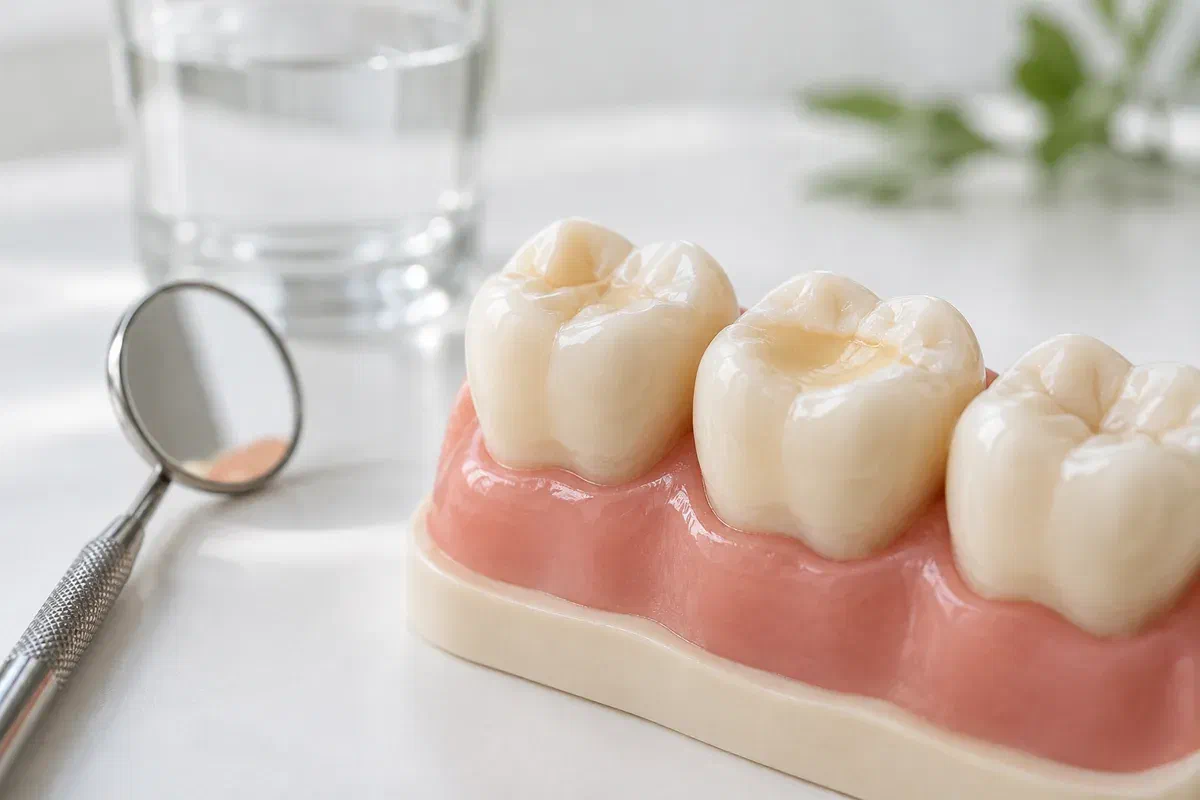
Enamel works like insulation. When it thins, the softer layer underneath, called dentine, sits closer to the surface, and cold, sweet or sour things can reach the nerve more easily. One way enamel thins is erosion: acids from drinks, foods or the stomach slowly dissolving the tooth surface. Bacteria are not involved, which is what separates erosion from decay.
Sensitivity is a signal, though, not a diagnosis. Receding gums, a cracked tooth, a leaky filling, grinding or brushing too firmly can all produce the same jolt. And some quite worn teeth hardly complain at all. That is why an assessment looks at the surfaces themselves, rather than judging the problem by how much it hurts.
For anyone booking from Georgetown, the first visit sets out to answer two questions: what is causing the discomfort, and is erosion part of it? We ask about drinks, meals, reflux, medicines and health, explaining each question as we go. Private matters can be discussed one-on-one. Then we plan relief and protection, with repair only where it has a role.