

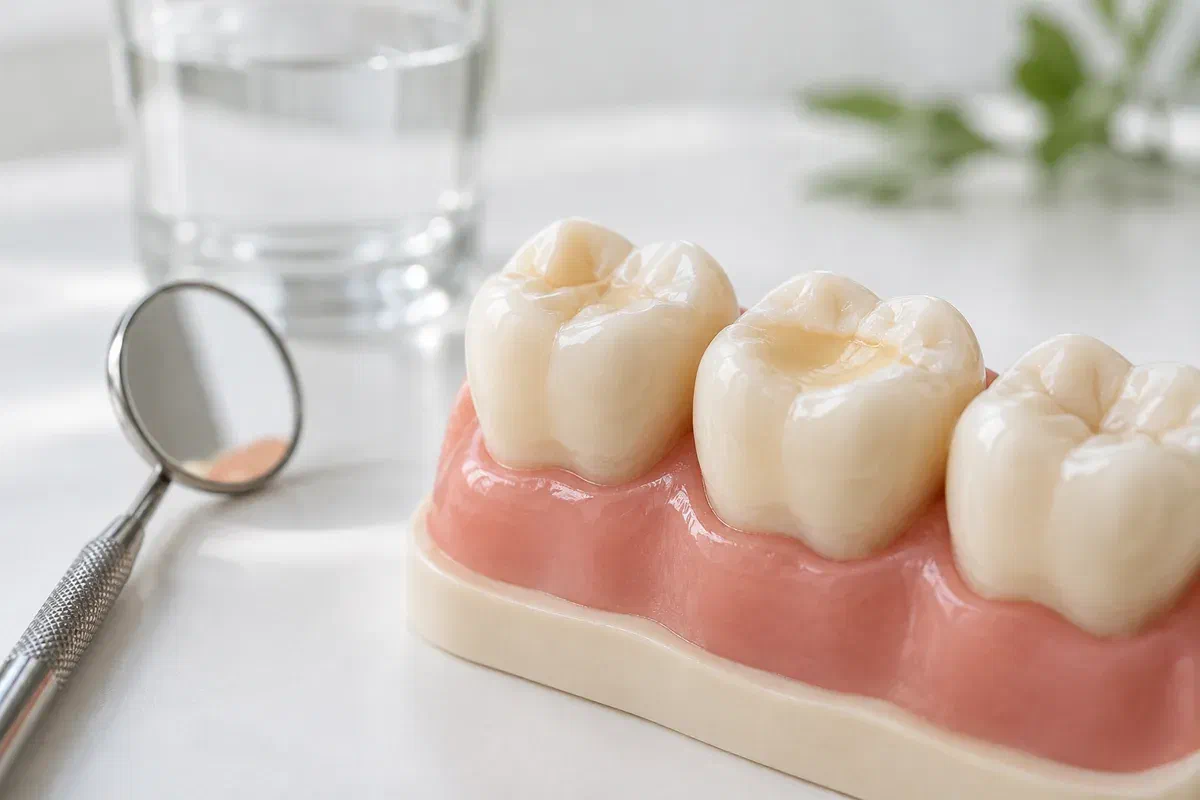
Illustrative dental discussion about daily habits and enamel protection
Restorative Dentistry

Tooth Erosion Treatment in Milton

Heard the word erosion at your last checkup and not sure what it means for you? Our Milton team explains acid wear, checks how far it has gone, and talks through protection before any repair.

When erosion shows up on your chart

A finding at a checkup is a starting point, not a verdict.

Many people first hear about erosion during an ordinary cleaning appointment. A hygienist points out a smooth, slightly hollowed patch, and suddenly there is a new word to look up. Erosion simply means tooth structure worn by acids that do not come from bacteria. It is a different process from a cavity, though the two can sit side by side in one mouth.

The term on its own says little about what to do next. Some worn areas are small and stable for years; others are changing and deserve closer attention. Grinding, an enthusiastic brushing technique, and older fillings can all leave marks that resemble acid wear, so a careful look at the pattern comes before any conclusion about cause or treatment.

For people here in Milton, an erosion assessment is usually a conversation as much as an examination. We ask about drinks, meals, dry mouth, reflux and general health, and we explain why each question matters. Sensitive topics can be discussed privately. The goal is a clear picture of what is happening and a plan that protects the teeth you have.

Book a tooth erosion assessment
Illustrative dental teaching model with a shallow depression on a molar surface
What to mention at your visit

Small changes you have noticed are worth describing.

Try to recall roughly when a difference first appeared and whether it has been getting worse. Old photographs or dental records can add context, though only an examination can tell us what they really mean.

Teeth that look smoother or thinner

Front edges might seem glassy or slightly see-through, and back teeth may have shallow cupped areas. The dentist maps where the wear sits and compares it with your other findings. How a tooth looks today does not reveal how quickly it changed or whether it is still changing.

Cold or sour things now sting

Discomfort with chilled drinks, sweets or citrus has several possible causes. Note what sets it off, how long it lasts and which tooth seems involved. The strength of sensitivity is not a gauge of how much enamel is gone, and one very painful tooth may point to a separate problem.

Acid is a regular part of your day

Sipping acidic drinks often, heartburn or reflux, and repeated vomiting can all be relevant. Share as much as you are comfortable sharing. We look at how to protect the teeth and whether a doctor’s input could help with an exposure that dental care cannot fix on its own.

Please keep taking prescribed medicines and avoid cutting out whole food groups on your own. Bring a current medication list and any relevant health details so dental advice can be coordinated with your doctor or other provider.

The aim of erosion care

Slow the wear first, then decide what needs rebuilding.

Enamel that has been lost does not regrow, and a filling placed over a worn spot leaves the acid source untouched. For that reason, erosion care usually starts by identifying and reducing whatever is driving the wear. Managing sensitivity and preventing further loss sit alongside any decision to restore a damaged surface.

Plenty of worn areas never need a restoration. Whether one does depends on how deep the change is, how it feels, how the teeth work together, how they look and whether the wear is advancing. It helps to ask what the dentist will watch for and what change would alter the advice, so each review has a clear purpose.

Patient information: American Dental Association — dental erosion

Knowing why the wear looks the way it does

The surfaces involved can hint at what has been contributing, and linking those clues with your history makes the explanation more useful. Often more than one factor is at work, and a good assessment says so rather than naming a single culprit.

Advice you can actually follow

Recommendations should work around your job, meals, exercise and health needs. Let the team know which changes feel hard, so the plan can be shaped into steps that suit a real week rather than an ideal one.

Repairs that each have a job

When a restoration is suggested, ask what it is meant to achieve: shielding an exposed area, easing discomfort, rebuilding lost shape or helping the bite. A repair should serve a clear purpose, not simply make every tooth match.

Your Milton erosion visit, step by step

We start with your story and finish with a plan.

There is no need to work out the cause before you come in. If we ask for a note of symptoms or a sample day of eating and drinking, a rough account is fine. Honest answers help far more than a flawless log.

  1. Talk through symptoms and health

    We cover what you have noticed, any medical conditions and the medicines you take. Questions about reflux, vomiting, dry mouth and diet may come up. If some of this feels personal, tell us and we will make space to discuss it privately.

  2. Record a starting point

    The dentist examines your teeth, current fillings and bite. Notes, photographs or other suitable records help document where things stand today. Further tests are only arranged when they would answer a specific question, not as a routine extra for everyone.

  3. Set priorities together

    We discuss which exposures can realistically change, how to handle sensitivity and whether any tooth needs repair. If medical care is involved, dental advice can be lined up with it. Ask for the stages of treatment and an estimate of costs before agreeing to restorative work.

  4. Check how things are going

    At a later visit we compare your symptoms, how the plan has fitted your life and any change in the teeth. The interval depends on what we found. If concerns remain or the wear seems to continue, the plan may need more investigation or adjustment.

Looking after enamel at home

Simple habits, each chosen for a reason.

Follow the advice that matches your own risks. Protecting enamel should fit alongside a balanced diet and good general health, not make you anxious about every snack.

Rethink how often acid reaches your teeth

When a specific drink or habit seems to be contributing, talk about having it less often and with meals. Try not to hold or swirl acidic drinks in your mouth. Water between meals is an easy swap for many people.

Brush softly and regularly

Keep using a suitable fluoride toothpaste, and skip gritty products or hard scrubbing. Ask which brush, paste and method suit you. A specialised toothpaste can help, but it does not take the place of dealing with the acid itself.

Act on health symptoms

See a doctor about ongoing reflux or vomiting, and mention persistent dry mouth. Never change a medication on your own. After vomiting, a rinse with plain water can help clear acid; ask us for personal advice if episodes recur.

Patient information: UK oral health guidance — managing and monitoring tooth wear

Choosing a level of care

Most plans mix prevention with selective repair.

Protective steps carry on whether or not any tooth is restored. Ask how each recommendation fits the bigger picture and which choices can be revisited before larger treatment begins.

When a repair is not needed yet

Protect and keep watch

A worn area can be watched while you reduce relevant risks and manage sensitivity. Ask what will be measured at each review and which changes would prompt treatment. Watching should be a deliberate plan with follow-up, never a way of brushing off your concern.

For a specific damaged surface

Rebuild one worn surface

Tooth-coloured composite or another suitable material may be used to rebuild a particular worn area. Talk through the expected benefit, upkeep and limitations. Your bite and any ongoing acid exposure need attention too, because the repair has to work in those conditions.

When wear is widespread or complex

Plan for wider wear

Wear across many teeth may call for detailed planning, treatment in stages or a specialist opinion. Ask how tooth structure will be preserved, what the alternatives are and what each option involves. Crowns on many teeth should never be assumed to be the default answer.

Common questions

What people ask after hearing the word erosion.

A new diagnosis often brings questions about habits, products and what happens next. We answer them in light of the wear actually present in your mouth and any health factors involved.

(905) 876-4488
Is erosion the same thing as a cavity?
No. A cavity comes from bacteria producing acid as they feed on sugars, while erosion is caused by acids from other sources. The two can occur together, so we check for both. A smooth worn patch is not automatically a cavity, and a sore tooth is not automatically erosion.
My hygienist mentioned erosion. Does that mean I need treatment now?
Not necessarily. Many worn areas are recorded and monitored while you reduce the exposures behind them. Treatment is considered when wear affects comfort, function or appearance, or when reviews show it progressing. Ask what was seen and what the next step is meant to achieve.
How will you know whether the wear is getting worse?
A baseline is recorded at the first assessment, often with notes and photographs, and later findings are compared with it. Your symptoms and history are part of the comparison too. Ask which surfaces are being tracked and how often they will be reviewed.
Can grinding my teeth look like erosion?
It can. Grinding and clenching wear teeth mechanically, and the marks may overlap with acid wear. Brushing too hard can add another layer. Often several factors combine, which is why the dentist looks at the pattern and your history together before drawing conclusions.
Are some everyday drinks more of a concern than others?
Acidic drinks such as soft drinks, sports drinks, fruit juices and some flavoured waters can contribute, especially when sipped slowly over long periods. How often and how you drink often matter as much as what. We can look at your own routine rather than giving a general list of forbidden items.
Can bonding fix sensitive worn spots for good?
Bonding can protect a suitable worn surface and may ease discomfort, but no restoration is permanent and each needs maintenance. If the acid source continues, wear can carry on around it. Ask how long a repair might be expected to serve and what upkeep it will need.
Erosion care close to home in Milton

Find out what that word on your chart really means.

Book a visit at our Bronte Street practice to talk about changes in shape, texture or sensitivity. Come with questions about daily habits and any health history that might be relevant. We will explain what we find and how to protect, and where needed restore, your teeth.

Severe pain or swelling? Please phone the clinic. Online requests are for appointments that are not urgent.

Visit Milton Dental Clinic
Unit 1, 342 Bronte St. S, Milton, ON L9T 5B7
Get directions Clinic hours
Monday–Thursday
11am–7pm
Friday–Sunday
By appointment only

Areas we serve

  • Milton
  • Oakville
  • Mississauga
  • Georgetown
  • Halton Hills
  • Acton
  • Campbellville
  • Brampton
  • Burlington
  • Puslinch
  • Rockwood
  • Erin
  • Caledon
  • Etobicoke
  • Old Milton
  • Bronte Meadows
  • Timberlea
  • Dorset Park
  • Dempsey
  • Clarke
  • Beaty
  • Coates
  • Harrison
  • Scott
  • Willmott
  • Ford
  • Bowes
  • Cobden
  • Walker
  • Mountain View
  • Milton Heights
  • Hawthorne Village
  • Valley View
  • Fallingbrook
  • Nassagaweya
  • Trafalgar
  • Esquesing
  • Nelson
  • Brookville
  • Moffat
  • Glen Williams
  • Norval
  • Limehouse
  • Stewarttown
  • Ashgrove
  • Hornby
  • Silver Creek
  • Speyside
  • Scotch Block
  • North Oakville
  • River Oaks
  • Glen Abbey
  • West Oak Trails
  • Palermo
  • Bronte Creek
  • College Park
  • Joshua Creek
  • Uptown Core
  • Preserve
  • Iroquois Ridge
  • Lisgar
  • Meadowvale
  • Meadowvale Village
  • Churchill Meadows
  • Erin Mills
  • Central Erin Mills
  • Streetsville
  • East Credit
  • Creditview
  • Heartland
  • Sheridan
  • Mount Pleasant
  • Credit Valley
  • Huttonville
  • Churchville
  • Springbrook
  • Northwest Brampton
  • Bram West
  • Fletcher's Meadow
  • Fletcher's Creek South
  • Alton Village
  • Orchard
  • Millcroft
  • Headon Forest
  • Tansley
  • Brant Hills
  • Tyandaga
  • Kilbride
  • Lowville
  • Aberfoyle
  • Morriston
  • Arkell
  • Hillsburgh
  • Freelton
  • Carlisle
  • Waterdown
  • Flamborough
  • Mountsberg

How can we help?

Milton Dental Clinic

Have a question about your smile? Choose the option that works best for you.

For urgent dental concerns, please call.
Messages are reviewed during clinic hours.