

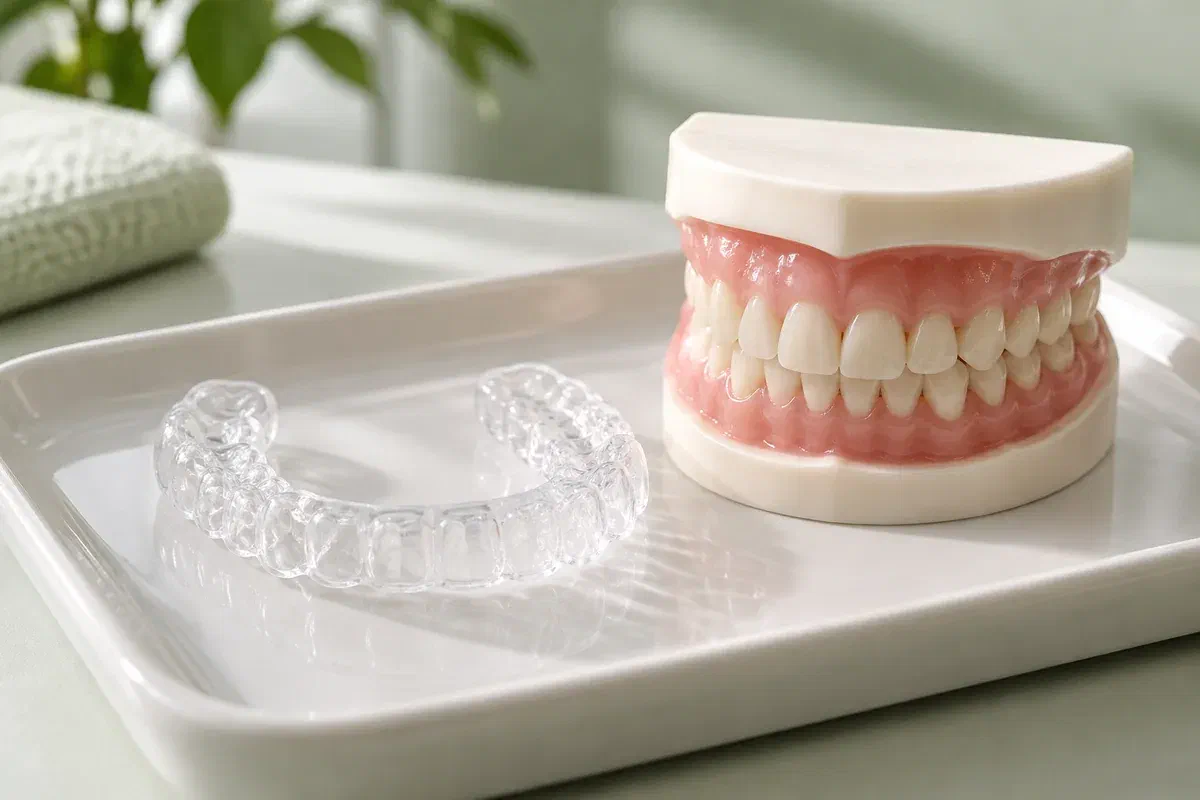
Illustrative consultation about a protective dental appliance and tooth wear
Restorative Dentistry

Tooth Wear from Grinding in Acton

A recent photo shows front teeth that look shorter and more even than you remember. From Acton, you can find out whether grinding may be involved, what protection would mean, and whether restoring the edges is sensible right now.

Seeing it in a photo

Shorter teeth in the picture

Sometimes wear is noticed not in the mirror but in a wedding photo or a video call. Front teeth that once had gentle variation now look straight across, or the upper teeth barely show when you smile. Grinding and clenching, grouped together as bruxism, are among the things that can wear edges down over years. Even so, the look of worn teeth cannot by itself tell when grinding happens or whether it is the only cause.

Acid from drinks or reflux, the way the front teeth overlap, and previous bonding or veneers all influence how edges change. If a tooth has become sensitive or the jaw feels sore, those concerns are examined separately instead of being bundled into the appearance question.

For anyone coming from Acton, northwest of our Milton clinic, an appearance concern is a perfectly good reason to book. We look at the wear, ask about your habits, and talk through what protection involves before any cosmetic repair is considered. Restoring an edge without addressing the forces on it may not last, and no guard can promise to end grinding.

Ask about worn front teeth
Illustrative clear dental night guard beside a teaching model with worn tooth edges
Changes in your smile

What people notice about worn front teeth

Appearance changes are often gradual. Bringing older photos helps, as does any guard you use. Mention these even if you have no idea whether you grind.

Edges that line up too evenly

Natural front teeth usually have slight differences in length and shape. When they are worn flat, the dentist examines how upper and lower edges meet and considers age, earlier work, and other causes before judging the significance.

Bonding that chips at the edge

Cosmetic bonding on a front tooth can chip when it takes a lot of force. Mention when it happened and how often. The shape of the bonding, remaining tooth, bite, and habits help decide what should happen next.

Tension through the face

Some people notice a clenched jaw or tired cheeks alongside the change in appearance. Those feelings are not unique to grinding. Report locking, limited opening, or lingering facial pain so they receive a proper look.

If a front tooth suddenly cracks, becomes painful, or feels loose, have it seen promptly. A cosmetic concern can wait; a painful break should not.

Why protection comes into it

Looks matter. So does what keeps them.

When grinding is a likely contributor, a protective appliance may be suggested to keep teeth from wearing directly on each other. That can help protect both natural edges and any cosmetic work. It does not restore lost enamel, and it does not cure the habit. You should understand its role, fit, and review schedule before deciding on any repairs.

Awake clenching, where present, is approached through awareness of how the jaw rests. Sleep or breathing concerns may suggest a medical evaluation. Not every person with worn front teeth needs the same appliance, and stress is not automatically blamed for the change.

Patient information: National Institute of Dental and Craniofacial Research — bruxism

Photographs as a reference

Clinical photos of your smile now allow fair comparison later. Ask what will be measured or photographed again, especially if the change seems slow.

Cosmetic work planned around forces

If edges are to be rebuilt, ask how the new surfaces will be protected. How the bite meets a bonded edge matters as much as the material and shade.

Your goals, clearly stated

Some people want a subtle refresh; others simply want to stop further change. Being specific helps the plan focus and avoids lengthening teeth that are serving you well.

From concern to plan

How we approach a change in your smile

No preparation is required. Older photos, a list of any chips, notes on how you sleep, and any guard you own all give useful context.

  1. Hear what you have noticed

    We ask when you first saw the change, whether anyone has heard grinding, and whether you clench in the day. Health history, sleep, and medicines are reviewed. If a prescription may be involved, keep taking it and talk to the prescriber.

  2. Examine edges, bite, and jaw

    The dentist looks at the worn edges, any bonding or veneers, cracks, and how front teeth overlap. Jaw movement may be checked. Photographs or models are added when they help answer a particular question.

  3. Weigh protection, monitoring, and cosmetic repair

    Options may include watching, a guard, habit awareness, or rebuilding edges. Ask what each step is meant to achieve, the materials, fees, and review plan, and whether repairs are limited to a few teeth or part of a larger design.

  4. Fit, review, and refine

    A guard is fitted with instructions, and any cosmetic work is reviewed separately. Bring the appliance to visits. New chips or ongoing symptoms may mean adjusting the plan before more work is done.

Keeping your smile protected

Habits that help edges last

Protection is an ongoing job. A guard you will wear, habits you can manage, and regular reviews look after both natural teeth and any repairs.

Use and care for the appliance

Wear and clean it as directed for its material, dry it, and keep it in its case, away from heat. Bring it to appointments. If it presses, cracks, or your bite changes, tell us instead of altering it.

Avoid biting things with your front teeth

Nail biting, opening packages, or chewing pens can chip worn or bonded edges. If you clench during the day, reminders to relax the jaw may help. Do not grind deliberately to test the habit.

Watch for small changes

Note new chips, rough spots on bonding, or sensitivity that lingers. Be open about how often the guard is used. That helps the team decide whether a fit issue or the wider plan needs attention.

Patient information: NIH News in Health — grinding and clenching

Choices for worn front teeth

Protect now, restore when it makes sense

Worn front teeth do not always need cosmetic work, and wear seldom has one cause. Ask what supports each recommendation and what would happen if the edges were simply watched.

When function is unaffected

Protection and monitoring

If teeth work well, the plan may focus on habits, an appliance where indicated, and photo comparisons over time. Ask what would make rebuilding worthwhile.

A few chipped or short teeth

Rebuilding selected edges

After assessment, composite or another restoration may restore the shape of a defined area. Discuss the expected appearance, shade, and upkeep, and how the edges will be protected if grinding continues.

Widespread wear or larger goals

A planned smile and bite assessment

Changes across many teeth may need records, staged planning, and possibly specialist input. Ask about conservative options and what changing the bite would involve. Extensive veneers or crowns are not a routine fix for grinding.

Patient information: UK oral health guidance — causes and monitoring of tooth wear

Questions about worn edges

Appearance, protection, and repair

Questions about how worn teeth look, guards, and cosmetic repairs often run together. A good answer separates the health of the teeth, the cause of the wear, and what each option can achieve.

(905) 876-4488
Can worn front teeth be made longer again?
Sometimes edges can be rebuilt with composite or other restorations, depending on how much tooth remains and how the teeth meet. The dentist will explain whether lengthening is realistic and how it would be protected. Not every worn edge needs to be lengthened.
Will bonded edges match the colour of my natural teeth?
The aim is to choose a shade that blends with your teeth, though bonding can stain or change over time and natural teeth may also change. Ask about upkeep and what to expect in the years after treatment.
Why might the dentist suggest protection before cosmetic repairs?
If grinding forces continue unchecked, new edges may chip quickly. Establishing protection first, and seeing how the teeth respond, can give repairs a better chance. The reasoning should be explained for your particular situation.
Could straightening my teeth be part of managing wear?
In some cases, the way teeth overlap contributes to how they wear, and alignment may be discussed. That decision usually involves specialist input. It is not a routine answer for everyone with worn teeth.
Is nail biting as harmful as grinding for front teeth?
Nail biting and chewing objects can chip front edges and stress bonding, especially when teeth are already worn. The pattern of damage can differ from grinding. Mention these habits so the dentist can interpret the wear accurately.
Is a consultation worth the trip from Acton if I am only considering options?
Yes, an assessment can be useful even before you decide anything. You leave with a clearer picture of the wear and possible next steps. Mention any scheduling needs from Acton when booking so the visit can be planned around them.

Patient information: NIDCR — jaw disorders and treatment considerations · American Dental Association — obstructive sleep apnea

Acton smiles

Talk through the change before choosing a fix.

Book at our Bronte Street clinic for front teeth that look shorter, bonding that chips, or concerns about clenching. Bring older photos and any guard you use. We will discuss protection, monitoring, and whether rebuilding edges is a good idea now.

Call about a painful broken tooth, swelling, or a jaw that locks. Online requests are for non-urgent appointments.

Visit Milton Dental Clinic
Unit 1, 342 Bronte St. S, Milton, ON L9T 5B7
Get directions Clinic hours
Monday–Thursday
11am–7pm
Friday–Sunday
By appointment only

Areas we serve

  • Milton
  • Oakville
  • Mississauga
  • Georgetown
  • Halton Hills
  • Acton
  • Campbellville
  • Brampton
  • Burlington
  • Puslinch
  • Rockwood
  • Erin
  • Caledon
  • Etobicoke
  • Old Milton
  • Bronte Meadows
  • Timberlea
  • Dorset Park
  • Dempsey
  • Clarke
  • Beaty
  • Coates
  • Harrison
  • Scott
  • Willmott
  • Ford
  • Bowes
  • Cobden
  • Walker
  • Mountain View
  • Milton Heights
  • Hawthorne Village
  • Valley View
  • Fallingbrook
  • Nassagaweya
  • Trafalgar
  • Esquesing
  • Nelson
  • Brookville
  • Moffat
  • Glen Williams
  • Norval
  • Limehouse
  • Stewarttown
  • Ashgrove
  • Hornby
  • Silver Creek
  • Speyside
  • Scotch Block
  • North Oakville
  • River Oaks
  • Glen Abbey
  • West Oak Trails
  • Palermo
  • Bronte Creek
  • College Park
  • Joshua Creek
  • Uptown Core
  • Preserve
  • Iroquois Ridge
  • Lisgar
  • Meadowvale
  • Meadowvale Village
  • Churchill Meadows
  • Erin Mills
  • Central Erin Mills
  • Streetsville
  • East Credit
  • Creditview
  • Heartland
  • Sheridan
  • Mount Pleasant
  • Credit Valley
  • Huttonville
  • Churchville
  • Springbrook
  • Northwest Brampton
  • Bram West
  • Fletcher's Meadow
  • Fletcher's Creek South
  • Alton Village
  • Orchard
  • Millcroft
  • Headon Forest
  • Tansley
  • Brant Hills
  • Tyandaga
  • Kilbride
  • Lowville
  • Aberfoyle
  • Morriston
  • Arkell
  • Hillsburgh
  • Freelton
  • Carlisle
  • Waterdown
  • Flamborough
  • Mountsberg

How can we help?

Milton Dental Clinic

Have a question about your smile? Choose the option that works best for you.

For urgent dental concerns, please call.
Messages are reviewed during clinic hours.