

Illustrative consultation about a protective dental appliance and tooth wear
Restorative Dentistry

Tooth Wear from Grinding in Brampton

Waking with a stiff jaw and teeth that feel bruised is no way to start the day. From Brampton, you can have grinding-related wear examined, jaw symptoms considered separately, and protection or repair discussed in plain terms.

Mornings that start sore

Stiff jaw, tender teeth, and a question about why

You open your eyes, and before anything else you notice your jaw. It feels heavy, maybe your back teeth ache when you first bite into breakfast. Grinding or clenching during sleep, part of what dentists call bruxism, is one possible reason. Repeated night-time loading can tire the chewing muscles and gradually wear or crack teeth. Even so, morning soreness has other explanations, and worn teeth cannot tell exactly when the habit happens.

Jaw joints, sinus pressure, posture, and dental problems like a cracked filling can all produce similar discomfort. Meanwhile, acid or older restorations may be adding to the wear itself. Separating the jaw question from the tooth question is often the most helpful thing an assessment can do.

Brampton lies northeast of our Milton clinic, so the aim is to make each visit count. We ask about your mornings, examine your teeth and jaw, and look at any guard you have tried. Then we explain what needs protection, what may need repair, and when a separate jaw assessment makes sense. We will not suggest that one appliance can end grinding.

Ask about morning jaw soreness
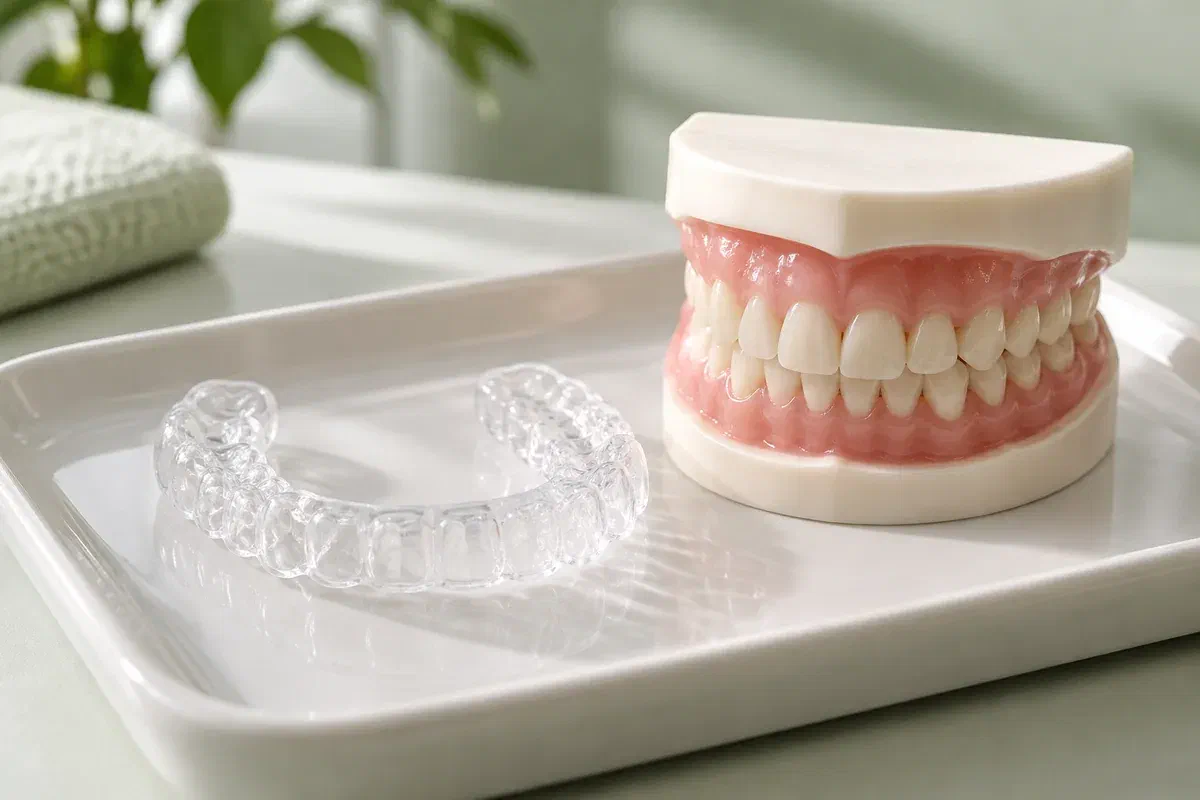
Illustrative clear dental night guard beside a teaching model with worn tooth edges
What mornings can reveal

Three clues worth bringing up

One sore morning after a stressful week may not mean much. A pattern over weeks is different. Describe how often it happens, bring any appliance you use, and say so even if you are not sure you grind.

Back teeth that ache when you first chew

Teeth can feel bruised after a night of heavy clenching. The dentist checks for wear, cracks, and how the teeth meet, and considers whether gum, nerve, or sinus causes could explain the tenderness instead. Wear is interpreted in the context of your age and history.

Chips that appear without an obvious bite

Finding a fragment of tooth or filling when you did not bite anything hard is worth mentioning. Explain the circumstances. Restoration design, remaining tooth structure, biting forces, and sleep habits all affect whether a simple repair is enough.

Tight muscles near the temples or cheeks

Aching muscles on waking may reflect clenching, but they can also stem from jaw joint disorders or other conditions. Mention locking, clicking with pain, or restricted opening so that an appropriate assessment is not missed.

Sudden severe tooth pain, a visible crack, or a loose tooth needs prompt care. Morning soreness you have had before does not make a new, sharper pain normal.

What you can expect to gain

Clearer answers about teeth and jaw

If sleep grinding is the likely contributor, a protective night appliance may be suggested to keep teeth from meeting directly. That can reduce wear and the risk of chipping. It does not replace lost enamel, and it is not a guaranteed fix for the habit or for jaw pain. The reasons for it, how it should fit, and when it will be reviewed should be explained.

Where symptoms point more toward the jaw joint, or the history includes snoring and poor sleep, a physician or other assessment may be recommended. Daytime clenching is addressed through awareness of how the jaw rests. Treatment is matched to findings, and stress is not assumed to be the explanation for everyone.

Patient information: National Institute of Dental and Craniofacial Research — bruxism

Today’s condition on record

Documenting teeth, restorations, and jaw findings provides a reference for later visits. Ask what will be checked next time, especially if the wear is subtle or its timing uncertain.

Protection planned alongside repair

Before any tooth is rebuilt, discuss how it will be protected if grinding continues overnight. A restoration’s surroundings deserve the same thought as its material.

Focus on the symptom that bothers you most

For some people the priority is comfort on waking; for others it is chewing or appearance. Naming yours keeps the plan practical and avoids assuming that every worn edge must be restored.

Inside the appointment

Separating tooth problems from jaw problems

You do not need to track every morning. A rough sense of how often you wake sore, what has chipped, how you sleep, and any guard you own is a good starting point.

  1. Describe your mornings and your health

    We ask when soreness appears, whether a partner has heard grinding, and whether you clench in the day. Sleep, health conditions, and medicines are reviewed. If you suspect a prescription is involved, carry on taking it and discuss it with the prescriber.

  2. Examine teeth, joints, and muscles

    The dentist checks worn surfaces, cracks, and existing work, and assesses how your jaw opens and moves. Tender muscles and the way teeth meet are noted. Further records or imaging are used if they help answer a specific question.

  3. Agree what comes next and why

    Options may include monitoring, habit awareness, a guard, restorative work, or a referral for jaw assessment. Ask about the aim, material, fee, and review plan of any appliance, and whether repairs are limited or part of a broader plan.

  4. Review comfort and progress

    A guard is fitted with instructions, and repairs have their own follow-up. Bring the appliance to later visits. If mornings stay sore or new damage appears, the plan may need adjusting or further evaluation.

Looking after your jaw and guard

Small routines, honest feedback

Ongoing review is part of the plan. A guard you find comfortable, steps you can keep up, and clear advice help much more than a device abandoned because it felt wrong and nobody was told.

Keep the appliance in good shape

Wear and clean it as instructed for its material, let it dry, and store it in its case. Heat can warp it. Bring it along to appointments, and tell us about soreness, cracks, or bite changes rather than altering it yourself.

Rest the jaw during the day

If you clench while awake, reminders to let your lips close with your teeth apart may help. Ask what suits your symptoms. Avoid chewing hard on purpose or grinding to check whether the soreness returns.

Keep a simple log

Jot down mornings that are worse, any new chips, or sensitivity that does not fade. Say plainly how often the guard is worn and what makes it hard. That helps distinguish a fit problem from a sign the wider plan needs changing.

Patient information: NIH News in Health — grinding and clenching

Matching care to findings

Not every sore jaw needs dental work

Grinding is not a reason for extensive treatment by default, and wear often has more than one cause. Ask which findings support each choice and what monitoring alone would involve.

Teeth still doing their job

Monitor and protect

Worn but comfortable teeth may not need rebuilding. The plan could focus on habits, a night appliance if indicated, and reviews. Ask why monitoring is suitable and what signs would lead to another approach.

A chip, crack, or worn surface

Repair a damaged tooth

After assessment, composite or another restoration may repair a defined area. Discuss shape and upkeep given ongoing grinding. The repair plan should address why the original tooth or filling failed.

Many teeth or a complex picture

Broader planning

Extensive wear may require records, staged treatment, and specialist input. Ask about conservative paths and what bite changes would mean. Crowns or irreversible changes should not be offered as a routine way to stop grinding.

Patient information: UK oral health guidance — causes and monitoring of tooth wear

Jaw and wear questions

When mornings hurt, people tend to ask this

Questions about sore jaws, worn teeth, and guards often overlap. A good answer keeps the health of your teeth, the cause of the pain, and the role of an appliance apart.

(905) 876-4488
Why does my jaw feel sore as soon as I wake up?
Night-time clenching or grinding can tire the chewing muscles, and that is one common explanation. Jaw joint problems, sleep issues, and dental causes can produce similar feelings. An examination of the teeth, joints, and muscles helps narrow it down.
Is jaw pain a dental problem or something else?
It can be either, or both. Pain may come from muscles, the jaw joint, a tooth, or areas nearby such as the sinuses. The dentist assesses what can be seen and felt and may suggest a separate evaluation if the joint or a medical cause seems involved.
Could a night guard make my jaw feel worse?
An appliance that does not fit well may cause pressure or discomfort. If your jaw or teeth feel worse after starting to wear it, stop forcing it and contact the clinic. The fit can be checked and the plan reconsidered.
What can I do at home when my jaw aches?
Common self-care advice includes softer foods for a while, avoiding very wide opening, and gentle warmth or cold on the muscles. Ask the dentist what suits your situation. Pain that persists, worsens, or comes with locking should be assessed.
Does tooth wear from grinding cause sensitivity?
Thinner enamel can leave teeth more reactive to cold or sweet things. Sensitivity also comes from recession, decay, and cracks, so it needs its own check. Treatment depends on the cause the dentist finds.
Can several Brampton family members be seen on the same day?
Ask when booking. Grouping appointments can reduce trips from Brampton, though it depends on availability and the type of visit each person needs. Some steps, such as fitting a guard, may still need their own appointment.

Patient information: NIDCR — jaw disorders and treatment considerations · American Dental Association — obstructive sleep apnea

Brampton visits

Start your mornings with fewer questions.

Set aside time with us on Bronte Street to look into morning jaw soreness, tender back teeth, or chips with no clear cause. Bring any guard you use. We will look at your teeth and jaw and talk through protection, monitoring, and any repairs needed.

Call promptly about severe tooth pain, a crack, swelling, or a jaw that locks. Online booking is meant for non-urgent requests.

Visit Milton Dental Clinic
Unit 1, 342 Bronte St. S, Milton, ON L9T 5B7
Get directions Clinic hours
Monday–Thursday
11am–7pm
Friday–Sunday
By appointment only

Areas we serve

  • Milton
  • Oakville
  • Mississauga
  • Georgetown
  • Halton Hills
  • Acton
  • Campbellville
  • Brampton
  • Burlington
  • Puslinch
  • Rockwood
  • Erin
  • Caledon
  • Etobicoke
  • Old Milton
  • Bronte Meadows
  • Timberlea
  • Dorset Park
  • Dempsey
  • Clarke
  • Beaty
  • Coates
  • Harrison
  • Scott
  • Willmott
  • Ford
  • Bowes
  • Cobden
  • Walker
  • Mountain View
  • Milton Heights
  • Hawthorne Village
  • Valley View
  • Fallingbrook
  • Nassagaweya
  • Trafalgar
  • Esquesing
  • Nelson
  • Brookville
  • Moffat
  • Glen Williams
  • Norval
  • Limehouse
  • Stewarttown
  • Ashgrove
  • Hornby
  • Silver Creek
  • Speyside
  • Scotch Block
  • North Oakville
  • River Oaks
  • Glen Abbey
  • West Oak Trails
  • Palermo
  • Bronte Creek
  • College Park
  • Joshua Creek
  • Uptown Core
  • Preserve
  • Iroquois Ridge
  • Lisgar
  • Meadowvale
  • Meadowvale Village
  • Churchill Meadows
  • Erin Mills
  • Central Erin Mills
  • Streetsville
  • East Credit
  • Creditview
  • Heartland
  • Sheridan
  • Mount Pleasant
  • Credit Valley
  • Huttonville
  • Churchville
  • Springbrook
  • Northwest Brampton
  • Bram West
  • Fletcher's Meadow
  • Fletcher's Creek South
  • Alton Village
  • Orchard
  • Millcroft
  • Headon Forest
  • Tansley
  • Brant Hills
  • Tyandaga
  • Kilbride
  • Lowville
  • Aberfoyle
  • Morriston
  • Arkell
  • Hillsburgh
  • Freelton
  • Carlisle
  • Waterdown
  • Flamborough
  • Mountsberg

How can we help?

Milton Dental Clinic

Have a question about your smile? Choose the option that works best for you.

For urgent dental concerns, please call.
Messages are reviewed during clinic hours.