

Illustrative consultation about a protective dental appliance and tooth wear
Restorative Dentistry

Tooth Wear from Grinding in Etobicoke

Managing grinding wear usually means more than one appointment, so the trip from Etobicoke deserves a plan. We assess the wear, explain protection and repair, and organize visits so each one has a clear purpose.

Planned around the drive

Fewer trips, better-organized care

From the west end of Toronto, coming to Milton is a commitment, so it helps to know up front what managing grinding wear involves. Bruxism, the umbrella term for clenching and grinding, can wear enamel, crack fillings, and tire jaw muscles, whether it happens at night or during the day. An examination can show what has changed, but worn surfaces alone cannot confirm how often the habit happens now or that it is the sole cause.

Other contributors matter too. Acid exposure, the age of existing restorations, and the way your teeth meet can all leave marks that look like grinding wear. A chipped filling or tender jaw is examined on its own, which keeps treatment aimed at the real problem and avoids wasted visits.

Our approach for people coming from Etobicoke is to gather as much as we can at the first appointment. Bring any guard you own, earlier X-rays if you have them, and a list of what has broken. We then explain what needs protection, what may need repair, how many visits that is likely to take, and why no single appliance can promise to end grinding.

Plan a grinding wear assessment
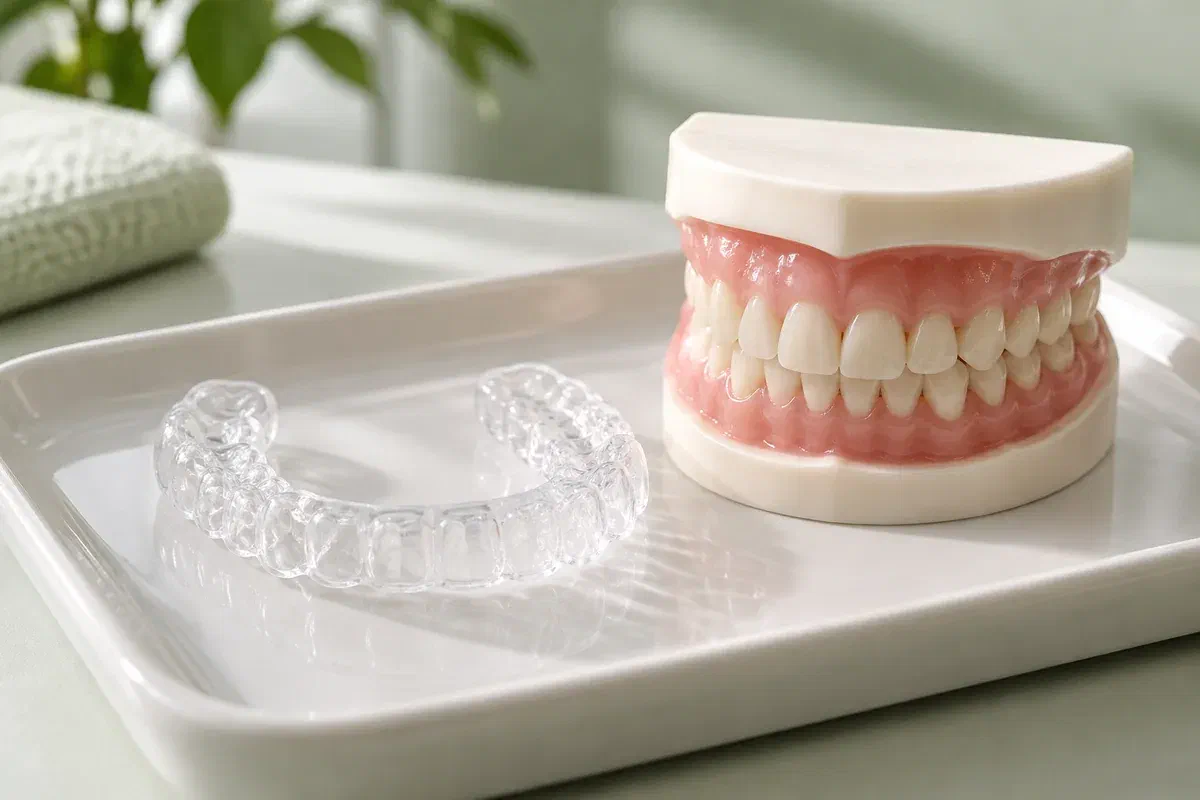
Illustrative clear dental night guard beside a teaching model with worn tooth edges
Worth mentioning when you book

Tell us early, plan more efficiently.

Knowing your concerns before the visit helps the team set aside the right kind of appointment. Mention any guard you use and anything that has changed, even if you are unsure whether grinding is involved.

Wear you can see in the mirror

Flattened edges, especially on canines and front teeth, are often the first visible sign. The dentist compares them with opposing teeth and takes age, past dental work, and acid exposure into account before judging whether the wear is beyond what would be expected.

A repair that has already failed twice

If the same filling or bonded edge keeps breaking, let us know when booking. Remaining tooth, restoration design, bite forces, and habits all influence what should happen next, and a plan may take more than a quick patch.

Jaw discomfort that comes and goes

Tired muscles or awareness of clenching are relevant, though such symptoms have several possible causes. Mention locking, painful clicking, or limited opening so the right assessment, possibly a separate one, can be arranged.

Call before setting out when a tooth suddenly becomes painful, cracks, or loosens. Depending on the situation, we may advise seeking urgent care closer to home.

Why a clear plan saves trips

Know the purpose of every visit.

A custom protective appliance is one common recommendation when grinding is likely. It keeps teeth from grinding directly against each other and can reduce further damage. It cannot restore enamel that is gone, and it is not a cure for bruxism. You should leave knowing why it was suggested, how many appointments it involves, and when it will be reviewed.

If you clench while awake, awareness of resting jaw position may be discussed. Sleep or breathing concerns may lead to a suggestion to see your family doctor. The plan reflects what was found, rather than giving every worn mouth the same device or assuming stress explains it.

Patient information: National Institute of Dental and Craniofacial Research — bruxism

A baseline from the first visit

Records of your teeth and restorations make it easier to judge later whether anything has progressed. Ask what will be compared next time, particularly if the wear is minor.

Repairs planned with protection in mind

If restorations are needed, discuss how they will be protected against ongoing grinding. Thinking about the forces on a new filling avoids repeat repairs and repeat trips.

Priorities you set

You may care most about appearance, comfortable chewing, or sensitivity. Saying so helps shape a focused plan and avoids building up edges that are functioning well.

A typical sequence

Assessment, plan, fitting, review

There is no need to keep a detailed record. Bring what you have: a guard, past X-rays, notes on breakages, and a sense of how you sleep. That helps us make the first visit as complete as possible.

  1. Collect history at the outset

    We ask about clenching, anything heard at night, and when discomfort occurs. Medicines, sleep, and general health are reviewed. If you think a prescription is involved, keep taking it and talk to the prescriber.

  2. Examine thoroughly in one sitting

    The dentist checks wear, cracks, restorations, bite, and jaw movement. Additional records are taken when they answer a specific question. Where possible, information needed for next steps is gathered at this visit.

  3. Map out the appointments ahead

    If a guard, repairs, or both are recommended, ask about the aim, material, fees, and how many visits each will need. Grouping steps where it is clinically sensible can reduce return trips.

  4. Fit and follow up

    An appliance is fitted and adjusted with instructions, and restorations are reviewed separately. Bring the guard to each later visit. Persistent symptoms or new chips suggest the plan may need adapting.

Managing at a distance

What to do between appointments

Because visits are spaced out, what happens at home matters even more. A guard that fits comfortably, a simple routine, and a quick call when something changes all help.

Care for the guard properly

Clean and wear the appliance as advised for its material. Keep it in its case and out of hot cars. If it cracks, presses on a tooth, or your bite feels different, phone us rather than adjusting it at home.

Watch for daytime clenching

For awake clenching, simple reminders to relax the jaw with teeth apart may help. Ask what suits your symptoms. There is no benefit in grinding deliberately to test whether the habit has gone.

Call before you drive in

New chips, sensitivity that lingers, or a change in jaw discomfort are worth reporting. A short call can tell us whether you need to come in sooner, can wait for your review, or should seek care closer to home.

Patient information: NIH News in Health — grinding and clenching

Possible plans

From a single review to staged treatment

Grinding does not automatically call for extensive dentistry, and wear seldom has one cause. Ask what supports each recommendation and what monitoring would look like instead.

Functional, comfortable teeth

Reviews, with a guard where needed

Some wear needs only monitoring. The plan may include habit awareness, an appliance if indicated, and reviews that can line up with routine check-ups. Ask what signs would prompt a change of approach.

A specific chip or damaged tooth

One-area restoration

A defined area can sometimes be repaired with composite or another restoration after assessment. Ask about its shape and maintenance if grinding continues, and why the original material or tooth was lost.

Widespread or complex wear

Staged, comprehensive care

Wear across many teeth may need records, treatment in phases, and sometimes a specialist. Ask about conservative options and the effect of bite changes. Extensive crowns should not be presented as a standard cure for grinding.

Patient information: UK oral health guidance — causes and monitoring of tooth wear

Planning questions

Practical answers for a longer trip

Questions about guards, repairs, and timing often come up together. Clear answers separate what your teeth need, what is causing symptoms, and how many visits the plan involves.

(905) 876-4488
How many appointments does a custom night guard usually involve?
Typically there is an assessment, a visit to record the shape of your teeth, and a fitting, followed by a review. Some steps may be combined when appropriate. Ask at the first visit so you can plan your schedule.
What should I do if my guard breaks while I am at home?
Stop wearing it if it has sharp edges or no longer seats properly, and keep the pieces. Call the clinic to discuss next steps. In the meantime, avoid trying to glue or file it, which can change how it fits.
If a tooth cracks at night, should I drive to Milton from Etobicoke?
Call first. Depending on the pain, swelling, and timing, the safest choice may be urgent care closer to Etobicoke. For less pressing problems, we can advise whether to book a visit with us or wait for your planned appointment.
Can grinding damage crowns and bridges as well as natural teeth?
Yes. Restorations can chip, wear, or loosen under heavy force, and they can also wear the teeth they bite against. The dentist examines both natural teeth and existing work when assessing grinding-related damage.
Is it fine to keep using my guard while waiting for a repair?
Often, if it still fits comfortably. If it rocks, presses, or catches on a chipped tooth, stop and let us know. The guard may need checking once the repair is done, because the fit can change.
What can I do before the first visit to make it more useful?
Bring any guard you use, earlier X-rays or notes if available, and a brief list of breakages and symptoms. Note any medicines you take. This helps the dentist gather what is needed in fewer appointments.

Patient information: NIDCR — jaw disorders and treatment considerations · American Dental Association — obstructive sleep apnea

Etobicoke to Milton

One well-planned visit is a good start.

Arrange an assessment at our Bronte Street clinic for worn edges, repeated chips, or clenching concerns. Bring your guard and any records. We will explain protection, monitoring, and repair, and map out the visits involved.

Call first about a painful crack, swelling, or a jaw that locks, as nearer urgent care may be best. Online requests are for non-urgent visits.

Visit Milton Dental Clinic
Unit 1, 342 Bronte St. S, Milton, ON L9T 5B7
Get directions Clinic hours
Monday–Thursday
11am–7pm
Friday–Sunday
By appointment only

Areas we serve

  • Milton
  • Oakville
  • Mississauga
  • Georgetown
  • Halton Hills
  • Acton
  • Campbellville
  • Brampton
  • Burlington
  • Puslinch
  • Rockwood
  • Erin
  • Caledon
  • Etobicoke
  • Old Milton
  • Bronte Meadows
  • Timberlea
  • Dorset Park
  • Dempsey
  • Clarke
  • Beaty
  • Coates
  • Harrison
  • Scott
  • Willmott
  • Ford
  • Bowes
  • Cobden
  • Walker
  • Mountain View
  • Milton Heights
  • Hawthorne Village
  • Valley View
  • Fallingbrook
  • Nassagaweya
  • Trafalgar
  • Esquesing
  • Nelson
  • Brookville
  • Moffat
  • Glen Williams
  • Norval
  • Limehouse
  • Stewarttown
  • Ashgrove
  • Hornby
  • Silver Creek
  • Speyside
  • Scotch Block
  • North Oakville
  • River Oaks
  • Glen Abbey
  • West Oak Trails
  • Palermo
  • Bronte Creek
  • College Park
  • Joshua Creek
  • Uptown Core
  • Preserve
  • Iroquois Ridge
  • Lisgar
  • Meadowvale
  • Meadowvale Village
  • Churchill Meadows
  • Erin Mills
  • Central Erin Mills
  • Streetsville
  • East Credit
  • Creditview
  • Heartland
  • Sheridan
  • Mount Pleasant
  • Credit Valley
  • Huttonville
  • Churchville
  • Springbrook
  • Northwest Brampton
  • Bram West
  • Fletcher's Meadow
  • Fletcher's Creek South
  • Alton Village
  • Orchard
  • Millcroft
  • Headon Forest
  • Tansley
  • Brant Hills
  • Tyandaga
  • Kilbride
  • Lowville
  • Aberfoyle
  • Morriston
  • Arkell
  • Hillsburgh
  • Freelton
  • Carlisle
  • Waterdown
  • Flamborough
  • Mountsberg

How can we help?

Milton Dental Clinic

Have a question about your smile? Choose the option that works best for you.

For urgent dental concerns, please call.
Messages are reviewed during clinic hours.