

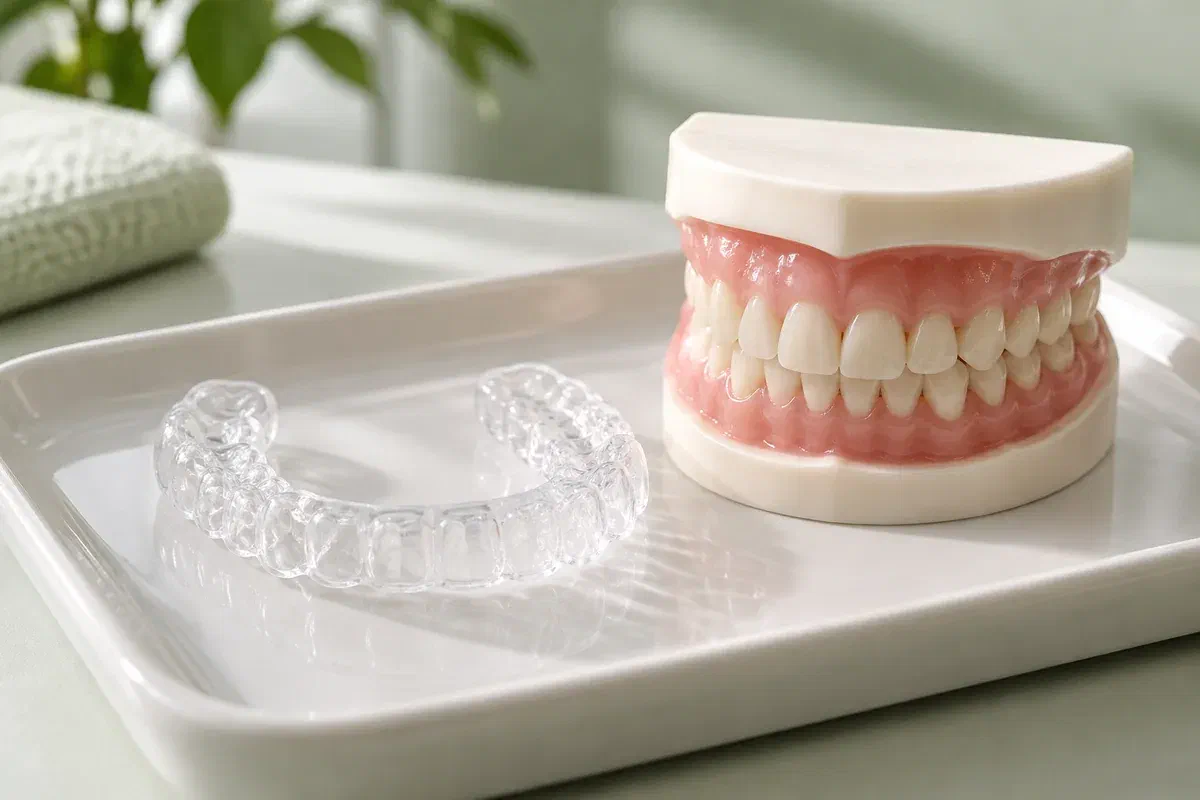
Illustrative consultation about a protective dental appliance and tooth wear
Restorative Dentistry

Tooth Wear from Grinding in Georgetown

You already own a night guard, but it feels loose, looks chewed, or mostly lives in a drawer. From Georgetown, bring it in so we can check it against your teeth, look at any new wear, and talk about what protection should look like now.

The guard in the drawer

Is your night guard still protecting anything?

Many people were given a guard years ago and have not thought about it since. Meanwhile teeth may have been filled or crowned, the appliance may have thinned, and the habit it was made for may have changed. Grinding and clenching, collectively called bruxism, can keep loading teeth and restorations. An updated look shows what is happening now, though the wear itself still cannot prove how often grinding occurs.

It is also possible that some of the wear never came from grinding. Acid from food, drinks, or reflux, along with ageing restorations, can produce similar changes. A tooth that has become sensitive, or a jaw that aches, is assessed separately rather than assuming the old guard simply needs replacing.

Georgetown sits north of our Milton clinic, and people from there often arrive with a guard in a case and a list of questions. We examine your teeth, check how the appliance sits, and look for new chips or cracks. Then we discuss whether to keep, adjust, or replace the guard, and whether any tooth needs repair, without claiming that an appliance will end grinding.

Bring your guard for a check
Illustrative clear dental night guard beside a teaching model with worn tooth edges
Time for a recheck?

Signs your protection may need attention

Small changes to the guard or your teeth can mean the original plan no longer fits. Bring the appliance, and mention anything new, even if you are not sure it relates to grinding.

Teeth that look flatter than last time

If edges have continued to shorten, the dentist compares them with older records and with the opposing teeth. Age, recent dental work, and acid exposure are considered before deciding whether the wear has progressed and why.

Restorations chipping despite the guard

Breakage while you are wearing protection, or on nights you skip it, is useful information. Note when it happened. Restoration design, tooth structure, bite forces, and daytime habits may all be involved.

A jaw that still feels tired

Continuing muscle discomfort may relate to clenching, the fit of the guard, or something else entirely. Report locking, reduced opening, or facial pain that persists so the appropriate assessment is not overlooked.

Sudden pain, a crack, or a loose tooth needs prompt attention, whether or not you wear a guard. Do not assume new symptoms are covered by an old diagnosis.

What a review offers

An appliance that matches today’s mouth

A well-fitting guard keeps upper and lower teeth from grinding directly together and can limit further damage. A worn or poorly fitting one may offer less protection or cause discomfort. Either way, it does not rebuild enamel and is not a cure for bruxism. A review clarifies what the appliance is doing for you now.

If daytime clenching has become more noticeable, awareness of jaw position may be discussed. Sleep problems, heavy snoring, or exhaustion may prompt a suggestion to see your physician. Each plan follows the findings, not the assumption that one device or one cause fits everyone.

Patient information: National Institute of Dental and Craniofacial Research — bruxism

Fresh comparison records

Updated notes and images give a new baseline. If older records exist, they can show whether wear has progressed. Ask which areas will be followed.

Protection that suits new restorations

If teeth have been repaired since the guard was made, its fit may need checking. Protecting newer work matters as much as the material it was made from.

Comfort you can live with

A guard you dislike wearing is not protecting anything. Telling us what bothers you, whether bulk, tightness, or appearance, helps the plan focus on something you will actually use.

What the check involves

Guard, teeth, jaw: examined together

Bring the appliance and its case. A few notes about how often you wear it, what has broken, and how you feel on waking are plenty.

  1. Talk about the guard’s history

    We ask when it was made, how often you wear it, and whether anything has changed. Clenching, night grinding, sleep, and medicines are reviewed. Continue any prescribed medicine and raise questions about it with the prescriber.

  2. Examine the appliance and your bite

    The dentist inspects the guard for thinning, cracks, and fit, then examines teeth, restorations, and jaw movement. The way the appliance sits on newer fillings or crowns gets particular attention. Additional records are taken when they help answer a particular question, not as a routine extra.

  3. Decide: keep, adjust, or replace

    Options may include continuing with the current guard, adjusting it, making a new one, monitoring, or restorative work. Ask about the purpose, material, fees, and review plan for any new appliance.

  4. Follow up regularly

    A new or adjusted guard is fitted with instructions, and restorations have their own review. Bring the appliance to future visits. Persistent symptoms or new damage suggest the plan should be reconsidered.

Making the guard part of life

Out of the drawer and into the routine

An appliance only helps on the nights it is worn. Comfort, simple care, and honest updates at each review keep protection working.

Clean and store it carefully

Rinse and clean it as directed for its material, let it air dry, and keep it in a vented case. Hot water and warm windowsills can warp it. Bring it to every visit, and report pressure, cracks, or bite changes instead of trimming it.

Notice clenching during the day

Gentle reminders to relax the jaw and keep the teeth apart may help if awake clenching is part of your history. Ask for suggestions that fit you. Grinding on purpose to test the habit is not recommended.

Keep the team informed

Note new chips, sensitivity that lingers, or jaw discomfort that changes. Tell us frankly if you have stopped wearing the guard and what made it difficult. That helps separate a fit problem from a need to rethink the plan.

Patient information: NIH News in Health — grinding and clenching

After the review

What might change, and what might not

A guard check does not automatically lead to more treatment. Ask what each recommendation is based on and what would happen if things stayed as they are.

Teeth stable and comfortable

Carry on, with a better-fitting guard

If wear has not progressed, the plan may be to continue protection, perhaps with an adjusted or replacement appliance, and keep reviewing. Ask what changes would prompt a different approach.

A fresh chip or failing filling

Repair a newly damaged spot

A defined area can be restored with composite or another restoration once assessed. Discuss how it will be protected and maintained, and why the tooth or earlier repair broke down.

Progressive or widespread wear

Look at the bigger picture

Wear that has advanced across several teeth may need records, care delivered in stages, and occasionally a specialist’s opinion. Find out which options preserve the most tooth, and what any proposed bite change would mean day to day. Widespread crowns are not a routine cure for grinding.

Patient information: UK oral health guidance — causes and monitoring of tooth wear

Questions from guard owners

Keeping an appliance useful over time

Questions about older guards, fit, and new wear often overlap. A good answer separates what your teeth show, what the guard is doing, and what any symptoms mean.

(905) 876-4488
Why does my night guard feel loose now?
Teeth can shift slightly, restorations may have changed their shape, or the appliance may have worn or warped. A loose guard may not protect as intended. Bring it in so the fit can be assessed and adjusted or replaced if needed.
Can you check a guard that another dentist made?
Yes. Bring it with you, along with anything you know about when and why it was made. The dentist examines it against your current teeth and restorations and explains whether it still seems suitable, needs adjusting, or has reached the end of its useful life.
Are grooves and scratches on my guard normal?
Marks often show where teeth have been contacting the appliance, which is part of its job. Deep grooves, thin spots, or cracks may mean it needs attention. The dentist can assess the pattern during your review.
Can wearing a night guard move my teeth?
Sometimes. Designs that cover only part of the arch, or a guard that no longer fits, can occasionally affect tooth position over time. If your bite feels different in the morning, or teeth seem to have shifted, mention it promptly so the guard can be checked. Do not keep wearing it while you wait if it feels clearly wrong.
Is it all right to boil my guard to sterilize it?
No. Heat can warp many guard materials and ruin the fit. Clean it gently as instructed for its material and let it dry. Ask the dentist about suitable cleaning products if you are unsure.
How do I fit a guard check into a trip from Georgetown?
Mention it when booking so the review can be scheduled alongside other care where possible. Bringing the guard and case to each visit means it can be checked without an extra trip from Georgetown.

Patient information: NIDCR — jaw disorders and treatment considerations · American Dental Association — obstructive sleep apnea

Georgetown guard checks

Bring the guard. Leave with a plan.

Visit our Bronte Street clinic for a loose or worn guard, new chips, or jaw discomfort that has returned. We will check the appliance against your teeth and discuss whether to keep, adjust, or replace it, and whether any tooth needs repair.

Call about a painful cracked tooth, swelling, or a jaw that suddenly will not open. Online requests are for non-urgent bookings.

Visit Milton Dental Clinic
Unit 1, 342 Bronte St. S, Milton, ON L9T 5B7
Get directions Clinic hours
Monday–Thursday
11am–7pm
Friday–Sunday
By appointment only

Areas we serve

  • Milton
  • Oakville
  • Mississauga
  • Georgetown
  • Halton Hills
  • Acton
  • Campbellville
  • Brampton
  • Burlington
  • Puslinch
  • Rockwood
  • Erin
  • Caledon
  • Etobicoke
  • Old Milton
  • Bronte Meadows
  • Timberlea
  • Dorset Park
  • Dempsey
  • Clarke
  • Beaty
  • Coates
  • Harrison
  • Scott
  • Willmott
  • Ford
  • Bowes
  • Cobden
  • Walker
  • Mountain View
  • Milton Heights
  • Hawthorne Village
  • Valley View
  • Fallingbrook
  • Nassagaweya
  • Trafalgar
  • Esquesing
  • Nelson
  • Brookville
  • Moffat
  • Glen Williams
  • Norval
  • Limehouse
  • Stewarttown
  • Ashgrove
  • Hornby
  • Silver Creek
  • Speyside
  • Scotch Block
  • North Oakville
  • River Oaks
  • Glen Abbey
  • West Oak Trails
  • Palermo
  • Bronte Creek
  • College Park
  • Joshua Creek
  • Uptown Core
  • Preserve
  • Iroquois Ridge
  • Lisgar
  • Meadowvale
  • Meadowvale Village
  • Churchill Meadows
  • Erin Mills
  • Central Erin Mills
  • Streetsville
  • East Credit
  • Creditview
  • Heartland
  • Sheridan
  • Mount Pleasant
  • Credit Valley
  • Huttonville
  • Churchville
  • Springbrook
  • Northwest Brampton
  • Bram West
  • Fletcher's Meadow
  • Fletcher's Creek South
  • Alton Village
  • Orchard
  • Millcroft
  • Headon Forest
  • Tansley
  • Brant Hills
  • Tyandaga
  • Kilbride
  • Lowville
  • Aberfoyle
  • Morriston
  • Arkell
  • Hillsburgh
  • Freelton
  • Carlisle
  • Waterdown
  • Flamborough
  • Mountsberg

How can we help?

Milton Dental Clinic

Have a question about your smile? Choose the option that works best for you.

For urgent dental concerns, please call.
Messages are reviewed during clinic hours.