

Illustrative consultation about a protective dental appliance and tooth wear
Restorative Dentistry

Tooth Wear from Grinding in Halton Hills

Guard first, or fix the chipped teeth first? For households across Halton Hills, we look at the wear, explain the order that makes sense for your mouth, and keep repairs to what the teeth genuinely need.

Getting the order right

Protect, repair, or both, and in which order?

Once grinding has been mentioned, the next question is usually practical: what happens first? Bruxism, whether it is night grinding or daytime clenching, can wear down enamel and break restorations. Fixing a chipped edge without considering those forces may only lead to another chip, while a guard on its own will not rebuild what has worn away. And the wear itself cannot reveal exactly when or how often the habit occurs.

Sequencing depends on a careful look at causes. Acid, older fillings, and bite patterns may all play a part, so the plan considers every contributor. A sensitive tooth or aching jaw also gets its own assessment, because treating it as automatically grinding-related could send the plan in the wrong direction.

For people from Georgetown, Acton, Glen Williams and the smaller hamlets of Halton Hills, our Milton clinic sits to the south. At the first visit we examine your teeth, hear what has broken, and look at any guard you have. Then we suggest an order of care that fits your situation, while being clear that no appliance or restoration can promise to stop grinding altogether.

Talk about where to start
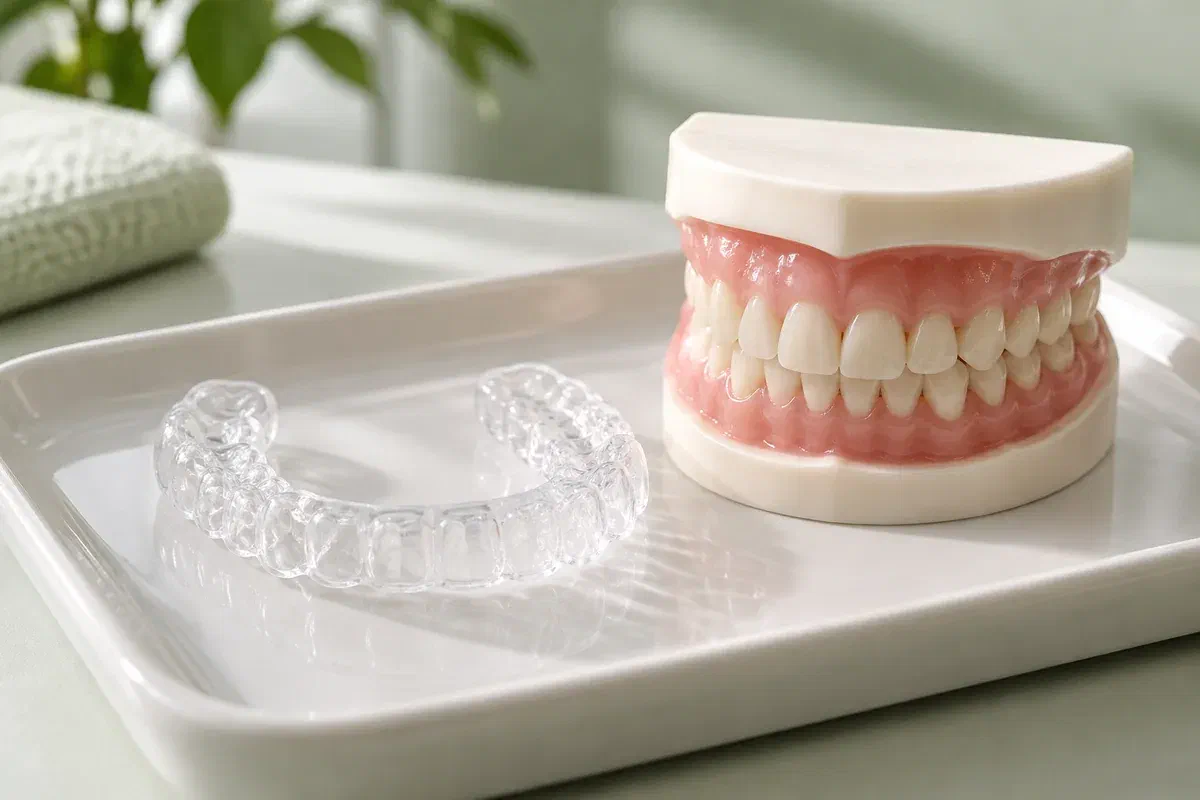
Illustrative clear dental night guard beside a teaching model with worn tooth edges
Questions that shape the order

What the dentist will want to know

The sequence of care depends on what has happened so far. Describe changes and breakages in your own words and bring any appliance you use, even if grinding has never been confirmed.

How much the edges have changed

Gradual shortening or flattening may be easiest to see when comparing older photos. The dentist examines the worn teeth and their opponents, considering age, earlier treatment, and acid exposure before judging how much the wear matters.

Which repairs have already failed

A filling or bonded edge that has broken before tells the dentist something about the forces involved. Share the timing and circumstances. Material, available tooth, bite, and habits will influence whether protection should come first.

Whether the jaw is part of it

Morning tiredness in the jaw or noticing clenching during the day can be relevant, though not specific to grinding. Report locking, reduced opening, or persistent facial pain so the right assessment is included in the plan.

A tooth that suddenly hurts, cracks, or becomes loose should be seen promptly, ahead of any planned sequence. New symptoms need their own check.

Why sequencing matters

Repairs last better when forces are considered first.

In many plans, protection and repair work together. An appliance may be recommended to keep teeth from grinding directly on one another, reducing the load on both natural enamel and new restorations. It will not restore what has already been lost, nor does it cure the habit. Its purpose and the timing of its fitting relative to any repairs should be explained.

Daytime clenching is often handled through awareness and attention to how the jaw rests. If there are signs of a sleep or breathing problem, a medical evaluation may be suggested before or alongside dental care. The order is based on findings, not on a standard template, and nobody presumes that stress alone is behind it.

Patient information: National Institute of Dental and Craniofacial Research — bruxism

A starting record

Documenting your teeth before any treatment provides a reference for later. Ask what will be compared at reviews, especially when wear is mild or its onset unclear.

Protection timed with repairs

If restorations are planned, ask when a guard will be made relative to that work. A guard made before repairs may need refitting afterward, so the timing matters.

Treatment shaped by your goals

Appearance, chewing comfort, and sensitivity may each come first for different people. Stating your priority helps decide what to address first and avoids rebuilding edges that are working well.

Building the plan

Four stages, arranged in a sensible order

Nothing needs to be prepared in detail. A few observations about breakages, jaw symptoms, sleep, and any guard you have provide enough to set priorities.

  1. Understand the story so far

    We ask about clenching, grinding noises at night, and when discomfort appears. Sleep, medicines, and health history are reviewed. If you think a medication may play a role, keep taking it and raise it with the prescriber.

  2. Assess every contributor

    The dentist examines wear, cracks, restorations, and the way teeth meet, and may check the jaw. Records or images are added when they clarify a specific question rather than as a routine step.

  3. Set priorities and timing

    Options may include monitoring, habit awareness, an appliance, and repairs. Ask which should come first and why, what any guard is designed to do, its material and fee, and whether repairs are confined to one area.

  4. Carry out, check, and refine

    Appliances are fitted and adjusted, and restorations are reviewed separately. Bring the guard to each visit, particularly after new dental work. Ongoing symptoms or fresh damage suggest the order or approach may need revisiting.

While the plan is under way

Protect the work already done

Care rarely happens in a single visit. Keeping the guard comfortable, following instructions, and mentioning changes between stages help each part of the plan succeed.

Wear the appliance as directed

Clean it according to its material, store it dry in its case, and keep it from heat. Bring it whenever you visit. If it feels different after new dental work, let us check it instead of forcing it or adjusting it yourself.

Ease off daytime pressure

Where awake clenching is part of the picture, gentle cues to let the jaw relax and the teeth separate may help. Ask for advice suited to you. Testing the bite repeatedly or grinding deliberately is not useful.

Speak up between stages

New chips, lingering sensitivity, or changes in jaw discomfort can affect what comes next. Be honest about the nights the guard stays in its case, and why. That feedback helps the team adjust the sequence if needed.

Patient information: NIH News in Health — grinding and clenching

Where your plan might begin

Three starting points for worn teeth

Grinding does not always mean extensive work, and wear may have several causes. Ask what each recommendation rests on and what monitoring would involve in your case.

Wear that is not causing problems

Protection and observation

Teeth that are worn yet functional may only need watching. Habit awareness, an appliance where indicated, and reviews can form the plan. Ask what would cause the dentist to move to repairs.

One area of damage

A focused repair

After assessment, a defined chip or worn surface can often be rebuilt in tooth-coloured composite or a different restorative material. Talk about its shape and maintenance, and whether a guard should be fitted before or after.

Multiple teeth affected

A staged, wider plan

Wear across many teeth may need records, phased care, and sometimes a specialist. Ask about conservative alternatives and the effects of changing the bite. Extensive crowns are not a routine answer to grinding.

Patient information: UK oral health guidance — causes and monitoring of tooth wear

Sequencing questions

Guards, repairs, and what happens when

Questions about timing, appliances, and repairs often overlap. A helpful answer separates the condition of your teeth, the source of any symptoms, and how each step fits the plan.

(905) 876-4488
Should my night guard be made before or after my teeth are repaired?
It depends on the extent of the repairs. Major changes to tooth shape can affect how a guard fits, so it is often made afterward, with interim advice in the meantime. The dentist will explain the timing that suits your plan.
Will I need a new guard if I get a crown or large filling?
Possibly. A change to a tooth’s shape can alter the fit. Bring the guard after any new restoration so it can be checked. Sometimes it can be adjusted; sometimes a new one is better.
Can bonding on my front teeth survive if I keep grinding?
Composite can be used on worn edges, but it remains exposed to the forces acting on it. Protection, bite, and habits all affect how long it lasts. Discuss maintenance and what would happen if it chipped.
Are worn teeth more likely to get cavities?
Worn areas can expose the softer layer beneath enamel, which may be more vulnerable in some situations. Decay risk depends on many factors, including diet and saliva. The dentist assesses each tooth rather than assuming wear means decay.
How is a night guard different from a sports mouthguard?
They are designed for different purposes. A sports guard protects against impact during activity, while a night appliance is made for the forces of grinding during sleep. One should not be used in place of the other without the dentist’s advice.
Do guard adjustments mean a separate trip from Halton Hills?
Often an adjustment can be done at a planned review. If the guard suddenly hurts or no longer fits, call first, since a short visit may be needed. We can try to line up checks from Halton Hills with other appointments.

Patient information: NIDCR — jaw disorders and treatment considerations · American Dental Association — obstructive sleep apnea

Halton Hills to Milton

Get the order right from the first visit.

Book a visit at our Bronte Street clinic for worn edges, repeated chips, or clenching worries. Bring any guard you use. We will discuss whether protection, monitoring, or repair should come first, and how the steps fit together.

Call about a painful crack, significant swelling, or a jaw that suddenly locks. Online requests are for non-urgent appointments only.

Visit Milton Dental Clinic
Unit 1, 342 Bronte St. S, Milton, ON L9T 5B7
Get directions Clinic hours
Monday–Thursday
11am–7pm
Friday–Sunday
By appointment only

Areas we serve

  • Milton
  • Oakville
  • Mississauga
  • Georgetown
  • Halton Hills
  • Acton
  • Campbellville
  • Brampton
  • Burlington
  • Puslinch
  • Rockwood
  • Erin
  • Caledon
  • Etobicoke
  • Old Milton
  • Bronte Meadows
  • Timberlea
  • Dorset Park
  • Dempsey
  • Clarke
  • Beaty
  • Coates
  • Harrison
  • Scott
  • Willmott
  • Ford
  • Bowes
  • Cobden
  • Walker
  • Mountain View
  • Milton Heights
  • Hawthorne Village
  • Valley View
  • Fallingbrook
  • Nassagaweya
  • Trafalgar
  • Esquesing
  • Nelson
  • Brookville
  • Moffat
  • Glen Williams
  • Norval
  • Limehouse
  • Stewarttown
  • Ashgrove
  • Hornby
  • Silver Creek
  • Speyside
  • Scotch Block
  • North Oakville
  • River Oaks
  • Glen Abbey
  • West Oak Trails
  • Palermo
  • Bronte Creek
  • College Park
  • Joshua Creek
  • Uptown Core
  • Preserve
  • Iroquois Ridge
  • Lisgar
  • Meadowvale
  • Meadowvale Village
  • Churchill Meadows
  • Erin Mills
  • Central Erin Mills
  • Streetsville
  • East Credit
  • Creditview
  • Heartland
  • Sheridan
  • Mount Pleasant
  • Credit Valley
  • Huttonville
  • Churchville
  • Springbrook
  • Northwest Brampton
  • Bram West
  • Fletcher's Meadow
  • Fletcher's Creek South
  • Alton Village
  • Orchard
  • Millcroft
  • Headon Forest
  • Tansley
  • Brant Hills
  • Tyandaga
  • Kilbride
  • Lowville
  • Aberfoyle
  • Morriston
  • Arkell
  • Hillsburgh
  • Freelton
  • Carlisle
  • Waterdown
  • Flamborough
  • Mountsberg

How can we help?

Milton Dental Clinic

Have a question about your smile? Choose the option that works best for you.

For urgent dental concerns, please call.
Messages are reviewed during clinic hours.