

Illustrative consultation about a protective dental appliance and tooth wear
Restorative Dentistry

Tooth Wear from Grinding in Milton

The same filling has broken twice this year, or a front edge keeps flaking. Before another repair, our Milton team looks at whether grinding or clenching may be loading the tooth, what needs protecting, and what truly needs fixing.

When one repair keeps failing

Ask why the tooth keeps breaking before fixing it again.

A patched molar that cracks again a few months later is frustrating, and it is often the point where grinding enters the conversation. Clenching and grinding, known together as bruxism, press teeth against each other with considerable force, sometimes during sleep and sometimes during a busy afternoon. That repeated load can wear enamel and stress fillings, though a broken repair has other possible explanations too.

So the first job is to sort out what is actually happening. Flattened surfaces, small fractures and tender jaw muscles can all appear with grinding, yet acid erosion, an old restoration near the end of its life, or a single hard bite can produce similar damage. Each sign is examined on its own merits instead of being filed under one label.

For families here in Milton, that usually means a straightforward visit to our Bronte Street practice where we look, listen, and explain. You tell us about the breakages, any jaw stiffness, or a guard you already have in a drawer. We then talk about which teeth need protection, which may need repair, and why no appliance or filling can promise to end grinding altogether.

Talk to us about a repair that keeps breaking
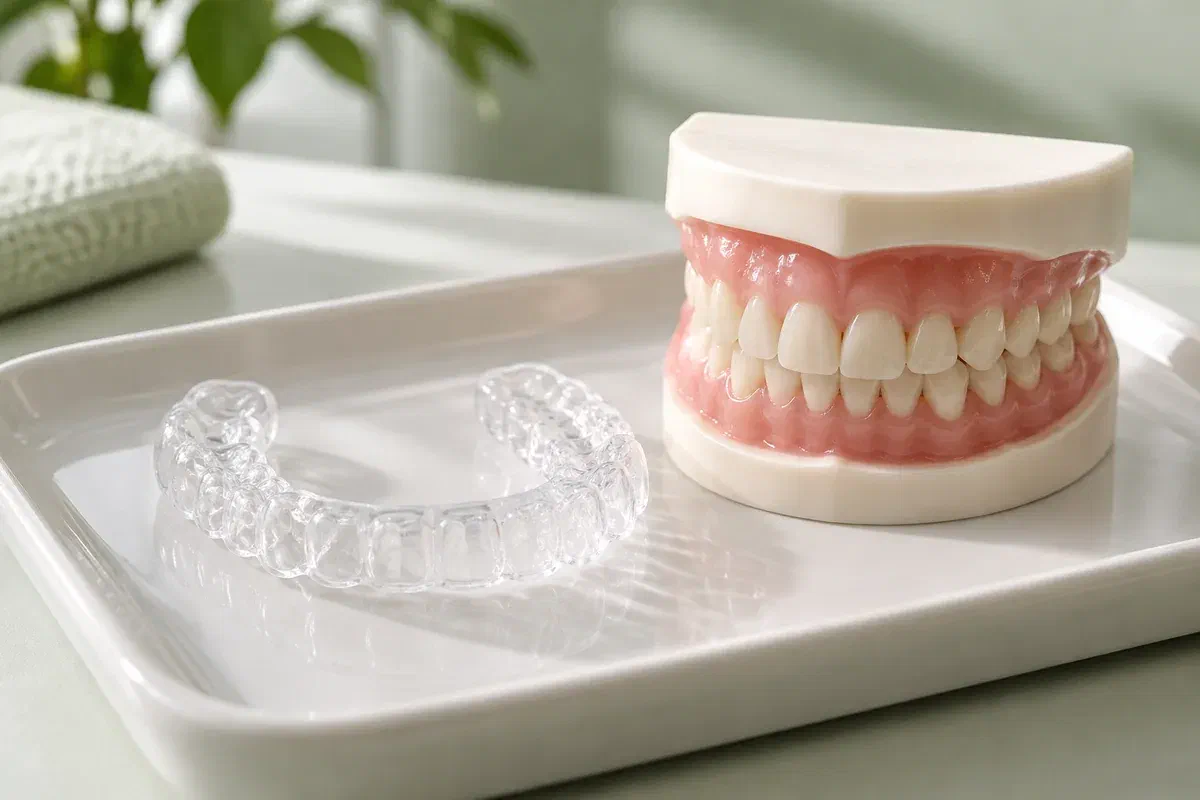
Illustrative clear dental night guard beside a teaching model with worn tooth edges
What people tend to notice first

Small changes that add up over months

One chip can be bad luck. A run of them, or a gradual change in how your teeth look and feel, is worth describing at the visit. You do not have to be sure you grind to raise the question.

Teeth look a little shorter

Front edges that were once slightly uneven may now seem straight and flat, which is often easiest to see when comparing photographs from a few years ago. The dentist looks at how upper and lower teeth wear against each other and weighs your age, past dental work, and other causes.

One filling fails more than once

When a restoration breaks more than once, simply replacing it may lead to the same result. It helps to recall what you were doing when it broke. Material choice, how much natural tooth remains, bite forces, and habits all affect what the next step should be.

Your jaw feels worked in the morning

Stiff or achy chewing muscles on waking, or catching yourself clenching at a desk, can be relevant clues. They are not unique to grinding, though. Mention any locking, reduced opening, or facial pain that lingers so it receives a proper assessment.

A tooth that suddenly hurts, cracks, or feels loose should be checked soon. Being told years ago that you grind is not a reason to assume new symptoms are minor.

What a sensible plan offers

Protection first, honest expectations throughout

A night guard or similar appliance may be suggested to keep the teeth from grinding directly on each other. That can reduce further damage, but it does not grow enamel back, and it is not a cure for the habit itself. We explain what the appliance is for, how it should fit, and when it will be checked.

Clenching during the day is handled differently. Awareness of jaw posture and resting habits can be part of the discussion, and some histories suggest that a physician or sleep assessment would be wise. Stress is not assumed to be the cause for everyone, and not every worn tooth is treated with the same device.

Patient information: National Institute of Dental and Craniofacial Research — bruxism

A clear record to compare against

Notes and images of your teeth and fillings today make future changes easier to judge. Ask which areas will be watched, especially if the wear is mild or you cannot tell how recent it is.

Planning for the forces before rebuilding

If repairs are needed, it helps to know how those surfaces will cope if grinding continues. Protecting the new work matters just as much as choosing the material it is made from.

Care shaped around what bothers you

Some people want their front teeth to look less worn; others mainly want comfortable chewing or less sensitivity. Naming your main concern keeps the plan focused and avoids the assumption that every short edge must be built back up.

How the visit unfolds

Four steps from questions to a plan you understand

There is no need to keep a detailed diary beforehand. A few honest notes about when things hurt, what has broken, how you sleep, and any guard you own give the assessment a useful starting point.

  1. Talk through habits and health

    We ask whether you notice clenching, whether a partner has heard grinding at night, and when discomfort tends to show up. Your medicines, sleep, and general health are reviewed. If you think a prescription might be involved, keep taking it and raise the question with the clinician who prescribed it.

  2. Examine teeth, fillings, and jaw movement

    The dentist checks worn areas, cracks, existing restorations, and how your teeth come together. Jaw muscles and movement may be assessed too. Extra records or imaging are used when they answer a particular question, not as a replacement for listening and examining.

  3. Decide what each option is meant to do

    Options may include monitoring, habit awareness, a guard, or repair. If an appliance is suggested, ask about its purpose, material, fee, and follow-up. Where teeth need restoring, find out whether the work is limited to one area or part of a larger plan.

  4. Fit, follow up, and adjust

    A new guard is checked for fit and comes with care instructions, while any restorations are reviewed separately. Bring the appliance to later visits so it can be inspected with your teeth. Ongoing symptoms or fresh damage may mean the plan needs changing.

Living with the plan

Small habits at home, honest updates at each visit

An appliance only protects teeth when it is comfortable enough to wear. Clear instructions and regular check-ins do more good than a guard sitting unused because a fit problem was never mentioned.

Care for the guard as instructed

Wear and clean your appliance the way you were shown for its material. Keep it away from hot water and sunny dashboards, and bring it to your appointments. Tell us about pressure, cracks, or a change in how your teeth meet rather than trimming it yourself.

Catch yourself clenching

If daytime clenching is part of the picture, simple cues to let the jaw relax with the teeth slightly apart can build awareness. Ask what suits your symptoms. Try not to keep testing your bite or grinding on purpose to see whether the habit is still there.

Write down what changes

A new chip, sensitivity that does not settle, or jaw soreness at a different time of day is worth noting. Be candid about how often the guard is worn and what makes it hard to use. That helps separate a simple fit issue from a plan that needs rethinking.

Patient information: NIH News in Health — grinding and clenching

Choosing a path

Watching, repairing, or planning more broadly

Grinding does not always call for major dental work, and worn teeth are not always the result of grinding alone. Ask what each recommendation is based on and what might happen if an area were simply watched.

Teeth still working well

Monitoring with protection where useful

Some worn surfaces can be left as they are for now. The focus may be on habits, an appliance if it is indicated, and periodic checks for change. Ask why monitoring makes sense and which signs would prompt a different plan.

A single chip or damaged surface

Repairing a specific area

After assessment, a suitable spot may be restored with composite or another material. Talk about the shape it will have and how to look after it if grinding carries on. The repair should account for why the original tooth or filling was lost.

Wear across many teeth

A broader wear assessment

Extensive changes can call for records, treatment in stages, and at times a specialist opinion. Ask about conservative choices and what any bite change would involve. Multiple crowns or permanent alterations should never be offered as a routine fix for grinding.

Patient information: UK oral health guidance — causes and monitoring of tooth wear

Common questions

Straight answers about guards, chips, and sore jaws

Questions about grinding tend to blur together. A helpful answer keeps three things apart: the condition of your teeth, the source of any discomfort, and what a proposed appliance is meant to achieve.

(905) 876-4488
My filling broke again. Does that mean I grind my teeth?
Not necessarily. A restoration can fail because of its size, its age, the amount of tooth supporting it, or a hard bite on something unexpected. Grinding is one possibility the dentist will consider, along with the pattern of wear elsewhere and any symptoms you describe.
Is a store-bought mouthguard good enough for night grinding?
Over-the-counter guards are made for general use and may not fit your bite closely. Some people find them bulky or notice changes in how their teeth meet. Ask the dentist whether a custom appliance is appropriate in your case and what the difference in purpose would be.
How do I keep a night guard clean?
Rinse it after use, clean it gently as instructed for its material, and let it dry in a ventilated case. Hot water can warp some materials. Bring the guard to check-ups so it can be inspected for wear, cracks, or a change in fit.
Can a guard stop my teeth from wearing down any further?
It can help protect the surfaces it covers from direct tooth-to-tooth contact, but it cannot restore enamel that is already gone. Wear from other causes, such as acid, may continue unless those are addressed. Reviews help show whether the protection is working.
Do I have to wear the guard every single night?
The dentist will explain how often your particular appliance is intended to be worn. Protection is only present while it is in place. If something makes regular use difficult, such as discomfort or a gag reflex, mention it so the fit or plan can be reconsidered.
Is it worth coming in when the chip is tiny and nothing hurts?
Often, yes. Small chips can be a useful sign of a pattern, and catching it early gives more options. Being local to Milton makes a quick look easy to fit around school runs or work. If nothing needs treatment, you leave with a baseline for future comparison.

Patient information: NIDCR — jaw disorders and treatment considerations · American Dental Association — obstructive sleep apnea

Book in Milton

Bring the broken filling story. We will take it from there.

Arrange a visit at our Bronte Street practice for recurring chips, flattened edges, or a jaw that feels tired. Bring any guard you own and tell us what has changed. Together we can sort out protection, monitoring, and whether a tooth needs repair.

Phone us about a painful crack, real swelling, or a jaw that suddenly will not move normally. Online forms are for routine requests.

Visit Milton Dental Clinic
Unit 1, 342 Bronte St. S, Milton, ON L9T 5B7
Get directions Clinic hours
Monday–Thursday
11am–7pm
Friday–Sunday
By appointment only

Areas we serve

  • Milton
  • Oakville
  • Mississauga
  • Georgetown
  • Halton Hills
  • Acton
  • Campbellville
  • Brampton
  • Burlington
  • Puslinch
  • Rockwood
  • Erin
  • Caledon
  • Etobicoke
  • Old Milton
  • Bronte Meadows
  • Timberlea
  • Dorset Park
  • Dempsey
  • Clarke
  • Beaty
  • Coates
  • Harrison
  • Scott
  • Willmott
  • Ford
  • Bowes
  • Cobden
  • Walker
  • Mountain View
  • Milton Heights
  • Hawthorne Village
  • Valley View
  • Fallingbrook
  • Nassagaweya
  • Trafalgar
  • Esquesing
  • Nelson
  • Brookville
  • Moffat
  • Glen Williams
  • Norval
  • Limehouse
  • Stewarttown
  • Ashgrove
  • Hornby
  • Silver Creek
  • Speyside
  • Scotch Block
  • North Oakville
  • River Oaks
  • Glen Abbey
  • West Oak Trails
  • Palermo
  • Bronte Creek
  • College Park
  • Joshua Creek
  • Uptown Core
  • Preserve
  • Iroquois Ridge
  • Lisgar
  • Meadowvale
  • Meadowvale Village
  • Churchill Meadows
  • Erin Mills
  • Central Erin Mills
  • Streetsville
  • East Credit
  • Creditview
  • Heartland
  • Sheridan
  • Mount Pleasant
  • Credit Valley
  • Huttonville
  • Churchville
  • Springbrook
  • Northwest Brampton
  • Bram West
  • Fletcher's Meadow
  • Fletcher's Creek South
  • Alton Village
  • Orchard
  • Millcroft
  • Headon Forest
  • Tansley
  • Brant Hills
  • Tyandaga
  • Kilbride
  • Lowville
  • Aberfoyle
  • Morriston
  • Arkell
  • Hillsburgh
  • Freelton
  • Carlisle
  • Waterdown
  • Flamborough
  • Mountsberg

How can we help?

Milton Dental Clinic

Have a question about your smile? Choose the option that works best for you.

For urgent dental concerns, please call.
Messages are reviewed during clinic hours.