

Illustrative consultation about a protective dental appliance and tooth wear
Restorative Dentistry

Tooth Wear from Grinding in Mississauga

Someone told you that you grind, yet nothing hurts and you have never heard it. If you are coming from Mississauga, we can show you what the wear looks like, explain what it may and may not mean, and help you decide what is worth doing.

Told you grind?

A diagnosis you cannot feel still deserves an explanation.

Plenty of people hear the word bruxism for the first time at a routine cleaning, with no sore jaw and no memory of grinding. That is not unusual: sleep grinding often goes unnoticed, and clenching can be so habitual that it feels normal. What a dentist sees is the result, such as flattened cusps or small fractures. Those marks reflect the past and cannot, by themselves, say whether grinding is happening now or how often.

It is also worth knowing that wear has company. Acidic foods and drinks, reflux, and the age and type of existing fillings can all leave similar traces. When a tooth is sensitive or a restoration chips, it should be investigated on its own terms instead of being folded into a grinding label.

Our clinic is in Milton, west of Mississauga, and people from neighbourhoods such as Meadowvale and Churchill Meadows sometimes come to us for a calm, second look. We go through the findings with you, show you the areas in question, and discuss protection, monitoring, or repair. We will be honest that no guard or filling guarantees an end to grinding.

Get a clear look at your wear
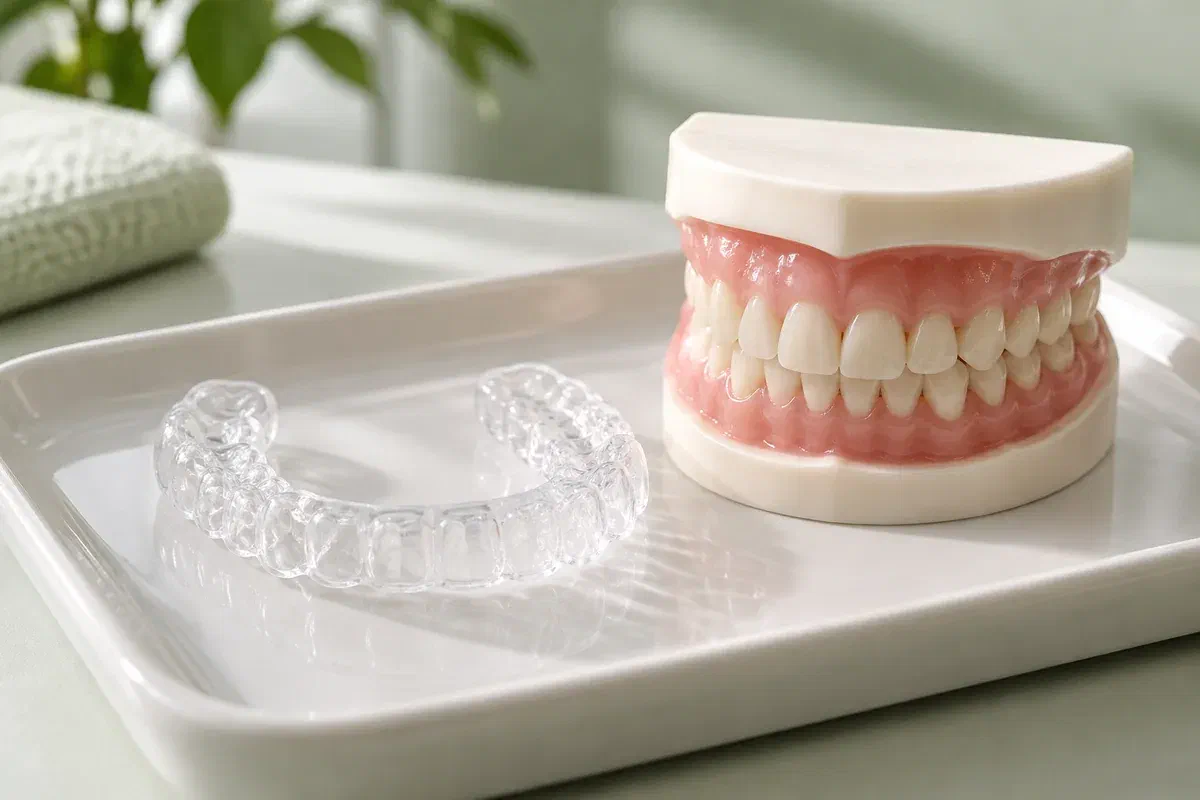
Illustrative clear dental night guard beside a teaching model with worn tooth edges
Quiet signs

Wear can show up before discomfort does.

You may have no symptoms at all. Even so, a few observations help the dentist judge whether the wear is stable or ongoing. Bring any guard you have been given and mention anything that seems different.

Cusps that have lost their points

Back teeth normally have rounded peaks. Where those are flattened, the dentist compares the worn areas with the opposing teeth and weighs age, earlier dental work, and acid exposure. Wear needs context before anyone decides whether it is excessive.

Tiny chips along the edges

Little notches on front teeth or bonded edges are easy to dismiss. If they keep appearing, describe when you first noticed them. The type of repair, the amount of natural tooth, bite forces, and habits can all shape what, if anything, should be done.

A tight feeling you had stopped noticing

Once the idea is raised, some people realize their jaw often feels tense or their cheeks tired. Those feelings are not unique to grinding. Mention locking, limited opening, or facial pain that persists so the right assessment can be considered.

A tooth that suddenly hurts, cracks, or loosens needs prompt attention. Being labelled a grinder earlier does not mean new symptoms are expected or harmless.

Why it is worth a plan

Knowing where you stand beats guessing

If ongoing grinding seems likely, a protective appliance may be suggested. Its role is to keep teeth from grinding directly on each other and lessen further damage. It cannot replace enamel that has worn away, and it should never be pitched as a cure. You should understand why it is recommended, how it will fit, and how it will be reviewed.

When the wear looks stable and you have no symptoms, monitoring may be the sensible choice. Daytime clenching, if present, is usually approached through awareness. Sleep concerns may lead to a suggestion to see your physician. Every worn mouth is not treated alike, and stress is not assumed to be the reason.

Patient information: National Institute of Dental and Craniofacial Research — bruxism

Proof of change, not guesswork

Notes and photographs taken now let future visits show whether wear is progressing. Ask which teeth will be compared and how, especially if the changes are small or of unknown age.

Forces considered before any repair

Should a tooth need restoring, ask how that surface will be protected from continued loading. The setting a filling lives in matters as much as the material chosen.

Decisions based on your priorities

Without symptoms, your main question may simply be whether to act at all. Others care about appearance or sensitivity. Sharing that keeps the discussion useful and avoids treating every flattened tooth as a problem.

How the assessment works

Your history, our examination, a shared decision

There is nothing to prepare beyond what you already know. Tell us what you were told before, whether anyone has heard grinding, how you sleep, and whether you own an appliance.

  1. Start with what you were told

    We ask what led to the earlier comment about grinding, whether you notice clenching, and whether anyone has heard noise at night. Health history, sleep, and medicines are reviewed. If you wonder whether a medication is relevant, keep taking it and ask the prescriber.

  2. Examine and explain the findings

    The dentist looks at worn surfaces, cracks, restorations, and how your teeth meet, and may check jaw muscles and movement. Where helpful, photos or images show you what is being described. Extra records are used to answer specific questions.

  3. Weigh monitoring against treatment

    Choices may include watching, habit awareness, a guard, or repair. If an appliance is recommended, ask what it should accomplish, what it is made from, the fee, and when it will be checked. For restorations, confirm their scope.

  4. Review and revise over time

    Any appliance is fitted with instructions, and restorations get their own follow-up. Bring the guard to each visit so it can be inspected. New damage or symptoms that develop later may mean the original plan should change.

Once you have a plan

Use what helps and flag what does not

Managing wear is an ongoing conversation. An appliance that feels manageable, a routine that fits your life, and instructions you trust do more than a guard you were never comfortable wearing.

Follow the care instructions

Wear and clean any prescribed guard as directed for its material. Heat can distort it, so store it in its case somewhere cool, and carry it with you to appointments. Report pressure, damage, or a change in your bite instead of adjusting it yourself.

Check in with your jaw occasionally

If daytime clenching is suspected, brief moments of noticing whether your teeth are touching can build awareness. Ask for guidance suited to you. There is no need to grind or press deliberately to find out if the habit remains.

Report anything new

Note fresh chips, sensitivity that will not settle, or jaw soreness that appears for the first time. Be candid about how often the appliance is used and why. That helps the team tell a fit problem from a reason to revisit the plan.

Patient information: NIH News in Health — grinding and clenching

Doing enough, not too much

Three levels of response to grinding wear

A grinding diagnosis is not a reason for extensive dentistry by default, and wear rarely has one tidy cause. Ask what each recommendation is based on and what would happen if the area were watched.

Symptom-free, functional teeth

Observation, with protection if needed

Wear that is stable and causing no trouble may simply be monitored. The plan might add an appliance if ongoing grinding seems likely, plus periodic reviews. Ask why watching is appropriate and what would change that advice.

A specific chip or worn surface

Repair where damage is defined

A suitable area may be restored with composite or another material after assessment. Discuss its shape and maintenance if grinding continues. The repair should consider why the original enamel or filling was lost.

Wear across several teeth

Comprehensive planning

Broad or complex wear may call for records, staged treatment, and sometimes a specialist. Ask about conservative alternatives and the effect of any bite change. Extensive crowns should never be offered as an automatic cure for grinding.

Patient information: UK oral health guidance — causes and monitoring of tooth wear

Second-look questions

Sorting out a grinding diagnosis

Questions about labels, guards, and future risk often come together. A clear answer separates what your teeth show, whether symptoms are present, and what any appliance would actually do.

(905) 876-4488
Should I do anything if I was told I grind but have no symptoms?
Not always right away. If wear is mild and stable, monitoring may be enough. The dentist can record your teeth now so future visits show whether anything is progressing, and explain which signs would make protection or repair worth discussing.
Can I get a second opinion on a recommended night guard?
Yes. Bring any notes or records you have, and the dentist can examine your teeth independently and explain their view. It is reasonable to ask what the appliance is meant to achieve and what would happen if you waited.
How long does a custom night guard usually last?
It varies with the material, how heavily you grind, and how it is cared for. Some last for years; others show wear sooner. Bringing the guard to check-ups lets the dentist spot thinning, cracks, or fit changes before protection is lost.
What happens if I leave mild wear alone?
Some mild wear stays stable for a long time, while other cases progress. That is why a baseline and reviews are useful. If changes appear, the plan can be adjusted before more tooth is lost. Monitoring is a decision, not neglect.
Does grinding cause notches near the gumline?
Notches near the gum have several possible contributors, including brushing technique and acid, and the role of biting forces is still debated. The dentist examines the shape and location of each notch and discusses which factors seem most relevant for you.
Should I bring records from my previous dentist?
If you can, yes. Earlier notes, X-rays, or photos help show whether wear has changed over time. You can ask your previous office to send them. If they are not available, the first visit becomes the starting point for comparison.

Patient information: NIDCR — jaw disorders and treatment considerations · American Dental Association — obstructive sleep apnea

From Mississauga to Milton

Find out what the wear actually means for you.

Book an assessment at our Bronte Street clinic if you have been told you grind, notice small chips, or simply want a second look. Bring any guard and past records. We will discuss monitoring, protection, and whether any tooth needs repair.

Call about a cracked tooth that hurts, facial swelling, or a sudden problem opening your mouth. Online requests are for non-urgent appointments.

Visit Milton Dental Clinic
Unit 1, 342 Bronte St. S, Milton, ON L9T 5B7
Get directions Clinic hours
Monday–Thursday
11am–7pm
Friday–Sunday
By appointment only

Areas we serve

  • Milton
  • Oakville
  • Mississauga
  • Georgetown
  • Halton Hills
  • Acton
  • Campbellville
  • Brampton
  • Burlington
  • Puslinch
  • Rockwood
  • Erin
  • Caledon
  • Etobicoke
  • Old Milton
  • Bronte Meadows
  • Timberlea
  • Dorset Park
  • Dempsey
  • Clarke
  • Beaty
  • Coates
  • Harrison
  • Scott
  • Willmott
  • Ford
  • Bowes
  • Cobden
  • Walker
  • Mountain View
  • Milton Heights
  • Hawthorne Village
  • Valley View
  • Fallingbrook
  • Nassagaweya
  • Trafalgar
  • Esquesing
  • Nelson
  • Brookville
  • Moffat
  • Glen Williams
  • Norval
  • Limehouse
  • Stewarttown
  • Ashgrove
  • Hornby
  • Silver Creek
  • Speyside
  • Scotch Block
  • North Oakville
  • River Oaks
  • Glen Abbey
  • West Oak Trails
  • Palermo
  • Bronte Creek
  • College Park
  • Joshua Creek
  • Uptown Core
  • Preserve
  • Iroquois Ridge
  • Lisgar
  • Meadowvale
  • Meadowvale Village
  • Churchill Meadows
  • Erin Mills
  • Central Erin Mills
  • Streetsville
  • East Credit
  • Creditview
  • Heartland
  • Sheridan
  • Mount Pleasant
  • Credit Valley
  • Huttonville
  • Churchville
  • Springbrook
  • Northwest Brampton
  • Bram West
  • Fletcher's Meadow
  • Fletcher's Creek South
  • Alton Village
  • Orchard
  • Millcroft
  • Headon Forest
  • Tansley
  • Brant Hills
  • Tyandaga
  • Kilbride
  • Lowville
  • Aberfoyle
  • Morriston
  • Arkell
  • Hillsburgh
  • Freelton
  • Carlisle
  • Waterdown
  • Flamborough
  • Mountsberg

How can we help?

Milton Dental Clinic

Have a question about your smile? Choose the option that works best for you.

For urgent dental concerns, please call.
Messages are reviewed during clinic hours.