

Illustrative consultation about a protective dental appliance and tooth wear
Restorative Dentistry

Tooth Wear from Grinding in Puslinch

Grinding is often blamed for worn teeth, but acid and other factors can share the work. From Puslinch, we look at every likely contributor, explain what we find, and plan protection or repair that addresses more than one cause where needed.

More than one cause

Grinding, acid, or both at once?

Tooth wear seldom comes from a single source. Grinding and clenching, together called bruxism, grind enamel down mechanically, while acid from drinks, fruit, or reflux softens it chemically. When both are present, softened enamel may wear faster than either process would cause alone. That is one reason the appearance of worn teeth cannot, on its own, prove when grinding occurs or that it is the main cause.

Working out the balance matters because the answers differ. A guard addresses tooth-to-tooth contact but does nothing about acid, and diet advice alone will not protect teeth during sleep grinding. A sensitive tooth or chipped filling also needs individual assessment rather than assuming one explanation covers everything.

Puslinch lies west of our Milton clinic, and for many households in the township, sorting out the cause in as few visits as possible is the priority. We examine the pattern of wear, ask about habits, diet, and health, and look at any appliance you already use. Then we explain what to protect, what to change, and what to repair, without suggesting that one guard will end grinding.

Find out what is wearing your teeth
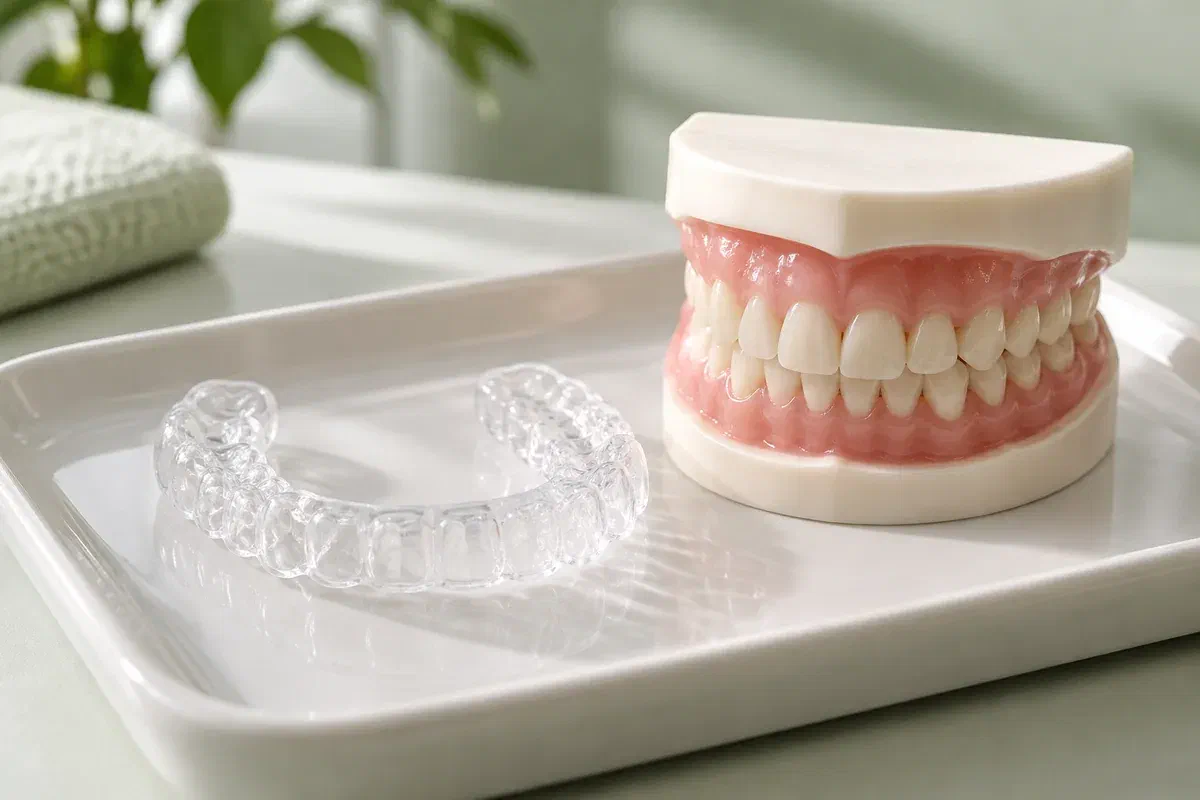
Illustrative clear dental night guard beside a teaching model with worn tooth edges
Mixed signals

Signs that could point several ways

Different causes can look alike. Describe what you have noticed, bring any guard you use, and mention your usual drinks and any reflux, even if you are unsure whether they matter.

Flat, glassy, or cupped surfaces

Grinding tends to create flat areas that line up with opposing teeth, while acid can leave smooth or scooped surfaces. Often both are present. The dentist interprets the pattern alongside age, earlier dental work, and your history.

Fillings that stand proud of the tooth

When enamel wears around a restoration, the filling may look raised or develop edges that chip. Describe when you noticed the change. Restoration design, tooth structure, bite forces, and acid exposure all affect the next step.

Jaw fatigue alongside sensitivity

Tired jaw muscles may reflect clenching, while sensitivity can come from thinning enamel or other causes. Neither symptom confirms one diagnosis. Mention locking, limited opening, or ongoing facial pain so the right assessment follows.

A tooth that suddenly becomes painful, cracks, or loosens needs prompt attention. Do not assume new symptoms fit an earlier explanation.

Why it pays to look wider

Address each cause, not just the obvious one.

Where grinding is likely, a protective appliance may be suggested to keep teeth from grinding directly on each other. That can limit mechanical wear. It does not repair enamel or stop grinding, and it does nothing to reduce acid exposure. Its purpose and review plan should be explained alongside any advice about diet or enamel care.

Frequent reflux, vomiting, or dry mouth may lead to a recommendation to talk with your physician. Daytime clenching is approached through awareness of jaw posture. Plans are built from findings, and neither stress nor a single habit is assumed to explain all the wear.

Patient information: National Institute of Dental and Craniofacial Research — bruxism

Records that track progress

Notes and photos of the affected surfaces allow later comparison. Ask which teeth will be followed and how, particularly when changes are slow or causes are mixed.

Repairs that suit the environment

If teeth need restoring, discuss how they will cope with both grinding and acid. The conditions around a restoration matter as much as the material used.

Priorities you choose

Your focus may be sensitivity, appearance, or simply slowing further wear. Saying which helps direct the plan and avoids rebuilding surfaces that are functioning well.

How the assessment runs

Looking at habits, diet, and teeth together

No food diary is required, though a rough sense of what you drink, any reflux, when your jaw aches, and any guard you own will help.

  1. Discuss habits, diet, and health

    We ask about clenching, night grinding, acidic foods and drinks, reflux, and when discomfort occurs. We also go over sleep and current medicines, since some can leave the mouth dry. Should a prescription seem relevant, carry on with it and put the question to the person who prescribed it.

  2. Examine the wear pattern

    The dentist looks at where and how teeth are worn, cracks, existing fillings, and how teeth meet. Jaw movement may be checked. Additional records are used when they help answer a specific question.

  3. Plan for each contributor

    Options may include monitoring, diet and enamel-care advice, habit awareness, an appliance, or repairs. Ask what each is meant to do, the materials and fees, and whether repairs are local or part of a staged plan.

  4. Review and adjust

    A guard is fitted with instructions, and repairs are reviewed separately. Bring the appliance to visits. If wear continues or symptoms persist, the balance of causes may need reassessing.

Daily habits that help

Protect against force and acid alike

Managing combined wear is an ongoing effort. A comfortable guard, a few sensible changes around acidic foods, and honest updates at each visit work better together than any one step alone.

Keep the guard clean and fitted

Use the cleaning method you were shown for your appliance, let it dry, and keep it in its case somewhere cool. Pack it for every dental visit. Pressure spots, cracks, or a bite that feels altered are reasons to call us, not to file or trim it at home.

Be gentle after acidic drinks

Rinsing with water after acidic food or drink, and waiting a while before brushing, are commonly advised. Ask what suits you. If you clench in the day, reminders to relax the jaw may also help.

Note what changes

Record new chips, sensitivity that lingers, or changes in jaw discomfort. Be frank about how often you wear the guard. That helps the team see whether one cause or another needs more attention.

Patient information: NIH News in Health — grinding and clenching

Fitting care to the causes

Prevention, repair, and broader planning

Worn teeth do not always need extensive work, and grinding is rarely the only factor. Ask what supports each recommendation and what monitoring would look like.

Teeth still comfortable and functional

Prevention and monitoring

Some wear can be managed by reducing acid exposure, building habit awareness, and using a guard if indicated, with regular reviews. Ask what changes would lead to repairs.

A sensitive or damaged surface

Restoring a specific area

A defined worn or chipped area can be covered with composite or another restoration after assessment. Discuss how it will be protected from both grinding and acid, and its long-term upkeep.

Extensive or advancing wear

Comprehensive wear management

When many teeth are affected, records, phased care, and specialist input may be needed. Ask about conservative options and what bite changes would involve. Extensive crowns are not a routine answer to combined wear.

Patient information: UK oral health guidance — causes and monitoring of tooth wear

Mixed-wear questions

Untangling grinding from other causes

Questions about acid, grinding, and guards often overlap. A clear answer separates what the teeth show, what is causing each change, and what any appliance or advice can achieve.

(905) 876-4488
How can a dentist tell acid wear from grinding wear?
The shape and location of worn areas give clues. Grinding often leaves flat facets that match opposing teeth, while acid can create smooth, rounded, or cupped surfaces. Many people show both. Your history helps complete the picture.
Should I brush right after drinking something acidic?
Common advice is to rinse with water and wait a while before brushing, since enamel can be softened briefly after acid exposure. Sipping acidic drinks slowly over a long period can also prolong contact. Ask the dentist what timing and habits suit your routine and teeth.
Can heartburn or reflux wear down my teeth?
Stomach acid reaching the mouth can contribute to erosion, sometimes without obvious heartburn. If the wear pattern suggests it, the dentist may recommend speaking with your physician. Dental care can then focus on protecting the teeth.
Does fluoride help teeth that are worn from grinding?
Fluoride can help strengthen enamel and may reduce sensitivity, but it does not replace lost tooth structure or stop grinding. The dentist can suggest products suited to your teeth and explain what they can and cannot do.
Would a guard help if most of my wear is from acid?
A guard protects against tooth-to-tooth contact during grinding. It does not prevent acid erosion, and wearing one does not change what happens when you sip an acidic drink during the day. If acid seems to be the main factor, the plan will focus more on reducing exposure and protecting enamel, with an appliance only if grinding is also likely.
How can I keep trips from Puslinch to a minimum while the cause is sorted out?
Bring a list of your regular drinks, any reflux symptoms, and your guard to the first visit, so more can be assessed at once. From Puslinch, ask whether follow-up reviews can be combined with routine appointments.

Patient information: NIDCR — jaw disorders and treatment considerations · American Dental Association — obstructive sleep apnea

Puslinch to Milton

Get the whole picture behind the wear.

Visit us on Bronte Street about worn or sensitive teeth, raised fillings, or suspected grinding. Bring any guard you use and notes on diet or reflux. We will explain what is contributing and talk through protection, prevention, and repair.

Phone rather than booking online if a cracked tooth is painful, your face is swelling, or your jaw has stopped opening normally. The online form suits routine requests.

Visit Milton Dental Clinic
Unit 1, 342 Bronte St. S, Milton, ON L9T 5B7
Get directions Clinic hours
Monday–Thursday
11am–7pm
Friday–Sunday
By appointment only

Areas we serve

  • Milton
  • Oakville
  • Mississauga
  • Georgetown
  • Halton Hills
  • Acton
  • Campbellville
  • Brampton
  • Burlington
  • Puslinch
  • Rockwood
  • Erin
  • Caledon
  • Etobicoke
  • Old Milton
  • Bronte Meadows
  • Timberlea
  • Dorset Park
  • Dempsey
  • Clarke
  • Beaty
  • Coates
  • Harrison
  • Scott
  • Willmott
  • Ford
  • Bowes
  • Cobden
  • Walker
  • Mountain View
  • Milton Heights
  • Hawthorne Village
  • Valley View
  • Fallingbrook
  • Nassagaweya
  • Trafalgar
  • Esquesing
  • Nelson
  • Brookville
  • Moffat
  • Glen Williams
  • Norval
  • Limehouse
  • Stewarttown
  • Ashgrove
  • Hornby
  • Silver Creek
  • Speyside
  • Scotch Block
  • North Oakville
  • River Oaks
  • Glen Abbey
  • West Oak Trails
  • Palermo
  • Bronte Creek
  • College Park
  • Joshua Creek
  • Uptown Core
  • Preserve
  • Iroquois Ridge
  • Lisgar
  • Meadowvale
  • Meadowvale Village
  • Churchill Meadows
  • Erin Mills
  • Central Erin Mills
  • Streetsville
  • East Credit
  • Creditview
  • Heartland
  • Sheridan
  • Mount Pleasant
  • Credit Valley
  • Huttonville
  • Churchville
  • Springbrook
  • Northwest Brampton
  • Bram West
  • Fletcher's Meadow
  • Fletcher's Creek South
  • Alton Village
  • Orchard
  • Millcroft
  • Headon Forest
  • Tansley
  • Brant Hills
  • Tyandaga
  • Kilbride
  • Lowville
  • Aberfoyle
  • Morriston
  • Arkell
  • Hillsburgh
  • Freelton
  • Carlisle
  • Waterdown
  • Flamborough
  • Mountsberg

How can we help?

Milton Dental Clinic

Have a question about your smile? Choose the option that works best for you.

For urgent dental concerns, please call.
Messages are reviewed during clinic hours.