

Illustrative consultation about restoring the shape and function of worn teeth
Restorative Dentistry

Worn Tooth Restoration in Burlington

Night-time grinding can flatten teeth long before you notice. For Burlington adults who clench or grind, we look at the damage, the forces behind it, and how any rebuilt surface can be protected afterwards.

Clenching, grinding, and worn edges

You sleep. Your teeth keep working.

Sometimes a partner mentions the noise first. Other times it is a tight jaw in the morning, or canines that have quietly lost their points. Grinding and clenching press teeth together far harder than normal chewing, and over the years the contact can wear surfaces flat, thin the edges, or chip a front tooth. Restoring that lost structure can help, provided there is a reason to do it.

Grinding is rarely the whole story, though. Acidic drinks or reflux soften enamel so it wears faster under the same pressure, and firm brushing adds its own share. A rebuilt surface faces the same forces as the tooth it replaces, so protection usually forms part of the plan. That might mean an appliance, changes to habits, or both.

From Burlington or anywhere else, the first visit is about understanding. Describe what you feel when you wake, what you have noticed about your teeth, and how you would like them to look. We examine the wear and the bite, then explain whether a limited repair is reasonable or whether the pattern needs more records, staged treatment, or specialist planning.

Book a visit about worn teeth
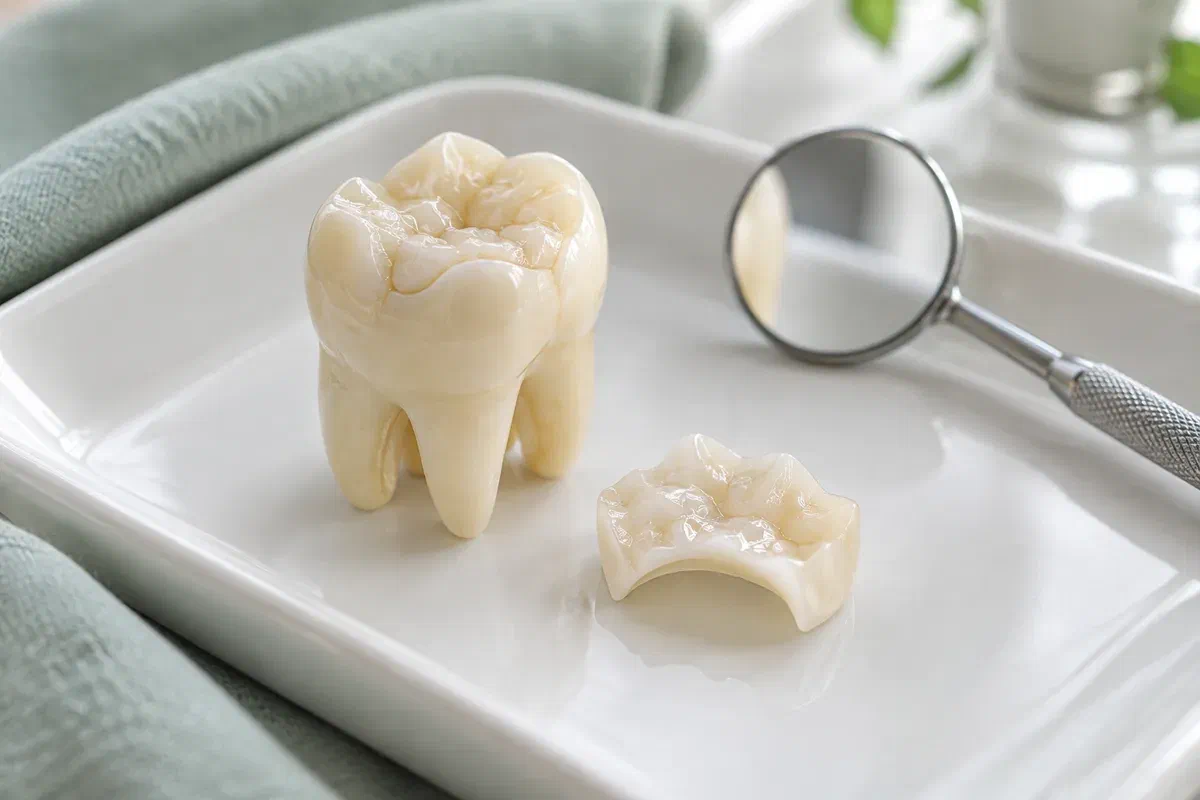
Illustrative molar teaching model and a separate partial-coverage restoration
When grinding leaves a mark

Damage you can feel, not just see

Some worn teeth need treatment now; others can safely be monitored. A careful examination tells the two apart. Photos from a few years ago, or a note from your previous dentist, may show how quickly things have moved.

Sensitivity that comes and goes

Worn enamel can leave a tooth reacting to cold or pressure, but cracked teeth, receding gums, and sore jaw muscles can also produce discomfort. Note the triggers and how long they last. Before suggesting a repair, the dentist works out whether wear is the real cause.

Flat, chipped, or shortened teeth

Grinding often wears the canines and front teeth first, then the chewing surfaces. Tell us whether biting or chewing has become harder. How tightly the teeth meet and how much space remains affect whether a surface can be rebuilt at all.

A bite that has changed overall

When grinding has worn many teeth, the discussion may involve the bite as a whole. Ask how repairs relate to one another, whether they could be staged, and how the teeth would meet afterwards. Wider plans call for a clear, unhurried explanation.

A worn tooth that suddenly hurts when you bite, cracks, or has swelling nearby should be examined promptly. Grinding can break teeth, so new pain deserves attention.

What rebuilding may achieve

Stronger edges, sensible expectations

Putting back lost structure can make a thin edge less fragile, ease a sensitive spot, or restore a canine that has worn flat. In suitable cases, bonded composite can be added to the tooth before more extensive preparation is considered. That conservative start still depends on a careful diagnosis, and on recognizing that heavy forces affect restorations too.

Talk about what success means for you. It might be front teeth that stop chipping, a smile that looks its proper length, or the first step in a staged plan. Equally important is what the restoration cannot promise. Repairs in a grinding mouth may need more frequent checks and occasional fixes over time.

Patient information: Leeds Teaching Hospitals — restorative dentistry services

Saving healthy structure

Each option removes a different amount of tooth. Ask how much preparation is involved and why it is needed. Choosing a restoration that covers more of the tooth is not automatically the safer path.

Contacts designed with grinding in mind

A rebuilt tooth needs to meet its neighbours and opposing teeth in a way that spreads load sensibly. Discuss how the contour affects chewing and cleaning, and whether a trial stage or more records would help first.

Maintenance agreed early

Polishing, small repairs, adjustments, or replacement may come up over time, especially with grinding. Knowing how reviews will run and what to watch for lets you judge the commitment as a whole.

The planning sequence

Forces first, then the design

A single chipped canine and a rebuild of many teeth need different visits and records. We explain the order that suits what we find before treatment is scheduled.

  1. Look at the wear and the habits behind it

    We ask about grinding, clenching, jaw discomfort, diet, reflux, and your medical history. The teeth, existing dental work, and bite are examined, and photos, scans, or X-rays may be recommended when they would clarify the extent of damage or what planning is needed.

  2. Discuss protection and repair together

    Monitoring, an appliance, preventive steps, and restorative choices are compared. Ask which teeth would be treated and what each repair is expected to do. Fees, the number of stages, and anything that could change the plan are reviewed before you decide.

  3. Restore the agreed surfaces

    Composite may be bonded directly, or a restoration may be fabricated and fitted later. Local anaesthetic and isolation from moisture are used when suitable. Larger changes are often staged so you can see how the new shapes cope with everyday use.

  4. Balance the bite and plan reviews

    We check how the teeth meet in different movements and explain care for the treated area. Follow-up reviews comfort, function, and appearance. An existing guard usually needs checking, since a new tooth shape can change its fit.

Caring for rebuilt teeth

Protection continues after the visit

A restoration replaces structure; it does not stop grinding or acid exposure. Keep following the advice agreed for your situation, including any appliance, and let the team know if something is hard to keep up.

Follow your post-treatment advice

There may be guidance about food, chewing, or a temporary restoration. If you were frozen, wait for feeling to come back before eating. Ask how the bite should feel as you adjust and what would be a reason to call.

Wear the guard as directed

If an appliance has been recommended, use it as advised and bring it to reviews. Brush with fluoride toothpaste and clean between teeth daily, because restored teeth can still decay. Ask for help if a new contour is awkward to clean.

Call about chips without waiting

Let us know about a chip, a sharp edge, or a change in comfort. Keep any broken piece. When the same area breaks repeatedly, the design or the forces on it may need a new look rather than another identical repair.

Patient information: UK oral health guidance — monitoring and managing tooth wear

Choosing an approach

Protect, bond, or cover

Several approaches may be reasonable, and some worn areas are better watched than treated. Weigh preparation, benefit, upkeep, and cost against how much force the teeth face before deciding.

When repair is not currently needed

Monitor with protection

Stable wear can be reviewed over time, often alongside an appliance to reduce further damage from grinding. Ask how change will be tracked and what would prompt restoration. Watching should come with a defined follow-up, not open-ended waiting.

Rebuilding suitable edges and surfaces

Bonded composite additions

Composite can restore worn canines, front edges, or chewing surfaces where enough tooth remains and the bite permits. It can often be repaired later. Ask how it is likely to cope with your grinding pattern and where its limits lie.

For greater structural loss

Onlays, crowns, or combined care

More extensive damage may lead to an onlay, a crown, or several coordinated restorations. These differ in preparation and maintenance. Ask why coverage is recommended and whether a less extensive approach could meet the same clinical need.

Grinding and worn teeth

Answers before you decide

Ask about the reason for treatment, the expected appearance, and what upkeep will involve, whether the plan concerns one chipped canine or several teeth.

(905) 876-4488
How can I tell if I grind my teeth at night?
Clues include a partner hearing it, jaw tightness or headaches on waking, and teeth that look flat or chipped. The dentist can look for wear patterns during an examination. Grinding has many possible contributors, and some people are referred to their physician if a sleep issue is suspected.
Is a night guard enough, or do worn teeth need rebuilding too?
It depends on the damage. A guard can help protect teeth from further grinding wear, but it does not replace lost structure. If teeth are sensitive, weak, or hard to use, restoration may also be discussed. Some people need only the guard and monitoring.
Will my current guard still fit after my teeth are rebuilt?
Possibly not. Adding material changes the tooth shape, which can affect how the guard sits and where it touches. Bring it to your treatment visit so it can be checked, and avoid forcing or trimming it yourself.
Does composite hold up against heavy grinding?
It can work well in many situations, but strong forces may chip or wear it over time. Small repairs are often possible. If chipping keeps happening, the dentist may reassess the design, the material, or the protection being used rather than repeating the same repair.
Can worn canines be built back to a point?
Sometimes. The canines guide sideways jaw movements, so their shape affects how other teeth meet. Whether they can be lengthened depends on space, the bite, and the remaining structure. Ask how the proposed shape would change your bite and how it would be checked.
What is the best way to plan visits from Burlington for staged work?
Ask at the start how many appointments the plan is likely to need and which could be combined. Booking a sequence in advance can help with work schedules. Our Bronte Street practice is open Monday to Thursday, 11 a.m. to 7 p.m., with weekend visits by appointment.
Burlington worn tooth care

Find out what the grinding has done

Book an assessment at our Bronte Street practice for flattened, chipped, or shortened teeth. Bring any guard you wear and your questions about comfort and appearance. We will explain the findings and which areas need protection, repair, or regular monitoring.

Phone the clinic for significant pain, swelling, or a newly broken tooth. Online requests are for non-urgent care.

Visit Milton Dental Clinic
Unit 1, 342 Bronte St. S, Milton, ON L9T 5B7
Get directions Clinic hours
Monday–Thursday
11am–7pm
Friday–Sunday
By appointment only

Areas we serve

  • Milton
  • Oakville
  • Mississauga
  • Georgetown
  • Halton Hills
  • Acton
  • Campbellville
  • Brampton
  • Burlington
  • Puslinch
  • Rockwood
  • Erin
  • Caledon
  • Etobicoke
  • Old Milton
  • Bronte Meadows
  • Timberlea
  • Dorset Park
  • Dempsey
  • Clarke
  • Beaty
  • Coates
  • Harrison
  • Scott
  • Willmott
  • Ford
  • Bowes
  • Cobden
  • Walker
  • Mountain View
  • Milton Heights
  • Hawthorne Village
  • Valley View
  • Fallingbrook
  • Nassagaweya
  • Trafalgar
  • Esquesing
  • Nelson
  • Brookville
  • Moffat
  • Glen Williams
  • Norval
  • Limehouse
  • Stewarttown
  • Ashgrove
  • Hornby
  • Silver Creek
  • Speyside
  • Scotch Block
  • North Oakville
  • River Oaks
  • Glen Abbey
  • West Oak Trails
  • Palermo
  • Bronte Creek
  • College Park
  • Joshua Creek
  • Uptown Core
  • Preserve
  • Iroquois Ridge
  • Lisgar
  • Meadowvale
  • Meadowvale Village
  • Churchill Meadows
  • Erin Mills
  • Central Erin Mills
  • Streetsville
  • East Credit
  • Creditview
  • Heartland
  • Sheridan
  • Mount Pleasant
  • Credit Valley
  • Huttonville
  • Churchville
  • Springbrook
  • Northwest Brampton
  • Bram West
  • Fletcher's Meadow
  • Fletcher's Creek South
  • Alton Village
  • Orchard
  • Millcroft
  • Headon Forest
  • Tansley
  • Brant Hills
  • Tyandaga
  • Kilbride
  • Lowville
  • Aberfoyle
  • Morriston
  • Arkell
  • Hillsburgh
  • Freelton
  • Carlisle
  • Waterdown
  • Flamborough
  • Mountsberg

How can we help?

Milton Dental Clinic

Have a question about your smile? Choose the option that works best for you.

For urgent dental concerns, please call.
Messages are reviewed during clinic hours.