Illustrative consultation about restoring the shape and function of worn teeth
Restorative Dentistry

Worn Tooth Restoration in Halton Hills

Sparkling water, citrus, sports drinks, a daily coffee with lemon: small habits can add up to worn enamel. For Halton Hills adults, we look at the everyday sources of wear before deciding whether anything needs rebuilding.

Everyday habits and worn enamel

Sip by sip

Wear does not usually come from one dramatic event. It builds from routines: a bottle of flavoured sparkling water sipped through the afternoon, a sports drink on the trail or in the arena, clenching while concentrating, or brushing hard straight after an acidic snack. Over years, those moments can leave edges thin and surfaces smooth, cupped, or shiny.

When the loss starts to matter, restoration can put structure back. That might be because a tooth is sensitive, has become fragile, is harder to chew with, or looks different in a way you dislike. Still, rebuilding is only half the answer. If the habits that caused the wear continue, they will act on the new surface and the teeth around it as well.

Families across Halton Hills, from Georgetown and Acton to Glen Williams and the smaller hamlets, tend to have busy routines, so we keep advice practical. Tell us what you drink, how you brush, and what you have noticed. After examining the teeth, we can explain whether a small repair, prevention alone, or a more detailed plan with possible specialist input makes sense.


Ask about your worn enamel
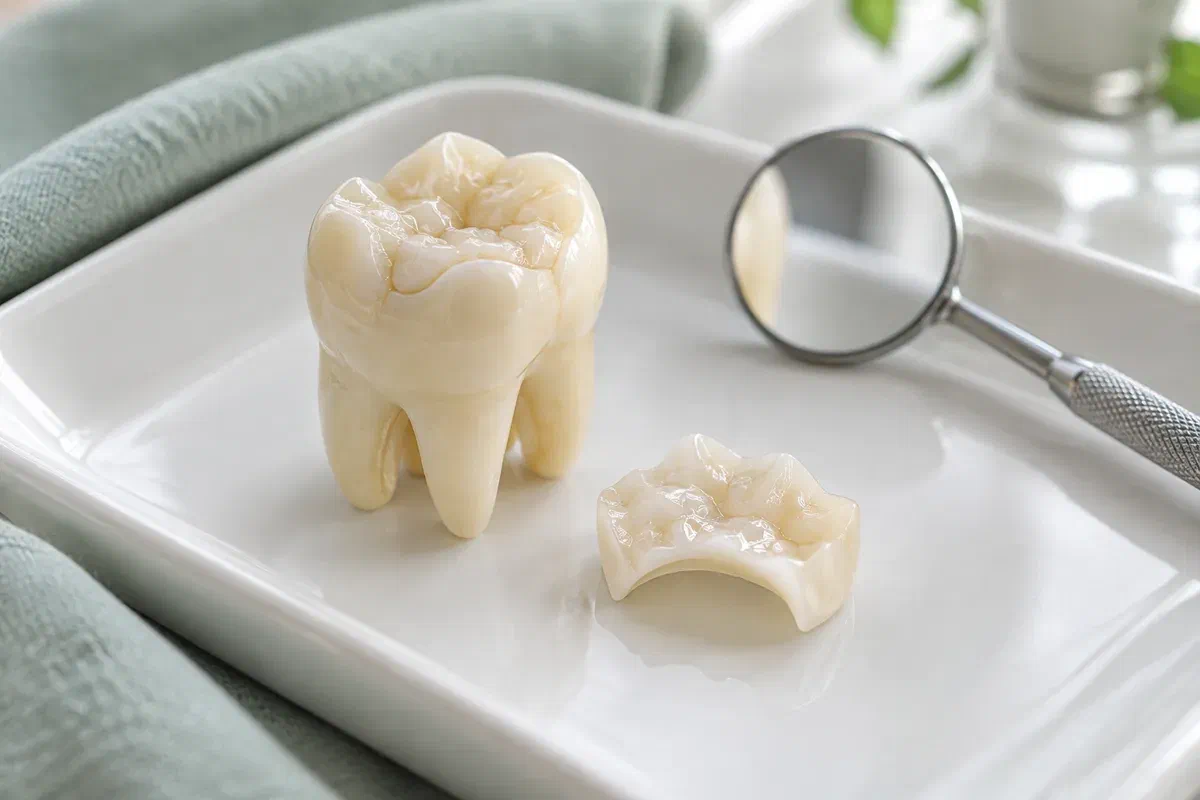
Illustrative molar teaching model and a separate partial-coverage restoration
Clues in daily life

How wear tends to show itself

Some worn areas can be watched; others need treatment. An examination tells them apart. Earlier photos or dental records are useful for judging whether the wear is active or has been stable for a while.

A twinge with cold or acidic food

Thinner enamel may leave a tooth reacting to cold drinks or fruit, but decay, cracks, and receding gums can feel the same. Pay attention to when it happens and how long it lasts. Wear is confirmed as the cause before any rebuild is offered.

Edges that look glassy or chipped

Thin, translucent front edges may chip, and flattened back teeth may make chewing less efficient. Mention any food that has become difficult. The bite and the space between teeth influence whether rebuilding a particular surface is realistic.

Changes on many teeth

Acid tends to affect several teeth at once, so a plan may involve more than one area. Ask how separate repairs would work together, whether they can be staged, and how your bite would change. Wider plans need more explanation, not less.

A worn tooth that suddenly hurts when you bite, cracks, or has swelling nearby should be checked soon. Long-standing wear doesn’t make a new symptom normal.

Benefits of rebuilding thoughtfully

Repair the damage, change the conditions

Restoring a thin or eroded surface can reduce sensitivity, strengthen a fragile edge, or return a contour you miss. Where suitable, bonded composite can be added to the tooth with little or no drilling before more extensive work is considered. That works best when the causes are also being addressed and expectations about upkeep are realistic.

Talk about what you would count as a good result. It might be drinking cold water comfortably again, front teeth that no longer look see-through at the edges, or finishing the first phase of a staged plan. Ask what the limits are. Restored teeth still change, and some repairs will need attention again over time.

Patient information: Leeds Teaching Hospitals — restorative dentistry services

More of your own tooth kept

Options vary in how much healthy enamel and dentine they remove. Ask what each one involves and why. A restoration that covers a larger area is not automatically the better choice for an eroded tooth.

Shapes that fit and clean well

The new contour must meet opposing teeth and its neighbours comfortably. Discuss its effect on chewing and on brushing and flossing, and whether further records or a trial shape would help before a larger change.

An agreed review routine

Polishing, adjustment, repair, or replacement may be needed later. Knowing how follow-up will work and what to report allows you to judge the long-term commitment, not just the first appointment.

Our planning steps

Causes, choices, repair, review

Restoring one eroded edge and rebuilding several teeth involve different visits and records. We explain the order that suits your findings before treatment is booked.

  1. Talk about habits and health

    We ask about drinks, snacks, sports, reflux, brushing, grinding, and medical history. The teeth, existing restorations, and bite are examined. Imaging or photographs may be advised if they would clarify a tooth’s condition or how much planning is needed.

  2. Compare prevention and restoration

    Monitoring, diet and brushing changes, and restorative options are set out together. Ask which surfaces would be treated and what each repair is meant to achieve. Fees, stages, and factors that could change the plan are reviewed before you go ahead.

  3. Rebuild the worn surfaces

    Composite may be bonded directly, or a restoration may be crafted separately and fitted later. The tooth can be numbed if needed and is kept dry during bonding. Larger changes can be staged so each one can be judged in everyday use.

  4. Check, polish, and follow up

    We look at how the teeth meet and explain how to care for the area. Reviews consider comfort, appearance, and function. If you wear a sports mouthguard or night guard, ask whether the new shape affects its fit.

Making the repair last

Small swaps, steady protection

A restoration replaces what was lost but does not stop acid, grinding, or abrasion. Keep to the advice we agreed, whether that involves drinks, brushing, or a guard, and say if something is unrealistic for your routine.

Ease into eating

Follow any instructions about food or a temporary stage. If the tooth was frozen, wait for normal sensation before chewing. Ask what the bite should feel like as it settles and which sensations would be worth a phone call.

Rethink when and how you brush

Use fluoride toothpaste and a soft brush twice a day, and clean between teeth daily. After acidic food or drink, rinsing with water and waiting a while before brushing may be advised. A restored tooth can still decay, so ask for help if it is hard to clean.

Flag chips and roughness

Let us know about chipping, a sharp spot, or a change in comfort, and keep any broken piece. If the same repair keeps breaking, the cause, design, or bite may need reassessment rather than another identical fix.

Patient information: UK oral health guidance — monitoring and managing tooth wear

Possible approaches

Prevention first, repair where needed

More than one route can be sensible, and some eroded areas need no restoration at all. Compare preparation, benefit, maintenance, and cost before choosing for a particular tooth.

When rebuilding is not yet called for

Prevent and monitor

Stable wear may be watched while acid exposure and other factors are reduced. Ask how change will be measured and what would signal that treatment is needed. A monitoring plan should have a clear schedule.

For surfaces that can be built up

Bonded composite

Composite can restore eroded edges or surfaces when enough tooth remains and the bite allows. It can often be repaired rather than replaced. Discuss how it may wear and where its limits lie for the surface in question.

For more extensive loss

Onlays, crowns, or combined restorations

Deeper damage may lead to an onlay, a crown, or several coordinated restorations. Each has different preparation and maintenance demands. Ask why coverage is advised and whether a smaller option could do the same job.

Acid, habits, and worn teeth

Questions about everyday wear

Ask about the reason for treatment, how it will look, and what it will need later. These questions help whether the concern is one thin edge or several worn teeth.

(905) 876-4488
Is sparkling water bad for my teeth?
Plain sparkling water is mildly acidic, and flavoured versions can be more so. For most people it is a much better choice than soft drinks, but sipping it slowly all day increases contact time. The dentist can suggest how to fit it into your routine if erosion is a concern.
Should I brush right after drinking something acidic?
Common advice is to rinse with water and wait a while before brushing, since enamel is temporarily softened after acid exposure. Using a soft brush and fluoride toothpaste also helps. The dentist may tailor this to your situation.
Do sports drinks wear teeth down?
Many sports drinks are acidic and sugary, and frequent sipping during activity can contribute to erosion and decay. Water is often enough for shorter activity. If you use them regularly, ask how to reduce their effect on your teeth.
Can eroded teeth be rebuilt if I keep drinking acidic drinks?
Restoration may still be possible, but continuing acid exposure affects both the repair and the surrounding teeth. That is why reducing the cause is discussed alongside treatment. A repair is not a substitute for prevention.
Will bonding make my worn teeth look natural?
Composite shades are chosen to blend with neighbouring teeth, but a perfect match cannot be guaranteed. Discuss the appearance you want, and for larger changes ask whether the proposed shape can be previewed before it is finalized.
Can several family members from Halton Hills be seen on the same trip?
Often, yes. Ask when booking whether appointments can be scheduled back to back. Our Bronte Street practice is open Monday to Thursday from 11 a.m. to 7 p.m., with Friday to Sunday visits by appointment, which can help when coordinating more than one person.
Worn tooth care for Halton Hills

Bring us your questions about worn enamel

Visit our Bronte Street practice to have thin, glassy, or flattened teeth examined. Tell us about your drinks, brushing habits, and any guard you use. We will explain what we see and which areas need prevention, repair, or monitoring.

Call the clinic for significant pain, swelling, or a broken tooth. Online booking is for non-urgent concerns.

Visit Milton Dental Clinic
Unit 1, 342 Bronte St. S, Milton, ON L9T 5B7
Get directions Clinic hours
Monday–Thursday
11am–7pm
Friday–Sunday
By appointment only

Areas we serve

  • Milton
  • Oakville
  • Mississauga
  • Georgetown
  • Halton Hills
  • Acton
  • Campbellville
  • Brampton
  • Burlington
  • Puslinch
  • Rockwood
  • Erin
  • Caledon
  • Etobicoke
  • Old Milton
  • Bronte Meadows
  • Timberlea
  • Dorset Park
  • Dempsey
  • Clarke
  • Beaty
  • Coates
  • Harrison
  • Scott
  • Willmott
  • Ford
  • Bowes
  • Cobden
  • Walker
  • Mountain View
  • Milton Heights
  • Hawthorne Village
  • Valley View
  • Fallingbrook
  • Nassagaweya
  • Trafalgar
  • Esquesing
  • Nelson
  • Brookville
  • Moffat
  • Glen Williams
  • Norval
  • Limehouse
  • Stewarttown
  • Ashgrove
  • Hornby
  • Silver Creek
  • Speyside
  • Scotch Block
  • North Oakville
  • River Oaks
  • Glen Abbey
  • West Oak Trails
  • Palermo
  • Bronte Creek
  • College Park
  • Joshua Creek
  • Uptown Core
  • Preserve
  • Iroquois Ridge
  • Lisgar
  • Meadowvale
  • Meadowvale Village
  • Churchill Meadows
  • Erin Mills
  • Central Erin Mills
  • Streetsville
  • East Credit
  • Creditview
  • Heartland
  • Sheridan
  • Mount Pleasant
  • Credit Valley
  • Huttonville
  • Churchville
  • Springbrook
  • Northwest Brampton
  • Bram West
  • Fletcher's Meadow
  • Fletcher's Creek South
  • Alton Village
  • Orchard
  • Millcroft
  • Headon Forest
  • Tansley
  • Brant Hills
  • Tyandaga
  • Kilbride
  • Lowville
  • Aberfoyle
  • Morriston
  • Arkell
  • Hillsburgh
  • Freelton
  • Carlisle
  • Waterdown
  • Flamborough
  • Mountsberg

How can we help?

Milton Dental Clinic

Have a question about your smile? Choose the option that works best for you.

For urgent dental concerns, please call.
Messages are reviewed during clinic hours.