

Illustrative consultation about restoring the shape and function of worn teeth
Restorative Dentistry

Worn Tooth Restoration in Milton

Front teeth that look shorter in photos, or a molar that feels flatter when you chew, can point to wear. Here in Milton, we look at why it happened before suggesting what, if anything, should be rebuilt.

Wear you notice close to home

When the mirror shows shorter teeth

Many people first spot tooth wear in a photo: the front teeth look a little shorter, or the edges seem straight and thin where they used to be gently rounded. For others it is a back tooth that feels smooth and flat under the tongue. Restoring a worn tooth means adding back lost structure, but only once there is a clear reason, such as discomfort, weakness, trouble chewing, or a change in appearance that bothers you.

Wear rarely has a single source. Acidic drinks or reflux can soften enamel, grinding and clenching bring teeth into heavy contact, and habits like scrubbing hard with a toothbrush or biting objects add mechanical loss. New material can replace what has gone, yet those causes keep working unless they are addressed too. That is why prevention sits beside any repair we plan for you in Milton.

Come in with whatever has caught your attention, even if it seems minor. Mention changes in how food feels, any sensitivity, and what you would like your smile to look like. After examining the teeth, we can tell you whether a small, local repair makes sense or whether the pattern calls for fuller records, staged work, or a referral for specialist planning.

Ask about rebuilding a worn tooth
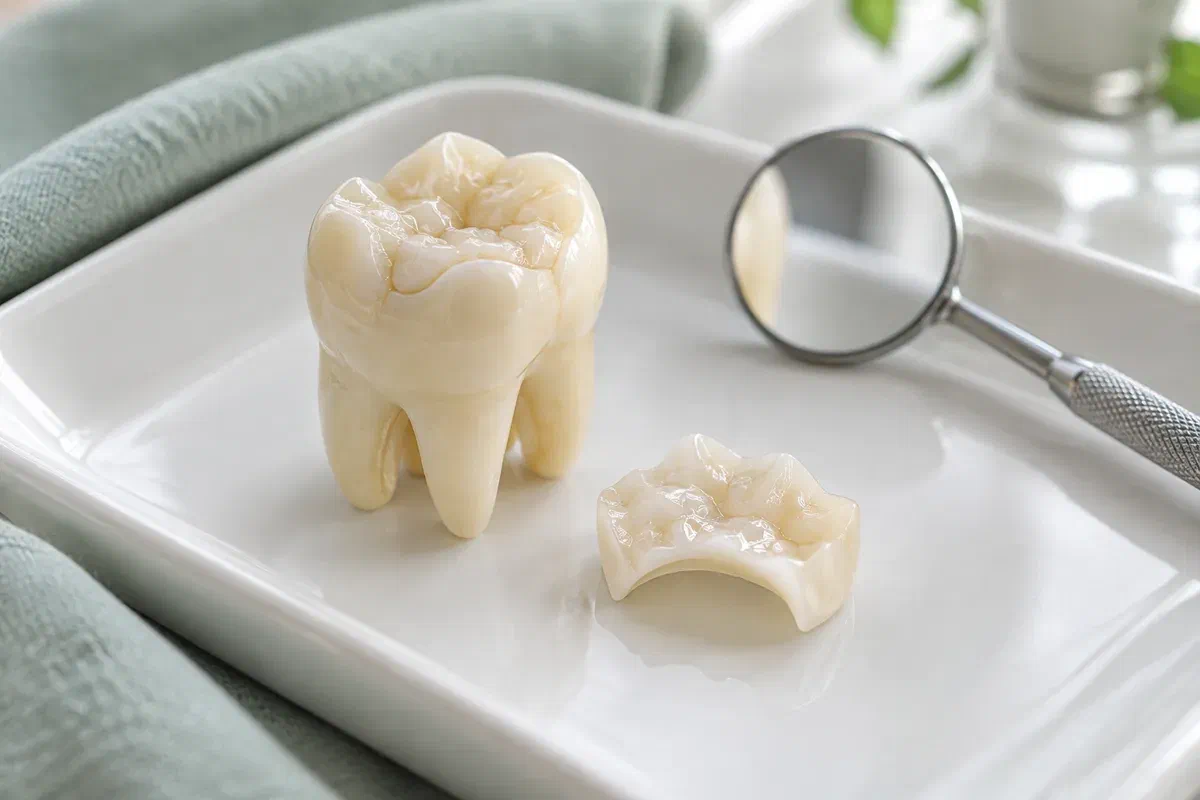
Illustrative molar teaching model and a separate partial-coverage restoration
Signs worth a conversation

Look past the shape to what it is doing

Not every worn area needs treatment today. An examination sorts what should be repaired from what can simply be watched. Old photos of your smile, or notes from previous dentists, can help show how quickly things have changed.

Cold or sweet drinks have started to sting

Thinning enamel can expose the more sensitive layer beneath, but gum recession, decay, and cracks can produce similar sensations. Note what sets it off and how long it lingers. The dentist confirms whether wear is really the source before any rebuilding is suggested.

Biting into food feels different

A flattened molar or a shortened front edge can make tearing or chewing less efficient. Tell us which foods have become awkward. How the opposing teeth meet, and how much room exists between them, shapes whether a particular surface can sensibly be rebuilt.

More than one tooth is involved

When wear runs across several teeth, the plan may touch the whole bite rather than one spot. Ask how each proposed repair connects to the others, whether the work can happen in stages, and what your bite will be like afterwards. Bigger plans need fuller explanations.

Sudden pain when biting, a visible crack, or any swelling around a worn tooth should be checked promptly. Long-standing wear does not make a new symptom something to ignore.

What a careful rebuild can give you

A repair with a job to do

A well-planned restoration can bring back a usable edge, restore a contour you miss, or shield a surface that keeps getting worse. Where the situation suits it, composite can often be bonded onto the existing tooth before anything more involved is considered. Even that conservative route depends on accurate diagnosis and honest talk about upkeep.

Before treatment begins, it helps to agree on what a good result looks like for you. That could be chewing without catching an edge, a front tooth that matches its neighbour, or finishing the first phase of a larger plan. Any answer should come with its limits, because restored teeth still change, wear, and sometimes need repair over the years.

Patient information: Leeds Teaching Hospitals — restorative dentistry services

Keeping healthy tooth where possible

Comparing options starts with how much sound structure is left and how much each one would remove. Ask why a given amount of preparation is needed. Covering more of the tooth is not, on its own, a reason to choose a bigger restoration.

A contour that suits your bite

New shapes have to meet the opposing teeth and sit comfortably beside neighbouring ones. Find out how the planned contour affects chewing and cleaning, and whether a trial shape or further records would be wise before a larger change.

Upkeep planned at the outset

Bonded and fitted restorations may later need polishing, adjustment, repair, or replacement. Knowing in advance how reviews work, and what to report between them, lets you weigh the long-term commitment alongside the first appointment.

How planning unfolds

Design first, then treatment

A single shortened edge and a mouth-wide rebuild follow very different paths. The visits, records, and decisions depend on what the examination finds, and we walk you through the sequence that fits.

  1. Find out why the teeth have worn

    We ask about symptoms, how things have changed, your medical history, and habits such as clenching. The teeth, existing fillings, and the way they meet are examined, and photos, scans, or X-rays may be suggested when they would clarify the picture.

  2. Weigh the reasonable choices

    Together we look at monitoring, prevention, and restorative options. You can ask which surfaces would be treated and what each repair should achieve. Fees, stages, and anything that might alter the plan are reviewed before you decide.

  3. Carry out the agreed restoration

    Composite may be bonded straight onto the tooth, or a restoration may be made separately and fitted at a later visit. Local anaesthetic and moisture control are used when appropriate, and larger changes can be staged so you can live with each step first.

  4. Confirm the bite and book a review

    We check how the restored teeth meet and give you care instructions for the area. Follow-up looks at comfort, appearance, and function. If you wear a guard or other appliance, ask whether the new shape means it should be checked or replaced.

Living with the repaired tooth

The habits around it still count

New material addresses lost structure, not the reasons it was lost. Keep up the advice on acidic drinks, grinding, brushing technique, or whatever else was identified, and let us know if any part is hard to manage.

Follow the instructions for your treatment

Some restorations come with guidance about eating or a temporary phase. After local anaesthetic, wait until feeling returns before you chew. Ask what the bite should feel like over the first few days and which sensations are worth a call.

Clean the new contours well

Brush twice daily with a fluoride toothpaste and clean between the teeth with floss or small brushes suited to the area. Decay and gum disease can still affect a restored tooth. If a new shape is tricky to reach, we can show you how.

Speak up about small damage

Call about a chip, a rough patch, or a change in comfort. Keep any broken piece and bring your guard if you use one. When breakage keeps happening, the design or the forces on it may need a fresh look rather than the same repair again.

Patient information: UK oral health guidance — monitoring and managing tooth wear

How much repair is right

Let the remaining tooth guide the choice

Several approaches can be reasonable, and some worn surfaces are best left alone for now. Weigh how much tooth each option removes, what it should achieve, its upkeep, and its cost before settling on one.

When there is no current need to rebuild

Watch and protect

Wear that appears stable and causes no problems may be reviewed over time while its causes are managed. Ask how changes will be tracked, for example with photos, and what would lead to treatment. Watching should come with a clear plan, not guesswork.

For areas suited to adding material

Bonded composite build-up

Tooth-coloured composite can rebuild chosen edges or surfaces when the remaining structure and bite allow. Talk about how it may be repaired later and where the material has limits. Whether it suits you depends on the specific surface involved.

When the damage calls for more coverage

Onlays, crowns, or a combination

Extensive loss may lead to discussion of an onlay, a crown, or several coordinated restorations. Each involves its own preparation and maintenance. Ask why coverage is recommended and whether something less extensive could meet the same need.

Your questions about worn teeth

Ask before anything is rebuilt

Good questions cover why treatment is suggested, how the result will look, and what upkeep follows. They are just as useful for one small edge as for several teeth.

(905) 876-4488
Is some tooth wear just a normal part of getting older?
Teeth do wear gradually over a lifetime, and mild, stable wear may need nothing more than monitoring. Faster change, new sensitivity, thinning edges, or noticeable damage at a younger age deserve a closer look. Comparing findings from one visit to the next helps show whether the wear is still active.
Do all of my worn teeth need crowns?
Often not. Bonded composite or other limited repairs may suit some areas, and others may need no treatment at all. How much structure remains, where it is, how your teeth meet, and your own goals all matter. Ask what makes a crown necessary on any specific tooth.
Will rebuilding my teeth stop me from grinding?
No. A restoration replaces lost structure but does not change a clenching or grinding habit. If grinding is a factor, a protective appliance or other measures may be discussed so the new surfaces and the remaining teeth are not exposed to the same heavy forces.
Can I see how my teeth might look before the work is done?
For larger changes, a trial shape or mock-up may be possible so you can judge appearance and function before anything is finalized. It is not needed for every small repair. Ask whether a preview would be useful in your case and how it would be assessed.
What happens to my existing night guard after bonding?
Bring it in so the fit can be checked. A change in tooth shape may alter how the guard seats and where it touches. Please don’t trim or force it yourself; the dentist can advise whether it can be adjusted or should be replaced.
Can a worn tooth assessment fit around a weekday schedule?
Our Bronte Street practice is open Monday to Thursday from 11 a.m. to 7 p.m., with Friday to Sunday visits by appointment only. For households in Milton juggling work and school, ask which parts of a staged plan can be grouped so fewer separate trips are needed.
Worn tooth care in Milton

Find out what rebuilding could do

Book an assessment at our Bronte Street practice if edges have shortened, surfaces feel flat, or repairs keep breaking. Bring questions about chewing and appearance, plus any guard you already wear. We will explain what we find and which areas need protection, repair, or simply watching.

For severe pain, swelling, or a tooth that has just broken, please call. Online requests are for non-urgent visits.

Visit Milton Dental Clinic
Unit 1, 342 Bronte St. S, Milton, ON L9T 5B7
Get directions Clinic hours
Monday–Thursday
11am–7pm
Friday–Sunday
By appointment only

Areas we serve

  • Milton
  • Oakville
  • Mississauga
  • Georgetown
  • Halton Hills
  • Acton
  • Campbellville
  • Brampton
  • Burlington
  • Puslinch
  • Rockwood
  • Erin
  • Caledon
  • Etobicoke
  • Old Milton
  • Bronte Meadows
  • Timberlea
  • Dorset Park
  • Dempsey
  • Clarke
  • Beaty
  • Coates
  • Harrison
  • Scott
  • Willmott
  • Ford
  • Bowes
  • Cobden
  • Walker
  • Mountain View
  • Milton Heights
  • Hawthorne Village
  • Valley View
  • Fallingbrook
  • Nassagaweya
  • Trafalgar
  • Esquesing
  • Nelson
  • Brookville
  • Moffat
  • Glen Williams
  • Norval
  • Limehouse
  • Stewarttown
  • Ashgrove
  • Hornby
  • Silver Creek
  • Speyside
  • Scotch Block
  • North Oakville
  • River Oaks
  • Glen Abbey
  • West Oak Trails
  • Palermo
  • Bronte Creek
  • College Park
  • Joshua Creek
  • Uptown Core
  • Preserve
  • Iroquois Ridge
  • Lisgar
  • Meadowvale
  • Meadowvale Village
  • Churchill Meadows
  • Erin Mills
  • Central Erin Mills
  • Streetsville
  • East Credit
  • Creditview
  • Heartland
  • Sheridan
  • Mount Pleasant
  • Credit Valley
  • Huttonville
  • Churchville
  • Springbrook
  • Northwest Brampton
  • Bram West
  • Fletcher's Meadow
  • Fletcher's Creek South
  • Alton Village
  • Orchard
  • Millcroft
  • Headon Forest
  • Tansley
  • Brant Hills
  • Tyandaga
  • Kilbride
  • Lowville
  • Aberfoyle
  • Morriston
  • Arkell
  • Hillsburgh
  • Freelton
  • Carlisle
  • Waterdown
  • Flamborough
  • Mountsberg

How can we help?

Milton Dental Clinic

Have a question about your smile? Choose the option that works best for you.

For urgent dental concerns, please call.
Messages are reviewed during clinic hours.