

Illustrative consultation about restoring the shape and function of worn teeth
Restorative Dentistry

Worn Tooth Restoration in Oakville

Told your worn teeth need crowns? Coming from Oakville, you can get a careful second look at how much tooth remains, what is driving the wear, and whether a smaller repair could do the job.

Before you agree to crowns

Start with the tooth, not the treatment

Hearing that several worn teeth need crowns can be unsettling, especially when they do not hurt. Crowns are sometimes the right answer, but wear on its own does not make them necessary. The useful questions come first: how much healthy structure is left, whether the wear is still progressing, and what problem a restoration would actually solve for you.

Those problems vary. One person has a molar so thin it flexes under load; another finds the front teeth sensitive or the edges chipping; someone else simply dislikes how short the smile now looks. The cause matters as well. Acid exposure, grinding, and abrasive habits each wear teeth differently, and none of them stop just because a tooth has been restored.

If you are travelling from Oakville, bring any previous treatment plan, X-rays, or photos you have. We will examine the teeth, explain what we see, and outline the range of reasonable approaches, from monitoring and protection to bonded repairs, onlays, or coverage. Where a case is complex, we will say so and discuss whether specialist planning would help.

Get a second look at worn teeth
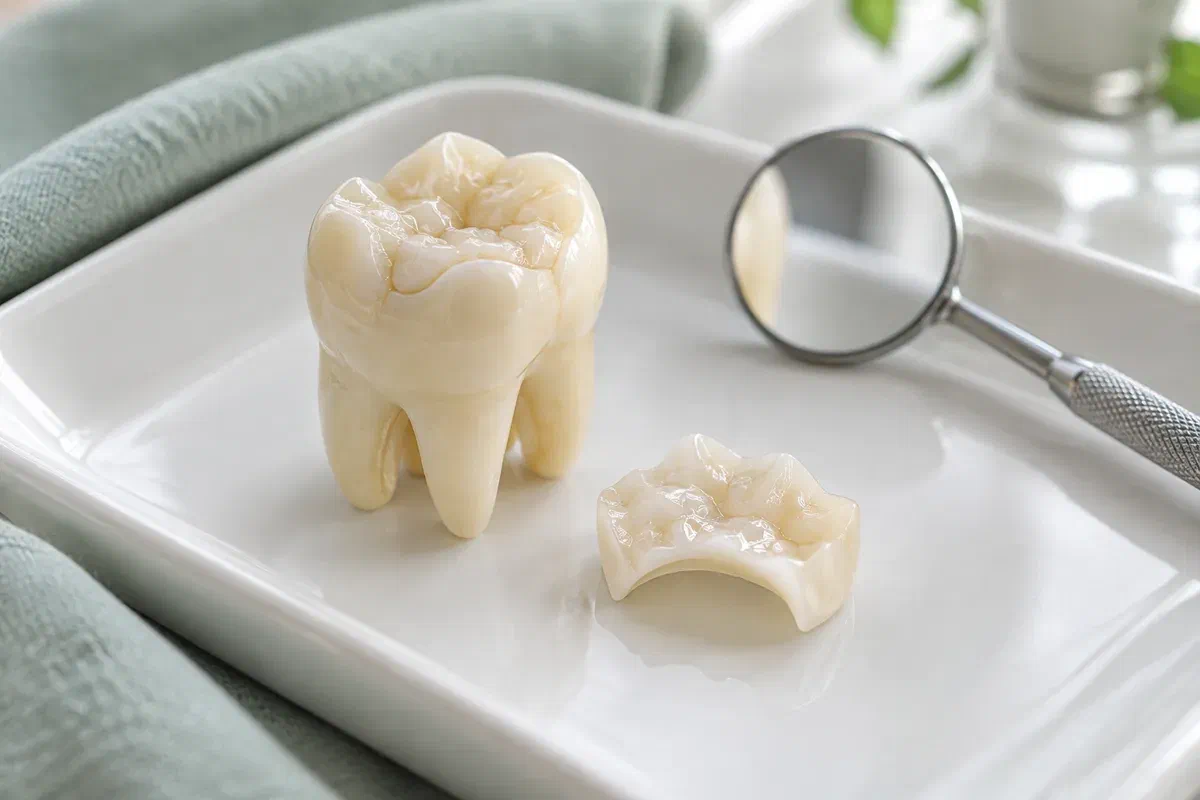
Illustrative molar teaching model and a separate partial-coverage restoration
Reasons to look closer

Three signs that wear is affecting you

An examination shows which areas need action and which are stable. Earlier photos, past X-rays, or a summary from another clinic can make the comparison more accurate.

Twinges you can’t quite explain

Lost enamel may leave a tooth reacting to cold, sweet, or touch, yet gum recession and cracks can feel much the same. Keep a quick note of what triggers it and how long it lasts. The dentist rules out other causes before treating it as a wear problem.

Edges that no longer cut cleanly

Short or flattened teeth may make biting into a sandwich or chewing tougher food harder than it used to be. Let us know what has changed. How your upper and lower teeth meet, and the room available, decide whether rebuilding a given surface is practical.

A plan covering many teeth

Extensive wear may lead to a proposal involving a whole arch or both jaws. You are entitled to understand how the pieces fit together, whether the work can be phased, and how your bite would change. The larger the plan, the clearer the reasoning should be.

Pain on biting, a crack you can see or feel, or swelling near a worn tooth needs prompt attention. Don’t assume a new symptom is part of the old wear.

The case for a measured repair

Restore what matters, preserve the rest

In the right circumstances, adding bonded composite to a worn tooth can rebuild its shape with little or no drilling, leaving crowns as an option for later if they become necessary. That is not always possible, and it is not a shortcut around diagnosis. It does mean the conversation can start with the least invasive approach that meets the need.

Decide early what a successful outcome would be. Perhaps it is front teeth that look their proper length again, a molar that stops catching food, or the completion of stage one in a broader plan. Ask what the restoration will not do, and how often it will need checking. No restored tooth stays exactly the same forever.

Patient information: Leeds Teaching Hospitals — restorative dentistry services

Less drilling where it is reasonable

Options differ in how much healthy tooth they remove. Ask the dentist to compare them plainly and explain the reason for any preparation. A restoration that covers more is not, for that reason alone, a stronger choice.

A shape your bite can live with

The rebuilt surface has to meet opposing teeth and line up with its neighbours. Discuss how the contour affects chewing and flossing, and whether a trial shape or more records would make sense before a significant change.

An honest maintenance picture

Polishing, adjustment, repair, or eventual replacement are normal parts of a restoration’s life. Understanding how reviews will be scheduled, and what to report between them, helps you compare options on more than the first appointment.

From first visit to review

How a wear plan comes together

Repairing one edge might take a single appointment; rebuilding several teeth usually takes more records and more decisions. We explain the route that fits your findings before anything is booked.

  1. Understand the pattern

    We talk through symptoms, how the teeth have changed, health history, diet, and habits like clenching. The teeth, existing restorations, and bite are examined. Photos, X-rays, or scans may be suggested where they help clarify a tooth’s condition or the scope of the work.

  2. Lay out the choices

    Monitoring, prevention, and restorative routes are compared openly. Ask which teeth each option involves and what it is expected to improve. Estimated fees, the number of stages, and anything that might change the plan are reviewed before you go ahead.

  3. Rebuild to the chosen design

    Composite can be shaped and bonded at the chair, or a restoration can be made off-site and fitted at a later appointment. Numbing and moisture control are used when needed, and bigger changes may be introduced in phases so you can adjust to each.

  4. Check the result and schedule follow-up

    We confirm how the teeth meet and explain care for the treated area. Later visits review comfort, function, and appearance. If you already wear a guard, ask whether the new tooth shape means it needs refitting or replacing.

Protecting the result

A restoration needs help from home

Rebuilding a tooth does not end the conditions that wore it down. Stay with the agreed plan on acidic drinks, grinding, brushing, or other factors, and tell us if part of it is not working for you.

The first hours and days

Follow any advice about eating, and take care with a temporary restoration if you have one. When freezing was used, wait until full feeling returns before chewing. Ask how the bite should settle and which sensations mean you should call.

A gentle, thorough clean

Twice-daily brushing with fluoride toothpaste, a soft touch, and daily cleaning between teeth help protect the repaired area. A restored tooth is still vulnerable to decay and gum problems. If a new contour is awkward to reach, ask us to demonstrate.

Small damage, early call

Contact us about chipping, roughness, or a change in how the tooth feels. Save any fragment and bring your guard. If repairs keep breaking, the design or the biting load may need reassessing rather than the same fix again.

Patient information: UK oral health guidance — monitoring and managing tooth wear

Comparing the approaches

From watching to full coverage

Different approaches can each be reasonable, and some worn surfaces need no restoration at all. Compare preparation, expected benefit, upkeep, and cost before choosing what suits a given tooth.

For stable wear with no current need

Monitor and manage causes

Wear that is not progressing and is not causing trouble may be recorded and reviewed while the causes are addressed. Ask what will be measured and what change would prompt treatment. Monitoring should be planned, with clear follow-up.

Building up suitable surfaces

Additive composite bonding

Tooth-coloured composite can restore chosen edges or contours when the remaining tooth and bite support it. Ask about future repairs and the material’s limits under heavy load. Suitability depends on the exact surface involved.

When more coverage is needed

Onlay, crown, or a mix

For deeper structural loss, an onlay, a crown, or a combination planned across several teeth may be discussed. Each carries different preparation and maintenance. Ask why coverage is advised and whether a smaller restoration could achieve the same result.

Frequently asked

Questions worth asking first

Ask why treatment is being proposed, how it will look, and what it will need over time. The same questions apply to one worn edge or a plan for many teeth.

(905) 876-4488
Another dentist recommended crowns. Can I get a second opinion?
Yes. Bring the plan and any X-rays you were given. The dentist will examine the teeth and explain whether the same approach seems necessary or whether more conservative choices could be considered. Different clinicians can reasonably reach different plans, and understanding the reasons helps you decide.
Why not just crown every worn tooth and be done with it?
Crown preparation removes healthy tooth structure, and not every worn tooth needs that. Some can be rebuilt with bonded material, and some are best left alone. Crowns also require maintenance and may need replacing eventually. The choice is made tooth by tooth, based on what each one needs.
How do I know whether my wear is still happening?
Comparing photos, models, or notes over time is the usual way. A single visit shows the current state but not the speed of change. If wear appears stable, monitoring may be reasonable; if it is progressing, identifying the cause becomes more urgent.
Can grinding damage bonded repairs?
It can. Heavy clenching or grinding places strong forces on composite as well as on natural teeth. If grinding is suspected, the dentist may discuss a protective appliance or other steps, and the design of the restoration may take those forces into account.
Will the new shape match my original teeth exactly?
It cannot be promised. The shape has to suit your current bite and neighbouring teeth, and records of the original outline may not exist. Tell us the look and function you want. For larger changes, ask how the proposed shape could be previewed first.
How can I keep visits manageable if I'm coming from Oakville?
Ask at the planning stage which steps could share an appointment and which need to be separate for clinical reasons. For a staged plan, booking several visits in advance can help. Our weekday hours run Monday to Thursday, 11 a.m. to 7 p.m., with Friday to Sunday by appointment.
Oakville worn tooth assessment

Get a clear answer about your worn teeth

Arrange an assessment at our Bronte Street practice for shortened edges, flattened molars, or a plan you would like reviewed. Bring prior X-rays, any appliance you use, and your questions. We will explain the findings and which teeth need protection, repair, or monitoring.

If you have significant pain, swelling, or a freshly broken tooth, please call rather than booking online.

Visit Milton Dental Clinic
Unit 1, 342 Bronte St. S, Milton, ON L9T 5B7
Get directions Clinic hours
Monday–Thursday
11am–7pm
Friday–Sunday
By appointment only

Areas we serve

  • Milton
  • Oakville
  • Mississauga
  • Georgetown
  • Halton Hills
  • Acton
  • Campbellville
  • Brampton
  • Burlington
  • Puslinch
  • Rockwood
  • Erin
  • Caledon
  • Etobicoke
  • Old Milton
  • Bronte Meadows
  • Timberlea
  • Dorset Park
  • Dempsey
  • Clarke
  • Beaty
  • Coates
  • Harrison
  • Scott
  • Willmott
  • Ford
  • Bowes
  • Cobden
  • Walker
  • Mountain View
  • Milton Heights
  • Hawthorne Village
  • Valley View
  • Fallingbrook
  • Nassagaweya
  • Trafalgar
  • Esquesing
  • Nelson
  • Brookville
  • Moffat
  • Glen Williams
  • Norval
  • Limehouse
  • Stewarttown
  • Ashgrove
  • Hornby
  • Silver Creek
  • Speyside
  • Scotch Block
  • North Oakville
  • River Oaks
  • Glen Abbey
  • West Oak Trails
  • Palermo
  • Bronte Creek
  • College Park
  • Joshua Creek
  • Uptown Core
  • Preserve
  • Iroquois Ridge
  • Lisgar
  • Meadowvale
  • Meadowvale Village
  • Churchill Meadows
  • Erin Mills
  • Central Erin Mills
  • Streetsville
  • East Credit
  • Creditview
  • Heartland
  • Sheridan
  • Mount Pleasant
  • Credit Valley
  • Huttonville
  • Churchville
  • Springbrook
  • Northwest Brampton
  • Bram West
  • Fletcher's Meadow
  • Fletcher's Creek South
  • Alton Village
  • Orchard
  • Millcroft
  • Headon Forest
  • Tansley
  • Brant Hills
  • Tyandaga
  • Kilbride
  • Lowville
  • Aberfoyle
  • Morriston
  • Arkell
  • Hillsburgh
  • Freelton
  • Carlisle
  • Waterdown
  • Flamborough
  • Mountsberg

How can we help?

Milton Dental Clinic

Have a question about your smile? Choose the option that works best for you.

For urgent dental concerns, please call.
Messages are reviewed during clinic hours.