Illustrative consultation about restoring the shape and function of worn teeth
Restorative Dentistry

Worn Tooth Restoration in Puslinch

Sometimes the acid wearing teeth away comes from inside: reflux, frequent vomiting, or a dry mouth. For people in Puslinch, we look at that wider health picture before planning any restoration of worn teeth.

Health, reflux, and tooth wear

The cause may not be in your diet

People are often surprised when the dentist asks about heartburn. Stomach acid reaching the mouth, whether from reflux, morning sickness, or another cause of frequent vomiting, can soften enamel in a pattern that differs from wear caused by drinks. Medications that dry the mouth reduce saliva’s protective effect. Each of these can leave teeth thin, smooth, or sensitive.

Rebuilding a worn tooth can help once there is a clear reason, such as discomfort, weakness, difficulty chewing, or an appearance change that concerns you. A restoration does not reach the cause, though. If acid exposure continues, the new material and the remaining teeth are affected too. Coordinating with your physician about the underlying condition can matter as much as the dental work.

From Puslinch, bring a list of your current medications and any relevant diagnoses, along with a description of what you have noticed in your teeth. Grinding and brushing habits often play a part alongside acid, so mention those too. After an examination, we will explain whether prevention, a small repair, or a broader plan with records or specialist input fits your situation.


Discuss wear linked to your health
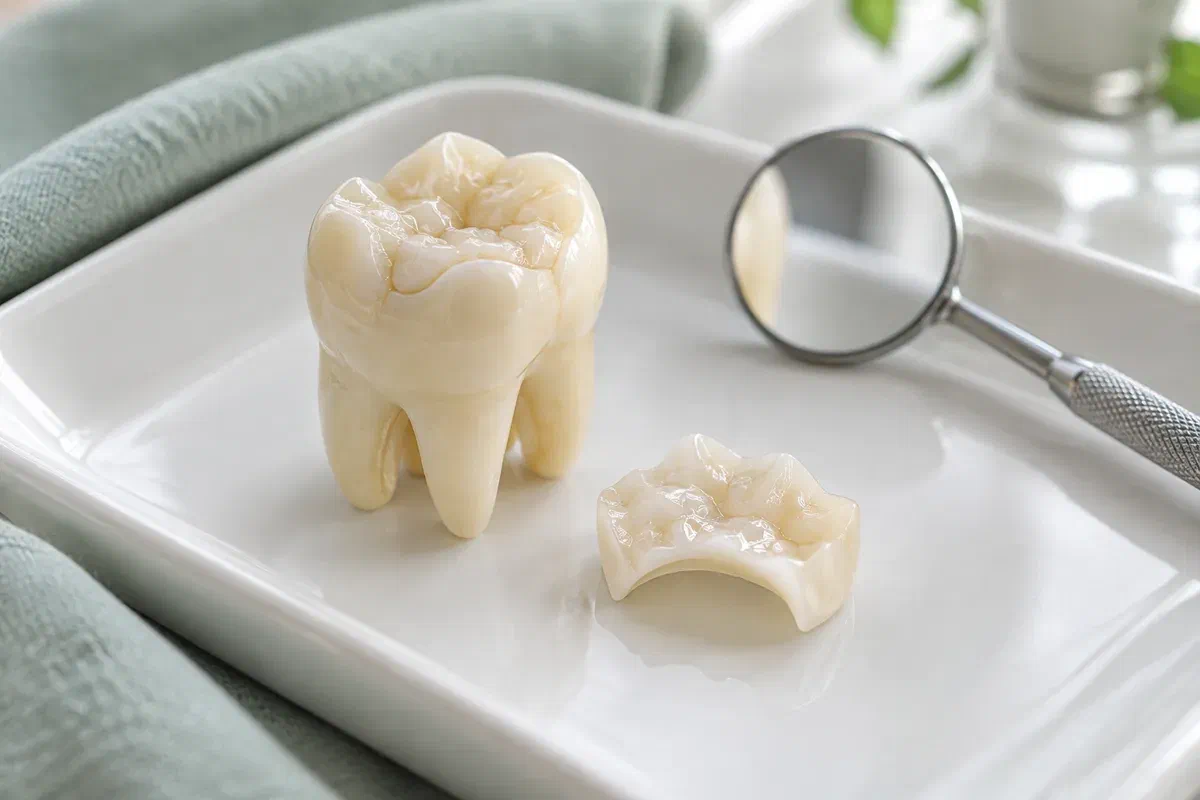
Illustrative molar teaching model and a separate partial-coverage restoration
Signs to raise with us

Wear that hints at a medical cause

An examination helps decide which teeth need treatment and which can be monitored while the cause is managed. Older dental photos or records help show whether the wear is recent or longstanding.

Sensitive inner surfaces

Acid from reflux often affects the tongue-side surfaces of upper teeth, which may become sensitive. Similar discomfort can come from decay, cracks, or gum recession. Describe the triggers and duration, and the dentist will confirm the cause before suggesting repair.

Teeth that feel thinner or shorter

Eroded teeth may chip more easily or make biting feel different. Mention which foods have become awkward. How the upper and lower teeth meet, and how much space remains, helps decide whether a surface can be rebuilt.

Changes across the mouth

Internal acid often affects many teeth at once. If several repairs are discussed, ask how they relate, how your bite would change, and whether work could wait until the medical cause is under better control. A wide plan deserves a careful explanation.

A worn tooth that cracks, becomes painful to bite on, or has swelling nearby needs prompt assessment. A new symptom should not be dismissed as part of ongoing erosion.

Restoring with the cause in view

Timing matters as much as technique

When the acid source is being managed, restoring eroded teeth can reduce sensitivity, protect thin areas, and improve shape. Bonded composite is often considered first for suitable surfaces because it needs little preparation and can be repaired later. Deciding when to restore, relative to medical treatment, is part of a sound plan.

Agree on what a good result means. It may be eating comfortably, edges that stop chipping, or protecting teeth while reflux is being treated. Discuss limitations openly. If acid exposure continues, restorations may wear or need repair sooner, and the plan should account for that.

Patient information: Leeds Teaching Hospitals — restorative dentistry services

Minimal removal of tooth

Teeth thinned by acid may already have lost a good deal of structure. Ask how much each option would remove and why. A restoration that covers more is not automatically better for a tooth that is already thin.

Contours that suit the bite

Rebuilt surfaces must meet opposing teeth comfortably and sit well beside neighbours. Discuss how the shape affects biting and hygiene, and whether trial work or further records would help before a substantial change.

Ongoing monitoring

Polishing, adjustment, repair, or replacement may be needed over time. With a medical cause involved, reviews may also track whether erosion is continuing. Knowing the schedule helps you weigh the commitment.

Planning around your health

Medical history shapes the sequence

One eroded edge and a mouth-wide rebuild follow different paths, and medical factors can affect timing. We explain the visits and records that suit your findings.

  1. Review health and examine the teeth

    We ask about reflux, vomiting, dry mouth, medications, diet, grinding, and brushing, then examine the teeth, existing restorations, and bite. Photos, X-rays, or scans may be recommended to document the wear and clarify a tooth’s condition.

  2. Discuss coordination and options

    We explain whether talking with your physician about the acid source would help, and compare prevention, monitoring, and restoration. Ask which teeth would be treated, when, and why. Fees, stages, and possible changes to the plan are covered first.

  3. Restore when the timing is right

    Composite may be bonded directly, or a restoration may be fabricated and fitted at a later visit. Numbing is offered if needed, and the tooth is kept dry while material is placed. Extensive plans can be phased.

  4. Review the teeth and the cause

    We check the bite and explain how to care for the area. Follow-up looks at comfort, appearance, function, and whether erosion is still active. If you use an appliance, ask whether its fit needs checking after treatment.

Protecting eroded teeth

Keep acid contact to a minimum

Restoration replaces what was lost, but continuing acid exposure can damage both new and natural surfaces. Follow medical advice for the underlying condition and the dental advice we agree, and tell us if anything is difficult.

After an acid episode

Rinsing with water, or a fluoride mouthwash if recommended, and waiting before brushing are often advised after reflux or vomiting, since softened enamel is more vulnerable. Ask what applies to you and to any new restoration.

A protective daily routine

Brush twice a day with fluoride toothpaste and a soft brush, and clean between teeth daily. Sipping water can help with a dry mouth. Restored teeth can still decay, so ask for advice if an area is hard to clean.

Speak up about changes

Call about a chip, roughness, new sensitivity, or a change in how the teeth feel. Keep any broken piece. Recurring damage may mean the cause or the design needs reassessing rather than another identical repair.

Patient information: UK oral health guidance — monitoring and managing tooth wear

Approaches to consider

Protect first, rebuild where needed

Different approaches may be reasonable, and some eroded areas need no restoration while the cause is managed. Compare preparation, benefit, upkeep, and cost before deciding.

While the acid source is addressed

Protect and monitor

Stable wear may be watched, with fluoride and preventive advice, while medical treatment takes effect. Ask how change will be measured, how often the teeth will be reviewed, and what would prompt restoration. Monitoring should include clear follow-up rather than vague reassurance.

For suitable eroded surfaces

Bonded composite restoration

Composite can rebuild thin edges or cover sensitive surfaces when enough tooth remains and the bite allows. It can usually be repaired later. Discuss how continuing acid exposure might affect it.

For more extensive structural loss

Onlays, crowns, or coordinated work

Where erosion has removed a great deal of structure, onlays, crowns, or several restorations planned together may be discussed. These involve more preparation and different maintenance. Ask what makes coverage necessary and whether something smaller would work.

Health and worn teeth

What to ask about erosion and treatment

Ask about the purpose of any repair, how it will look, and what care it will need, especially when a medical condition is involved.

(905) 876-4488
How can reflux damage teeth if I rarely notice heartburn?
Some people have reflux without obvious symptoms, sometimes called silent reflux. The dentist may notice an erosion pattern that suggests it. If so, you may be encouraged to talk with your physician, who can assess and manage the condition. A dentist cannot diagnose reflux, but describing the pattern can be a helpful starting point for that conversation.
Should my teeth be restored before or after reflux is treated?
It depends on the teeth. Urgent problems such as pain or a weak tooth may be treated promptly, while larger rebuilding is often better planned once the acid source is better controlled. The dentist will explain the reasoning in your case.
Can medications cause tooth wear?
Some medicines reduce saliva, and a dry mouth gives teeth less protection from acid. A few liquid medicines are also acidic or sugary. Never stop or change a medication on your own; discuss concerns with your physician or pharmacist.
Is erosion from vomiting treated differently?
The same principles apply: identify and manage the cause, protect the teeth, and restore when there is a clear need. Advice about rinsing and delaying brushing after episodes is often given. Any underlying condition should be addressed with appropriate medical care.
Will restorations protect my teeth from further acid?
They cover the areas they restore, but the surrounding teeth remain exposed, and the restoration edges can still be affected. Managing acid exposure remains important even after treatment. Think of the restoration as one layer of protection, with medical care, fluoride, and daily habits doing the rest of the work.
Can my dental visits from Puslinch be planned around medical appointments?
Yes. Let the team know about upcoming medical appointments or treatments, and a staged dental plan can often be arranged to fit around them. Where helpful, we can also discuss what information would be useful to share with your physician.
Worn tooth care for Puslinch

Look at the whole picture

Come to our Bronte Street practice to have eroded, thinning, or sensitive teeth assessed. Bring your medication list, any appliance you wear, and your questions about function and appearance. We will explain what we see and which areas need protection, repair, or watching.

Please call for severe pain, swelling, or a tooth that breaks suddenly. Online requests are intended for routine care.

Visit Milton Dental Clinic
Unit 1, 342 Bronte St. S, Milton, ON L9T 5B7
Get directions Clinic hours
Monday–Thursday
11am–7pm
Friday–Sunday
By appointment only

Areas we serve

  • Milton
  • Oakville
  • Mississauga
  • Georgetown
  • Halton Hills
  • Acton
  • Campbellville
  • Brampton
  • Burlington
  • Puslinch
  • Rockwood
  • Erin
  • Caledon
  • Etobicoke
  • Old Milton
  • Bronte Meadows
  • Timberlea
  • Dorset Park
  • Dempsey
  • Clarke
  • Beaty
  • Coates
  • Harrison
  • Scott
  • Willmott
  • Ford
  • Bowes
  • Cobden
  • Walker
  • Mountain View
  • Milton Heights
  • Hawthorne Village
  • Valley View
  • Fallingbrook
  • Nassagaweya
  • Trafalgar
  • Esquesing
  • Nelson
  • Brookville
  • Moffat
  • Glen Williams
  • Norval
  • Limehouse
  • Stewarttown
  • Ashgrove
  • Hornby
  • Silver Creek
  • Speyside
  • Scotch Block
  • North Oakville
  • River Oaks
  • Glen Abbey
  • West Oak Trails
  • Palermo
  • Bronte Creek
  • College Park
  • Joshua Creek
  • Uptown Core
  • Preserve
  • Iroquois Ridge
  • Lisgar
  • Meadowvale
  • Meadowvale Village
  • Churchill Meadows
  • Erin Mills
  • Central Erin Mills
  • Streetsville
  • East Credit
  • Creditview
  • Heartland
  • Sheridan
  • Mount Pleasant
  • Credit Valley
  • Huttonville
  • Churchville
  • Springbrook
  • Northwest Brampton
  • Bram West
  • Fletcher's Meadow
  • Fletcher's Creek South
  • Alton Village
  • Orchard
  • Millcroft
  • Headon Forest
  • Tansley
  • Brant Hills
  • Tyandaga
  • Kilbride
  • Lowville
  • Aberfoyle
  • Morriston
  • Arkell
  • Hillsburgh
  • Freelton
  • Carlisle
  • Waterdown
  • Flamborough
  • Mountsberg

How can we help?

Milton Dental Clinic

Have a question about your smile? Choose the option that works best for you.

For urgent dental concerns, please call.
Messages are reviewed during clinic hours.