

Illustrative consultation about restoring the shape and function of worn teeth
Restorative Dentistry

Worn Tooth Restoration in Rockwood

Worn front teeth can make a smile look flatter and older than you feel. For people coming from Rockwood, we discuss what rebuilding could change in appearance, what it cannot, and how the bite has to fit in.

Appearance and worn front teeth

Shorter teeth can age a smile

When front teeth lose length, less of them shows as you speak and smile, and the edges can look straight, thin, or uneven. Some people only notice it when comparing an old wedding photo with a recent one. Wanting to restore that appearance is a legitimate reason to ask about treatment, as long as the plan also respects how the teeth work together.

Appearance and function are tied closely. The length and angle of front teeth guide how the jaw moves, so adding material changes more than the look. The cause of the wear matters too. Grinding, acid from food, drink, or reflux, and abrasive brushing can all shorten teeth, and a restoration will face the same influences unless they are addressed.

Bring photos of your smile from earlier years if you have them; they help show what has changed. Coming from Rockwood, tell us what you would like to see and what feels different when you bite. After an examination, we can explain whether a modest bonded repair might suit you or whether a larger change needs more records, a trial, or specialist planning.

Ask about restoring worn front teeth
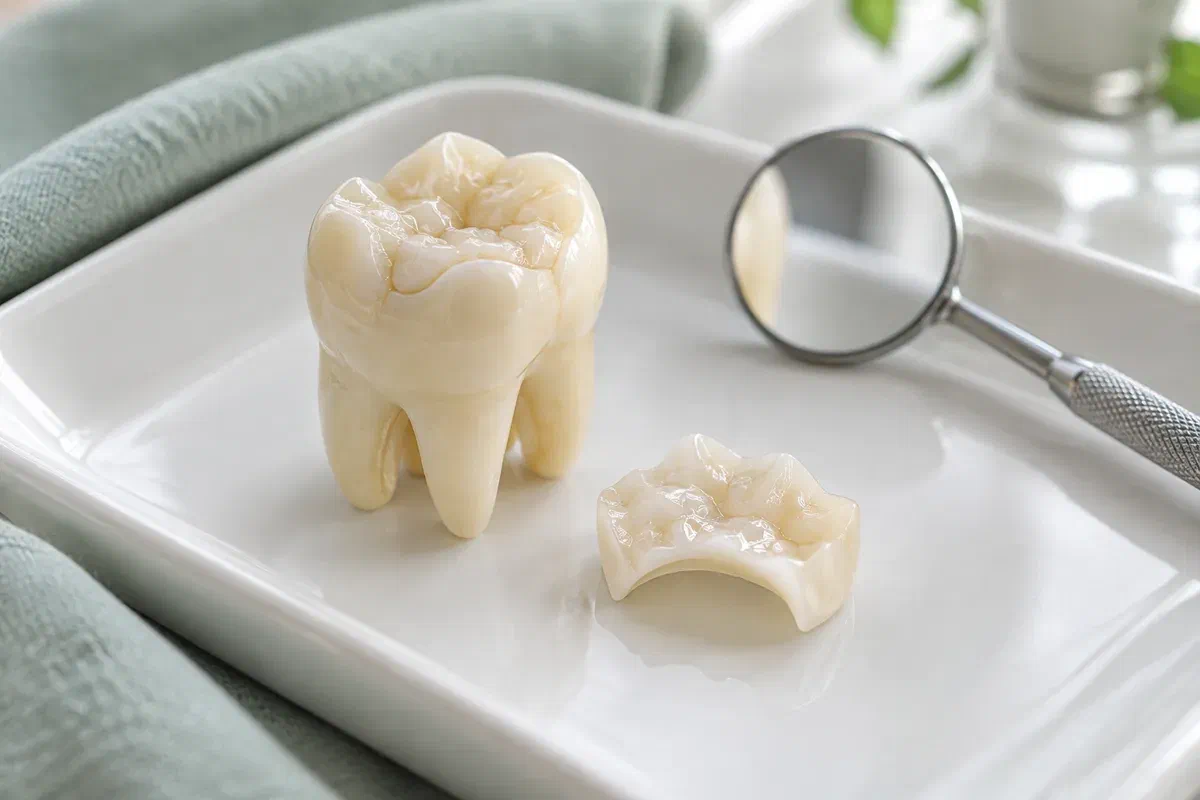
Illustrative molar teaching model and a separate partial-coverage restoration
What people notice

Looks, comfort, and bite, all at once

Some worn teeth can be left alone; others benefit from restoration. An examination sorts them. Earlier photos are especially useful for appearance concerns, since they show how much length or shape has changed.

Edges that feel sensitive or sharp

Thin front edges may be sensitive to cold or feel rough to the tongue. Other causes, including cracks or gum recession, can produce similar sensations. Tell us what triggers the discomfort so the dentist can confirm whether wear is responsible.

Teeth that look short or flat

Shortened teeth can change the smile line and make biting into food harder. Describe what you have noticed. How your upper and lower front teeth meet, and how much room exists, determines whether length can be added and how much.

Wanting several teeth to match

Restoring one front tooth may make neighbouring worn teeth more noticeable. Ask how a group of restorations would be planned, how your bite would be affected, and whether the work can be staged. A cosmetic plan needs as much explanation as a functional one.

A worn front tooth that suddenly cracks, hurts when biting, or has swelling at the gum should be checked promptly. Appearance concerns can wait; new pain should not.

What restoration may change

Length, shape, and a smile that fits you

Adding bonded composite to worn edges can restore some length and a more natural outline, often with little or no removal of healthy tooth. For suitable cases, this conservative approach is weighed before veneers, onlays, or crowns. It still depends on careful diagnosis, on a bite that can accommodate the change, and on accepting that bonded edges need upkeep.

Be specific about the look you have in mind. It might be front teeth that show a little more when you smile, edges that are smoother and more even, or matching teeth after a staged plan. Ask what is realistic. Restored teeth can chip or stain over time, and the result has to work with your bite, not only in the mirror.

Patient information: Leeds Teaching Hospitals — restorative dentistry services

Change without unnecessary drilling

Options differ in how much natural tooth they remove. Ask what each would involve and why. A restoration that covers more of the tooth is not automatically the better route to a good appearance.

A preview for larger changes

When length or shape will change noticeably, a trial or mock-up may help you judge appearance and how the teeth meet. Ask whether one would be useful and how it would be evaluated before definitive treatment.

Care for the long run

Polishing, small repairs, adjustment, or replacement may be needed eventually. Knowing how reviews will work and what to report helps you consider the ongoing commitment as well as the first result.

From idea to result

How an appearance-led plan works

Lengthening one edge may take a single visit, while changing several front teeth involves more records and decisions. We explain the steps suited to your findings in advance.

  1. Discuss goals and examine

    We talk about what you would like to change and review symptoms, history, and habits like grinding. The teeth, existing restorations, and bite are examined. Photographs and scans may be recommended to plan the appearance and check what the bite allows.

  2. Plan the shape together

    Monitoring, prevention, and restorative options are compared. For bigger changes, a trial shape may be suggested. Ask which teeth would change and how. Fees, the number of stages, and anything that might alter the plan are reviewed beforehand.

  3. Build or fit the restorations

    Composite can be sculpted onto the teeth at the chair, or restorations may be made by a lab and placed later. The area can be frozen if needed and kept dry while bonding. Larger changes may be phased so you can live with each one.

  4. Refine and review

    We check how the teeth meet in biting and sliding movements, polish the surfaces, and explain care. Follow-up looks at appearance, comfort, and function. If you wear a night guard, ask whether it needs to be checked or remade.

Keeping the new edges looking good

Habits that protect the result

Restorations restore shape but do not stop grinding, acid, or abrasion. Keep to the advice agreed for your situation, and tell the team if any of it is hard to follow.

Take care with front edges

You may be advised to avoid biting into very hard foods with restored edges, and not to bite nails, pens, or packaging. After freezing, wait for normal feeling before eating. Ask what sensations should prompt a call.

Brush and clean gently

Use a soft brush and fluoride toothpaste twice a day, and clean between teeth daily. A low-abrasion toothpaste may be suggested to protect polished surfaces. Restored teeth can still decay at their edges, so keep those areas clean.

Watch for chips and staining

Let us know about a chip, roughness, or a change in colour, and keep any broken piece. Polishing can often refresh a dull surface. If chipping recurs, the design or the bite may need another look.

Patient information: UK oral health guidance — monitoring and managing tooth wear

Ways to restore a worn smile

Three routes, different commitments

Several approaches may be reasonable, and some worn teeth look fine left as they are. Compare preparation, expected benefit, maintenance, and cost before deciding.

When rebuilding is not needed

Polish, protect, and monitor

Mild, stable wear can sometimes be improved by smoothing rough edges, with the causes managed and the teeth reviewed. Ask how change will be tracked and what would prompt restoration later.

Adding length and shape to suitable teeth

Composite edge bonding

Composite can rebuild worn edges and contours when there is enough tooth and the bite allows. It can usually be repaired or polished later. Ask how it may age and what limits apply for front teeth.

When more coverage or change is needed

Veneers, onlays, or crowns

Larger changes or greater structural loss may lead to discussion of lab-made restorations. These involve more preparation and their own maintenance. You should understand why coverage is suggested and whether bonding could achieve a similar result.

Appearance questions

Before you change your smile

Ask about the purpose, appearance, and future care of any restoration. These questions help whether you are considering one edge or several front teeth.

(905) 876-4488
Can bonding make my worn front teeth longer?
In many suitable cases, yes. How much length can be added depends on your bite, the space available, and the remaining tooth. Adding too much may lead to chipping or an uncomfortable bite, so the dentist will explain what is realistic.
Should I whiten my teeth before having them rebuilt?
If you are considering whitening, it is usually done before composite is placed, because composite does not lighten with whitening products. The shade of the restoration can then be matched to your whitened teeth. Ask whether whitening is suitable for you.
Will people be able to tell my teeth have been restored?
Composite and ceramic are designed to blend, and many restorations are hard to spot. A perfect match cannot be guaranteed, though, and the result can change slightly over time. Discuss the look you want, and ask whether a preview can be arranged for larger changes.
Could lengthening my teeth affect my speech?
Changes to front tooth length or shape can affect certain sounds at first, and most people adapt quickly. If speech feels noticeably different after a few weeks, let us know so the shape can be reviewed.
Does composite stain over time?
It can pick up some staining from coffee, tea, red wine, or smoking, and the surface can dull. Professional polishing often helps. Avoiding stain-heavy habits and keeping regular reviews helps restorations look their best for longer.
How should I plan visits from Rockwood for a multi-tooth smile change?
Ask at the planning stage how many appointments are likely, which steps must be separate, and whether a trial and final stage can be scheduled close together. Booking the series in advance can make travel easier to organise.
Rockwood worn tooth restoration

Talk about the smile you want back

Visit our Bronte Street practice to discuss shortened, flattened, or uneven front teeth. Bring older photos if you have them, any guard you wear, and your questions about appearance and comfort. We will explain what is possible and which teeth need repair, protection, or monitoring.

If you have significant pain, swelling, or a newly broken tooth, please phone. Online requests are for non-urgent appointments.

Visit Milton Dental Clinic
Unit 1, 342 Bronte St. S, Milton, ON L9T 5B7
Get directions Clinic hours
Monday–Thursday
11am–7pm
Friday–Sunday
By appointment only

Areas we serve

  • Milton
  • Oakville
  • Mississauga
  • Georgetown
  • Halton Hills
  • Acton
  • Campbellville
  • Brampton
  • Burlington
  • Puslinch
  • Rockwood
  • Erin
  • Caledon
  • Etobicoke
  • Old Milton
  • Bronte Meadows
  • Timberlea
  • Dorset Park
  • Dempsey
  • Clarke
  • Beaty
  • Coates
  • Harrison
  • Scott
  • Willmott
  • Ford
  • Bowes
  • Cobden
  • Walker
  • Mountain View
  • Milton Heights
  • Hawthorne Village
  • Valley View
  • Fallingbrook
  • Nassagaweya
  • Trafalgar
  • Esquesing
  • Nelson
  • Brookville
  • Moffat
  • Glen Williams
  • Norval
  • Limehouse
  • Stewarttown
  • Ashgrove
  • Hornby
  • Silver Creek
  • Speyside
  • Scotch Block
  • North Oakville
  • River Oaks
  • Glen Abbey
  • West Oak Trails
  • Palermo
  • Bronte Creek
  • College Park
  • Joshua Creek
  • Uptown Core
  • Preserve
  • Iroquois Ridge
  • Lisgar
  • Meadowvale
  • Meadowvale Village
  • Churchill Meadows
  • Erin Mills
  • Central Erin Mills
  • Streetsville
  • East Credit
  • Creditview
  • Heartland
  • Sheridan
  • Mount Pleasant
  • Credit Valley
  • Huttonville
  • Churchville
  • Springbrook
  • Northwest Brampton
  • Bram West
  • Fletcher's Meadow
  • Fletcher's Creek South
  • Alton Village
  • Orchard
  • Millcroft
  • Headon Forest
  • Tansley
  • Brant Hills
  • Tyandaga
  • Kilbride
  • Lowville
  • Aberfoyle
  • Morriston
  • Arkell
  • Hillsburgh
  • Freelton
  • Carlisle
  • Waterdown
  • Flamborough
  • Mountsberg

How can we help?

Milton Dental Clinic

Have a question about your smile? Choose the option that works best for you.

For urgent dental concerns, please call.
Messages are reviewed during clinic hours.