
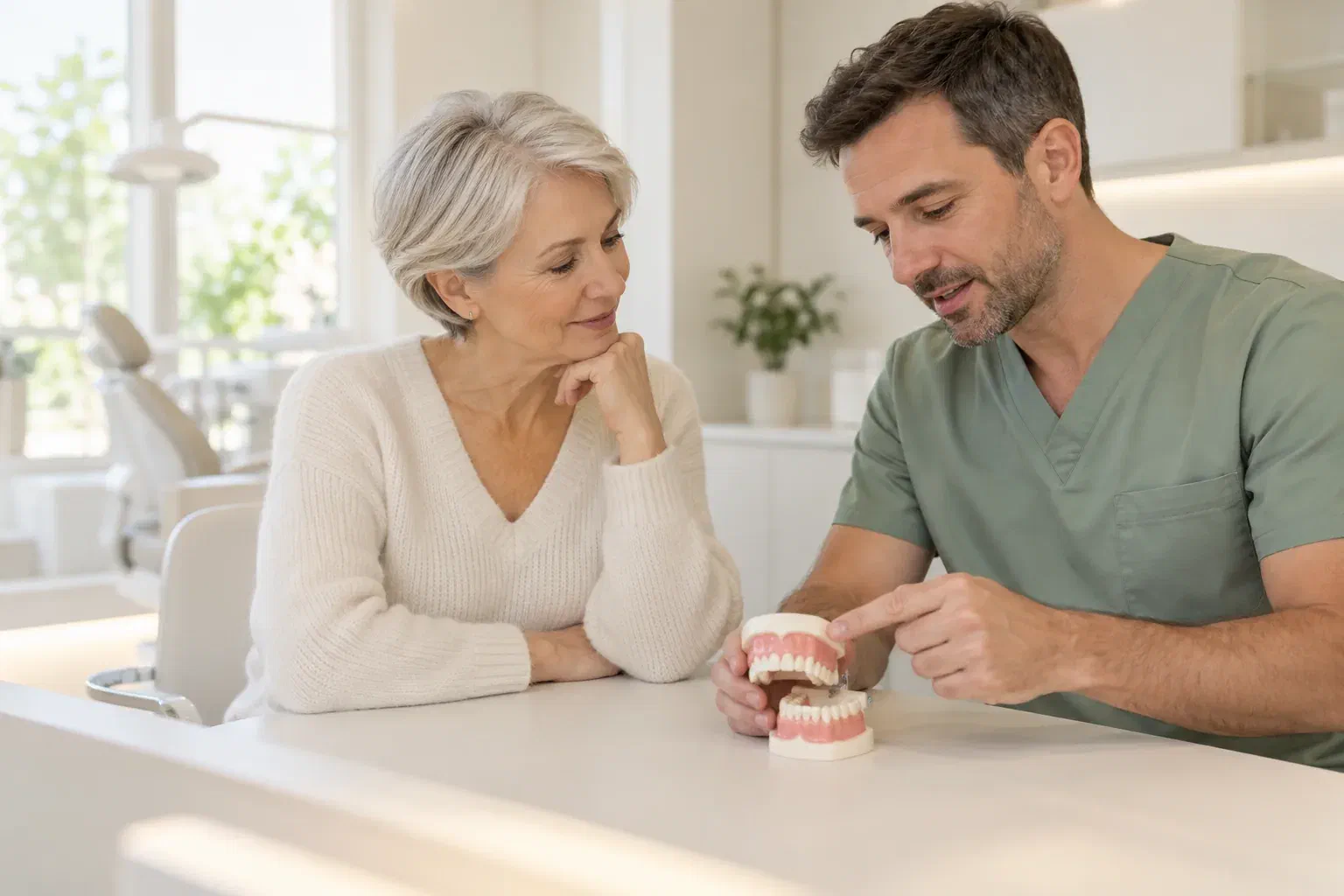
Illustrative patient and clinician discussing upper and lower tooth contacts using a dental model
Specialized Care

Bite and Occlusion Assessment

If your teeth meet differently, a restoration feels high, or chewing has become uncomfortable, begin with an assessment. Explore bite and occlusion assessment in Milton to review tooth contacts, recent changes, and the findings that should guide any next step.

A closer look at bite and occlusion assessment

Describe what feels different, then find out what needs attention.

Occlusion describes the way the upper and lower teeth contact one another. A bite assessment considers those contacts alongside the condition of the teeth, existing restorations, and the concern you have noticed. The purpose is to gather useful information before deciding whether treatment is needed.

You might feel one tooth touching first after a filling, notice discomfort when chewing, or want a second explanation of a suggested bite change. These experiences should be described carefully rather than grouped into one diagnosis. A tooth problem, restoration issue, and jaw complaint may require different investigations and different care.

At Milton Dental Clinic, explain when the change began and whether it followed dental treatment, an injury, or a change in an appliance. Bring relevant records if you have them. We can discuss the examination findings, clarify what remains uncertain, and help you understand the next step without assuming your bite must be permanently altered.

Discuss a change in your bite
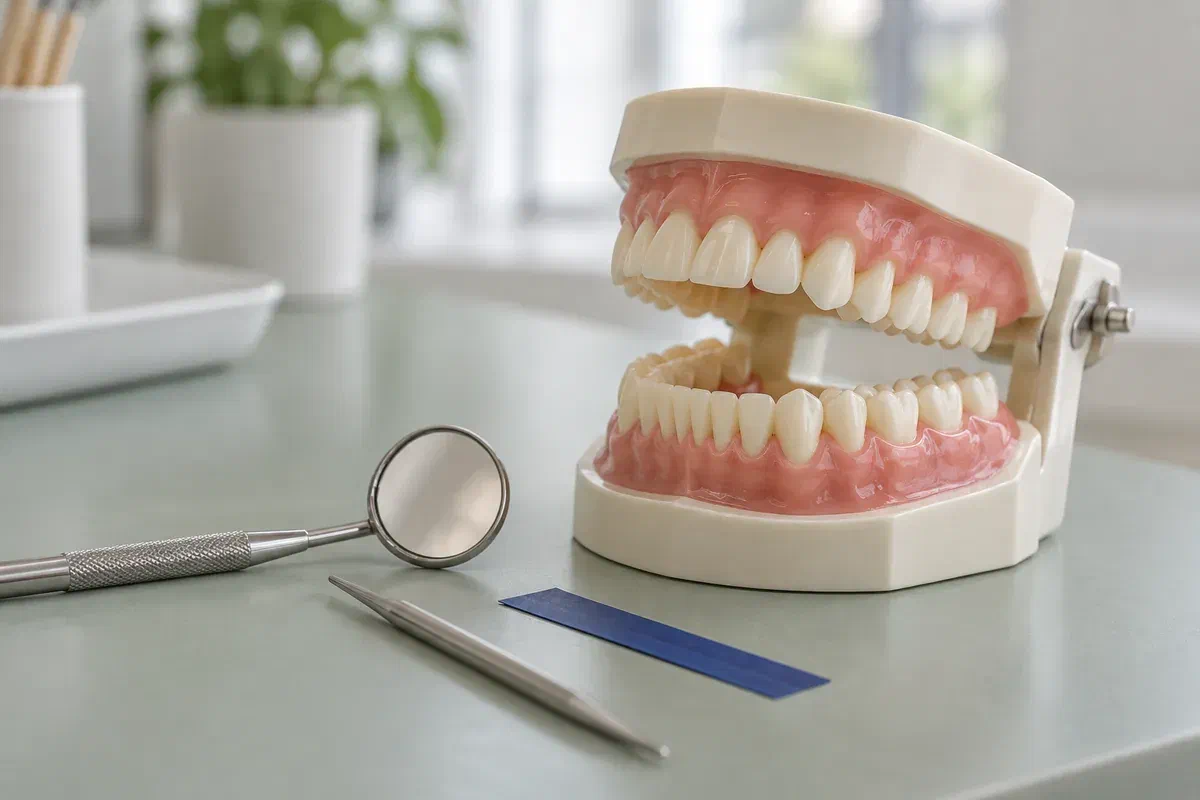
Illustrative hinged dental model beside a mirror and blue bite-marking paper on a pale surface
Reasons to have the contacts checked

A specific history helps make the assessment more useful.

Tell us what you feel during ordinary chewing and closing, and whether the concern is new or longstanding. There is no need to repeatedly test a painful tooth before attending.

A different contact after dental work

Mention a recent filling, crown, bridge, or other restoration and describe which area feels different. Explain whether it touches first, hurts on chewing, or simply feels unfamiliar. Contact the treating practice for review rather than assuming the restoration will wear into place.

Wear, chips, or recurring restoration problems

Bring the history of repairs and any current guard or retainer. Ask whether the tooth condition and contact pattern help explain the concern and what other causes need consideration. A visible wear mark alone is not a complete account of what is happening now.

Jaw symptoms or difficulty using the teeth comfortably

Describe pain, restricted movement, locking, or a change in how you can eat. The clinician may need to consider the jaw muscles, joints, and other possible sources of symptoms. A bite assessment should not turn every jaw complaint into a recommendation to reshape teeth.

Research does not support assuming that a bad bite causes temporomandibular disorders. If jaw pain is part of your concern, ask how the diagnosis is being established and why a proposed treatment is appropriate.

What the assessment can establish

Turn an uncomfortable sensation into a clearer set of questions.

A useful examination connects what you feel with the findings that can be demonstrated and explained. Ask which tooth or restoration is involved, whether the symptoms fit the observed contact, and what further information might be needed. An explanation can be valuable even when immediate treatment is not recommended.

The assessment also creates a chance to compare the scope of proposed care. Reviewing one recent restoration is different from planning changes across several teeth. You should understand the reason, alternatives, and limits of each proposal before deciding whether it addresses the problem that brought you in.

A distinction between a local issue and a broader concern

Ask whether the findings point to one restoration, a tooth requiring further tests, or a more complex assessment. This helps keep a limited concern from becoming an unexplained comprehensive plan. If several areas need attention, request a clear explanation of the priority for each.

A record of the starting point

Discuss which observations or records are useful before intervention and how the response will be reviewed. Ask what improvement would mean for your complaint, such as comfort with a particular activity. A follow-up plan is easier to understand when its purpose is agreed in advance.

Space to consider the consequences of a change

Before any irreversible adjustment, ask exactly what would be altered and whether the change affects enamel or restorative material. Review alternatives and uncertainty as well as the intended benefit. You can request further explanation or another opinion before committing to a wider plan.

What a bite assessment may involve

Listen to the history, examine the teeth, and interpret the findings together.

The assessment is individualized. Not every concern needs the same records, and an examination appointment is not automatic consent for grinding teeth or changing a restoration.

  1. Explain the onset and the activities affected

    Describe when the change began, where you notice it, and whether the problem occurs with closing, chewing, or at rest. List relevant recent treatment and previous attempts to address it. Mention any jaw symptoms separately so the discussion does not focus only on tooth contacts.

  2. Examine the teeth, restorations, and contacts

    The clinician checks the relevant structures and may use bite-marking material to help identify contact areas. Explain what you feel during the assessment. Marks are considered alongside the history and examination rather than treated as a complete explanation of pain on their own.

  3. Discuss further investigation where appropriate

    Ask whether additional tooth tests, images, study records, or another clinician's assessment would help. The choice should reflect the findings and the question being investigated. There is no need to assume that every patient requires a particular digital device or extensive set of records.

  4. Agree on a proportionate next step

    Review monitoring, targeted care, conservative symptom management, or referral as appropriate. Confirm any proposed adjustment separately and ask how it will be reviewed afterward. If the findings do not explain the complaint, discuss how that uncertainty will be investigated rather than proceeding by trial and error.

After the examination or a recommended intervention

Know what to observe and when to come back.

An assessment alone may not require a treatment recovery period. Instructions depend on whether care was provided, an appliance was reviewed, or further investigation is being arranged.

Follow the plan without home adjustment

Do not file a tooth, trim a restoration, or reshape a guard yourself. If something still feels wrong, contact the team and describe the change. Keep any appliance available for review so the clinician can assess it directly instead of relying only on a description.

Report the response in ordinary daily use

Explain whether chewing is more comfortable, unchanged, or worse, and whether new symptoms have appeared. You can make brief notes about the activity and location without repeatedly clenching to test the bite. Ask when a persistent concern should be reassessed rather than waiting indefinitely.

Bring the relevant information to follow-up

Keep the treatment summary, referral details, and appliance instructions together if they were provided. Tell the clinician about care received elsewhere since the assessment. A clear record helps the next visit focus on what has changed and what question still needs an answer.

Choosing what follows the assessment

The findings should determine the scope of care.

Ask which problem an option is intended to address and what evidence supports it. A contact difference, damaged tooth, and jaw pain do not automatically share the same solution.

When the concern is limited and the findings are clear

Observation or a focused restoration review

A specific restoration may need review, while another finding may reasonably be monitored. Ask why a change is recommended, what material would be affected, and what follow-up is planned. The decision should be based on the examination rather than the sensation alone.

When protection or symptom management is relevant

Conservative care or appliance assessment

If clenching, grinding, or an existing appliance is part of the concern, discuss its assessment and the purpose of any proposed care. An appliance is not a universal answer to jaw pain. Ask about fit, instructions, limitations, and how benefit or a problem would be reviewed.

When the explanation or treatment needs broader input

Further dental or specialist evaluation

Persistent symptoms, complex restorative questions, or a jaw condition may warrant another opinion. Ask what the referral is intended to clarify and what to do while waiting. Permanent bite changes should not be offered as a routine cure for temporomandibular pain.

Patient information: NIDCR — bruxism assessment, symptoms, and protection of teeth

Bite and occlusion questions

Ask for an explanation before agreeing to an adjustment.

Your symptoms, treatment history, and examination findings need to be considered together. The appointment can clarify the choices even if no immediate alteration is appropriate.

(905) 876-4488
Does booking a bite assessment mean my teeth will be filed at that visit?
No. Assessment and treatment consent are separate. Ask what the clinician found, whether any adjustment is recommended, and exactly what would be changed. You should understand the purpose, alternatives, and consequences before agreeing to removal of enamel or restorative material.
What should I do if a new filling seems to touch before the other teeth?
Contact the treating practice and explain when it was placed, what feels different, and whether there is pain. The tooth and restoration need review before deciding on the next step. Do not try to wear the contact down by repeatedly biting hard.
Can bite-marking paper identify the whole cause of chewing pain?
It can help show where contacts occur, but it is only part of the assessment. The symptom history, tooth condition, restorations, and other examination findings also matter. Ask how the observed marks relate to the diagnosis rather than assuming a mark alone explains pain.
Should I bring a nightguard even if the appointment is about a filling?
Bring any appliance you currently use and explain whether the concern occurs with or without it. Recent dental work may be relevant to fit. The clinician can decide what needs checking; do not modify or stop a prescribed appliance routine without discussing the situation.
Does painless jaw clicking mean my bite needs correcting?
Painless clicking is common and does not itself require treatment. Mention it during assessment, particularly if the pattern changes, but distinguish it from pain, locking, or restricted movement. A sound alone is not a reason to permanently alter the teeth.
What if the examination does not clearly explain why my bite feels wrong?
Ask what has been ruled out, what remains uncertain, and whether review or further assessment is appropriate. A clear diagnosis may require more information. Repeated irreversible adjustments without an understood purpose should not replace a considered investigation of the complaint.

Patient information: NIDCR — painless joint sounds and caution about permanent bite changes for TMD

Bite and occlusion assessment in Milton

Bring the change you feel and the history that comes with it.

Contact our Bronte Street practice about uneven contacts, a restoration that feels different, or discomfort when using your teeth. We can assess the concern and discuss suitable review, care, or further investigation.

The examination, records, treatment scope, referral needs, and fees depend on findings. Bite adjustment is not automatic, and no assessment can promise a particular explanation or symptom outcome in advance.

Visit Milton Dental Clinic
Unit 1, 342 Bronte St. S, Milton, ON L9T 5B7
Get directions Clinic hours
Monday–Thursday
11am–7pm
Friday–Sunday
By appointment only

How can we help?

Milton Dental Clinic

Have a question about your smile? Choose the option that works best for you.

For urgent dental concerns, please call.
Messages are reviewed during clinic hours.