
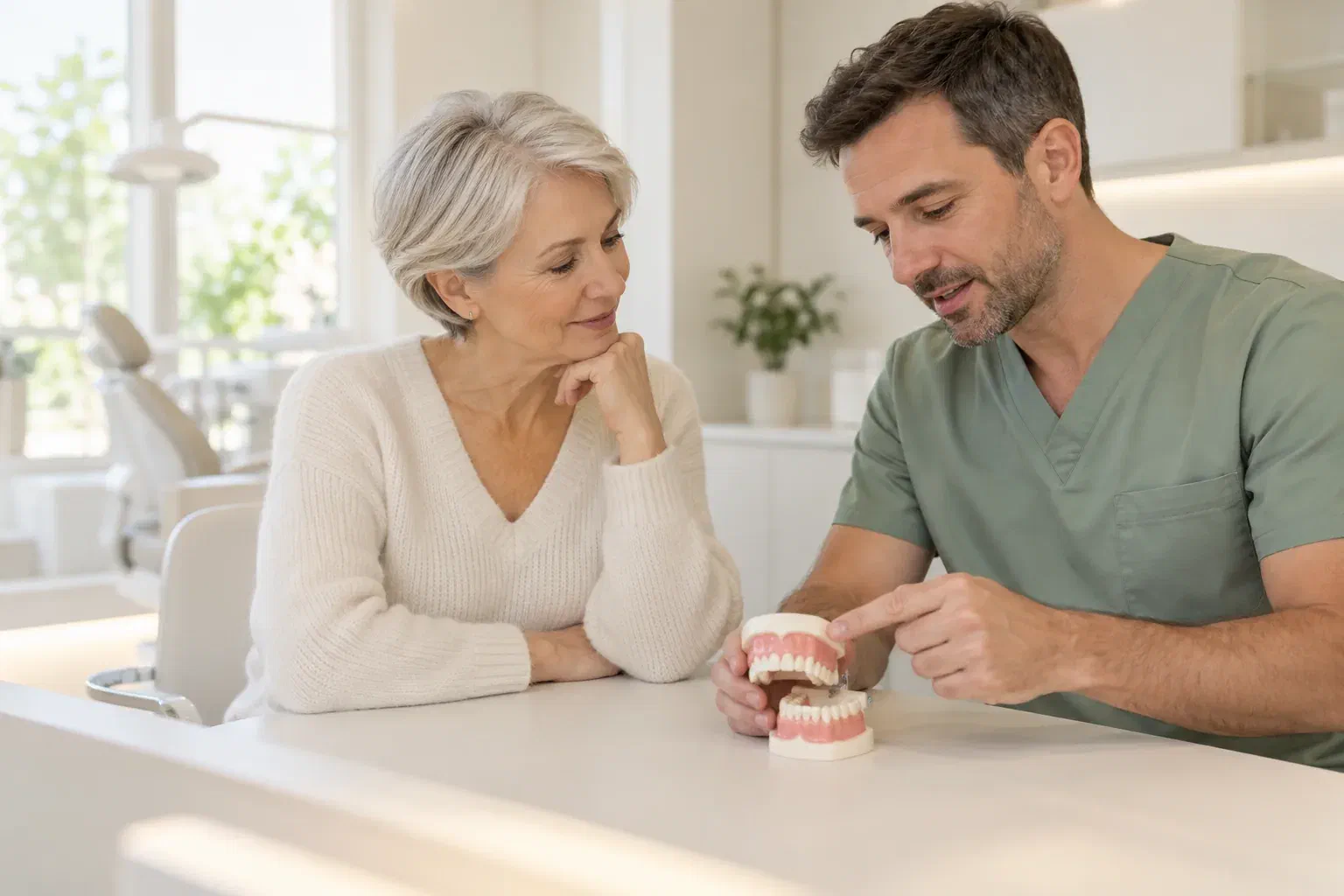
Illustrative patient and clinician discussing upper and lower tooth contacts using a dental model
Specialized Care

Bite and Occlusion Assessment in Campbellville

It is only a small thing, so you have been waiting to see whether it settles. Sometimes that is reasonable; sometimes it means living with a problem for longer than needed. From Campbellville, a bite assessment can tell you which applies, by examining your contacts, teeth and dental work.

Deciding whether to wait

Wait and see has its limits.

When the trip into town has to be fitted around work, chores and weather, it is tempting to give a minor bite problem a few more weeks. The trouble is that a tooth meeting too early, or one that has become tender, does not always improve with time. Occlusion is the term for how your teeth contact each other, and an assessment checks that alongside the teeth, any restorations and your symptoms.

Knowing what might be going on helps you judge the wait. A new filling sitting a little high, a cracked or inflamed tooth, a loose restoration and tired jaw muscles can all feel like a bite that is off. Some of those can reasonably be watched; others are better looked at soon. They are not interchangeable, so the examination separates them.

When you call, say when the change began and whether it followed dental work, a knock to the face or an altered appliance. Bring any records and appliances you have. We will explain what we see, tell you honestly what remains uncertain and agree on a next step with you, without assuming the teeth need to be reshaped.

Ask whether your bite needs a look
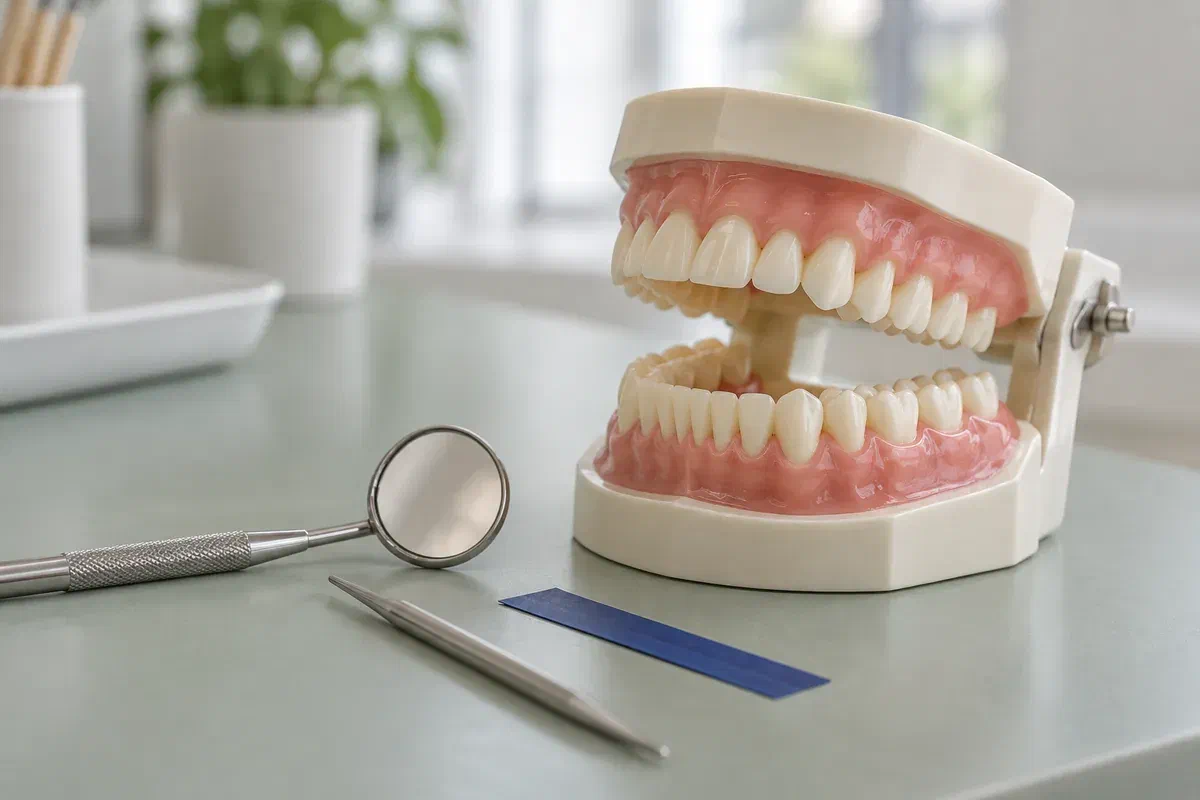
Illustrative hinged dental model beside a mirror and blue bite-marking paper on a pale surface
Reasons not to keep waiting

These are worth a booking rather than another month.

Think about whether the problem is steady, improving or getting worse, and how it affects meals. You do not need to keep biting on a sore tooth to see if it has changed before you come in.

Recent work that still feels high

A filling, crown or bridge that keeps landing first, or hurts when you chew, is unlikely to sort itself out quickly. Tell us where it is and what you feel. If another practice placed it, contacting them for a review is usually the best first step.

Chips, wear or a restoration that keeps failing

A tooth that has chipped more than once, or a repair that keeps coming loose, deserves attention before it breaks further. Bring any guard or retainer and your repair history. We consider whether contacts and tooth condition fit the problem and what else could be involved.

A jaw that is making eating harder

Pain, stiffness, catching, locking or limited opening that is changing your meals should be described in detail. What is happening in the chewing muscles and joints deserves a separate look. Jaw symptoms are not an automatic reason to reshape teeth.

Evidence does not show that a poor bite is a reliable cause of temporomandibular disorders. If your jaw is involved, it is fair to ask how the diagnosis was reached and why a particular treatment is proposed.

A clearer answer to the waiting question

Sometimes reassurance, sometimes a simple fix.

One of the most practical outcomes is simply knowing whether waiting is safe. The examination connects your sensation with something visible: a high contact, a tender tooth, a worn restoration or a jaw that needs a different approach. When nothing needs treating, you can stop wondering; when something does, it can be dealt with before it grows.

You can also see the size of any proposal. Easing one high spot on a new filling is quick and specific, while changing many contacts is a significant commitment. For anything suggested, ask what it is for, what the alternatives are and what it will not do, and whether it truly answers your original concern.

One tooth, or a bigger picture?

The findings may centre on a single restoration, a tooth needing further testing, or a broader pattern. Knowing which helps you plan your time and keeps a small issue from turning into a large unexplained plan. If several things need care, ask how they rank.

A note of where things stand

Agree on which observations are worth recording now, so a later visit can compare fairly. Decide what improvement would mean, such as chewing comfortably on both sides. Then a review appointment has an obvious purpose.

No rush on permanent changes

If an irreversible adjustment is mentioned, ask exactly what would be removed and whether that is enamel or restoration material. Weigh the alternatives and uncertainty. You can take time, or seek another opinion, before deciding.

What to expect

An examination that answers a practical question.

The visit is shaped by your concern. Records differ from one person to the next, and sitting in the chair to be examined is not the same as saying yes to any reshaping.

  1. Explain how long you have waited

    Tell us when the change began, whether it is improving or worsening, and whether it shows up on closing, chewing or at rest. Mention recent dental care and any home remedies. If your jaw is part of it, we give that its own time in the conversation.

  2. Check teeth, restorations and contacts

    The clinician examines the teeth and any work involved, and a strip of coloured paper between your teeth may reveal where they touch. Describe what you feel. Those coloured spots are one clue among several, not the whole explanation.

  3. Decide on further tests, if useful

    Sometimes a test on one tooth, an x-ray, models or a colleague’s view will help. Ask whether anything needed can be done at the same visit to save another trip. Not every concern requires a particular device or a full set of records.

  4. Agree on what happens next

    Monitoring, a focused correction, conservative care or a referral are the usual options. Any adjustment is a separate agreement, with a plan to check it. If the cause is still unclear, the next step is further investigation rather than trial and error.

After the visit

Back home, keep it simple.

If all you had was an examination, you can usually carry on as normal. Anything more specific will depend on whether care was given, a guard was reviewed or another step is being lined up.

Avoid home adjustments

A nail file, a kitchen knife on a guard or picking at a filling can turn a small problem into a harder one. If something still feels wrong, call first and describe it; that may spare you a drive. Keep the appliance ready to bring in.

See how ordinary meals go

Notice whether chewing is easier, the same or harder, and whether anything new has appeared. Short notes are enough, and testing by clenching is not helpful. Before you leave, find out how long a lingering issue should be given before you call.

Group your paperwork

Put the visit summary, any referral letter and guard instructions in the same drawer, and let us know about dental care received elsewhere. A follow-up can then concentrate on what has changed.

What might follow

Small problems usually need small answers.

Ask what each option is meant to fix and what supports it. A high spot, a damaged tooth and a painful jaw rarely call for the same thing.

When the problem is narrow and clear

Watching or a restoration review

Often only one restoration is the culprit, and everything else can simply be kept under observation. Before anything is touched, ask what the change would accomplish, whether it involves tooth or filling material and when it will be checked again. Let the findings, not the sensation alone, decide.

When protection or comfort is the goal

Conservative care or a guard check

Night grinding, daytime clenching or a guard that no longer sits well can all be looked at, with a plain account of what any new care is meant to do. Guards shield enamel; they are not a remedy for every sore jaw. Ask how it should feel, when to wear it, what it cannot do and when it gets rechecked.

When the answer needs more expertise

A further dental or specialist opinion

Symptoms that will not ease, a tangle of older restorations or a suspected joint disorder can be beyond a single visit’s answer. If you are referred, find out what question the referral is meant to settle and what to do until then. Altering the bite for good is not a standard fix for jaw joint pain.

Patient information: NIDCR — bruxism assessment, symptoms, and protection of teeth

Should I wait or book?

Straight answers about timing.

Your symptoms, history and examination findings are considered together. The appointment can clarify whether waiting is sensible even if nothing needs changing.

(905) 876-4488
How long is it reasonable to wait for a new filling to stop feeling high?
A new restoration can feel unfamiliar briefly, but one that clearly lands first or hurts when chewing should be reviewed rather than left for weeks. Contact the practice that placed it and describe what you feel.
Can a high spot on a filling cause tooth pain if it is left?
Extra force on one tooth can leave it tender. That is one reason a contact that feels clearly high is worth checking sooner. The clinician will look at the tooth itself as well as the contact.
I bumped my mouth and now my teeth meet differently. Can I book a routine visit?
A change in your bite after an injury should be discussed promptly rather than booked as routine. Call and describe what happened, any pain, looseness or swelling, so the team can advise how quickly you should be seen.
Does an assessment mean my teeth will be adjusted?
No. Examining your bite and changing it are separate decisions. If a change is suggested, ask what would be removed, from which surface and why, and consider the alternatives before agreeing.
Can I combine a bite check with another appointment to save a trip from Campbellville?
Ask when booking whether it can be scheduled alongside a checkup or another family member’s visit. Whether that works depends on the time needed and on the findings, but the team can help you plan.
What if the assessment does not find a clear reason?
Ask what was excluded, what remains open and whether a review or further assessment would help. Sometimes the picture becomes clearer over time. Repeated irreversible changes without a clear goal are not a good substitute for patient investigation.

Patient information: NIDCR — painless joint sounds and caution about permanent bite changes for TMD

Campbellville bite assessments

Find out if it is worth waiting.

Call our Bronte Street practice about a bite that has not settled, a filling or crown that still lands first, or meals that have become uncomfortable. If you are coming from Campbellville, we will examine the concern and explain whether to monitor, treat or look further.

The examination, records, treatment, referral and fees are guided by the findings. A bite adjustment is never assumed, and no visit can guarantee a particular explanation or outcome.

Visit Milton Dental Clinic
Unit 1, 342 Bronte St. S, Milton, ON L9T 5B7
Get directions Clinic hours
Monday–Thursday
11am–7pm
Friday–Sunday
By appointment only

Areas we serve

  • Milton
  • Oakville
  • Mississauga
  • Georgetown
  • Halton Hills
  • Acton
  • Campbellville
  • Brampton
  • Burlington
  • Puslinch
  • Rockwood
  • Erin
  • Caledon
  • Etobicoke
  • Old Milton
  • Bronte Meadows
  • Timberlea
  • Dorset Park
  • Dempsey
  • Clarke
  • Beaty
  • Coates
  • Harrison
  • Scott
  • Willmott
  • Ford
  • Bowes
  • Cobden
  • Walker
  • Mountain View
  • Milton Heights
  • Hawthorne Village
  • Valley View
  • Fallingbrook
  • Nassagaweya
  • Trafalgar
  • Esquesing
  • Nelson
  • Brookville
  • Moffat
  • Glen Williams
  • Norval
  • Limehouse
  • Stewarttown
  • Ashgrove
  • Hornby
  • Silver Creek
  • Speyside
  • Scotch Block
  • North Oakville
  • River Oaks
  • Glen Abbey
  • West Oak Trails
  • Palermo
  • Bronte Creek
  • College Park
  • Joshua Creek
  • Uptown Core
  • Preserve
  • Iroquois Ridge
  • Lisgar
  • Meadowvale
  • Meadowvale Village
  • Churchill Meadows
  • Erin Mills
  • Central Erin Mills
  • Streetsville
  • East Credit
  • Creditview
  • Heartland
  • Sheridan
  • Mount Pleasant
  • Credit Valley
  • Huttonville
  • Churchville
  • Springbrook
  • Northwest Brampton
  • Bram West
  • Fletcher's Meadow
  • Fletcher's Creek South
  • Alton Village
  • Orchard
  • Millcroft
  • Headon Forest
  • Tansley
  • Brant Hills
  • Tyandaga
  • Kilbride
  • Lowville
  • Aberfoyle
  • Morriston
  • Arkell
  • Hillsburgh
  • Freelton
  • Carlisle
  • Waterdown
  • Flamborough
  • Mountsberg

How can we help?

Milton Dental Clinic

Have a question about your smile? Choose the option that works best for you.

For urgent dental concerns, please call.
Messages are reviewed during clinic hours.