
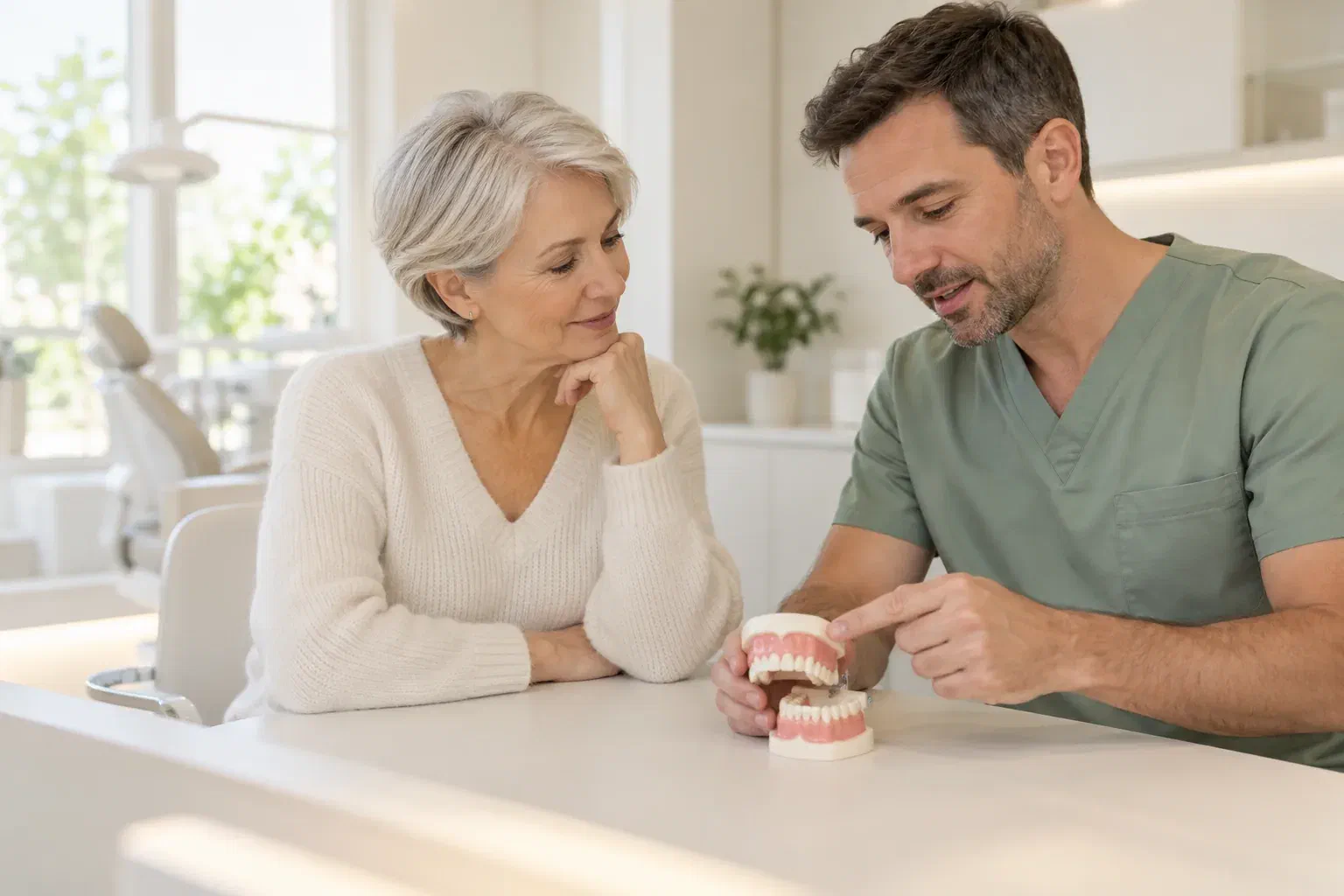
Illustrative patient and clinician discussing upper and lower tooth contacts using a dental model
Specialized Care

Bite and Occlusion Assessment in Erin

Most of what happens after a bite assessment happens at home: eating normally, noticing how things feel and knowing when to call. From Erin or Hillsburgh, you can have your contacts, teeth and dental work examined, then leave with a clear idea of what to watch and when to come back.

Thinking past the appointment

The real test is your kitchen table.

In the chair, you close on a strip of coloured paper and the clinician looks at the marks. At home, you eat toast, chew a steak, wake up after a night’s sleep. Occlusion, the way upper and lower teeth touch, is assessed in the clinic, but whether a concern is resolved is judged in ordinary life. A good assessment prepares you for both.

That starts with knowing what is being looked at. A filling that meets too early, a tooth that is tender for another reason and a jaw that is tired or sore can all feel like a bite problem, yet each would be watched for different signs afterward. Separating them during the visit makes the days that follow much easier to interpret.

Bring what you can: recent treatment details, any guard or retainer and a sense of when the change began and whether it followed dental work, an injury or an appliance change. We will explain the findings, say plainly what is still uncertain and talk through what to notice at home, without assuming your teeth must be reshaped.

Ask what to expect after an assessment
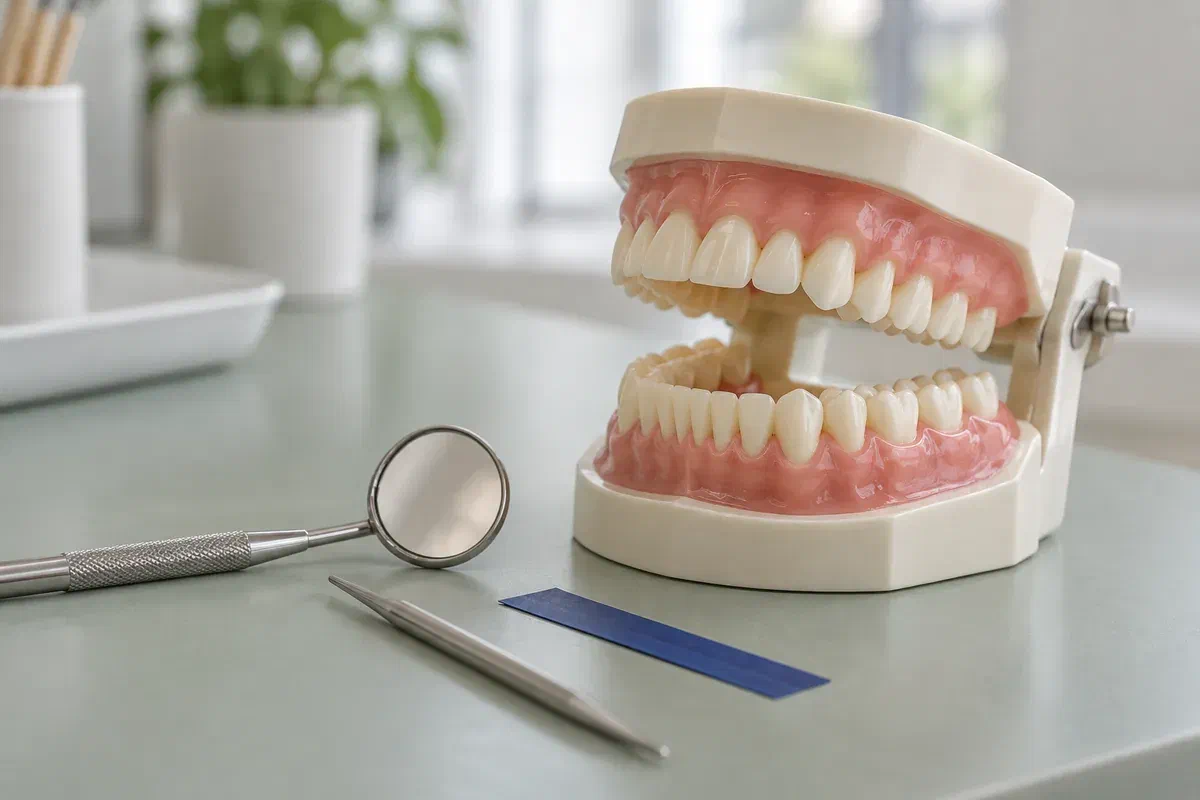
Illustrative hinged dental model beside a mirror and blue bite-marking paper on a pale surface
Concerns we hear from Erin

What you notice at home is the starting point.

Before your visit, pay attention to ordinary meals and mornings rather than testing your teeth deliberately. Avoid chewing on a sore tooth while you wait.

A restoration that feels wrong at meals

A new filling, crown or bridge that lands first, aches when you chew or feels foreign is worth describing. Mention which side and when it was placed. If another practice did the work, contact them for a review; time alone rarely corrects a clearly high contact.

Chips, wear or repairs that do not last

Point out chipped edges, flattened surfaces or a filling that keeps loosening, and bring any guard or retainer. We look at whether contacts and tooth condition explain the damage and consider other causes. Wear tells us where teeth have met, not the full reason for a problem.

A jaw that aches or catches

Describe pain, stiffness, catching, locking or limited opening, and any foods you now avoid. Chewing muscles and the joints in front of the ears sometimes need examining in their own right. A sore jaw is not, by itself, grounds for grinding teeth down.

An uneven bite has not been shown to be a dependable cause of temporomandibular disorders. When jaw soreness is part of the picture, you are entitled to know how the diagnosis was arrived at and why a given treatment suits you.

What a clear assessment gives you

Confidence to get on with your week.

Clarity is the main gift. When your description is matched to findings that can be explained, you know which tooth or restoration is involved, whether the contacts fit your symptoms and what remains open. That makes it far easier to judge at home whether things are improving, even if no treatment was needed.

It also tells you how big any proposed step really is. Refining one new filling is a small change with a short settling period; altering contacts across many teeth is a much larger commitment. For each idea, find out why it is suggested, what else could be done, where it falls short and how its effect would be judged in daily life.

Knowing what you are watching

Findings may point to one tooth or restoration, to something needing more testing or to a broader question. Understanding which tells you what signs matter at home and keeps a small issue from becoming an unexplained large plan.

A starting point to compare with

Agree on what to note now and what improvement would look like, perhaps eating on both sides without hesitation. With that agreed, you will know whether a follow-up visit is needed.

No pressure on permanent changes

Should a permanent adjustment come up, get a clear account of how much enamel or filling material is involved, what the other choices are and what is still unknown. Taking a few days to decide, or seeking another opinion, is fine.

In the clinic

Four steps, then home with a plan.

Every assessment is adapted to the concern. Some need only a conversation and an examination, others need records, and being looked at is never the same as agreeing to have something reshaped.

  1. Explain how daily life is affected

    Describe when the change began, where you feel it and whether it shows up when closing, chewing or resting. Mention any recent dental visits and home remedies. A sore or stiff jaw is talked about on its own.

  2. Examination of teeth and contacts

    The clinician examines the teeth and restorations and may ask you to bite on thin marking paper. Tell us what you feel. The marks are weighed with your history and the examination rather than treated as a full answer.

  3. Consider further information

    Tooth tests, x-rays, models or another clinician’s view are useful for some questions and not others. Ask whether anything needed can be done the same day. No single device is required for everyone.

  4. Leave knowing what to watch

    The next step may be monitoring, focused care, conservative symptom relief or a referral. Any adjustment is agreed separately, and you should leave knowing what to expect afterward and when it will be reviewed. If the cause is unclear, further investigation comes before any trial changes.

The days afterward

Eat normally, notice calmly, call if unsure.

Assessment alone typically needs no recovery. If a small adjustment, an appliance check or another step was involved, you will be given specific guidance for the days that follow.

Let teeth settle without interference

Avoid filing, scraping or trimming teeth, fillings or guards at home. If something still feels off after the period you were given, call and describe it. Keep any appliance ready to bring in.

Use ordinary meals as the test

Notice whether chewing feels easier, the same or harder, and whether any new tenderness appears. There is no need to clench or bite hard to check. Make a short note so you can describe it accurately if you call.

Keep instructions where you will see them

Put any treatment summary, referral information and appliance instructions somewhere handy, and mention care received elsewhere. Clear notes let a follow-up focus on what has changed.

Possible paths

The findings decide, and the follow-up confirms.

For every route, ask what it is aimed at and why it is thought to work. An early-landing filling, a cracked or worn tooth and an aching jaw are separate problems, and each would be judged by different signs at home.

When a single cause stands out

Monitoring or a single restoration review

It may be that one restoration deserves a closer look and the rest can be left alone for now. Ask what the change would accomplish, which material it touches and how you will know it worked. The examination, rather than sensation alone, should guide the decision.

When protection or comfort is the aim

Conservative care or a guard check

If grinding, clenching or an existing guard is part of the picture, it can be checked and any new care explained. A guard protects teeth but does not settle every jaw complaint. Ask about fit, wearing routine, limits and what to notice at home.

When the explanation needs broader input

Further dental or specialist assessment

When symptoms hang on, several restorations interact or the jaw joint itself seems involved, another clinician’s view can help. Find out what that visit should answer and how to manage until it happens. Permanent bite changes are not a standard remedy for jaw joint pain.

Patient information: NIDCR — bruxism assessment, symptoms, and protection of teeth

Questions from Erin and Hillsburgh

What about afterward?

We look at your symptoms, your dental history and what the examination shows as one picture. The visit can clarify choices even if no change is needed.

(905) 876-4488
How will I know at home whether the problem has been solved?
Before leaving, agree on what improvement would look like, such as chewing comfortably on the affected side. Then pay attention during ordinary meals. If things are no better after the time you were given, call and describe what you notice.
If a filling is adjusted, how soon should it feel normal?
Many people notice a difference fairly quickly, but the clinician will tell you what to expect for your situation. If the tooth still lands first or becomes more painful, contact the practice rather than waiting indefinitely.
Is some tenderness normal after a bite assessment?
An examination alone does not usually cause lasting discomfort. If a tooth or jaw was already sore, it may stay that way for a while. New or worsening pain, swelling or difficulty opening should be reported.
Can I go back to wearing my guard straight away?
Follow the instructions you were given. If the guard was reviewed or the fit was questioned, ask before leaving whether to keep wearing it. Do not trim or adjust it yourself.
Will anything be removed from my teeth without my agreement?
No. Assessment and treatment are separate. If a change is recommended, ask what would be removed, why and what the alternatives are, and agree only once you understand the reasons.
Can follow-up from Erin be handled by phone first?
Often a call is a sensible first step to describe how things are going. The team can advise whether a visit is needed. For urgent symptoms such as swelling or severe pain, call promptly so the right next step can be arranged.

Patient information: NIDCR — painless joint sounds and caution about permanent bite changes for TMD

Booking from Erin

Come in with questions, leave with a plan for home.

Give our Bronte Street practice a call if your teeth have started landing unevenly, a crown or filling no longer feels like yours, or meals have become a chore. We will examine what is going on, tell you what to watch for once you are home, and say whether care or a further look is warranted.

The scope of the examination, records, any treatment or referral, and fees depend on what is found. Bite adjustment is not automatic, and the explanation or outcome cannot be promised in advance.

Visit Milton Dental Clinic
Unit 1, 342 Bronte St. S, Milton, ON L9T 5B7
Get directions Clinic hours
Monday–Thursday
11am–7pm
Friday–Sunday
By appointment only

Areas we serve

  • Milton
  • Oakville
  • Mississauga
  • Georgetown
  • Halton Hills
  • Acton
  • Campbellville
  • Brampton
  • Burlington
  • Puslinch
  • Rockwood
  • Erin
  • Caledon
  • Etobicoke
  • Old Milton
  • Bronte Meadows
  • Timberlea
  • Dorset Park
  • Dempsey
  • Clarke
  • Beaty
  • Coates
  • Harrison
  • Scott
  • Willmott
  • Ford
  • Bowes
  • Cobden
  • Walker
  • Mountain View
  • Milton Heights
  • Hawthorne Village
  • Valley View
  • Fallingbrook
  • Nassagaweya
  • Trafalgar
  • Esquesing
  • Nelson
  • Brookville
  • Moffat
  • Glen Williams
  • Norval
  • Limehouse
  • Stewarttown
  • Ashgrove
  • Hornby
  • Silver Creek
  • Speyside
  • Scotch Block
  • North Oakville
  • River Oaks
  • Glen Abbey
  • West Oak Trails
  • Palermo
  • Bronte Creek
  • College Park
  • Joshua Creek
  • Uptown Core
  • Preserve
  • Iroquois Ridge
  • Lisgar
  • Meadowvale
  • Meadowvale Village
  • Churchill Meadows
  • Erin Mills
  • Central Erin Mills
  • Streetsville
  • East Credit
  • Creditview
  • Heartland
  • Sheridan
  • Mount Pleasant
  • Credit Valley
  • Huttonville
  • Churchville
  • Springbrook
  • Northwest Brampton
  • Bram West
  • Fletcher's Meadow
  • Fletcher's Creek South
  • Alton Village
  • Orchard
  • Millcroft
  • Headon Forest
  • Tansley
  • Brant Hills
  • Tyandaga
  • Kilbride
  • Lowville
  • Aberfoyle
  • Morriston
  • Arkell
  • Hillsburgh
  • Freelton
  • Carlisle
  • Waterdown
  • Flamborough
  • Mountsberg

How can we help?

Milton Dental Clinic

Have a question about your smile? Choose the option that works best for you.

For urgent dental concerns, please call.
Messages are reviewed during clinic hours.