
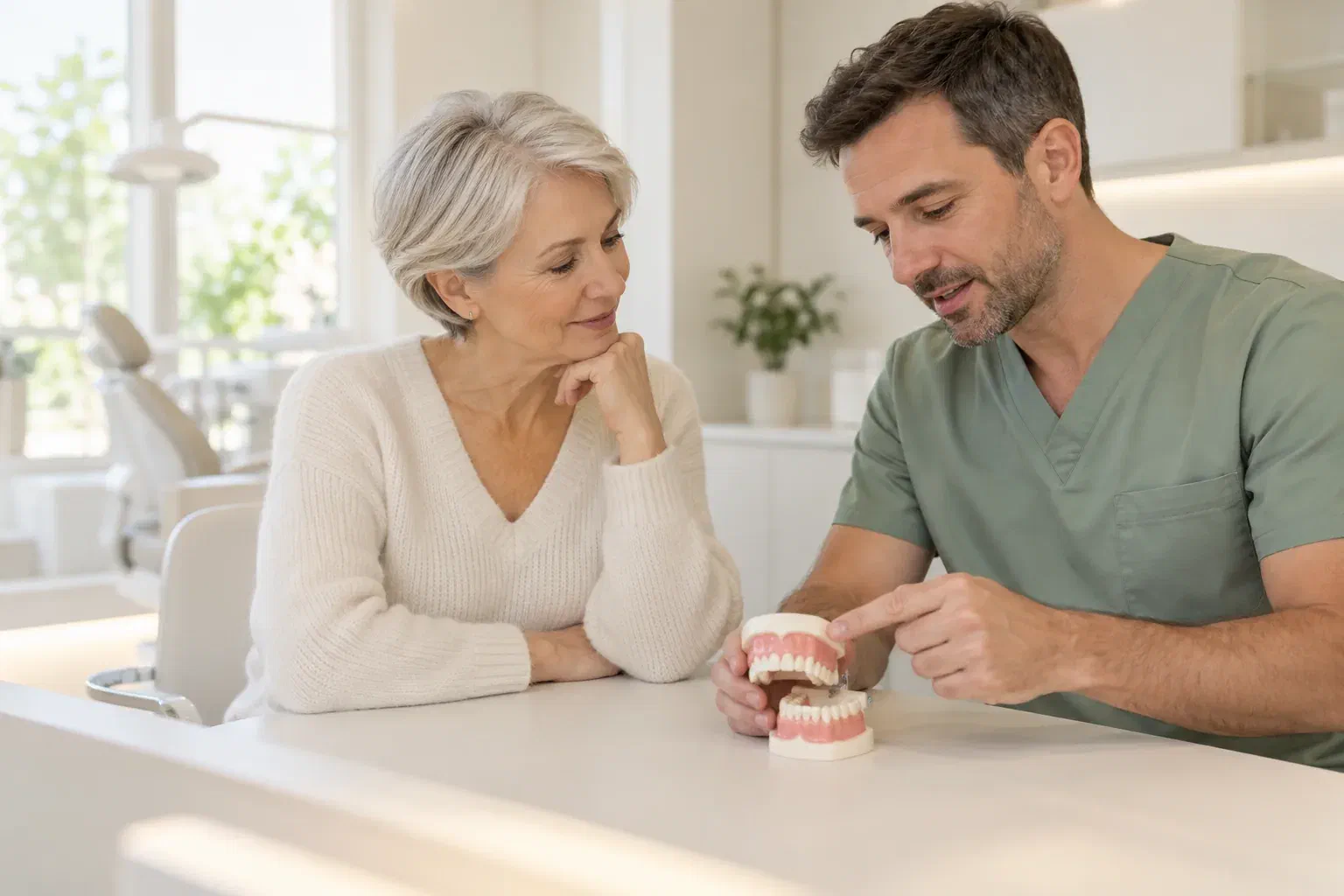
Illustrative patient and clinician discussing upper and lower tooth contacts using a dental model
Specialized Care

Bite and Occlusion Assessment in Georgetown

A recent photo made your front teeth look shorter, or a hygienist mentioned wear. Does that mean your bite needs fixing? From Georgetown, an assessment examines how your teeth meet, what the wear suggests and whether anything is actually causing trouble, before any care is planned.

Wear as the first clue

Shorter edges, flatter surfaces, and a fair question.

Wear is often spotted before it is felt. A smile in a family photo looks different, edges seem flatter in the mirror, or a hygienist points out shiny facets during a cleaning. Occlusion, the pattern in which your top and bottom teeth touch, matters here, and examining it alongside the teeth and their history helps explain what the wear means and whether it is still happening.

Worn teeth do not automatically point to a bite that is wrong. Grinding or clenching, acidic drinks, the natural effects of age, older restorations and the way certain teeth guide your jaw can all play a part, sometimes together. Some patterns call for protection or monitoring, others for repair, and some need nothing more than a record.

Tell us when you first noticed the change and whether anything else seems linked, such as sensitivity, chipping, a sore jaw, new dental work or a guard that has changed. Photos from a few years ago can be surprisingly useful. Our team will explain the findings, be honest about the limits of what wear can tell us and help you decide on a next step without assuming the teeth must be reshaped.

Ask about worn or shorter-looking teeth
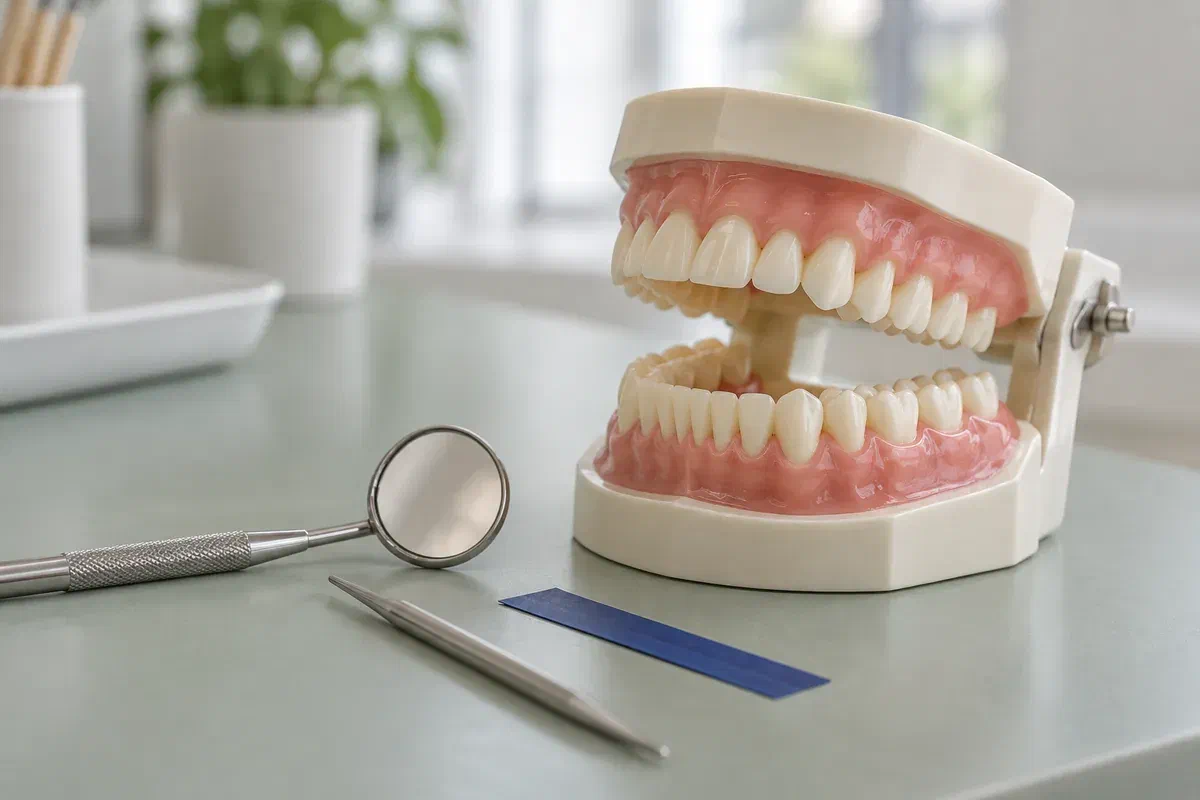
Illustrative hinged dental model beside a mirror and blue bite-marking paper on a pale surface
What Georgetown visitors often mention

Signs that are worth pointing out.

Notice what you see and feel, whether it is a recent change or has crept up over years, and whether it bothers you when you eat. There is no need to keep testing a chipped or sensitive tooth before your visit.

A new restoration among worn teeth

A fresh filling or crown placed beside worn teeth may meet earlier than its neighbours. Tell us which tooth, and whether it lands first, hurts on chewing or just feels unfamiliar. Recent work is best reviewed by the practice that placed it rather than left to settle.

Visible wear, chipping or repeat repairs

Flattened edges, small chips and restorations that keep breaking can be related, or not. Bring any guard or retainer and a list of past repairs. We look at whether the contacts and the state of the teeth fit the pattern and what else might be involved. A facet records contact; it does not prove a present cause.

Jaw discomfort alongside the wear

If you also have jaw pain, stiffness, locking or limited opening, mention it separately. Muscles and joints may need their own assessment. Seeing wear and feeling jaw pain at the same time does not make reshaping the teeth the obvious answer.

There is no reliable evidence that a misaligned bite causes temporomandibular disorders. If jaw symptoms are part of your concern, ask how the diagnosis is reached and why any proposed treatment fits.

Understanding the wear

Is it history, or is it still going on?

Much of the value lies in telling past wear from active damage. The examination links what you have noticed to what can be shown: which teeth are affected, how they meet, whether restorations are involved and what remains uncertain. Sometimes the answer is reassuring, and simply recording the current state is the right first step.

Proposals also need to be weighed by size. Protecting teeth from further grinding, repairing a single chipped edge and rebuilding many surfaces are very different commitments. For each idea, ask about its purpose, the alternatives and its limits, and whether it addresses the change you actually noticed.

Local or widespread?

Wear might be confined to a few teeth, linked to a single restoration, or spread across the mouth. Knowing which keeps the response proportionate and prevents a small concern from becoming an unexplained large plan. If several areas matter, ask which comes first.

A baseline to compare against

Photos, notes or study models taken now can make later changes easier to judge. Agree on what you are watching for and how often it will be checked. A review means more when both of you know what it is measuring.

Thought before irreversible work

Worn teeth have already lost some structure, so any plan to remove more deserves particular care. Ask exactly what would be altered and why, and consider the uncertainty and alternatives. A second opinion before extensive work is a reasonable request.

Step by step

How a wear and bite assessment unfolds.

The visit is adapted to your concern. Some people need only an examination and a conversation, others need more records, and coming in does not commit you to any adjustment.

  1. Describe what you have noticed

    Start with when the change became noticeable, which teeth bother you and whether there is sensitivity, chipping or discomfort when closing or chewing. Mention diet, habits, recent treatment and anything already tried. Jaw symptoms are discussed separately.

  2. Examine the wear and the contacts

    The clinician looks at the pattern of wear, the teeth and the restorations, and a thin marking strip may show how they meet. Share what you feel as you close. The marks are interpreted with the history and examination, not as the whole story.

  3. Consider records or further tests

    Photographs, models, x-rays or another clinician’s view can help with some wear questions and add little to others. The choice should follow what was found and what you want to know. There is no single device every assessment requires.

  4. Agree on a measured response

    That might be monitoring, protection, a focused repair, conservative care or a referral. Any adjustment would be a separate decision with a review afterward. If the findings leave the cause unclear, the plan should be to investigate rather than to experiment.

Looking after worn teeth

Protect, observe, and check in.

Assessment alone usually has no recovery period. Instructions depend on whether care was given, a guard was reviewed or further records are being arranged.

Leave smoothing to the clinic

A sharp chipped edge can be tempting to file, but please do not adjust teeth, restorations or a guard at home. If something catches or feels wrong, call and describe it. Bring any appliance so it can be checked in person.

Watch for sensitivity and chipping

Notice whether eating feels the same, better or worse, and whether new sensitivity or chips appear. Dated notes or a photo every few months can help. You can ask at the appointment how soon a new change should prompt another visit.

Keep your records together

Store treatment summaries, guard instructions and any referral details in one place, and mention dental care you receive elsewhere. A consistent record makes it easier to see whether wear is progressing.

Ways forward

Protection, repair, or simply a record?

Ask what each option is intended to achieve and what supports it. Wear from grinding, a single chipped tooth and jaw pain may each call for a different response.

When wear is limited or one tooth needs attention

Monitoring or focused restoration work

Some wear is best recorded and watched, while a chipped edge or failing filling may need repair. Ask what a change would accomplish, which material it involves and when it will be reviewed. The examination, not appearance alone, should shape the decision.

When grinding or clenching may be contributing

Protective appliance or conservative care

A guard can help protect teeth from night-time grinding, and an existing one can be checked for fit and wear. It is not a remedy for every jaw complaint. Clarify how it should fit, when to wear it, its limits and how you will judge its usefulness.

For extensive wear or complex symptoms

Wider dental or specialist review

Significant wear across many teeth, complex restorative questions or persistent jaw symptoms may justify another opinion. Ask what it should answer and how to protect your teeth meanwhile. Permanently reshaping the bite is not a standard treatment for jaw joint pain.

Patient information: NIDCR — bruxism assessment, symptoms, and protection of teeth

Wear and bite questions

Do worn teeth mean a bad bite?

What you have noticed, what has been done before and what the clinician sees all count. The appointment can clarify your options even if the best plan is to protect and monitor.

(905) 876-4488
Is some tooth wear normal as I get older?
A degree of wear is expected over a lifetime. What matters is how much there is, how quickly it seems to be changing and whether it is causing problems. The assessment helps you understand where your teeth sit on that spectrum.
Can acidic drinks cause wear that looks like grinding?
Acid erosion and grinding can look different, but they can also occur together. Mention what you drink and eat regularly, and any reflux. The clinician will consider all of these rather than assuming the bite is responsible.
Does a worn surface prove that my bite is wrong?
No. A worn surface shows that teeth have contacted there, but not that the bite is faulty or that the cause is still active. It is one clue among several, interpreted alongside your history and the rest of the examination.
Should worn teeth be built back up straight away?
Not necessarily. Some wear can be monitored and protected, while some needs repair because of sensitivity, breakage or function. Ask what problem any build-up would solve, what it involves and what the alternatives are.
Will my bite be adjusted if wear is found?
Finding wear does not mean adjustment follows. Any change would be a separate decision with a clear reason. Ask what would be removed and why, especially when teeth have already lost structure, before agreeing to anything.
Can I book from Georgetown around a work schedule if photos or models are needed?
Ask when you book whether records are likely, and whether they can be combined with the assessment or a later visit. The team can help you plan, though what is needed depends on the findings.

Patient information: NIDCR — painless joint sounds and caution about permanent bite changes for TMD

Georgetown bite and wear assessments

Bring an old photo if you have one.

Contact our Bronte Street practice about worn or chipped teeth, contacts that feel uneven or restorations that keep failing. We can examine the teeth, explain what the wear suggests and discuss protection, repair or further investigation.

What is examined, the records taken, any treatment or referral, and fees all follow from the findings. Bite adjustment is not routine, and we cannot predict in advance exactly what the assessment will explain.

Visit Milton Dental Clinic
Unit 1, 342 Bronte St. S, Milton, ON L9T 5B7
Get directions Clinic hours
Monday–Thursday
11am–7pm
Friday–Sunday
By appointment only

Areas we serve

  • Milton
  • Oakville
  • Mississauga
  • Georgetown
  • Halton Hills
  • Acton
  • Campbellville
  • Brampton
  • Burlington
  • Puslinch
  • Rockwood
  • Erin
  • Caledon
  • Etobicoke
  • Old Milton
  • Bronte Meadows
  • Timberlea
  • Dorset Park
  • Dempsey
  • Clarke
  • Beaty
  • Coates
  • Harrison
  • Scott
  • Willmott
  • Ford
  • Bowes
  • Cobden
  • Walker
  • Mountain View
  • Milton Heights
  • Hawthorne Village
  • Valley View
  • Fallingbrook
  • Nassagaweya
  • Trafalgar
  • Esquesing
  • Nelson
  • Brookville
  • Moffat
  • Glen Williams
  • Norval
  • Limehouse
  • Stewarttown
  • Ashgrove
  • Hornby
  • Silver Creek
  • Speyside
  • Scotch Block
  • North Oakville
  • River Oaks
  • Glen Abbey
  • West Oak Trails
  • Palermo
  • Bronte Creek
  • College Park
  • Joshua Creek
  • Uptown Core
  • Preserve
  • Iroquois Ridge
  • Lisgar
  • Meadowvale
  • Meadowvale Village
  • Churchill Meadows
  • Erin Mills
  • Central Erin Mills
  • Streetsville
  • East Credit
  • Creditview
  • Heartland
  • Sheridan
  • Mount Pleasant
  • Credit Valley
  • Huttonville
  • Churchville
  • Springbrook
  • Northwest Brampton
  • Bram West
  • Fletcher's Meadow
  • Fletcher's Creek South
  • Alton Village
  • Orchard
  • Millcroft
  • Headon Forest
  • Tansley
  • Brant Hills
  • Tyandaga
  • Kilbride
  • Lowville
  • Aberfoyle
  • Morriston
  • Arkell
  • Hillsburgh
  • Freelton
  • Carlisle
  • Waterdown
  • Flamborough
  • Mountsberg

How can we help?

Milton Dental Clinic

Have a question about your smile? Choose the option that works best for you.

For urgent dental concerns, please call.
Messages are reviewed during clinic hours.