

Illustrative patient and clinician discussing gentle brushing with a dental teaching model
Specialized Care

Bleeding Gums Treatment in Etobicoke

Travelling in for gum care means each appointment should do real work. Share your history before you arrive, let us examine and explain the bleeding in one sitting where possible, and know in advance when closer urgent help makes more sense.

Planning gum care from Etobicoke

Make the trip count.

When the clinic is not around the corner, bleeding gums can slide down the list for months. That delay is understandable, yet blood on your brush is a signal to act on. With a little planning, one well-organized visit can examine the tissue, explain the cause and set up what happens next.

The usual explanation is gum inflammation from plaque that has stayed along the gumline. Still, nothing is assumed. Your clinician also asks about the way you clean, any crown or tooth that catches food, health conditions and every medicine you take. Testing products at home for weeks before booking only postpones the answer.

Before the day, jot down where the bleeding shows, how long it has continued and anything sore or swollen. Tell us when booking that you are travelling some distance, so time can be used well. You will hear plainly what we find and what care and review we suggest, with the scheduling explained.

Plan a gum assessment
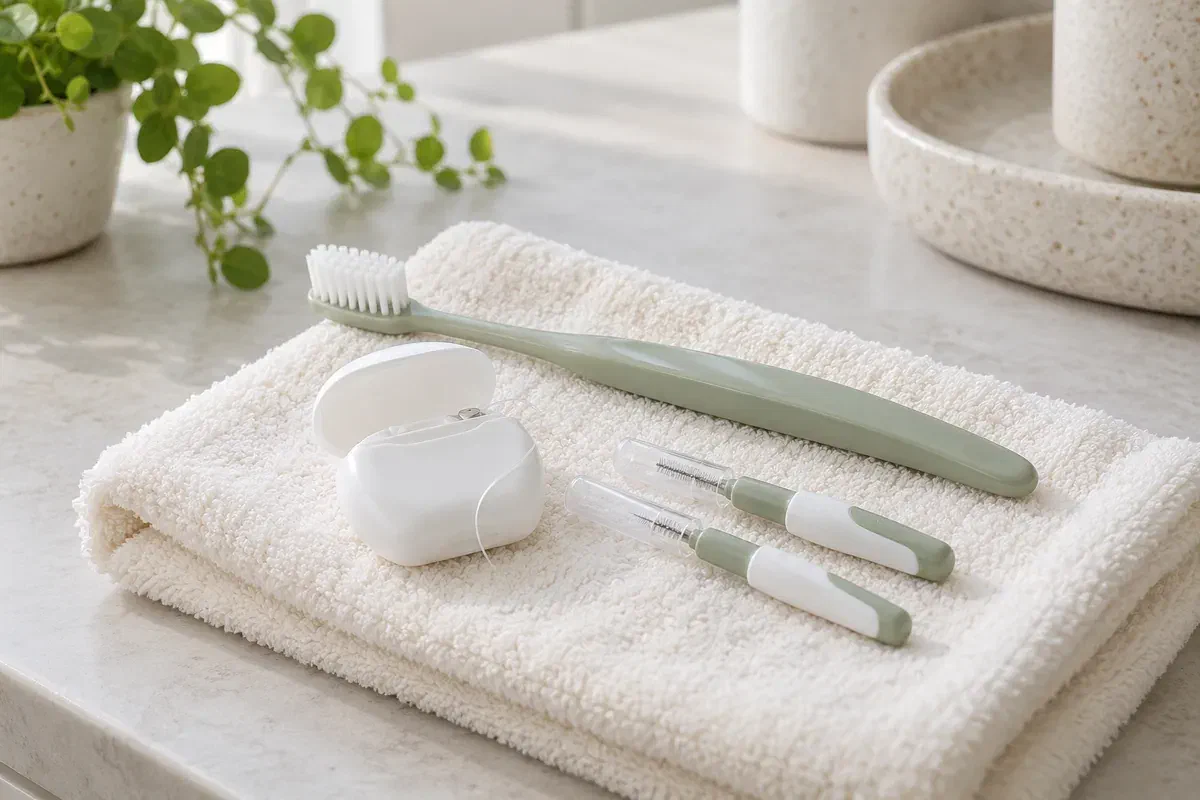
Illustrative soft toothbrush, interdental brushes, and floss container on a clean ivory towel
Send these details ahead

Arrive with the facts, save a visit.

Painless bleeding still belongs on the list. Note whether it is one site or spread around, and whether it seems different from your last dental appointment, wherever that was.

How cleaning sets it off

Write down which tool brings out blood and which places resist cleaning. Bringing your brush and interdental aids means the demonstration can happen with the very tools you will use at home. The team can check those areas and tailor technique to the shape of your gaps.

Pain, swelling or a persistent foul taste

Tell us about these when you book, not only on the day, along with any tooth that moves or hurts on biting. They can change whether you should be seen sooner, or nearer home, and how much the first visit includes.

Prescriptions and health updates

Have a current medicine list ready and mention any condition or unusual bleeding elsewhere. Prescribed medicines should continue as directed; gum bleeding is not a reason to stop. If your physician may need to be involved, knowing early helps the team plan without an extra appointment.

Gum bleeding with brushing calls for an assessment. Bleeding that is heavy, persistent, unprovoked, follows an injury or comes with other worrying signs needs prompt advice, and may be better handled by urgent care close to where you are.

What a well-planned visit achieves

One sitting, a clear finding and a plan you can follow far from the clinic.

Examination lets your clinician tell surface inflammation at the gum margin apart from signs that the deeper attachment needs a fuller periodontal review. That distinction shapes the whole plan, including how many trips you are likely to need. Ask what was seen and why one level of care is suggested over another.

Because you will be managing on your own between visits, home care has to be workable. Mention a floss that shreds, a brush head that feels clumsy or a tender spot you avoid. Advice built around those specifics is what carries you through the weeks until you are back.

A cause you can name

Leave knowing what explains the bleeding and whether a local problem is feeding it. If a rinse or paste is part of the plan, its job should be clear. That spares you weeks of trying products while waiting for your next trip.

Hands-on practice with your own tools

Use the visit to rehearse cleaning the hardest places, including any crowns or crowded teeth. Confirm sizes so you can restock locally. Show the routine back before you go, because questions are easier to settle in person than over the phone.

A review you can schedule now

Book the recheck before you leave and ask what will be compared. Seeing less blood at home is encouraging, but only a look at the tissue confirms progress. Agree on which changes should prompt a call and which would justify nearer urgent care.

Organizing the appointments

History by phone, examination in person, then a timed review

The findings dictate how many appointments are needed and what each involves. Share any worry about tender gums or past cleanings at booking, together with your travel constraints, so the sequence can be planned.

  1. Share the history before the day

    Describe when the bleeding started, where it happens and whether there is pain, swelling or bleeding with no cleaning. Mention your routine, health, medicines and earlier gum care. Giving this ahead means less time spent catching up once you are in the chair.

  2. Examine the gums and their support

    The clinician inspects the tissue and may record pocket measurements beside the teeth. Images are considered only when there is a clinical reason. Rather than reading severity into the amount of blood, ask what each finding signifies.

  3. Treat or schedule the next stage

    Depending on what is found, care may include professional cleaning, further gum therapy, managing a local irritant or more assessment. Ask whether something can start the same day to save a trip, and how comfort is handled. Instructions for any rinse or medicine should be specific to you.

  4. Compare at the recheck

    The review sets current findings beside the first visit. If the tools were hard to use or the timing did not suit, say so. Ongoing concerns might need investigation or referral, possibly to someone nearer to you, instead of the same advice on repeat.

Between trips

Your routine does the work while you are away.

Keep to the advice given after your examination and any treatment. If a spot stays painful or bleeding does not ease, call us for guidance rather than ignoring it or brushing harder.

Practise what you rehearsed

Brush and clean between the teeth as demonstrated. If a tool stops fitting comfortably, phone for advice instead of improvising. A tight contact is no place for force, whatever the tool. Plaque comes off with gentle repetition, not pressure.

Know each product’s purpose and end date

A recommended rinse or other product should come with its reason, duration and precautions. It does not stand in for brushing or professional care. Prescribed medicines continue unless the prescriber says otherwise; tell us of changes before your next trip.

Keep the booked review

Report whether bleeding has eased, stayed the same or moved. Mention discomfort, puffiness or a tooth that feels less secure even when bleeding is better. The review is where findings are measured against the first visit and the plan is confirmed.

Deciding on treatment

Care levels, and what each means for your schedule

Ask how the plan addresses the cause, how progress is checked and how many visits each option involves. Diagnosis should decide, not a stronger rinse or a different toothpaste.

Where plaque-related inflammation is the key finding

Cleaning and coaching

Professional cleaning with practical advice is often enough to start. Ask which areas to focus on and how to keep them well between trips. A planned review belongs in this option; no single visit promises lasting freedom from bleeding.

Where the deeper attachment needs attention

Periodontal treatment and upkeep

Pocket measurements and other findings may lead to further gum treatment over several stages. Ask how many visits, how comfort is managed, the fees and the maintenance rhythm. A referral may be suggested, and the reasoning should be clear.

Where something local or medical is involved

Addressing another cause

A crown edge, a food trap or a health factor may need separate attention. Ask what the dental team can treat and whether medical advice is warranted. Bleeding is not always about technique, and bleeding while on medicine is not automatically harmless.

Travel and timing questions

What to know when the clinic is a longer trip.

You do not need a diagnosis to call. Ask about scheduling, tools, medicines, treatment and follow-up.

(905) 876-4488
Can my gum assessment and cleaning happen on the same day?
Sometimes, depending on what the examination finds and how much time is set aside. Ask when booking and mention that you are coming from Etobicoke. If more detailed treatment turns out to be needed, the team will explain why it is scheduled separately and what it involves.
What should I do if the bleeding gets worse before my next visit from Etobicoke?
Phone us for advice and describe what has changed, such as new swelling, soreness or bleeding in other places. If bleeding is heavy, will not stop or you feel unwell, seek urgent care close to home rather than making the trip.
Can I buy the recommended cleaning tools near home?
Usually, yes. Ask the team to write down the type and size so you can restock without guessing. If a replacement feels different, mention it at your review.
Does bleeding without pain still need a dental visit?
Yes. Comfort does not show that gums are healthy, and painless bleeding is a common reason people put off a visit. An examination can check inflammation and the supporting tissue, and the clinician can then explain whether cleaning, further care or simply monitoring makes sense.
Is it safe to keep cleaning an area that bleeds?
Generally, gentle cleaning with the right tool is better than avoiding it, but do not force anything into a painful spot. Have it examined so the technique can be adjusted for that area.
How many visits does bleeding gums treatment usually take?
It depends on what is found. Some people need a cleaning and a review; others need staged periodontal care and maintenance. Ask for an outline of the likely sequence so you can plan travel.
Etobicoke gum appointments

A planned visit beats months of wondering.

Contact our Bronte Street practice about gums that bleed while brushing, flossing or eating. We will help you arrange visits efficiently, examine the tissue, explain what needs attention and leave you with a routine that holds up between trips.

Cause, urgency, number of visits, review timing and fees depend on what the assessment shows. A single symptom cannot confirm a diagnosis, and no one cleaning is guaranteed to resolve the bleeding.

Visit Milton Dental Clinic
Unit 1, 342 Bronte St. S, Milton, ON L9T 5B7
Get directions Clinic hours
Monday–Thursday
11am–7pm
Friday–Sunday
By appointment only

Areas we serve

  • Milton
  • Oakville
  • Mississauga
  • Georgetown
  • Halton Hills
  • Acton
  • Campbellville
  • Brampton
  • Burlington
  • Puslinch
  • Rockwood
  • Erin
  • Caledon
  • Etobicoke
  • Old Milton
  • Bronte Meadows
  • Timberlea
  • Dorset Park
  • Dempsey
  • Clarke
  • Beaty
  • Coates
  • Harrison
  • Scott
  • Willmott
  • Ford
  • Bowes
  • Cobden
  • Walker
  • Mountain View
  • Milton Heights
  • Hawthorne Village
  • Valley View
  • Fallingbrook
  • Nassagaweya
  • Trafalgar
  • Esquesing
  • Nelson
  • Brookville
  • Moffat
  • Glen Williams
  • Norval
  • Limehouse
  • Stewarttown
  • Ashgrove
  • Hornby
  • Silver Creek
  • Speyside
  • Scotch Block
  • North Oakville
  • River Oaks
  • Glen Abbey
  • West Oak Trails
  • Palermo
  • Bronte Creek
  • College Park
  • Joshua Creek
  • Uptown Core
  • Preserve
  • Iroquois Ridge
  • Lisgar
  • Meadowvale
  • Meadowvale Village
  • Churchill Meadows
  • Erin Mills
  • Central Erin Mills
  • Streetsville
  • East Credit
  • Creditview
  • Heartland
  • Sheridan
  • Mount Pleasant
  • Credit Valley
  • Huttonville
  • Churchville
  • Springbrook
  • Northwest Brampton
  • Bram West
  • Fletcher's Meadow
  • Fletcher's Creek South
  • Alton Village
  • Orchard
  • Millcroft
  • Headon Forest
  • Tansley
  • Brant Hills
  • Tyandaga
  • Kilbride
  • Lowville
  • Aberfoyle
  • Morriston
  • Arkell
  • Hillsburgh
  • Freelton
  • Carlisle
  • Waterdown
  • Flamborough
  • Mountsberg

How can we help?

Milton Dental Clinic

Have a question about your smile? Choose the option that works best for you.

For urgent dental concerns, please call.
Messages are reviewed during clinic hours.