

Illustrative patient and clinician discussing gentle brushing with a dental teaching model
Specialized Care

Bleeding Gums Treatment in Oakville

You finally started flossing every night, and now there is blood on the string. That is a good moment to have your gums examined, so you can keep going with the right tool and know what the bleeding means.

For Oakville flossers with questions

New routine, new bleeding. Keep going or stop?

Plenty of people decide to take their gums seriously and then feel discouraged the first week, because the floss comes out red. It is tempting to read that as a sign you are doing damage. More often, the cleaning has found tissue that was already inflamed. Only an examination can confirm which is true for you.

Plaque along the gumline is a usual suspect, yet your clinician will think wider than that. The way you hold the floss, a crowded pair of teeth, a filling that catches, your general health and the medicines you take can all shape what is going on. A stronger mouthwash bought in a hurry does not answer any of those questions.

Come in and tell us which spaces bleed, when you started the new habit and whether anything feels tender or swollen. There is no wrong answer about your old routine. We will explain what we find, show you a method that suits your teeth and set out sensible care and follow-up.

Have your gums examined
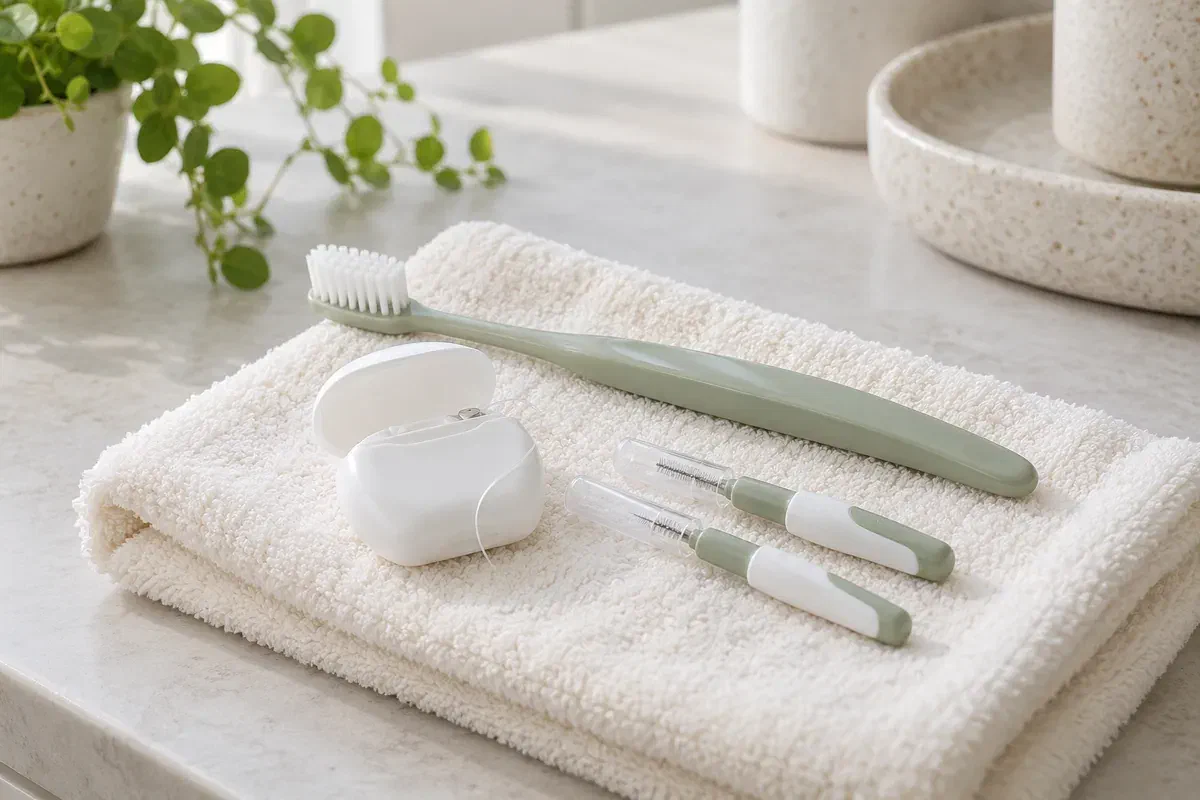
Illustrative soft toothbrush, interdental brushes, and floss container on a clean ivory towel
Notes to bring with you

A few observations make the exam more useful.

It helps to mention bleeding whether or not it hurts. Say if it is limited to a few gaps or appears all around, and whether it seems to be changing as you keep cleaning.

Which gaps bleed, and with which tool

Floss, picks, water flossers and small brushes all reach the gums differently. Tell us what you use and where it bleeds, or bring the product itself. The team can check those spaces and show you how to clean them firmly enough to work, gently enough not to injure.

Tenderness, puffiness or a stale taste

These are worth reporting along with the bleeding, as is any tooth that shifts or feels odd when you bite. Taken together, they can change how soon you should be seen and how broad the examination is. Mention them even if each one seems trivial.

Health or medication changes around the same time

Bring a list of what you currently take and note any health condition or unusual bruising. Carry on with prescribed medicines; your gums are not a reason to stop them. The dental team can work out whether to speak with your doctor and what to do next.

Bleeding while you clean should be checked by a dentist. Call promptly if bleeding is heavy or long-lasting, starts without brushing or flossing, follows an injury or comes with other symptoms that concern you.

Why it is worth booking now

Your effort deserves the right direction.

Starting a habit is hard; keeping it is harder when you are not sure it is helping. During an examination your clinician can tell gumline inflammation apart from findings that point to a deeper periodontal issue. Ask what they saw and whether the tissue that anchors your teeth needs more evaluation. With the reason in hand, a cleaning or a more involved plan stops feeling arbitrary.

The other benefit is practical, and it matters if you are coming from Oakville and want each visit to count. Floss that frays, a pick that will not fit, or a back corner you cannot reach are all fixable once someone sees them. Raise these frustrations at the visit, and expect advice that respects them and leaves you with a plan you can sustain.

A clear cause before a new purchase

Find out what explains the bleeding and whether anything local is adding to it. Specific rinses or toothpastes sometimes have a place, but you should know why. The goal is fewer guesses at the pharmacy shelf, not more.

Tools sized for your spaces

Ask to see how to clean around tight contacts, bridges or overlapping teeth. Check the correct tool and size for each gap and how much pressure is enough. Before you leave, say the routine back to us so anything unclear can be sorted out.

Progress judged by examination

Ask when the next review is and what will be compared. Less red on the floss is encouraging, but it is not the same as a re-examination. Agree on which changes should prompt a call before that appointment.

What happens at the clinic

Four stages, from first question to follow-up.

How many visits you need, and their type, depends on what is found. If tender gums or a past cleaning make you uneasy, say so when you book and we will talk it through.

  1. Talk about the bleeding and your health

    We ask when the bleeding began, where it happens and whether there is pain, swelling or bleeding without any cleaning. Your current routine, health conditions, medicines and previous gum care are reviewed. That discussion points us toward what needs a closer look and whether more information is needed.

  2. Check the gums and the support around the teeth

    The clinician examines the tissue and may take measurements around each tooth to judge the attachment. Images or other records are added only when indicated. Ask what the findings mean rather than assuming how much you bleed shows how serious it is.

  3. Begin the care that fits

    That may be a professional cleaning, more detailed gum therapy, attention to a local irritant or a plan for further assessment. Ask what each step includes and how your comfort will be managed. Any rinse or medicine should come with instructions meant for your situation.

  4. Review the response and refine

    At the recheck we compare symptoms and examination findings with the first visit. Tell us if a tool did not work for you or the schedule was hard to keep. A concern that lingers may need more investigation or a referral, not simply the same instructions again.

Keeping the habit going

Consistency, not force, is what helps tissue settle.

Follow the guidance for your diagnosis and any treatment you received. If cleaning stays painful or the bleeding does not ease, ask to be reviewed instead of giving up on that area or pressing harder.

Repeat the technique you practised

Clean the way it was demonstrated and tell us if a tool feels awkward. Do not jam floss or a brush that is too big into a tight space. A routine you can repeat every evening removes plaque better than an aggressive one you abandon.

Know what each product is for

If a rinse or other product was suggested, confirm its purpose, how long to use it and any cautions. It works alongside brushing and professional care, not instead of them. Keep taking prescribed medicines unless the prescriber says otherwise, and update us if anything changes.

Return for the planned review

Tell us whether bleeding is rarer, the same or appearing in new places. Mention soreness, swelling or a tooth that feels less secure even if things look better. The review lets the team compare findings and change the plan if needed.

How treatment is matched

Three possible plans, and how one is picked.

Ask how the proposed care tackles the cause and how you will judge whether it is working. A diagnosis should guide the decision, not the flavour of the toothpaste or how strong the rinse feels.

When plaque-related inflammation is the main finding

Cleaning and daily-care coaching

A professional cleaning and hands-on advice is often the first step. Ask which areas need extra attention and how to keep them healthy. Expect a review in the plan rather than a promise that one appointment stops all future bleeding.

When the supporting tissue needs deeper care

Gum treatment with a maintenance schedule

Measurements and other findings may lead to further periodontal treatment. Go over the stages, comfort options, fees and ongoing maintenance. A referral may be suggested when appropriate, with the reason explained.

When the pattern suggests something else is involved

A closer look at another contributing factor

A food trap, a rough restoration or a piece of your health history may need its own review. Ask what can be managed in the dental chair and whether your doctor should weigh in. Technique is not behind every case, and medicine-related bleeding is not automatically harmless.

Flossing and bleeding: answers

What new flossers tend to ask us.

Arrive with questions rather than a diagnosis. We are happy to talk about tools, medicines, treatment and how often your gums should be looked at.

(905) 876-4488
Is it normal for gums to bleed when I first start flossing?
It is common, but it still deserves a look. Bleeding often means the tissue was already inflamed. An examination shows what is going on and whether cleaning, more detailed gum care or another review makes sense.
Should I stop flossing until the bleeding settles?
Stopping usually leaves the cause in place. Instead, have the area checked and ask for a method that suits it. Never force floss into a painful space; tell the team so they can suggest a different approach.
Is a water flosser a good substitute for string floss?
Some people find a water flosser easier, and it may suit certain mouths. Whether it is enough on its own depends on your gaps and gums. Bring it to your visit and ask how it fits into your routine.
Do interdental brushes work better than floss?
For some spaces they do; for very tight contacts floss may be more practical. The right choice depends on the size of each gap. Ask the team to check sizes and show you how to use them without pushing into the gum.
Can one appointment fix my bleeding gums?
One visit can explain the cause and begin care, but most plans include a review. How the tissue responds over the following weeks guides whether anything else is needed. No single cleaning can be guaranteed to settle every concern.
What should I do if one gap still bleeds after the others have stopped?
Point it out at your review and mention any food catching or soreness there. A stubborn spot may have a local cause that needs attention. Improvement elsewhere does not mean every area needs exactly the same care.
Gum assessments for Oakville

Bring your floss and your questions.

Reach out to our Bronte Street practice about gums that bleed when you clean between your teeth or brush. The team will examine the tissue, tell you plainly what is going on and help you settle into a routine that works.

Cause, urgency, treatment steps, review timing and fees are confirmed after assessment. A single symptom is not a diagnosis, and no one cleaning is guaranteed to resolve the concern.

Visit Milton Dental Clinic
Unit 1, 342 Bronte St. S, Milton, ON L9T 5B7
Get directions Clinic hours
Monday–Thursday
11am–7pm
Friday–Sunday
By appointment only

Areas we serve

  • Milton
  • Oakville
  • Mississauga
  • Georgetown
  • Halton Hills
  • Acton
  • Campbellville
  • Brampton
  • Burlington
  • Puslinch
  • Rockwood
  • Erin
  • Caledon
  • Etobicoke
  • Old Milton
  • Bronte Meadows
  • Timberlea
  • Dorset Park
  • Dempsey
  • Clarke
  • Beaty
  • Coates
  • Harrison
  • Scott
  • Willmott
  • Ford
  • Bowes
  • Cobden
  • Walker
  • Mountain View
  • Milton Heights
  • Hawthorne Village
  • Valley View
  • Fallingbrook
  • Nassagaweya
  • Trafalgar
  • Esquesing
  • Nelson
  • Brookville
  • Moffat
  • Glen Williams
  • Norval
  • Limehouse
  • Stewarttown
  • Ashgrove
  • Hornby
  • Silver Creek
  • Speyside
  • Scotch Block
  • North Oakville
  • River Oaks
  • Glen Abbey
  • West Oak Trails
  • Palermo
  • Bronte Creek
  • College Park
  • Joshua Creek
  • Uptown Core
  • Preserve
  • Iroquois Ridge
  • Lisgar
  • Meadowvale
  • Meadowvale Village
  • Churchill Meadows
  • Erin Mills
  • Central Erin Mills
  • Streetsville
  • East Credit
  • Creditview
  • Heartland
  • Sheridan
  • Mount Pleasant
  • Credit Valley
  • Huttonville
  • Churchville
  • Springbrook
  • Northwest Brampton
  • Bram West
  • Fletcher's Meadow
  • Fletcher's Creek South
  • Alton Village
  • Orchard
  • Millcroft
  • Headon Forest
  • Tansley
  • Brant Hills
  • Tyandaga
  • Kilbride
  • Lowville
  • Aberfoyle
  • Morriston
  • Arkell
  • Hillsburgh
  • Freelton
  • Carlisle
  • Waterdown
  • Flamborough
  • Mountsberg

How can we help?

Milton Dental Clinic

Have a question about your smile? Choose the option that works best for you.

For urgent dental concerns, please call.
Messages are reviewed during clinic hours.