

Illustrative patient and clinician discussing gentle brushing with a dental teaching model
Specialized Care

Bleeding Gums Treatment in Puslinch

Three mouthwashes later, the gums still bleed. Products cannot diagnose anything. A gum examination finds out why the tissue is bleeding, tells you whether any rinse actually belongs in your routine and sets out care that addresses the cause.

Beyond the bathroom cabinet, for Puslinch

Why hasn’t the new rinse fixed it?

Driving out to a dental office from a rural township is a commitment, so many people try the pharmacy first: a gum-care toothpaste, an antiseptic rinse, perhaps a second brand when the first does not work. When bleeding carries on regardless, that is a sign the product was never the right question.

Gum inflammation from plaque is frequently behind the bleeding, and no rinse removes plaque the way careful cleaning does. Your clinician will also check technique, any dental work that holds food against the gum, health conditions and medicines. Some of those need a completely different response from a mouthwash.

Bring the bottles and tubes you have tried, or their names, along with a note of where the gums bleed and how long it has lasted. We will not judge the experiments. Instead, we explain what the examination shows and what care, and which products if any, make sense for you.

Book an exam instead
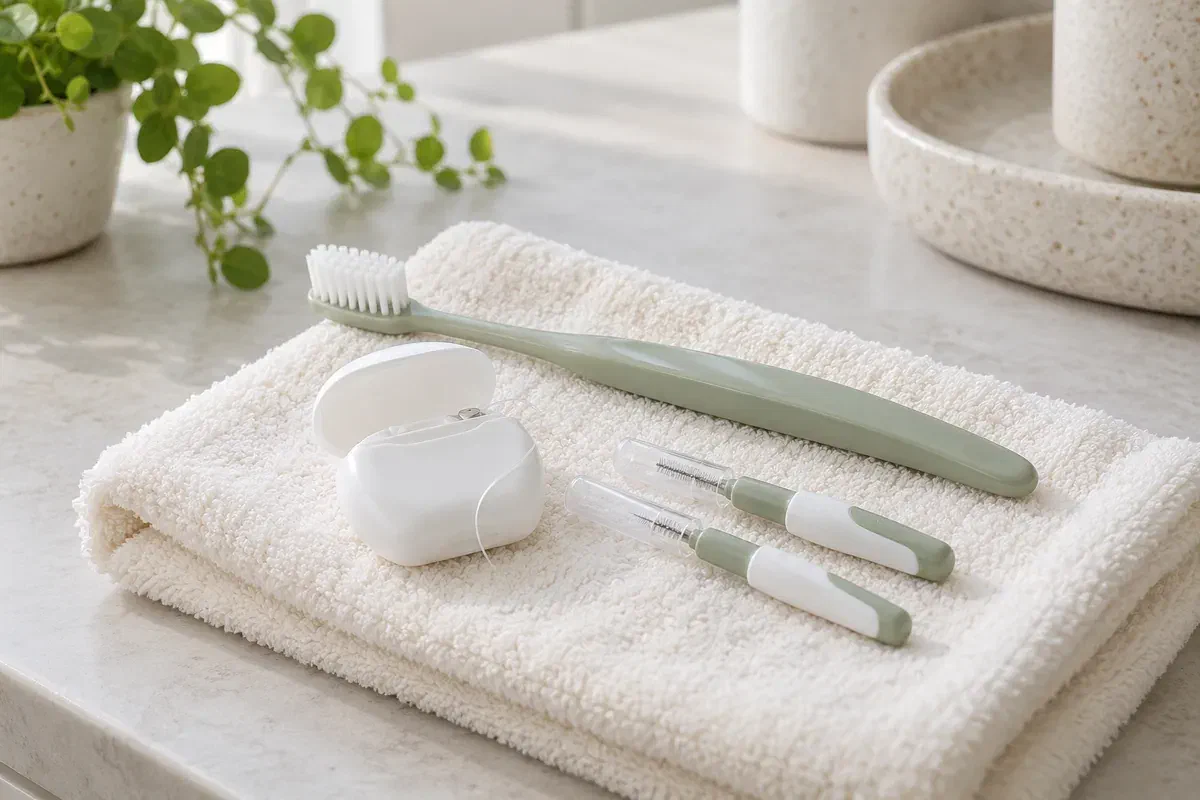
Illustrative soft toothbrush, interdental brushes, and floss container on a clean ivory towel
What to bring and tell us

Your product history is useful information.

Painless bleeding is still worth raising. Let us know whether it involves a single area or several, and whether anything changed after you started or stopped a product.

Products and tools you have tried

List the toothpastes, rinses, floss or brushes you have used and how they seemed to affect the bleeding. Bring them if that is easier. The team can examine the areas that bleed and show you a cleaning method that does the work a rinse cannot.

Soreness, swelling or an odd taste

Mention these along with the bleeding, as well as any change in how a tooth feels when you bite or whether it seems loose. They can shift the urgency and broaden the examination. Some rinses also change taste, so tell us what you were using.

Prescriptions and medical history

Bring an up-to-date medicine list and mention any condition or unusual bruising. Do not stop a prescribed medicine because of gum bleeding. The team can weigh whether to involve your physician and will explain the next step.

Bleeding when you brush should be assessed, whatever products you have tried. Seek prompt advice if it is heavy or persists, appears without cleaning, follows an injury or comes with other concerning symptoms.

What an examination adds

A diagnosis turns the shopping list into a plan.

Your clinician can tell, by examining the tissue, whether inflammation is confined to the gumline or whether there are signs that the support around the teeth needs a more detailed periodontal review. Ask what was observed. Once you know the reason, it becomes clear why a routine cleaning, or a different level of care, is being suggested.

It also saves effort at home. Perhaps you have been rinsing faithfully but skipping floss because it catches, or using a brush that is too firm. Mention those habits. Advice that starts from what you really do gives you a manageable routine instead of another product to add.

Knowing when a rinse helps and when it does not

Ask what explains the bleeding and whether any local factor needs attention. If a rinse or toothpaste is recommended, find out its specific purpose and duration. You should not have to keep buying products in the hope that one works.

Cleaning that reaches what rinses miss

Ask for a demonstration of how to clean between the teeth and along the gumline, especially near fillings or crowding. Confirm which tool and size to use and how gently. Repeat the routine back before you go.

A recheck that looks at the gums, not the label

Find out when the gums will be reassessed and what will be compared. Bleeding less often is helpful to know but does not replace an examination. Agree on which changes should prompt an earlier call.

Inside the appointment

Hear the history, examine, treat, reassess

How many appointments are required depends on what is found. If you dread tender gums or have had an uncomfortable cleaning in the past, mention it when you book so we can discuss the visit.

  1. Review your symptoms and what you have tried

    Tell us when the bleeding started, where it occurs and whether it ever hurts, swells or begins without cleaning. We also go over your products, routine, medical conditions, medicines and earlier gum care. That conversation shows us where to focus.

  2. Assess the gums and the support of each tooth

    The clinician examines the tissue and may record measurements beside the teeth to understand their attachment. Dental images are added if indicated. Ask what the findings mean rather than assuming that the amount of bleeding shows how serious it is.

  3. Provide or plan suitable care

    Care might include professional cleaning, more detailed gum treatment, attention to a local irritant or further assessment. Ask what each step involves and how comfort will be managed. If a rinse or medicine is prescribed, it should come with instructions for your plan.

  4. Compare results and adjust

    At follow-up, findings and symptoms are compared with the first visit. Mention any trouble with tools or with getting in from Puslinch for appointments. If something has not settled, the next step is a closer look or a referral, not the same suggestions repeated.

After the visit

Mechanical cleaning first. Products only if prescribed.

Follow the instructions that match your diagnosis and treatment. If cleaning stays painful or bleeding goes on, ask for a review rather than reaching for a new rinse or brushing harder.

Brush and clean between the teeth as shown

Use the demonstrated method daily, and call if a tool does not fit comfortably. Do not force floss or a large brush into a tight gap. Removing plaque with a routine you can repeat is the foundation; a rinse is not a substitute.

Use any rinse exactly as advised

If a rinse or other product was recommended, confirm its purpose, how many days to use it and any cautions. Stop experimenting with other products unless the team suggests a change. Continue prescribed medicines unless your prescriber advises otherwise, and tell us about changes.

Attend the follow-up

Report whether bleeding is less frequent, unchanged or showing up in new areas. Mention discomfort, swelling or any change in how a tooth feels, even when bleeding has improved. That review lets the team compare and adjust the plan.

What care may look like

Treatment follows the cause, not the advertising.

Ask how the plan deals with the reason for the bleeding and how its effect will be checked. A diagnosis should guide the choice, not the claims on a bottle or the flavour of a paste.

When inflammation from plaque is the main finding

Cleaning with daily-care coaching

Professional cleaning and practical guidance are often where care begins. Ask which areas need attention and how to maintain them without relying on rinses. A review should be part of the plan rather than a promise that one visit stops bleeding permanently.

When the deeper supporting tissue needs care

Periodontal treatment and maintenance

Measurements and other findings may support further gum treatment. Discuss the stages, comfort measures, fees and ongoing maintenance. Referral may be considered where appropriate, with the reasoning explained.

When another cause seems involved

Review of a local or health factor

A tooth that traps food, an irritating restoration or a medical factor may need separate review. Ask what can be treated dentally and whether your physician should be involved. Not every case is about technique, and bleeding while on medicine deserves proper attention.

Rinse and toothpaste questions

What the bottle cannot tell you.

You do not need to know the cause before you call. Ask about products, cleaning, medicines, treatment and follow-up.

(905) 876-4488
Can a gum-care toothpaste stop my gums from bleeding?
Some toothpastes may support gum health, but none can diagnose why your gums bleed. Have the gums examined first, then ask whether a particular toothpaste suits your plan.
Is an antiseptic mouthwash safe to use every day?
It depends on the product and your situation. Some rinses are intended only for short-term use, and a few can have side effects with extended use. Ask the team before using one long term, follow the label directions and mention any rinse you use at your visit.
Why did the bleeding seem better with a rinse and then return?
A rinse may temporarily reduce bleeding without addressing plaque or another cause. When it is stopped, the underlying problem is still there, so the bleeding comes back. An examination can identify what actually needs treating and whether the rinse has any ongoing role.
Should I bring the products I have been using to my appointment?
Yes, or a list of their names. Knowing what you have tried, and how long, helps the clinician understand your history and advise whether to keep, change or stop them.
Do gums that bleed without discomfort need attention?
Yes. Comfort does not confirm healthy gums. The clinician can examine the tissue and its support and explain whether cleaning, further care or another review is appropriate.
Is the drive from Puslinch worth it if the bleeding is mild?
Mild, ongoing bleeding still deserves an assessment. Mention it when booking so time is set aside, and ask whether the visit can be combined with a routine checkup to save a trip.
Puslinch bleeding gums care

Put the bottles down. Let us take a look.

Reach our Bronte Street practice by phone if brushing or flossing keeps leaving blood. We will examine the gums, explain what is causing the bleeding and help you settle on a routine, with products only where they serve a purpose.

The cause, urgency, treatment stages, review interval and fees depend on assessment. One symptom is not a diagnosis, and a single cleaning cannot be guaranteed to settle the concern.

Visit Milton Dental Clinic
Unit 1, 342 Bronte St. S, Milton, ON L9T 5B7
Get directions Clinic hours
Monday–Thursday
11am–7pm
Friday–Sunday
By appointment only

Areas we serve

  • Milton
  • Oakville
  • Mississauga
  • Georgetown
  • Halton Hills
  • Acton
  • Campbellville
  • Brampton
  • Burlington
  • Puslinch
  • Rockwood
  • Erin
  • Caledon
  • Etobicoke
  • Old Milton
  • Bronte Meadows
  • Timberlea
  • Dorset Park
  • Dempsey
  • Clarke
  • Beaty
  • Coates
  • Harrison
  • Scott
  • Willmott
  • Ford
  • Bowes
  • Cobden
  • Walker
  • Mountain View
  • Milton Heights
  • Hawthorne Village
  • Valley View
  • Fallingbrook
  • Nassagaweya
  • Trafalgar
  • Esquesing
  • Nelson
  • Brookville
  • Moffat
  • Glen Williams
  • Norval
  • Limehouse
  • Stewarttown
  • Ashgrove
  • Hornby
  • Silver Creek
  • Speyside
  • Scotch Block
  • North Oakville
  • River Oaks
  • Glen Abbey
  • West Oak Trails
  • Palermo
  • Bronte Creek
  • College Park
  • Joshua Creek
  • Uptown Core
  • Preserve
  • Iroquois Ridge
  • Lisgar
  • Meadowvale
  • Meadowvale Village
  • Churchill Meadows
  • Erin Mills
  • Central Erin Mills
  • Streetsville
  • East Credit
  • Creditview
  • Heartland
  • Sheridan
  • Mount Pleasant
  • Credit Valley
  • Huttonville
  • Churchville
  • Springbrook
  • Northwest Brampton
  • Bram West
  • Fletcher's Meadow
  • Fletcher's Creek South
  • Alton Village
  • Orchard
  • Millcroft
  • Headon Forest
  • Tansley
  • Brant Hills
  • Tyandaga
  • Kilbride
  • Lowville
  • Aberfoyle
  • Morriston
  • Arkell
  • Hillsburgh
  • Freelton
  • Carlisle
  • Waterdown
  • Flamborough
  • Mountsberg

How can we help?

Milton Dental Clinic

Have a question about your smile? Choose the option that works best for you.

For urgent dental concerns, please call.
Messages are reviewed during clinic hours.