

Illustrative patient and clinician discussing tooth protection with a clear dental guard
Specialized Care

Bruxism Treatment

Clenching during the day and grinding during sleep can raise different questions about tooth wear and comfort. Explore bruxism treatment in Milton with an assessment of your symptoms, practical management advice, and discussion of tooth protection where appropriate.

A closer look at bruxism treatment

Notice the pattern, protect what needs protecting, and review the response.

Bruxism is the term used for clenching or grinding the teeth. It can happen while you are awake or asleep, and you may not be aware of every episode. Some people seek advice after noticing a daytime habit; others come because a partner hears grinding or a dentist finds tooth wear.

Treatment is guided by the effects and the circumstances, rather than the label alone. The discussion may involve awareness of daytime clenching, protection of vulnerable teeth, review of damaged restorations, or further investigation of symptoms. A guard can have a useful role, but it is not a promise that the underlying activity will stop.

At Milton Dental Clinic, tell us what you have noticed and when it tends to happen. Bring any appliance you already wear and explain whether it helps, feels uncomfortable, or is no longer used. We can assess your teeth and symptoms and help you understand a management plan with clear reasons for each step.

Discuss clenching or grinding
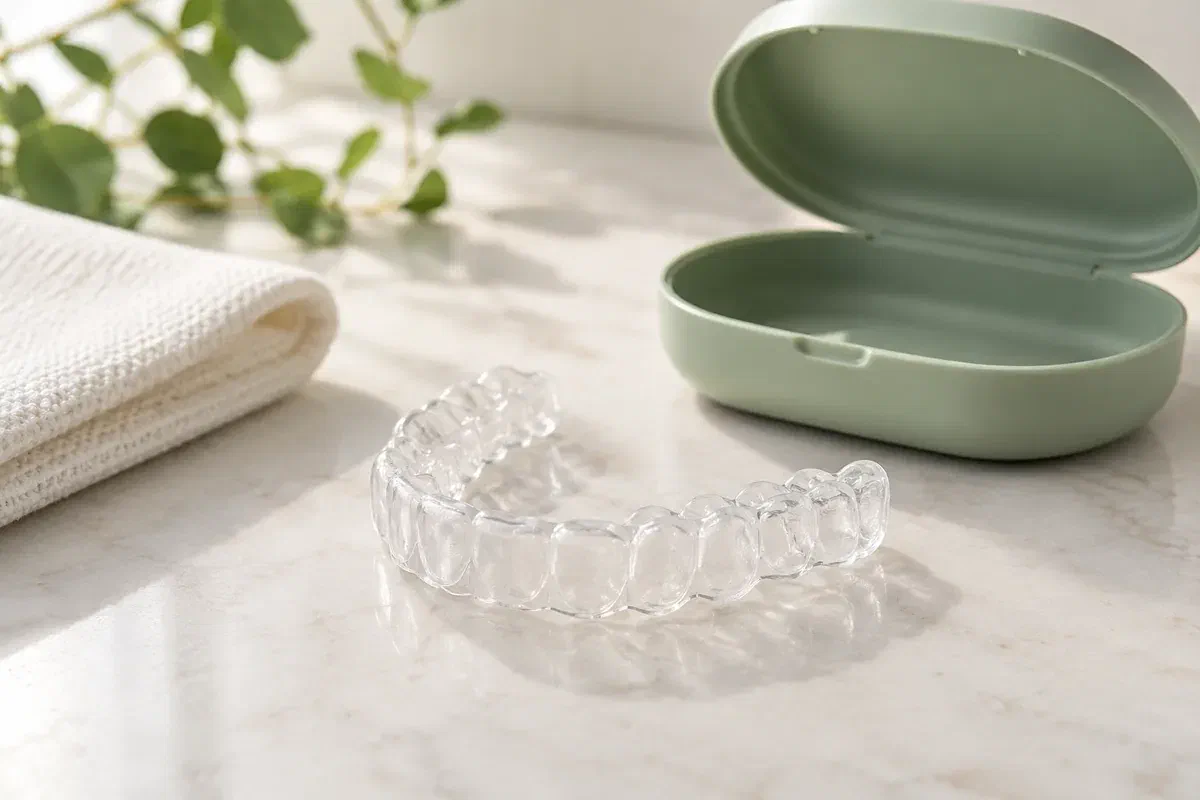
Illustrative clear dental nightguard beside an open pale sage case on a light stone surface
Different clues deserve a careful history

Describe what happens during the day, overnight, and at your teeth.

You do not need to arrive certain that you have bruxism. Explain the observations that raised the question so the clinician can consider the relevant findings and other possible explanations.

Clenching when concentrating or under pressure

Mention whether you catch your teeth pressed together during work, driving, or another activity. Describe any muscle tiredness and what you have tried so far. The aim is to identify a manageable pattern without assuming that every symptom is caused by stress.

Grinding noticed during sleep

Tell us if someone hears grinding, if you wake with jaw discomfort, or if sleep itself is a concern. Explain any existing sleep diagnosis or appliance use. The clinician can discuss whether further medical or sleep assessment is relevant rather than treating every overnight symptom as the same problem.

Wear, chips, or repeated restoration damage

Point out the teeth that have changed and bring the history of repairs if available. Ask whether the wear pattern and current symptoms support the concern and what other factors need review. Repairing a chip and managing the conditions around it are related but separate decisions.

Bruxism can be mild, and not every person needs an appliance or restorative treatment. Assessment helps determine whether there is damage, a meaningful risk, or a symptom that needs a different investigation.

What a management discussion can clarify

Set a useful goal instead of expecting one device to solve everything.

The most useful goal depends on your concern. It may be protecting a vulnerable restoration, reducing an awake clenching habit, understanding persistent discomfort, or monitoring wear. Ask which goal is being prioritized and how the team will assess whether the plan is helping.

A thoughtful review also distinguishes treatment of the consequences from management of the activity. A damaged tooth may need its own care even when a protective appliance is considered. Equally, visible wear does not mean every tooth needs rebuilding before the present situation has been assessed.

Advice linked to the time and circumstances

Ask whether the proposed strategy is intended for daytime awareness, sleep-related protection, or another concern. A plan that fits the actual pattern is easier to follow than a general instruction to stop grinding. Explain what is realistic within your work and daily routine.

A clear purpose for any appliance

If a guard is recommended, ask what it is designed to protect and what it cannot reliably accomplish. Review fit, wear instructions, cleaning, fees, and follow-up. The device should be considered part of ongoing care rather than a permanent solution that never needs checking.

Attention to symptoms that do not fit neatly

Persistent tooth pain, restricted jaw movement, or a changing complaint deserves its own explanation. Ask what has been assessed and whether another clinician's input is appropriate. A bruxism label should not prevent review of a symptom that remains unexplained or is getting worse.

Planning bruxism care

Build the history, examine the effects, and choose a proportionate response.

The visit should explain the evidence behind the recommendation. Let us know about previous guards, dental repairs, medicines, and any medical or sleep-related care already underway.

  1. Review observations and the timing of symptoms

    Describe daytime clenching, reports of sleep grinding, and when discomfort occurs. Mention changes in medicines or health and bring your current appliance. If someone has noticed grinding, their observations can be useful without requiring you to record or prove every overnight episode.

  2. Examine teeth, restorations, and relevant tissues

    The clinician assesses wear, damage, tenderness, and other findings related to your concern. Ask whether additional records would help monitor changes. A history of wear is considered alongside current symptoms rather than used alone to determine exactly how often you grind today.

  3. Compare observation, practical strategies, and protection

    Discuss the reason for each option and what would make it worthwhile in your case. If an appliance is appropriate, confirm how it will be fitted and reviewed. If a tooth needs repair or another assessment is advised, discuss that stage separately.

  4. Review the effect and adjust the plan with advice

    At follow-up, explain comfort, appliance use, damage, and any changes in the habit you notice. Ask whether the original goals are being met and what remains uncertain. A poor response should prompt review rather than unplanned appliance changes or irreversible alteration of the teeth.

Between appointments

Use the plan consistently, and bring problems back for review.

Instructions differ for observation, daytime strategies, a new guard, and care after a tooth repair. Confirm what applies to you and how to contact the team about an unexpected change.

Make daytime awareness practical

If awake clenching is part of the assessment, ask about simple reminders and a comfortable resting position for the jaw. Choose cues that fit your routine rather than repeatedly testing the bite. Discuss stress or concentration patterns without treating them as a complete diagnosis.

Care for an appliance according to its instructions

Follow the recommended cleaning, storage, and wear schedule and bring the device to reviews. Do not heat, trim, or reshape it yourself. Contact the team if it becomes loose, painful, damaged, or feels different after dental work so its fit and continued use can be assessed.

Share relevant health and sleep changes

Mention new medicines, altered symptoms, or concerns about sleep quality at review. Do not stop prescribed medicines because you suspect a connection with clenching. The dental and medical teams can discuss whether further assessment or coordination is needed.

Patient information: NIH News in Health — daytime awareness, sleep-related questions, and conservative care

Choosing the focus of bruxism management

Protection, behaviour support, and repair have different roles.

Ask what the proposed option is intended to change and how its results will be reviewed. More treatment is not automatically better when the findings support a limited approach.

When awareness and observation fit the findings

Monitoring and practical habit support

Discuss a manageable approach to awake clenching and the records needed to monitor your teeth. Ask which changes matter and when to return. A mild finding may be observed, while persistent symptoms should be reviewed rather than dismissed as a habit you ought to control.

When tooth or restoration protection is appropriate

An individually assessed protective appliance

Review the proposed device, fit, limitations, and maintenance. Ask whether it can be used alongside any retainer or other prescribed appliance. Protection does not guarantee that grinding stops, and an uncomfortable device should be assessed rather than worn through increasing pain.

When damage or another concern needs its own plan

Restorative care or further evaluation

A fractured or significantly worn tooth may need treatment based on its condition. Other symptoms may justify medical, sleep, or jaw-pain assessment. Ask why that care is recommended and avoid assuming that permanent bite changes are a routine cure for bruxism.

Bruxism questions

Ask what is known, what needs protection, and what still needs explaining.

A useful discussion recognizes the differences between awake habits, sleep-related activity, and existing damage. Bring your observations even if you are unsure how they fit together.

(905) 876-4488
Can I clench my teeth without making the grinding noise people hear at night?
Yes. Clenching can involve pressing the teeth together without a noticeable grinding sound. Explain when you catch yourself doing it and any associated discomfort. The absence of noise does not answer every question, but your observations need to be considered with an examination.
Will a nightguard definitely stop the grinding itself?
A guard may be recommended to protect teeth and restorations, but it should not be presented as a guaranteed way to stop all grinding. Ask about its specific purpose and how the response will be reviewed. Continued symptoms or damage deserve reassessment.
Does visible tooth wear show exactly how much I am grinding now?
No. Wear reflects a history and can have more than one contributing factor. The clinician considers its pattern, your symptoms, and available records. Ask whether monitoring over time would help clarify current change before agreeing to a larger treatment plan.
Should a new clenching concern after a medication change be mentioned?
Yes. Bring the medicine name and explain when the change occurred. Do not stop or adjust a prescription yourself. The dental clinician can assess your teeth and discuss whether the prescriber should review a possible connection with your symptoms.
Can I use my orthodontic retainer instead of a recommended grinding guard?
Do not assume the devices have the same function. Bring the retainer and ask how tooth retention and protection should be coordinated. The clinician can discuss an appropriate arrangement and review fit rather than asking you to combine or substitute appliances without guidance.
Why might sleep questions be part of a bruxism consultation?
The timing of grinding and any wider sleep concerns can affect the assessment. Mention snoring, an existing sleep diagnosis, or other symptoms you have noticed. Dental tooth protection and medical evaluation of a sleep problem serve different purposes and may need coordinated advice.
Bruxism treatment in Milton

Bring the pattern you have noticed and discuss a practical next step.

Contact our Bronte Street practice about clenching, grinding, tooth wear, or an existing guard that needs review. We can assess the effects, explain suitable protection or care, and discuss when further evaluation is appropriate.

Management, appliance suitability, repair needs, referral, and fees depend on assessment. No guard or treatment can guarantee that all grinding, discomfort, or future damage will stop.

Visit Milton Dental Clinic
Unit 1, 342 Bronte St. S, Milton, ON L9T 5B7
Get directions Clinic hours
Monday–Thursday
11am–7pm
Friday–Sunday
By appointment only

How can we help?

Milton Dental Clinic

Have a question about your smile? Choose the option that works best for you.

For urgent dental concerns, please call.
Messages are reviewed during clinic hours.