

Illustrative patient and clinician discussing tooth protection with a clear dental guard
Specialized Care

Bruxism Treatment in Campbellville

A little clenching here and there does not always call for a guard or any treatment. From Campbellville, a bruxism assessment can tell you whether your teeth are being affected, whether simply keeping watch is enough, and what signs would mean it is time to act.

A measured look at grinding for Campbellville

Does mild grinding need doing anything about?

Clenching and grinding, which dentists call bruxism, are surprisingly common. Many people do a bit of both, by day or during sleep, and never come to harm. Others gradually crack fillings, flatten their teeth, or wake with aching muscles. The real question is not whether you grind, but whether it is causing a problem worth managing.

Answering that well means looking at the evidence rather than reaching for an appliance by default. Sometimes the honest recommendation is to keep an eye on things and compare at future check-ups. Sometimes it is a simple daytime habit change, a protective guard, attention to a damaged tooth, or a closer look at a symptom that may have a different cause altogether.

Book a visit at our Bronte Street practice and tell us what prompted the question. If you already have a guard, bring it and say whether you actually use it. We will examine your teeth and explain whether action is needed now, later, or not at all, with reasons you can weigh up yourself.

Find out if your grinding needs care
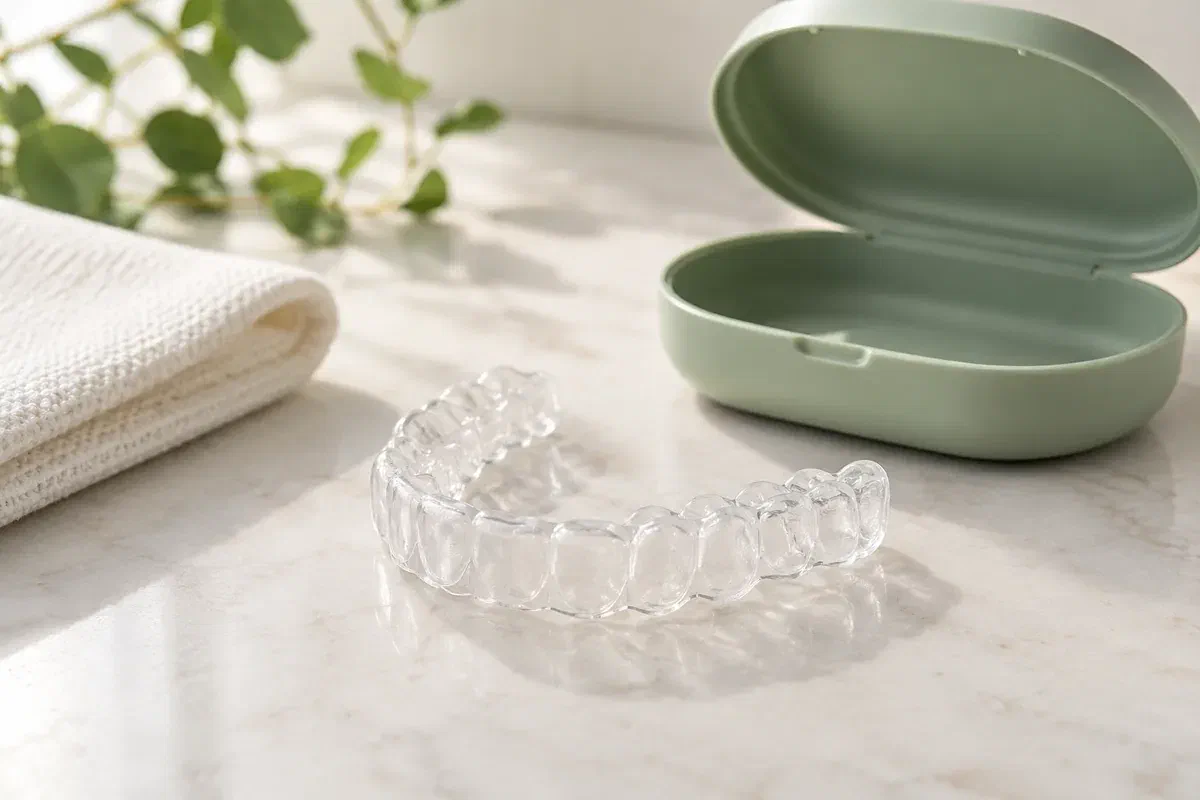
Illustrative clear dental nightguard beside an open pale sage case on a light stone surface
Signs that help decide

What would make treatment worthwhile?

You do not need to be sure it is bruxism. Describe what you have noticed, and the clinician can weigh it against other explanations and the actual condition of your teeth.

Clenching while you work or concentrate

Many people clench during physical work, long drives, or tasks that take focus. Note when it happens and whether your face feels tired afterward. Stress or effort may play a part, although that is not assumed to explain every ache.

Grinding someone hears at night

Mention how often a household member hears it and whether you wake stiff or with a headache. Share any sleep diagnosis or device. Night-time grinding can overlap with sleep concerns that may need a physician’s view.

Changes you can see or feel on your teeth

Flattened tips, small chips, or a filling that keeps breaking are the kinds of findings that can tip the balance toward treatment. Bring records if you have them. Repairing a tooth and dealing with the forces behind its damage are planned as separate steps.

Many people with mild bruxism need no appliance or dental treatment. Assessment shows whether there is real damage, a risk significant enough to act on, or a symptom that belongs to something else.

What a clear answer gives you

Confidence to wait, or a reason to act.

The most useful outcome might be reassurance backed by a baseline, a plan to protect a vulnerable tooth, relief for tired muscles, or an explanation of something you have been wondering about for years. Decide which matters most to you, and ask how the team will judge whether anything is changing.

Treating the damage and managing the habit are different. A cracked filling may need replacing even if grinding is mild. Equally, some wear on its own is not a reason to rebuild teeth before anyone knows whether it is still happening.

Advice proportionate to what is found

Ask whether a suggestion is aimed at daytime clenching, sleep grinding, or something else, and whether a lighter step would do. Recommendations that match your findings and your routine are easier to follow, and less likely to be more than you need.

A guard only if it earns its place

When an appliance is suggested, ask what it would protect and what it cannot achieve. Discuss comfort, fit, cleaning, wear time, cost, and review. If the benefit is small, it is fair to ask whether monitoring would be just as reasonable.

Room to revisit odd symptoms

Tooth pain that lingers, stiffness when opening, or complaints that keep changing should be investigated, even if your grinding seems mild. Ask what has been checked and whether another clinician should be involved.

Making the decision

Evidence first, action only where it helps

You should understand the reason for every recommendation, including a recommendation to wait. It helps to tell us about any guard you have owned, the fillings or crowns you have had, what you take each day, and whether a doctor is already looking into your sleep.

  1. Hear what you and others have noticed

    We ask about clenching during the day, grinding heard at night, and any morning or evening discomfort. Mention health or medicine changes. What a household member has observed is useful; you do not need to track every night.

  2. Look for real effects on teeth and muscles

    The clinician examines wear, cracks, existing fillings, and muscle tenderness, and may record findings for later comparison. Wear is read in the context of your current symptoms, since on its own it cannot reveal today’s level of grinding.

  3. Decide whether to act now

    If findings are mild, monitoring may be the advice. If teeth or restorations are at risk, protection or repair is explained with its purpose. A separate concern, such as a sleep question, is discussed on its own.

  4. Compare at a later visit

    Reviews can often be timed with routine check-ups. Tell us about comfort, any new damage, and changes in the habit. If things have moved, the plan is adjusted with care rather than by guesswork or irreversible changes to your teeth.

If you are keeping watch

What to notice, and when to call before the next check-up

Instructions differ for monitoring, daytime awareness, a new appliance, or care after a repair. Confirm which apply, and how to reach us between visits if something new comes up.

A light touch on daytime habits

If awake clenching was noticed, ask about easy reminders and the jaw’s relaxed resting position. Choose moments already in your day, such as finishing a chore or climbing into the truck. Avoid repeatedly testing the bite. Stress is part of the conversation, not the whole answer.

Basic care if you have a guard

Clean and store the appliance as advised and bring it to reviews. Do not heat, cut, or bend it yourself. Call if it loosens, causes soreness, cracks, or feels different after other dental work.

Note anything that changes

New chips, more frequent jaw aches, different sleep, or new medicines are all worth mentioning. Keep taking prescriptions as directed even if you suspect a link to clenching. We can discuss whether medical input would be useful.

Patient information: NIH News in Health — daytime awareness, sleep-related questions, and conservative care

Campbellville bruxism options

From doing nothing new to targeted care

Before agreeing to anything, find out the result it is meant to produce and when you will look at that result together. A smaller response is usually the right fit when findings are limited.

Often enough for mild, stable findings

Monitoring at routine visits

Daytime awareness tips are combined with records compared at regular check-ups, which can reduce extra trips. Ask what would justify coming in sooner. Symptoms that persist should be reassessed rather than shrugged off.

When teeth or restorations are at real risk

A protective appliance, individually assessed

Go over the design, fit, limits, and upkeep. If you wear a retainer, ask how the two will work together. A guard protects but does not guarantee that grinding stops, and a painful one should be brought back for adjustment.

When there is damage or a separate concern

Repair or another opinion

A broken or badly worn tooth is treated according to its condition. Some symptoms warrant a medical, sleep, or jaw-joint assessment. Ask the reason for each step, and be cautious about permanent bite reshaping put forward as a cure.

Questions about mild bruxism

When is grinding worth treating?

These answers address the questions people ask when they are not sure their clenching or grinding is serious enough to need care.

(905) 876-4488
How common is teeth grinding?
Bruxism is common, and many people clench or grind at some point in their lives. Most cases are mild. That is why the focus is on whether it is causing problems for you, rather than whether it happens at all.
Is it okay to do nothing about mild grinding?
For many people with mild findings and no damage, monitoring is a reasonable choice. Ask what signs would change that advice, so you know when to get in touch before the next routine visit.
What findings would make a guard more likely to be suggested?
Rapid wear, repeated chips or broken fillings, crowns at risk, or significant morning muscle pain may make protection more worthwhile. The decision depends on your overall findings and preferences. If a guard is only a marginal benefit for you, it is reasonable to say you would rather monitor for now and revisit the idea later.
Can my grinding check be done at my regular check-up?
Often it can. Mention your concern when booking so enough time is set aside. If more assessment is needed, a separate visit can be arranged.
Can children grind their teeth too?
Yes, grinding is often noticed in children and frequently eases as they grow. Mention it at their dental visit so their teeth can be checked. Any accompanying sleep concerns, such as loud snoring, are worth raising with their doctor.
Could my household book visits together from Campbellville?
Ask when booking. Grouping appointments for more than one family member can sometimes be arranged, which can help when you prefer to make one trip into town.
Booking from Campbellville

Find out where you stand, then decide.

Get in touch with our Bronte Street team about clenching, grinding, tooth wear, or a guard you are unsure about. We will assess whether your teeth are being affected, explain whether to watch or act, and say when another opinion would help.

The need for an appliance, a repair, or a referral, and any fee, is decided only after your examination. Even a well-made guard cannot promise to end grinding or prevent every future chip or ache.

Visit Milton Dental Clinic
Unit 1, 342 Bronte St. S, Milton, ON L9T 5B7
Get directions Clinic hours
Monday–Thursday
11am–7pm
Friday–Sunday
By appointment only

Areas we serve

  • Milton
  • Oakville
  • Mississauga
  • Georgetown
  • Halton Hills
  • Acton
  • Campbellville
  • Brampton
  • Burlington
  • Puslinch
  • Rockwood
  • Erin
  • Caledon
  • Etobicoke
  • Old Milton
  • Bronte Meadows
  • Timberlea
  • Dorset Park
  • Dempsey
  • Clarke
  • Beaty
  • Coates
  • Harrison
  • Scott
  • Willmott
  • Ford
  • Bowes
  • Cobden
  • Walker
  • Mountain View
  • Milton Heights
  • Hawthorne Village
  • Valley View
  • Fallingbrook
  • Nassagaweya
  • Trafalgar
  • Esquesing
  • Nelson
  • Brookville
  • Moffat
  • Glen Williams
  • Norval
  • Limehouse
  • Stewarttown
  • Ashgrove
  • Hornby
  • Silver Creek
  • Speyside
  • Scotch Block
  • North Oakville
  • River Oaks
  • Glen Abbey
  • West Oak Trails
  • Palermo
  • Bronte Creek
  • College Park
  • Joshua Creek
  • Uptown Core
  • Preserve
  • Iroquois Ridge
  • Lisgar
  • Meadowvale
  • Meadowvale Village
  • Churchill Meadows
  • Erin Mills
  • Central Erin Mills
  • Streetsville
  • East Credit
  • Creditview
  • Heartland
  • Sheridan
  • Mount Pleasant
  • Credit Valley
  • Huttonville
  • Churchville
  • Springbrook
  • Northwest Brampton
  • Bram West
  • Fletcher's Meadow
  • Fletcher's Creek South
  • Alton Village
  • Orchard
  • Millcroft
  • Headon Forest
  • Tansley
  • Brant Hills
  • Tyandaga
  • Kilbride
  • Lowville
  • Aberfoyle
  • Morriston
  • Arkell
  • Hillsburgh
  • Freelton
  • Carlisle
  • Waterdown
  • Flamborough
  • Mountsberg

How can we help?

Milton Dental Clinic

Have a question about your smile? Choose the option that works best for you.

For urgent dental concerns, please call.
Messages are reviewed during clinic hours.