

Illustrative patient and clinician discussing tooth protection with a clear dental guard
Specialized Care

Bruxism Treatment in Georgetown

Finished orthodontics, still wearing a retainer, and now someone says you grind? It is a common combination. From Georgetown, book a bruxism assessment to sort out what each appliance is for and how to protect both your teeth and the result you worked for.

Retainers, guards, and grinding in Georgetown

Two appliances, two different jobs

A retainer holds teeth in their new positions after orthodontic treatment. A protective guard is made to absorb and spread the forces of clenching and grinding, known as bruxism. They can look alike, especially clear versions, which is why people sometimes assume one can stand in for the other. That is not a safe assumption.

Grinding can wear a retainer quickly, crack it, or loosen its fit, and a guard that has not been planned around orthodontic needs might not hold teeth where they should be. The right arrangement depends on your teeth, your retention plan, and what the grinding is actually doing. For some people the answer is monitoring rather than another appliance.

Bring your retainer, any guard you own, and the name of your orthodontist if you have it. Our Bronte Street team will examine your teeth, look at the appliances, and explain how protection and retention can work together without leaving you to improvise.

Ask about retainers and grinding
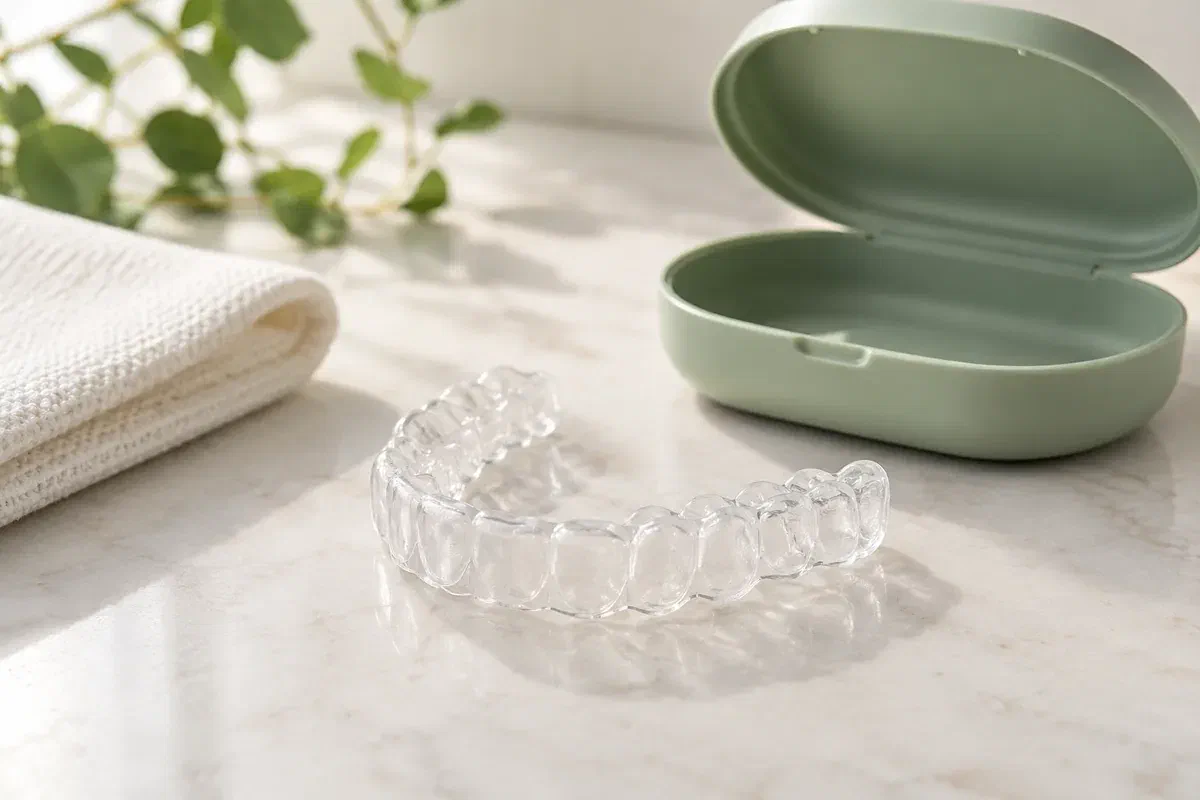
Illustrative clear dental nightguard beside an open pale sage case on a light stone surface
What to mention

Start with what you see on the retainer and the teeth.

There is no need to be certain it is bruxism. Share your observations so the clinician can consider them along with other reasons for wear or discomfort.

Teeth meeting hard during the day

Notice whether you clench while studying, working, or playing sports, and whether your jaw feels tired afterward. Mention anything you have tried. Pressure and concentration can contribute, but they are not assumed to explain every symptom.

A retainer that looks chewed or worn

Holes, thin spots, or cracks in a retainer can be a clue to night grinding. Bring it so the wear can be seen. Mention any morning jaw stiffness, sleep concerns, or a sleep diagnosis, since those may need medical input as well.

Chips or edges that have changed after braces

Point out teeth that look different since orthodontic treatment ended. The wear pattern and other contributors are examined before linking changes to grinding. Repairing a chipped tooth and managing the forces behind it are separate decisions.

Mild clenching may not need any extra appliance. Assessment shows whether teeth or the retainer are being damaged, whether the risk is real, or whether something else is behind the symptoms.

Why coordination matters

Keep the alignment and protect the enamel.

For many people with a retainer, the goal is twofold: hold the orthodontic result and avoid wear or damage from grinding. Others mainly want to stop wrecking retainers or to ease jaw tension. Agree on which aim takes priority, and ask how you will judge whether the plan is working.

Separating the effects from the activity helps here too. A chipped tooth may need repair regardless of any appliance. Meanwhile, wear on a retainer does not automatically mean you need a new device or dental treatment before the pattern is understood.

A plan that fits your routine

Ask whether the advice targets daytime clenching, sleep grinding, or both. Practical strategies that fit school, work, or sports schedules are more useful than being told to stop grinding, and easier for teenagers to follow.

Clear roles for each device

If a guard is recommended, ask what it protects, how it relates to retention, and what it cannot do. Discuss fit, cleaning, wear schedule, fees, and review. Both appliances need regular checks.

Attention to symptoms that don’t add up

Persistent tooth pain, stiffness that limits how wide you can open, or symptoms that keep changing deserve a proper look. Ask what has been examined and whether your orthodontist or another clinician should be involved. Bruxism should not become a catch-all explanation.

How the assessment works

Check the teeth, check the appliances, then coordinate.

You will hear the reasoning behind each recommendation. Tell us about retainers, earlier guards, when your orthodontic treatment ended, current prescriptions, and any doctor you are already seeing about sleep or jaw pain.

  1. Discuss habits, history, and retention

    We ask about daytime clenching, reports of grinding, morning discomfort, your orthodontic treatment, and how often you wear a retainer. Mention medicine or health changes. Family observations are useful, and recording every night is not necessary.

  2. Examine teeth and both appliances

    The clinician checks for wear, cracks, and tender muscles, and looks at how the retainer and any guard fit and are wearing. Records may be suggested for later comparison. Old wear is read alongside current symptoms rather than as a measure of present grinding.

  3. Work out a combined approach

    Options such as monitoring, daytime strategies, or protection are explained with their purpose and how they would sit alongside retention. If your orthodontist should be consulted, we will say so. Any tooth repair is discussed separately.

  4. Follow up on fit and comfort

    At review, share how the appliances feel, how often you wear them, and any new damage or changes in clenching. We check progress against your goals. If things are not working, the plan is reassessed rather than changed on impulse or by permanently altering teeth.

Living with two appliances

Follow one clear routine, not two competing ones.

Instructions depend on whether you are monitoring, building daytime awareness, wearing a new guard, or recovering after a repair. Confirm which apply and who to contact with questions.

Catch daytime clenching early

If you clench while awake, ask about simple reminders and the jaw’s relaxed position. Link them to regular moments such as checking your phone or the start of a practice. Avoid tapping your teeth together to test them. Stress can be discussed without becoming the only explanation.

Wear each appliance as directed

Follow the agreed schedule for your retainer and any guard, and never swap or combine them without advice. Clean and store both properly and bring them to reviews. Do not heat or trim them. Call if either loosens, hurts, cracks, or fits differently.

Report health and orthodontic changes

Tell us about new medicines, symptoms, sleep concerns, or advice from your orthodontist. Do not stop a prescription on your own because you suspect a link with clenching. Your dental, orthodontic, and medical providers can coordinate if needed.

Patient information: NIH News in Health — daytime awareness, sleep-related questions, and conservative care

Georgetown bruxism options

Protection planned around your orthodontic result

Ask what each option should change and how it will be reviewed. When findings are limited, a smaller step often makes the most sense.

For mild wear or mostly daytime clenching

Monitoring with daytime habit support

Records track whether teeth or the retainer are wearing, and awareness strategies are offered for daytime clenching. Ask what should prompt an earlier return. Mild findings can be watched, while persistent symptoms deserve another look.

For teeth or appliances that need protecting

A guard coordinated with retention

Review the design, fit, limits, and care, and how it will work with your retainer. Your orthodontist may need to weigh in. A guard protects without promising that grinding stops, and one that causes pain should be checked.

For damage or a different underlying concern

Repair or additional assessment

Chipped or significantly worn teeth may need treatment based on their condition. Some symptoms warrant medical, sleep, or jaw-pain evaluation. Ask why each step is recommended, and be cautious about permanent bite changes offered as a cure.

Questions from Georgetown families

Retainers, guards, teens, and grinding

These answers address the questions that come up most often when grinding and orthodontic retention overlap.

(905) 876-4488
Can grinding damage my clear retainer?
Yes. Heavy grinding can thin, crack, or wear holes in a retainer over time. If yours looks worn, bring it in. A worn retainer may not hold teeth as intended and should be checked. It also helps to mention how old the retainer is and whether it has been replaced before, since that history can show how quickly the wear is happening.
Can a nightguard double as a retainer?
Some appliances may be designed to serve both roles in certain situations, but many guards are not made to hold teeth in position. Do not assume one replaces the other. Ask what arrangement suits your retention plan.
My teenager grinds at night. Should we be worried?
Grinding is fairly common in young people and may ease over time. Mention it at a dental visit so the teeth can be checked for wear or damage. If there are other sleep concerns, such as loud snoring, ask your family doctor.
Should my orthodontist know that I grind?
Yes, it is helpful. Grinding can affect retainers and, in some cases, the stability of the result. We can share findings with your orthodontist if you would like, so that any decision about a new retainer or a guard is made with both sides of the picture in view.
Does grinding cause teeth to shift after braces?
Grinding is one of several possible influences on tooth position, alongside retainer wear, growth, and natural changes over time. Wearing your retainer as directed is the main protection against shifting. Mention any changes you notice.
Is it okay to book a family member at the same time?
Ask when booking. Back-to-back appointments for family members can sometimes be arranged, which may reduce trips in from Georgetown. Let us know who is coming and what each person needs so enough time can be set aside.
Grinding care for Georgetown

Bring the retainer, the guard, and your questions.

Get in touch with the Bronte Street team about a worn-through retainer, clenching, grinding, worn teeth, or a guard that needs review. We will assess the effects, explain how protection and retention fit together, and say when your orthodontist or another clinician should be involved.

Recommendations, appliance choices, repairs, referrals, and fees depend on your examination. Neither a guard nor a retainer can guarantee that grinding, discomfort, or future damage will stop.

Visit Milton Dental Clinic
Unit 1, 342 Bronte St. S, Milton, ON L9T 5B7
Get directions Clinic hours
Monday–Thursday
11am–7pm
Friday–Sunday
By appointment only

Areas we serve

  • Milton
  • Oakville
  • Mississauga
  • Georgetown
  • Halton Hills
  • Acton
  • Campbellville
  • Brampton
  • Burlington
  • Puslinch
  • Rockwood
  • Erin
  • Caledon
  • Etobicoke
  • Old Milton
  • Bronte Meadows
  • Timberlea
  • Dorset Park
  • Dempsey
  • Clarke
  • Beaty
  • Coates
  • Harrison
  • Scott
  • Willmott
  • Ford
  • Bowes
  • Cobden
  • Walker
  • Mountain View
  • Milton Heights
  • Hawthorne Village
  • Valley View
  • Fallingbrook
  • Nassagaweya
  • Trafalgar
  • Esquesing
  • Nelson
  • Brookville
  • Moffat
  • Glen Williams
  • Norval
  • Limehouse
  • Stewarttown
  • Ashgrove
  • Hornby
  • Silver Creek
  • Speyside
  • Scotch Block
  • North Oakville
  • River Oaks
  • Glen Abbey
  • West Oak Trails
  • Palermo
  • Bronte Creek
  • College Park
  • Joshua Creek
  • Uptown Core
  • Preserve
  • Iroquois Ridge
  • Lisgar
  • Meadowvale
  • Meadowvale Village
  • Churchill Meadows
  • Erin Mills
  • Central Erin Mills
  • Streetsville
  • East Credit
  • Creditview
  • Heartland
  • Sheridan
  • Mount Pleasant
  • Credit Valley
  • Huttonville
  • Churchville
  • Springbrook
  • Northwest Brampton
  • Bram West
  • Fletcher's Meadow
  • Fletcher's Creek South
  • Alton Village
  • Orchard
  • Millcroft
  • Headon Forest
  • Tansley
  • Brant Hills
  • Tyandaga
  • Kilbride
  • Lowville
  • Aberfoyle
  • Morriston
  • Arkell
  • Hillsburgh
  • Freelton
  • Carlisle
  • Waterdown
  • Flamborough
  • Mountsberg

How can we help?

Milton Dental Clinic

Have a question about your smile? Choose the option that works best for you.

For urgent dental concerns, please call.
Messages are reviewed during clinic hours.