Illustrative patient and clinician discussing tooth protection with a clear dental guard
Specialized Care

Bruxism Treatment in Halton Hills

Grinding at night sometimes travels with other sleep complaints: snoring, restless nights, waking unrefreshed. For people across Halton Hills, a bruxism assessment looks at what your teeth and jaw show and helps you decide which questions belong with us and which with your doctor.

Sleep, grinding, and your teeth in Halton Hills

Is it a tooth problem, a sleep problem, or a bit of both?

Sleep bruxism is grinding or clenching that happens while you are asleep. You rarely hear it yourself. A bed partner might, or you may simply wake with a heavy jaw, a dull headache, or teeth that feel tender. Awake bruxism, the daytime version, often involves silent clenching instead, and a person can have one, the other, or both.

When night grinding comes with loud snoring, gasping, or constant tiredness, it is reasonable to wonder about sleep health more broadly. A dentist can assess wear, damage, and muscle tenderness, and discuss protecting your teeth. Diagnosing a sleep disorder is a medical matter, so part of a good plan may be knowing when to bring your physician into the conversation.

Visit our Bronte Street practice with whatever you have noticed, from the sounds at night to how mornings feel. If you use a CPAP machine or an oral appliance from another provider, bring the details along. We will explain what we find in your mouth, what protection could do, and where medical input fits.


Ask about grinding and sleep
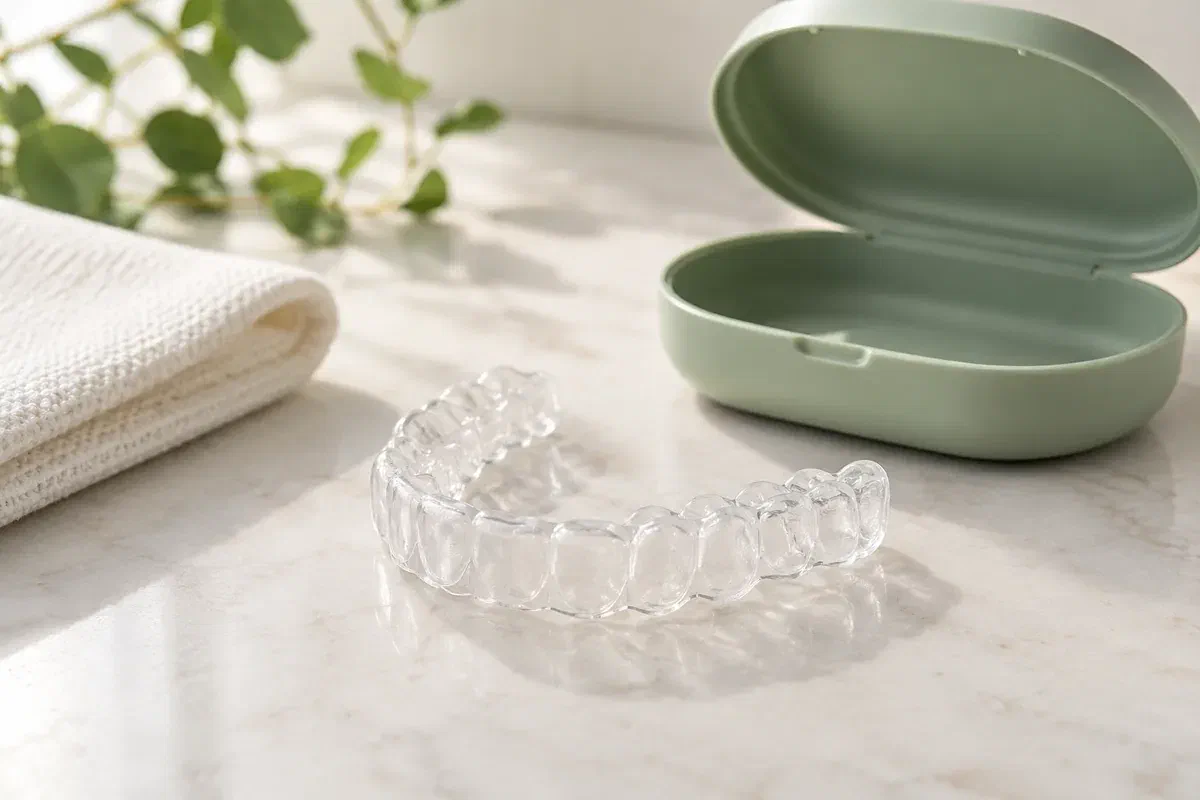
Illustrative clear dental nightguard beside an open pale sage case on a light stone surface
Signs from the night and the morning after

Tell us about the night as well as the teeth.

No diagnosis is needed to book. Describe your sleep, your mornings, and any changes in your teeth, so bruxism can be considered alongside other possible explanations.

Clenching that carries into the daytime

Some people who grind at night also catch themselves clenching while working or driving. Mention when this happens and whether your jaw or temples ache. Tiredness and stress can play into it, but neither is assumed to explain every symptom.

Noise, snoring, or restless sleep

Share what someone has heard, including snoring or pauses in breathing, and whether you wake feeling unrested. Mention any sleep study, diagnosis, or device already in use. These details help decide whether a medical sleep assessment should be part of the plan.

Morning tenderness and visible wear

Point out teeth that feel sore on waking or look flatter than before, and any repairs that have failed. Wear can have several contributors. Treating a damaged tooth and addressing the night-time forces on it are separate steps.

Occasional grinding is common and may cause no damage. An assessment helps establish whether teeth are being harmed, whether the risk justifies protection, or whether symptoms point to something else.

Getting the right people involved

Dental protection and sleep health are different jobs.

Your main aim might be guarding teeth that are wearing quickly, easing morning jaw soreness, or finally getting an answer about why you wake tired. Each of these leads somewhere slightly different. Ask which goal the plan is built around, and how you and the team will know if it is helping.

It helps to keep three things distinct: what grinding has done to your teeth, the grinding activity itself, and any underlying sleep concern. A cracked tooth may need repair whatever else happens. Equally, signs of a sleep problem deserve medical follow-up rather than being treated only as a dental issue.

Advice that fits night and day patterns

Ask whether a recommendation is aimed at sleep grinding, daytime clenching, or both. Strategies matched to your actual pattern are easier to keep up than a general instruction to stop, which is not much help for something that happens while you are asleep.

Understanding what a nightguard is for

If an appliance is suggested, ask what it is designed to protect and what it cannot do, including that it does not treat a sleep disorder. Discuss fit, cleaning, wear schedule, fees, and review. It needs to be checked over time like other dental work.

A route for symptoms beyond dentistry

Daytime sleepiness, loud snoring, persistent tooth pain, or a jaw that will not open fully should each be explained. Ask what has been assessed and whether your physician or another clinician should be involved. A bruxism label should never close off those questions.

What to expect

From sleep history to a plan that respects both sides.

You should hear the reasoning for every suggestion. Mention previous guards, dental work, medications, and any sleep or medical care already underway.

  1. Ask about sleep, mornings, and daytime habits

    We discuss reports of grinding or snoring, how you feel on waking, daytime clenching, and when discomfort tends to appear. Mention medicine or health changes and bring any appliance. Observations from a bed partner are useful, and there is no need to record yourself.

  2. Examine the effects on teeth and muscles

    The clinician checks for wear, cracks, tender muscles, and related signs. Ask whether records would help track change. Existing wear is read together with current symptoms, since it reflects a history rather than a measurement of tonight’s grinding.

  3. Discuss protection and medical follow-up

    Monitoring, daytime awareness, and a protective appliance are explained along with their purpose. If your history suggests a possible sleep disorder, we will recommend speaking with your physician. Any tooth repair is planned as a distinct step.

  4. Review how things are going

    At follow-up, share how the appliance feels, how often you wear it, any new damage, and what your doctor has said if you have seen one. We revisit the goals together. A poor response prompts reassessment, not unplanned changes or irreversible reshaping of teeth.

Night to night

Small routines, honest updates, and the right contacts.

What applies to you depends on whether you are being monitored, working on daytime habits, using a new guard, or recovering after a repair. Ask which instructions are yours and how to reach the team.

Notice daytime clenching too

If you also clench while awake, ask about gentle reminders and a relaxed resting position for the jaw. Choose cues that already exist in your day. Testing your bite again and again tends to backfire. Stress and fatigue are worth discussing, though they rarely tell the whole story.

Care for the guard and any sleep device

Clean and store the nightguard as instructed and bring it to appointments. Avoid heating, filing, or bending it. If you also use a CPAP mask or a sleep appliance from another provider, tell us, so we can consider how the two fit together. Report looseness, pain, or cracks.

Share sleep and health news

Let us know about a new sleep diagnosis, changes in medicines, or symptoms that have shifted. Do not stop a prescribed medicine because you think it may relate to grinding. Your medical and dental teams can coordinate if further assessment is needed.

Patient information: NIH News in Health — daytime awareness, sleep-related questions, and conservative care

Halton Hills bruxism options

Watching, protecting, or looking further

Ask what any option should change and how its effect will be checked. When findings are limited, a modest approach is often the better choice.

For mild wear and occasional symptoms

Observation and habit awareness

Records are kept to show whether wear progresses, and daytime awareness is offered if clenching is present. Ask what would justify an earlier review. Mild findings can be watched, but symptoms that persist should be looked at again rather than brushed aside.

For teeth or dental work at risk overnight

A nightguard that is properly assessed

Go over the guard’s design, fit, limits, and maintenance, and mention any retainer or sleep appliance you use. The guard protects teeth but does not stop grinding or treat sleep problems. If it hurts, have it checked instead of wearing through the discomfort.

For damage or a concern outside the teeth

Repair, or a medical or sleep referral

Broken or badly worn teeth are treated according to their condition. Snoring, breathing pauses, or daytime sleepiness belong with a physician. Ask why each step is suggested, and be sceptical of permanent bite adjustment promoted as a routine fix.

Sleep and grinding FAQ

Where teeth, sleep, and jaw comfort meet

These answers cover the overlap between night grinding and broader sleep questions that people often bring to a dental visit.

(905) 876-4488
Is grinding a sign of sleep apnea?
Not necessarily. Grinding and sleep-disordered breathing can occur together in some people, but one does not confirm the other. If you snore loudly, stop breathing during sleep, or feel very tired by day, ask your physician about an assessment.
Can I wear a nightguard if I already use a CPAP machine?
Many people can, but it depends on your mask type and the appliance. Bring details of your CPAP setup. We can discuss options and, if needed, coordinate with the clinician managing your sleep care.
Is a nightguard the same as a snoring appliance?
No. A protective guard is designed to cushion and protect teeth, while appliances used for snoring or sleep apnea are designed differently and are prescribed based on a medical sleep assessment. Do not use one in place of the other without advice.
Why do my teeth feel sore when I wake up?
Night clenching or grinding can leave teeth and muscles tender in the morning. Other causes, such as a cracked tooth, sinus pressure, or gum problems, are possible too. Mention which teeth feel sore and how long it lasts.
Would sleeping on my back or side change my grinding?
Sleep position is sometimes discussed, but evidence is limited and it varies between people. It is fine to mention how you sleep. We focus on the dental effects and can talk about whether any changes seem worth trying.
Can someone in Georgetown or Acton book this assessment?
Yes. Anyone in Halton Hills can book. Weekday appointments run until early evening, and other days are by arrangement, which can help if you are planning around work or family commitments.
Booking for Halton Hills

Bring what you know about your nights.

Contact our Bronte Street practice about grinding, clenching, morning jaw soreness, worn teeth, or a guard that needs review. We will assess the dental effects, explain suitable protection, and tell you when a conversation with your doctor would be wise.

What we recommend, whether a guard suits you, any repair or referral, and the fee all follow from the examination. A nightguard cannot treat a sleep disorder, and no dental care can promise that grinding or future damage will end.

Visit Milton Dental Clinic
Unit 1, 342 Bronte St. S, Milton, ON L9T 5B7
Get directions Clinic hours
Monday–Thursday
11am–7pm
Friday–Sunday
By appointment only

Areas we serve

  • Milton
  • Oakville
  • Mississauga
  • Georgetown
  • Halton Hills
  • Acton
  • Campbellville
  • Brampton
  • Burlington
  • Puslinch
  • Rockwood
  • Erin
  • Caledon
  • Etobicoke
  • Old Milton
  • Bronte Meadows
  • Timberlea
  • Dorset Park
  • Dempsey
  • Clarke
  • Beaty
  • Coates
  • Harrison
  • Scott
  • Willmott
  • Ford
  • Bowes
  • Cobden
  • Walker
  • Mountain View
  • Milton Heights
  • Hawthorne Village
  • Valley View
  • Fallingbrook
  • Nassagaweya
  • Trafalgar
  • Esquesing
  • Nelson
  • Brookville
  • Moffat
  • Glen Williams
  • Norval
  • Limehouse
  • Stewarttown
  • Ashgrove
  • Hornby
  • Silver Creek
  • Speyside
  • Scotch Block
  • North Oakville
  • River Oaks
  • Glen Abbey
  • West Oak Trails
  • Palermo
  • Bronte Creek
  • College Park
  • Joshua Creek
  • Uptown Core
  • Preserve
  • Iroquois Ridge
  • Lisgar
  • Meadowvale
  • Meadowvale Village
  • Churchill Meadows
  • Erin Mills
  • Central Erin Mills
  • Streetsville
  • East Credit
  • Creditview
  • Heartland
  • Sheridan
  • Mount Pleasant
  • Credit Valley
  • Huttonville
  • Churchville
  • Springbrook
  • Northwest Brampton
  • Bram West
  • Fletcher's Meadow
  • Fletcher's Creek South
  • Alton Village
  • Orchard
  • Millcroft
  • Headon Forest
  • Tansley
  • Brant Hills
  • Tyandaga
  • Kilbride
  • Lowville
  • Aberfoyle
  • Morriston
  • Arkell
  • Hillsburgh
  • Freelton
  • Carlisle
  • Waterdown
  • Flamborough
  • Mountsberg

How can we help?

Milton Dental Clinic

Have a question about your smile? Choose the option that works best for you.

For urgent dental concerns, please call.
Messages are reviewed during clinic hours.