

Illustrative patient and clinician discussing tooth protection with a clear dental guard
Specialized Care

Bruxism Treatment in Mississauga

Being told your teeth show signs of grinding can be puzzling when nothing hurts and nobody has heard a sound. From Mississauga, you can book a focused visit to understand what the wear means, whether it is still changing, and what, if anything, needs doing.

For Mississauga adults surprised by a wear finding

Flat edges, no symptoms, and a question mark

Tooth wear is often spotted during a routine examination long before it is felt. Smooth, flattened biting edges or small chips can hint at bruxism, the clenching and grinding that may happen during sleep or while you are awake. Because so much of it goes unnoticed, a lack of symptoms does not rule it out.

Nor does wear prove that grinding is going on today. Teeth record years of use, and acid, brushing technique, and the way the bite comes together can all leave marks. The sensible first step is usually to understand the pattern and find out whether it is still progressing, before talking about guards or rebuilding.

When you book with our Bronte Street team, bring any notes from the dentist who raised the concern, and an appliance if you have one. We will examine your teeth, ask about habits you may never have thought about, and set out the reasons for whatever we suggest.

Understand your wear finding
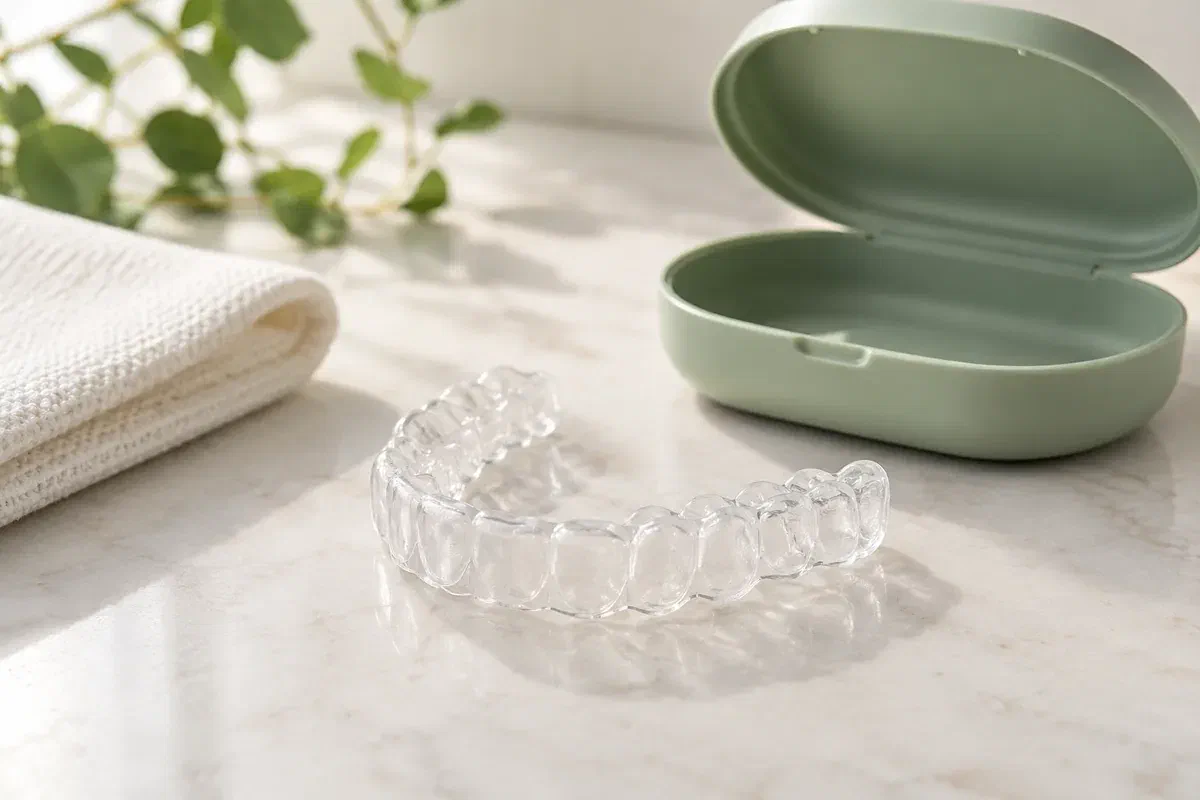
Illustrative clear dental nightguard beside an open pale sage case on a light stone surface
Things to reflect on before you come

You may know more than you think.

Even without pain, small details help. A few minutes of reflection on habits, sleep, and dental history lets the clinician consider bruxism alongside other explanations.

Moments when your jaw is busy

Think about whether your teeth meet while you study, game, lift weights, or sit in traffic. Any tension in the cheeks or temples is worth mentioning. Stress may be part of the picture, though it is not assumed to account for everything.

What happens after the lights go out

Ask someone you share a room with whether they have heard grinding, and notice whether you wake with a tight jaw or headache. Mention any sleep diagnosis or device. Sleep-related grinding and wider sleep issues may each need their own assessment.

The wear itself

Note which teeth look shorter, sharper, or chipped, and gather past dental records if they are easy to find. The clinician studies where the wear sits and what else may be involved. Repairing worn teeth and managing what wore them are distinct choices.

Wear that is mild and stable may need nothing more than monitoring. The purpose of the visit is to see whether there is real damage, a risk worth acting on, or a sign of something unrelated.

Why understanding comes before treatment

Knowing whether it is active changes the plan.

Your goal might be peace of mind, a baseline for future comparison, protection for a filling that is starting to crack, or simply clarity about what the earlier comment meant. Name the outcome you care about and ask how the team will tell whether the approach is working.

Separating the history from the present also prevents overtreatment. Worn teeth do not automatically need covering or building up. At the same time, a tooth that has actually broken may need care whether or not grinding is still going on.

Guidance tied to your real habits

Ask whether the advice is for daytime clenching, sleep grinding, or another issue altogether. Suggestions that suit how you live, work, and train are more realistic than a blanket instruction to stop.

Clarity before any appliance

If protection is suggested, ask what exactly it guards against and what it will not change. Discuss fit, cleaning, nightly wear, cost, and how often it will be reviewed. It is one piece of ongoing care, not a permanent fix.

Openness to a different explanation

Tooth pain, limited jaw opening, or symptoms that do not match the wear should be investigated on their own. Ask what was examined and whether another provider’s view would help. A grinding label should not end the inquiry.

Your first bruxism appointment

Establish a baseline, then decide if anything needs to change.

You should understand the evidence for each recommendation. Mention earlier guards, repairs, medicines, and any medical or sleep care you are having.

  1. Talk about habits you rarely notice

    We ask about clenching during concentration or exercise, whether anyone has heard grinding, and any jaw or tooth discomfort. Health and medication changes matter too. You do not need proof of night grinding; reports from family are welcome but not required.

  2. Record the wear and look for damage

    The clinician examines where wear sits, checks for cracks and tender muscles, and may suggest photos or other records to compare at future visits. Existing wear is interpreted with your symptoms and history rather than as a gauge of how much you grind now.

  3. Decide between watching and acting

    For many people with stable wear, observation is reasonable. If protection or a repair is suggested, you will hear why and what it should achieve. Referral for a separate concern is discussed as its own step.

  4. Compare at the next visit

    Later reviews look at whether wear has moved, how any appliance feels, and whether new symptoms have emerged. If the picture changes, the plan is updated thoughtfully rather than replaced on a hunch or with irreversible changes to the teeth.

Until we see you again

Watch, note, and report.

What you do between visits depends on whether you are being monitored, practising daytime awareness, using a new guard, or recovering from a repair. Ask which applies and how to reach us.

Notice your resting jaw

If awake clenching is suspected, ask for easy reminders and what a relaxed jaw position feels like. Link the cue to something regular, like unlocking your phone. Avoid grinding your teeth together to check the bite. Stress is worth discussing, but it is rarely the only factor.

If you have a guard, look after it

Clean it as advised, store it in its case, and bring it to appointments. Do not soften it with heat or cut it to make it fit. Get in touch if it loosens, causes soreness, cracks, or changes after other dental treatment.

Jot down anything new

A short note about new medicines, symptoms, or sleep problems helps at review. Do not stop a prescription because you suspect it is linked to clenching. We can talk with you about whether your physician should weigh in.

Patient information: NIH News in Health — daytime awareness, sleep-related questions, and conservative care

Options after a wear assessment

Sometimes the right answer is to wait and measure.

Whichever direction is suggested, ask what it should change and how you will know. A light approach is often the right fit for mild, stable findings.

When wear is mild and no damage is found

Baseline records and monitoring

Records are taken so future visits can show whether anything is changing, and daytime awareness tips are offered if they apply. Ask what signs should bring you back early. Lasting symptoms deserve a fresh look rather than being dismissed.

If records show wear advancing or dental work at risk

A protective appliance, if warranted

Discuss the design, fit, limits, and upkeep. If you wear a retainer or sports guard, ask how the devices relate. A guard is meant to protect, not to stop grinding, and one that hurts should be brought back for adjustment.

When damage or a separate problem needs addressing

Repair or another assessment

A chipped or significantly worn tooth may need its own treatment. Some symptoms suggest a medical, sleep, or jaw-joint evaluation. Ask the reasoning behind each step, and be cautious about permanent bite changes promoted as a cure.

Mississauga patient questions

What does a wear finding actually mean?

These answers cover what people commonly ask after hearing about grinding for the first time.

(905) 876-4488
Why didn’t I feel anything if my teeth are worn?
Wear usually happens slowly, and enamel does not have nerves that signal gradual change. Many people only learn about it at a check-up. That is one reason a baseline and later comparison can be more useful than a single impression, especially when the finding came as a surprise and you want to know whether it is still happening.
Can tooth wear make my teeth more sensitive?
It can, if wear exposes the softer layer beneath the enamel. Sensitivity can have other causes too, such as gum recession or decay. Mention which teeth react and to what, so the clinician can look into it.
Can my previous dentist’s records help?
Yes. Earlier photos, charts, or notes about wear can show whether things have changed over time. If they are easy to request, bring copies, though an assessment can go ahead without them.
Does lifting weights or intense exercise cause clenching?
Some people clench hard during strenuous effort. Mention the activities you do and whether you notice jaw tension during them. We can discuss whether it is relevant to the wear and whether a sports mouthguard question also needs answering.
Do I have to treat wear right away?
Often not. Mild, stable wear may simply be monitored. Treatment is more likely to be discussed if teeth are breaking, sensitivity is a problem, or records show the wear progressing. Ask what would change the recommendation, so you know what to watch for in the meantime.
Is grinding something that runs in families?
Bruxism is sometimes noticed in more than one family member, but many factors can be involved. It is fine to mention a family history. The assessment still focuses on what is happening in your own mouth.
Planning from Mississauga

Turn a vague comment into a clear plan.

Contact our Bronte Street practice about worn teeth, suspected clenching, night grinding, or an appliance that needs review. We can assess what the wear means, discuss whether protection or repair is warranted, and suggest when another evaluation would help.

Assessment determines any advice, appliance, repair, referral, or fee. No treatment can promise that grinding, discomfort, or further wear will stop.

Visit Milton Dental Clinic
Unit 1, 342 Bronte St. S, Milton, ON L9T 5B7
Get directions Clinic hours
Monday–Thursday
11am–7pm
Friday–Sunday
By appointment only

Areas we serve

  • Milton
  • Oakville
  • Mississauga
  • Georgetown
  • Halton Hills
  • Acton
  • Campbellville
  • Brampton
  • Burlington
  • Puslinch
  • Rockwood
  • Erin
  • Caledon
  • Etobicoke
  • Old Milton
  • Bronte Meadows
  • Timberlea
  • Dorset Park
  • Dempsey
  • Clarke
  • Beaty
  • Coates
  • Harrison
  • Scott
  • Willmott
  • Ford
  • Bowes
  • Cobden
  • Walker
  • Mountain View
  • Milton Heights
  • Hawthorne Village
  • Valley View
  • Fallingbrook
  • Nassagaweya
  • Trafalgar
  • Esquesing
  • Nelson
  • Brookville
  • Moffat
  • Glen Williams
  • Norval
  • Limehouse
  • Stewarttown
  • Ashgrove
  • Hornby
  • Silver Creek
  • Speyside
  • Scotch Block
  • North Oakville
  • River Oaks
  • Glen Abbey
  • West Oak Trails
  • Palermo
  • Bronte Creek
  • College Park
  • Joshua Creek
  • Uptown Core
  • Preserve
  • Iroquois Ridge
  • Lisgar
  • Meadowvale
  • Meadowvale Village
  • Churchill Meadows
  • Erin Mills
  • Central Erin Mills
  • Streetsville
  • East Credit
  • Creditview
  • Heartland
  • Sheridan
  • Mount Pleasant
  • Credit Valley
  • Huttonville
  • Churchville
  • Springbrook
  • Northwest Brampton
  • Bram West
  • Fletcher's Meadow
  • Fletcher's Creek South
  • Alton Village
  • Orchard
  • Millcroft
  • Headon Forest
  • Tansley
  • Brant Hills
  • Tyandaga
  • Kilbride
  • Lowville
  • Aberfoyle
  • Morriston
  • Arkell
  • Hillsburgh
  • Freelton
  • Carlisle
  • Waterdown
  • Flamborough
  • Mountsberg

How can we help?

Milton Dental Clinic

Have a question about your smile? Choose the option that works best for you.

For urgent dental concerns, please call.
Messages are reviewed during clinic hours.