

Illustrative patient and clinician discussing tooth protection with a clear dental guard
Specialized Care

Bruxism Treatment in Puslinch

Hauling, lifting, swinging a hammer, or bracing on a tractor seat: hard physical effort often comes with a clamped jaw. For people working and living around Puslinch, a bruxism assessment looks at what that effort, and any night grinding, is doing to your teeth.

Clenching under load, for Puslinch workers

Brace, lift, clench: the jaw joins in.

Bracing the body often means bracing the jaw. Lots of people clamp their teeth while lifting feed bags, working with tools, or pushing through a heavy workout, and many never realize it. That clenching is a form of awake bruxism. Some of the same people also grind during sleep, which is the other common pattern.

Occasional clenching during effort is not automatically harmful. It becomes a concern when teeth are cracking, fillings keep failing, wear is moving quickly, or muscles ache day after day. The plan depends on which of those you have: awareness during heavy tasks, protection for vulnerable teeth, repair of damage, or a look at symptoms that may have another cause.

Come to our Bronte Street practice and describe the work or activities where you notice it. Bring any mouthguard or nightguard you already use. We will examine your teeth and jaw muscles and talk through practical steps that suit the way you actually spend your days.

Ask about clenching during work
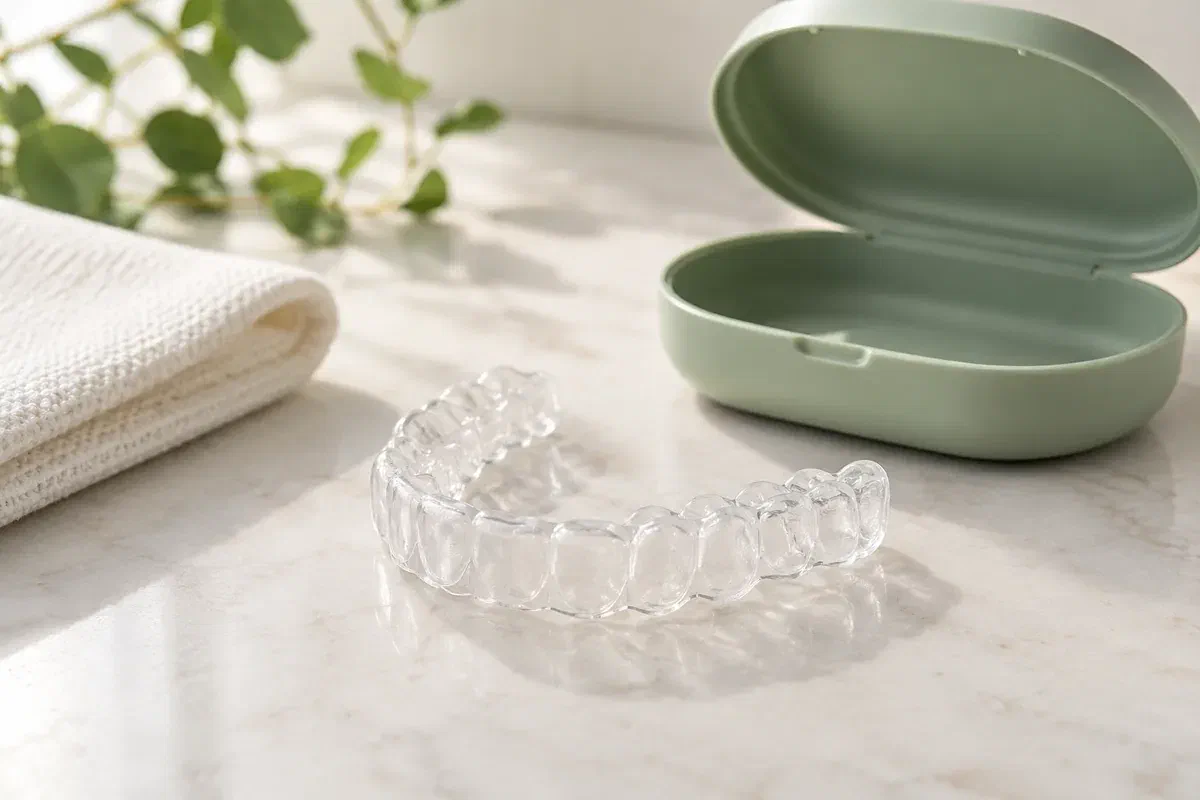
Illustrative clear dental nightguard beside an open pale sage case on a light stone surface
Situations to tell us about

Think about the moments when you bite down.

A clear description of when clenching happens helps the clinician consider bruxism alongside other reasons for wear, pain, or damage. You do not need to be sure.

Heavy lifting, tools, and hard workouts

Say which jobs or activities bring it on and whether your cheeks or temples ache afterward. Mention what you have tried. Effort and stress can both contribute, but neither is assumed to account for every symptom.

Grinding during sleep after a long day

If someone at home hears grinding, or you wake with a stiff jaw, let us know how often. Mention snoring, poor sleep, or any sleep diagnosis. Night grinding can sit alongside sleep concerns that are best assessed by a physician.

Cracks, chips, and worn back teeth

Point out teeth that have broken or worn, especially molars, and any repairs over the years. The pattern is examined before conclusions are drawn. Fixing a cracked tooth and reducing the load on it are two separate decisions.

Clenching during effort is common and may cause no lasting harm. Assessment helps show whether teeth are being damaged, whether that risk is worth acting on, or whether a symptom has another explanation.

What you get from a closer look

Practical goals for a working jaw

Goals vary. You might want to stop cracking back teeth, ease muscle soreness after heavy days, protect a crown, or just understand whether the clenching matters. Name the one you care most about, and ask how the team will tell whether the plan is making a difference.

Damage and habit are handled separately. A fractured molar may need treatment whether or not you wear a guard. At the same time, worn teeth do not automatically need rebuilding before anyone knows whether the wear is still progressing.

Advice that suits physical work

Ask whether a suggestion is aimed at clenching during effort, night grinding, or something else. Ideas that fit the jobs and routines you have are much easier to use than a vague instruction to stop clenching.

The right appliance for the right time

A nightguard and a sports mouthguard are different things. If one is suggested, ask what it protects, when to wear it, and what it will not do. Cover fit, cleaning, cost, and review so it holds up to real use.

A second look at pain that persists

Ongoing tooth pain, a jaw that is hard to open, or discomfort that keeps shifting deserves its own explanation. Find out what the examination covered and whether a physician or other clinician has a part to play. Clenching should not be the automatic answer.

The appointment

Describe the work, examine the effects, choose sensibly.

Expect a reason for every recommendation. Tell us about guards you have used, earlier repairs, any medicines, and whether a doctor is already looking into sleep or pain.

  1. Talk through your days and nights

    We ask about clenching during tasks and exercise, grinding noticed at night, and when soreness appears. Mention medicine or health changes and bring any mouthguard or nightguard. Someone else’s observations help, and you do not need to log each episode.

  2. Check molars, fillings, and muscles

    The clinician examines wear, fractures, restorations, and jaw-muscle tenderness, and may suggest records for later comparison. Old wear is considered with your current symptoms rather than as a measure of how much you clench now.

  3. Weigh awareness, protection, and repair

    Each option is explained with its purpose and what would make it worthwhile for you. If an appliance is suitable, we explain fitting and follow-up. A cracked tooth or referral is discussed as its own step.

  4. Review after real-world use

    At follow-up, share how the appliance has held up, how often you wear it, and whether new chips or aches have appeared. We compare that with your goals. A poor result leads to a fresh assessment rather than random changes or permanent reshaping of teeth.

On the job and at home

Simple habits that work with your routine.

Instructions depend on whether you are monitoring, building awareness during effort, wearing a new guard, or recovering from a repair. Confirm which ones are yours and how to reach us.

Unclench between lifts

If clenching during effort was found, ask about cues for heavy tasks, such as a breath and a loose jaw before each lift, and where the jaw should rest. Avoid testing the bite repeatedly. Stress and fatigue can be discussed without becoming the whole explanation.

Keep the appliance clean and protected

Rinse and clean it as shown, keep it in its case away from heat, and bring it to reviews. Do not trim or reshape it. Call if it loosens, causes pain, cracks, or fits differently after other dental work.

Let us know what else is changing

New medicines, new aches, or poor sleep are worth mentioning at review. Keep taking prescriptions as directed even if you suspect a link with clenching. We can talk about whether a physician should weigh in.

Patient information: NIH News in Health — daytime awareness, sleep-related questions, and conservative care

Puslinch bruxism options

Awareness, protection, or repair?

Ask what result each option should deliver and how it will be checked. When findings are modest, a lighter approach is often enough.

For clenching mostly during effort

Awareness and monitoring

Practical cues for heavy tasks are paired with records that show whether teeth are changing. Ask what would prompt an earlier visit. Mild findings can be watched, but aches that keep coming back deserve a second look.

For molars or dental work at risk

An individually assessed guard

Discuss the design, fit, limits, and care, and whether a night appliance or a sports guard suits the situation. If you wear a retainer, ask how they work together. A guard protects but does not guarantee grinding stops; pain from it should be checked.

For cracked teeth or a separate concern

Repair or a wider assessment

A split or worn molar is treated according to its condition. Other symptoms may need medical, sleep, or jaw-pain assessment. Ask why each step is recommended, and be wary of permanent bite reshaping sold as a cure.

Questions about effort clenching

Lifting, guards, and cracked molars

These answers cover questions people with physically demanding work or hobbies often ask about clenching and grinding.

(905) 876-4488
Is it normal to clench my teeth when lifting something heavy?
Many people do. Occasional clenching during effort is not necessarily a problem. It becomes worth assessing if you notice cracked teeth, worn molars, or persistent jaw soreness. Paying attention to when it happens, and whether it carries on once the task is over, gives useful detail for the visit.
Should I wear a sports mouthguard while working out?
Sports guards are mainly designed to protect against impact. Whether one helps with clenching during exercise depends on the situation. Ask before relying on it for that purpose, and bring it along so we can see how it fits and whether it shows signs of heavy biting.
Why do my back teeth keep cracking?
Heavy clenching or grinding can contribute, but large fillings, past root canal treatment, and chewing hard foods can also make molars more prone to cracks. The clinician examines the teeth to look for the likely causes.
Can I wear my nightguard during the day at work?
Night appliances are designed for sleep and may not be suitable for daytime use. Ask whether daytime wear makes sense for you, or whether awareness strategies would be more appropriate.
Does chewing on hard objects make wear worse?
Habits like chewing ice, pens, or hard objects can damage teeth and restorations. Mention any such habits so they can be considered alongside clenching. Holding nails, screws, or tools between the teeth while working is another common one worth bringing up.
Can I book an appointment outside regular work hours?
Weekday hours run until early evening, and other days are by appointment. Ask when booking, and mention if you would like to group a review with a routine check-up to save a trip from Puslinch.
Booking from Puslinch

Tell us how you work, and we will look at the wear.

Contact the team at our Bronte Street practice about clenching under effort, night grinding, cracked teeth, or a mouthguard you are unsure about. The team can look at the effects, explain protection or treatment that suits your routine, and say when another evaluation would help.

Every recommendation, appliance, repair, referral, and fee follows from assessment. A guard cannot guarantee that clenching ends or that teeth will never crack again.

Visit Milton Dental Clinic
Unit 1, 342 Bronte St. S, Milton, ON L9T 5B7
Get directions Clinic hours
Monday–Thursday
11am–7pm
Friday–Sunday
By appointment only

Areas we serve

  • Milton
  • Oakville
  • Mississauga
  • Georgetown
  • Halton Hills
  • Acton
  • Campbellville
  • Brampton
  • Burlington
  • Puslinch
  • Rockwood
  • Erin
  • Caledon
  • Etobicoke
  • Old Milton
  • Bronte Meadows
  • Timberlea
  • Dorset Park
  • Dempsey
  • Clarke
  • Beaty
  • Coates
  • Harrison
  • Scott
  • Willmott
  • Ford
  • Bowes
  • Cobden
  • Walker
  • Mountain View
  • Milton Heights
  • Hawthorne Village
  • Valley View
  • Fallingbrook
  • Nassagaweya
  • Trafalgar
  • Esquesing
  • Nelson
  • Brookville
  • Moffat
  • Glen Williams
  • Norval
  • Limehouse
  • Stewarttown
  • Ashgrove
  • Hornby
  • Silver Creek
  • Speyside
  • Scotch Block
  • North Oakville
  • River Oaks
  • Glen Abbey
  • West Oak Trails
  • Palermo
  • Bronte Creek
  • College Park
  • Joshua Creek
  • Uptown Core
  • Preserve
  • Iroquois Ridge
  • Lisgar
  • Meadowvale
  • Meadowvale Village
  • Churchill Meadows
  • Erin Mills
  • Central Erin Mills
  • Streetsville
  • East Credit
  • Creditview
  • Heartland
  • Sheridan
  • Mount Pleasant
  • Credit Valley
  • Huttonville
  • Churchville
  • Springbrook
  • Northwest Brampton
  • Bram West
  • Fletcher's Meadow
  • Fletcher's Creek South
  • Alton Village
  • Orchard
  • Millcroft
  • Headon Forest
  • Tansley
  • Brant Hills
  • Tyandaga
  • Kilbride
  • Lowville
  • Aberfoyle
  • Morriston
  • Arkell
  • Hillsburgh
  • Freelton
  • Carlisle
  • Waterdown
  • Flamborough
  • Mountsberg

How can we help?

Milton Dental Clinic

Have a question about your smile? Choose the option that works best for you.

For urgent dental concerns, please call.
Messages are reviewed during clinic hours.