

Illustrative clinician explaining a tooth-and-gum model to a patient during a consultation
Specialized Care

Crown Lengthening in Campbellville

Gum only, or gum and bone? That single detail shapes much of a crown-lengthening plan. For households in Campbellville, we explain what tissue would be changed around your tooth and why, and help you line up the assessment, procedure and healing checks sensibly.

What is actually being changed

Understanding the tissue, layer by layer

Picture a tooth with gum wrapped around its neck and bone holding its root. Crown lengthening adjusts one or both of those layers so that more natural tooth sits in the open. Sometimes trimming gum is enough; sometimes the bone edge also needs reshaping so the gum heals at a healthy level.

The aim is usually restorative. A tooth broken or decayed below the gum needs more sound surface before a crown or filling can be placed well. For some people the reason is appearance instead, such as teeth that look short. In neither case is an artificial crown being made taller; the name refers to your own tooth.

From Campbellville and the rural roads around Nassagaweya, it often makes sense to cover as much as possible in each visit. Bring your treatment plan and any X-rays. We can go over how the procedure fits your care, what tissue is likely to be involved, whether a periodontist should be part of it, and what remains to be assessed.

Ask which tissues your plan involves
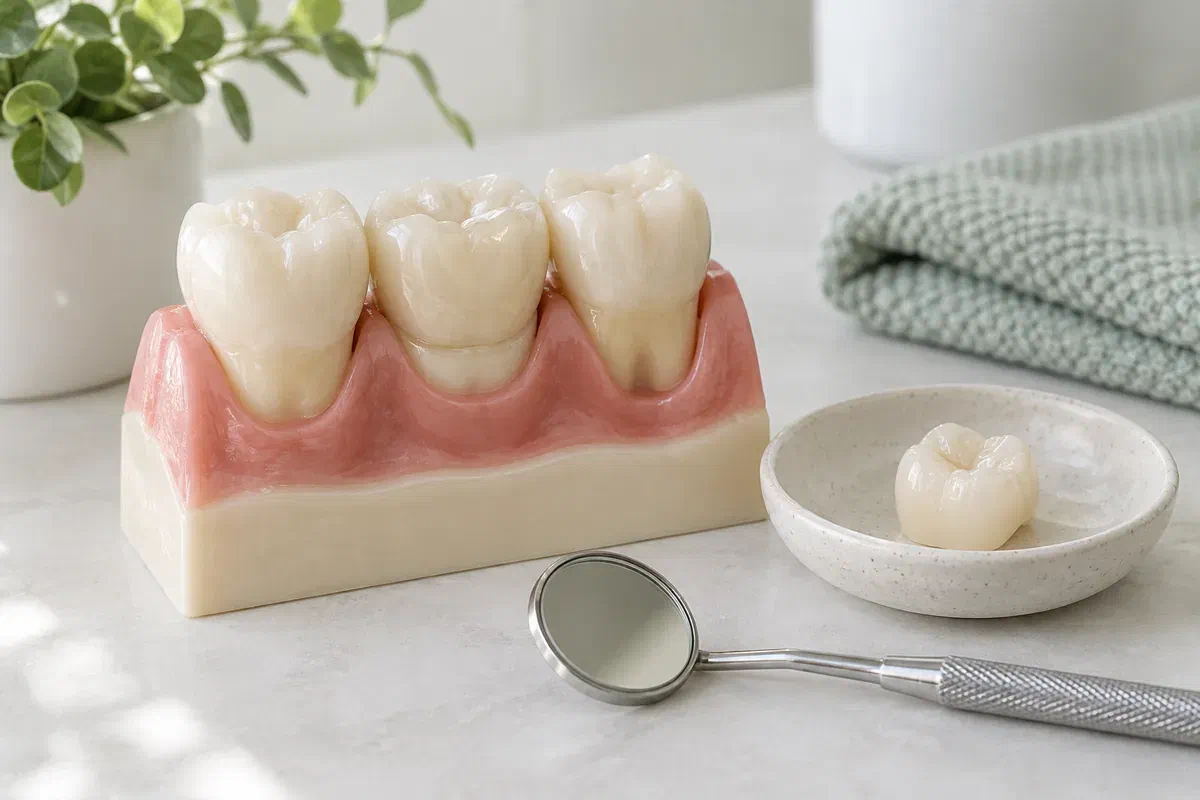
Illustrative tooth-and-gum teaching model beside a ceramic crown sample and dental mirror
Situations that lead here

Each reason calls for a slightly different change.

Ask which tooth is affected and what problem the procedure should solve. The tissue involved, and how much, depends heavily on whether the goal is repair or appearance.

Not enough tooth above the gum to restore

When damage reaches well below the gumline, bone may need reshaping as well as gum so a restoration can sit properly. Ask whether more exposure would make repair realistic and what the tooth’s prospects are. A root that is badly compromised may not be worth the procedure.

A crown edge that crowds the bone

Gum tissue needs a certain amount of room between a restoration margin and the bone to stay healthy. Ask whether that space is currently lacking and how the change would restore it. Plan the gum work and the restoration together, not as unrelated jobs.

Gum covering more tooth than you’d like

Explain what you notice and what you’d like to keep. Excess gum display can have more than one cause, and some don’t involve gum at all. Another smile in a photo can’t show whether tissue removal suits your teeth.

Your plan might involve gum only, or gum and bone together. Ask which, whether teeth beside the main one are included, and how the change would affect support, appearance and the restoration afterward.

Clarity before consent

Know what will be removed, and what that makes possible.

A thorough consultation should explain what the procedure is expected to enable and whether that is worth changing tissue that can’t simply grow back to where it was. Ask how much tooth and support will remain afterward. A better foundation helps the restoration; it isn’t a promise of permanence.

With visits that may need some travel, the sequence matters. Ask how many appointments are planned, how long healing is followed, and whether any can be combined. When your dentist and a periodontist split the work, confirm who is in charge of each stage so the plan stays joined up.

A diagram or model of the planned change

Ask to see where gum and, if relevant, bone will be adjusted, and where the final restoration edge should sit. Check how neighbouring teeth may look afterward. This is worth extra time when the tooth shows in your smile.

Realistic benefits and tradeoffs

Compare the expected improvement with healing time, sensitivity, changes in appearance and ongoing care. Ask which risks apply to your mouth, rather than to people in general. You can always ask for more assessment first.

A written outline of stages and fees

Check whether the estimate takes in the exam, the procedure, healing visits, any temporary and the final restoration, or only some of these. Ask what could change it. A written outline also makes it easier to plan the trips.

How a plan unfolds

Measure, decide, treat, and let it heal

The method and timing depend on the tooth, the tissues and the treatment goal. The clinician who carries out the procedure will explain the details and ask for your consent.

  1. Measure the gum, bone and tooth

    An exam and X-rays show the root, bone level, gum health and neighbouring teeth. Ask whether gum alone or gum and bone would need changing, and whether the tooth can truly benefit. Settle any uncertainty before agreeing to the sequence.

  2. Agree on exactly what will change

    Go over the tissue involved, comfort, risks, expected healing and other options. Confirm any referral and who is responsible for each part. Ask what would happen if more bone needed reshaping than expected.

  3. Reshape the planned tissue

    This is commonly done under local anaesthetic. The clinician adjusts gum and, where indicated, bone to expose the planned tooth structure, and may place stitches. You should receive written instructions before leaving.

  4. Review the healing before restoring

    Keep the planned checks and ask when stitches or a temporary need attention. Restorative work is timed to healing and the clinical aim. Early comfort isn’t the same as readiness, so ask what the clinician will be looking for at each review.

Recovery and follow-up

Give the tissue time, and keep the check-ins.

Use the written instructions from the clinician who treated you. They should be specific about cleaning, eating, activity, medicines and review for your site.

Follow the plan for food and hygiene

Ask how to clean near the treated area and when your usual brushing and flossing can resume there. Leave the stitches in peace. Repeatedly lifting the lip to look, or trying a homemade rinse, is best avoided unless your instructions say otherwise.

Phone first when something changes

Tenderness or sensitivity can be expected for a while. Ask what is typical and when to call, and keep the number handy. For growing pain, ongoing bleeding, increasing swelling or anything else that worries you, calling ahead lets the team advise whether you need to come in.

Don’t skip the pre-restoration review

The gum may settle in a new position as healing progresses, which affects any final restoration. Ask who decides the site is ready and what to do if a temporary loosens. Feeling well is not a reason to cancel the check.

Patient information: Cambridge University Hospitals — crown-lengthening risks and healing before final restoration

Other ways forward

If changing the tissue isn’t right, what else is there?

Ask which alternatives actually suit your tooth and goal. The choice turns on how much tooth is left, its support, the look you want and how many visits each plan would take.

When tooth and supporting tissue justify it

Crown lengthening followed by restoration

Consider the exposure, tissue change and final restoration as a single design. Ask how the plan balances access to healthy tooth with keeping support and a natural look. The surgery helps only if the completed restoration is the right one.

When another method could spare bone or gum

Moving the tooth, or restoring it differently

Orthodontic extrusion can move a tooth so more of it sits above the gum, sometimes limiting how much tissue must be removed. A different restorative design may also suit some cases. Ask about suitability, the time involved and who would provide it.

When the benefit doesn’t outweigh surgery

Monitoring, or a different decision

If the concern is purely about appearance, leaving healthy tissue as it is may be sensible. A tooth with a poor outlook may lead to a talk about replacement instead. Ask what saying no would mean for your health and which options remain.

Patient information: European Federation of Periodontology — selection of surgical and orthodontic approaches

Tissue questions

Gum, bone and what happens to them

The clearer the sequence, the easier it is to weigh a recommendation. Bring the original plan with you and ask which parts can be decided now and which depend on more findings.

(905) 876-4488
How do I know whether bone will be reshaped in my case?
Your clinician decides based on measurements and X-rays showing how the gum, bone and tooth relate. Ask them to explain the findings and why gum alone would or wouldn’t be enough.
Does reshaping bone affect how stable the tooth is?
Removing supporting bone changes the support around a tooth, which is why the amount is planned carefully. Ask how much support would remain and how that affects the tooth’s outlook.
Will the gum grow back to where it was?
The gum changes as it heals, and it can shift somewhat, which is why healing is reviewed before final restorative work. It doesn’t simply return to its old position. Ask how your clinician will monitor it.
Can a laser be used instead of a scalpel?
Some clinicians use different instruments for certain gum-only procedures. Whether that suits your case depends on the tissue involved. Ask what technique your clinician plans to use and why.
Might the treated tooth look different from its neighbours?
It can, especially if only one tooth is treated in a visible area. Ask whether nearby teeth are included and how the gumline should look once healed. Get this clear before consenting.
Can a Campbellville household book several family visits together?
Often, yes. Ask when scheduling whether other family members’ checkups or cleanings can be arranged on the same day as your assessment or reviews. It can make the trips easier to manage.
Visiting from Campbellville

Learn what will change before anything does.

Get in touch with our Bronte Street practice to discuss a crown-lengthening plan, a tooth that is proving difficult to restore, or a gumline you are unsure about. We can explain the tissues involved, the assessment needed, and suitable care or specialist coordination.

Whether the procedure suits you, which tissues change, who treats you, healing, the timing of any restoration and fees all follow assessment. Tooth retention and a particular cosmetic outcome cannot be guaranteed.

Visit Milton Dental Clinic
Unit 1, 342 Bronte St. S, Milton, ON L9T 5B7
Get directions Clinic hours
Monday–Thursday
11am–7pm
Friday–Sunday
By appointment only

Areas we serve

  • Milton
  • Oakville
  • Mississauga
  • Georgetown
  • Halton Hills
  • Acton
  • Campbellville
  • Brampton
  • Burlington
  • Puslinch
  • Rockwood
  • Erin
  • Caledon
  • Etobicoke
  • Old Milton
  • Bronte Meadows
  • Timberlea
  • Dorset Park
  • Dempsey
  • Clarke
  • Beaty
  • Coates
  • Harrison
  • Scott
  • Willmott
  • Ford
  • Bowes
  • Cobden
  • Walker
  • Mountain View
  • Milton Heights
  • Hawthorne Village
  • Valley View
  • Fallingbrook
  • Nassagaweya
  • Trafalgar
  • Esquesing
  • Nelson
  • Brookville
  • Moffat
  • Glen Williams
  • Norval
  • Limehouse
  • Stewarttown
  • Ashgrove
  • Hornby
  • Silver Creek
  • Speyside
  • Scotch Block
  • North Oakville
  • River Oaks
  • Glen Abbey
  • West Oak Trails
  • Palermo
  • Bronte Creek
  • College Park
  • Joshua Creek
  • Uptown Core
  • Preserve
  • Iroquois Ridge
  • Lisgar
  • Meadowvale
  • Meadowvale Village
  • Churchill Meadows
  • Erin Mills
  • Central Erin Mills
  • Streetsville
  • East Credit
  • Creditview
  • Heartland
  • Sheridan
  • Mount Pleasant
  • Credit Valley
  • Huttonville
  • Churchville
  • Springbrook
  • Northwest Brampton
  • Bram West
  • Fletcher's Meadow
  • Fletcher's Creek South
  • Alton Village
  • Orchard
  • Millcroft
  • Headon Forest
  • Tansley
  • Brant Hills
  • Tyandaga
  • Kilbride
  • Lowville
  • Aberfoyle
  • Morriston
  • Arkell
  • Hillsburgh
  • Freelton
  • Carlisle
  • Waterdown
  • Flamborough
  • Mountsberg

How can we help?

Milton Dental Clinic

Have a question about your smile? Choose the option that works best for you.

For urgent dental concerns, please call.
Messages are reviewed during clinic hours.