

Illustrative clinician explaining a tooth-and-gum model to a patient during a consultation
Specialized Care

Crown Lengthening in Etobicoke

Crown lengthening involves a sequence of visits, so a longer trip calls for a well-organised plan. If you are coming from Etobicoke, we can explain why the gum may need to move, which tissues are involved, and how to group appointments while knowing when to get help nearer home.

Organising care across a longer trip

Make every visit count.

Treatment that unfolds over weeks feels very different when each appointment means a longer drive. Crown lengthening is that kind of treatment. The gum, and sometimes the bone beneath, is reshaped to uncover more natural tooth, and then healing is watched before any final restoration goes on.

That uncovered tooth is what the word “crown” refers to; no artificial cap is being stretched. The aim is usually to give a damaged tooth enough sound surface for a crown or filling. Less often it is about teeth that look short. Either aim depends on how much tooth, root and support remain.

For a first visit from Etobicoke, send or bring your treatment plan and X-rays so we can make the most of the time. We can explain how the procedure fits your dental needs, what more needs checking and whether a periodontist would be involved, and then sketch a schedule that keeps trips to a sensible number.

Plan a well-organised first visit
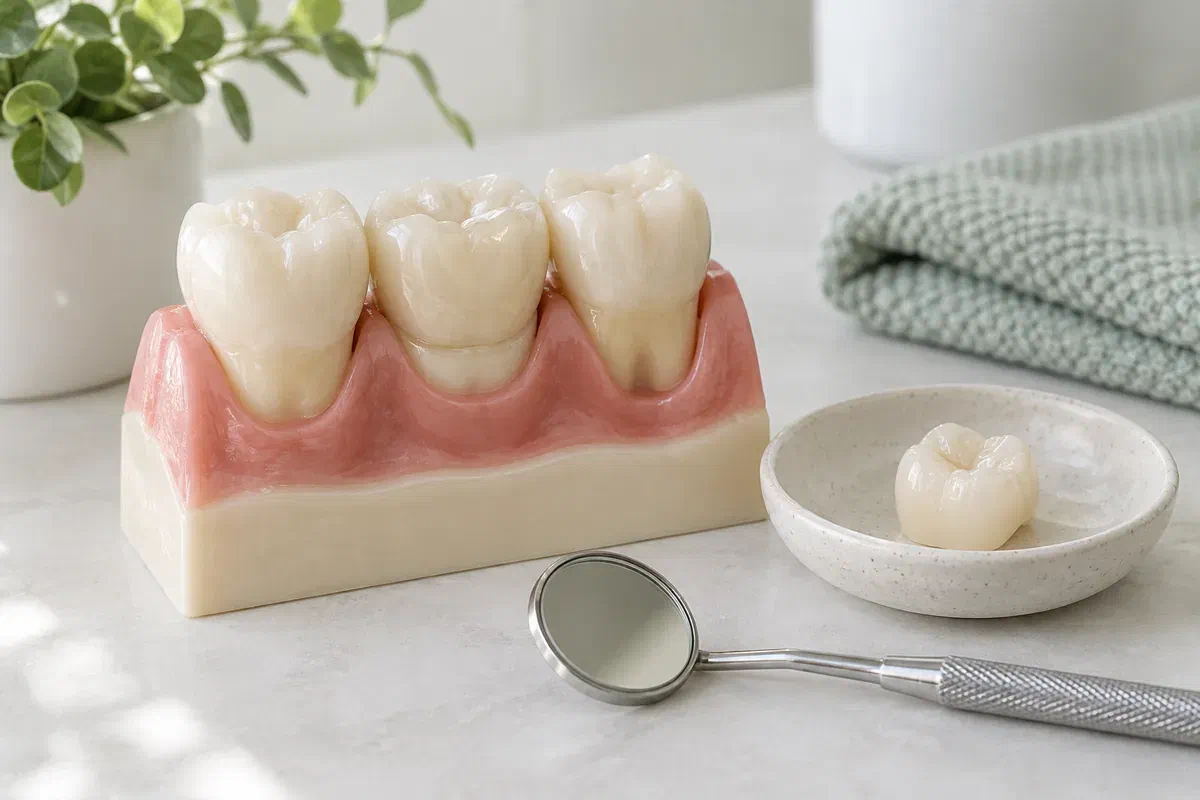
Illustrative tooth-and-gum teaching model beside a ceramic crown sample and dental mirror
Why it may be recommended

Get the reason straight before arranging the trips.

Ask which tooth is involved and the specific problem the procedure should solve. A tooth being readied for a crown and a smile being reshaped are distinct situations with distinct questions.

A tooth damaged down toward the bone

A crack, wear or decay below the gum can leave too little structure for a restoration to sit on. Ask whether exposing more healthy tooth would make repair reasonable and what the long-term outlook is. A badly compromised root may not justify the effort and the travel.

A crown edge that needs better tissue spacing

Where a restoration ends relative to the gum and bone affects how well the area stays healthy. Ask why the current situation is a problem and how the change would help. Treat the gum work and the crown as a single plan rather than unrelated appointments.

Teeth that seem small in your smile

Describe what you see and which features you want preserved. Several things can cause visible gum, and the cause should be found before surgery is considered. A reference photo of another person cannot show whether tissue removal suits you.

Gum tissue, bone or both may be reshaped. Ask which applies to you, whether neighbouring teeth are included, and how this affects support, appearance and the restoration to follow.

What upfront planning gives you

Fewer trips, fewer surprises, one clear goal

A thorough consultation explains what surgery is expected to make possible and whether that gain is worth it. Ask how much tooth and support will be left. Uncovering more structure helps a restoration fit, though it can’t guarantee the tooth will last for good.

For a longer journey, knowing the order of visits is practical as well as reassuring. Ask how many reviews are planned and whether any can be combined with other appointments. If two clinicians share the work, confirm who handles each stage so nothing requires an extra trip to sort out.

A plain explanation of the planned change

Ask where the new gumline and the edge of any crown are intended to sit, and have it shown on an X-ray or model. Check whether nearby teeth would change. That is particularly important for teeth you show when speaking.

A realistic tally of benefits and burdens

Set the intended gain against healing, sensitivity, appearance changes, upkeep and the number of visits. Ask which risks are most relevant for you. You can request further assessment before deciding.

A written sequence and estimate

Check that the estimate names each piece, from the first exam through to the finished restoration and every check in between. Ask which findings might push the plan or the fee up. A full written sequence also makes it easier to book time off in advance.

How the visits are arranged

An outline you can plan your travel around

Each case is shaped by the tooth itself, the gum and bone around it, and what you are aiming for. The clinician who treats you explains the details and asks for your consent before any procedure.

  1. Assessment with records ready

    The tooth, roots, gum, bone and neighbouring teeth are reviewed. Having recent X-rays sent ahead can make this visit more productive. Ask whether the tooth is likely to benefit, and settle any doubts before committing to the rest of the sequence.

  2. A planning conversation that covers everything

    Go over the tissue change, comfort, risks, healing and alternatives in one sitting if possible. Confirm referrals and roles. Ask how unexpected findings would be handled and whether they could change the restoration plan.

  3. The surgical visit

    Local anaesthetic is typical. The clinician reshapes gum and, if needed, bone to reveal the planned structure, and may place stitches. Consider having someone drive you, and leave with written instructions and an after-hours contact.

  4. Grouped reviews before the restoration

    Ask which checks are essential and whether stitch removal and review can share a visit. The final restoration is timed to healing and the clinical goal. Comfort returning early doesn’t confirm readiness, so ask what the clinician needs to see.

Healing at a distance

Know what to watch for, and who to call first.

Rely on the written instructions from your treating clinician. Guidance on hygiene, food, activity, medicines and reviews should fit the site that was treated.

Follow the site instructions at home

Your sheet should explain how to clean near the treated area and when regular brushing and flossing can resume there. Stitches should be left alone. Peeking under the lip again and again, or trying a home remedy rinse, is best avoided.

Call before you decide to drive in

Some soreness or sensitivity can be part of recovery. Ask what is normal, and keep the aftercare number handy. If pain is building, bleeding continues, swelling grows or something else worries you, phone first so the team can advise whether you need to come in or get care closer to home.

Keep the essential reviews

The gum may settle differently as it heals, which affects where the restoration should finish. Ask who will judge readiness and how to care for the temporary. Travel time is a fair consideration, but skipping a needed review can cost more visits later.

Patient information: Cambridge University Hospitals — crown-lengthening risks and healing before final restoration

Weighing the approaches

Which plan fits your tooth, and your schedule?

Ask which alternatives are realistic for your tooth and goal. Suitability depends on structure, support, appearance and how many visits each approach would require.

When the tooth and tissue support it

Crown lengthening planned alongside the restoration

Review exposure, tissue change and the final restoration together. Ask how the plan balances healthy tooth access with support and appearance. Surgery is just one step, and it only helps if the completed restoration is suitable.

When another route may preserve tissue

Orthodontic extrusion or a different restorative plan

In some cases, a tooth can be moved gradually to expose more of it, or restored in another way. Extrusion generally involves more appointments over a longer period. Ask about suitability, timing and which clinicians would be needed.

When the gain doesn’t justify the procedure

Declining surgery or changing direction

With a cosmetic concern, leaving healthy gum unchanged is often reasonable. When a tooth’s future looks shaky, the better conversation may be about replacing it. Find out what turning surgery down would leave unaddressed, and how those health needs could still be looked after.

Patient information: European Federation of Periodontology — selection of surgical and orthodontic approaches

Practical questions

Before the first trip

A clear view of the sequence makes a recommendation easier to judge. Bring your plan and ask which decisions can be made at this visit and which depend on further assessment.

(905) 876-4488
Should someone drive me home after the surgery?
Ask the treating clinician. With local anaesthetic alone, many people can drive, but if any sedation is used or you would simply feel better not driving, arrange a ride. It is easier to plan ahead than decide on the day.
Can the stitch removal and healing review happen in one appointment?
Often they can be combined, depending on the type of stitches and the clinician’s plan. Some stitches dissolve on their own. Ask which visits are essential and whether any can be merged.
What if my temporary comes off when I’m far from the clinic?
Call the team first for advice. Keep the tooth clean and avoid chewing on that side. Ask at your appointment what to do in this situation and whether there is anything you should keep at home.
When should I go to a closer clinic or emergency department instead?
Difficulty breathing or swallowing, rapidly spreading swelling, or bleeding you cannot control are reasons to seek nearby emergency care straight away. For other concerns, phone the treating clinician first for guidance.
Is bone always reshaped as part of crown lengthening?
No. Some cases involve only the gum, while others need bone recontouring as well. Ask which applies to you and why, because it affects planning and may affect healing reviews.
Can my first Etobicoke visit include both the assessment and the planning talk?
Often, yes, if records are available in advance. Ask when booking whether X-rays can be sent ahead so the first appointment can cover as much as possible.
Crown lengthening for Etobicoke

A plan that respects your travel time

Phone our Bronte Street practice once crown lengthening has been raised, or if a damaged tooth or uneven gum is on your mind. We’ll explain the aim and the checks involved, then help you arrange the visits, and any specialist care, with as little back-and-forth as possible.

Suitability, tissue changes, the treating provider or referral, healing, restoration timing and fees depend on assessment. The procedure cannot guarantee tooth retention or a specific appearance.

Visit Milton Dental Clinic
Unit 1, 342 Bronte St. S, Milton, ON L9T 5B7
Get directions Clinic hours
Monday–Thursday
11am–7pm
Friday–Sunday
By appointment only

Areas we serve

  • Milton
  • Oakville
  • Mississauga
  • Georgetown
  • Halton Hills
  • Acton
  • Campbellville
  • Brampton
  • Burlington
  • Puslinch
  • Rockwood
  • Erin
  • Caledon
  • Etobicoke
  • Old Milton
  • Bronte Meadows
  • Timberlea
  • Dorset Park
  • Dempsey
  • Clarke
  • Beaty
  • Coates
  • Harrison
  • Scott
  • Willmott
  • Ford
  • Bowes
  • Cobden
  • Walker
  • Mountain View
  • Milton Heights
  • Hawthorne Village
  • Valley View
  • Fallingbrook
  • Nassagaweya
  • Trafalgar
  • Esquesing
  • Nelson
  • Brookville
  • Moffat
  • Glen Williams
  • Norval
  • Limehouse
  • Stewarttown
  • Ashgrove
  • Hornby
  • Silver Creek
  • Speyside
  • Scotch Block
  • North Oakville
  • River Oaks
  • Glen Abbey
  • West Oak Trails
  • Palermo
  • Bronte Creek
  • College Park
  • Joshua Creek
  • Uptown Core
  • Preserve
  • Iroquois Ridge
  • Lisgar
  • Meadowvale
  • Meadowvale Village
  • Churchill Meadows
  • Erin Mills
  • Central Erin Mills
  • Streetsville
  • East Credit
  • Creditview
  • Heartland
  • Sheridan
  • Mount Pleasant
  • Credit Valley
  • Huttonville
  • Churchville
  • Springbrook
  • Northwest Brampton
  • Bram West
  • Fletcher's Meadow
  • Fletcher's Creek South
  • Alton Village
  • Orchard
  • Millcroft
  • Headon Forest
  • Tansley
  • Brant Hills
  • Tyandaga
  • Kilbride
  • Lowville
  • Aberfoyle
  • Morriston
  • Arkell
  • Hillsburgh
  • Freelton
  • Carlisle
  • Waterdown
  • Flamborough
  • Mountsberg

How can we help?

Milton Dental Clinic

Have a question about your smile? Choose the option that works best for you.

For urgent dental concerns, please call.
Messages are reviewed during clinic hours.