

Illustrative clinician explaining a tooth-and-gum model to a patient during a consultation
Specialized Care

Crown Lengthening in Georgetown

A back tooth cracked over dinner, and the break seems to go under the gum. If you’re coming from Georgetown, we can explain why crown lengthening is sometimes needed before a tooth like that can be rebuilt, what it changes in the gum and bone, and how healing affects the timing.

After a tooth breaks

The break goes below the gum. Now what?

When part of a tooth snaps off, what is left may sit at or under the gumline. A crown needs a band of solid tooth to wrap around, and sometimes there isn’t enough showing. Crown lengthening lowers the gum, and where necessary trims supporting bone, so that more of the natural tooth can be reached.

No one is making a crown taller here. The term describes your own tooth above the gum. For other people the reason is cosmetic, such as short-looking front teeth, which is a separate discussion entirely. In every case, the decision rests on how much tooth, root and support remain.

From Georgetown, bring any X-rays or notes from the visit where the break was first seen, and tell us how the tooth feels now. We can explain how crown lengthening relates to rebuilding it, what needs further assessment, and when a periodontist might be involved. Knowing the whole plan comes before any surgical step.

Ask about a tooth that broke near the gum
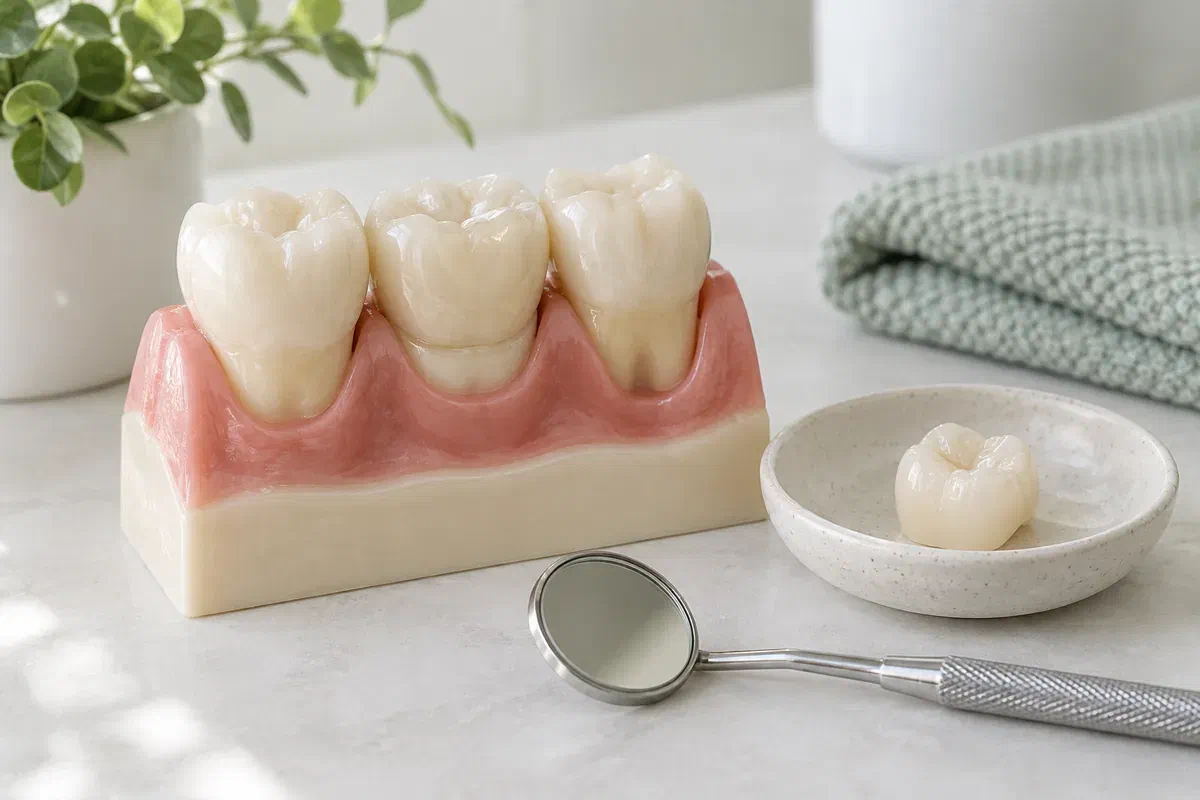
Illustrative tooth-and-gum teaching model beside a ceramic crown sample and dental mirror
What the dentist is weighing

Is there enough tooth, in the right place?

Ask which tooth is being discussed and what the procedure is supposed to solve. Rebuilding a broken tooth and changing a smile’s appearance raise quite different questions.

A fracture that runs below the gumline

If the break, or decay along it, extends under the gum, a restoration may have nothing sound to seal against. Ask whether exposing more healthy tooth would make rebuilding reasonable and how the tooth is likely to do. A crack that splits the root is a different story.

Room needed between the crown edge and bone

Where the edge of a new crown sits in relation to gum and bone influences how healthy the surrounding tissue stays. Ask why the current situation needs changing and how the procedure would help. The gum and crown stages belong in one plan.

A cosmetic wish for longer front teeth

Explain what you would like to change and what you’d rather keep. Visible gum can have several causes, and finding yours comes first. Another person’s photo can’t show whether removing tissue suits your tooth proportions.

Crown lengthening may reshape the gum, the bone or both. Ask which is planned for you, whether adjacent teeth are involved, and how it affects support, appearance and the new restoration.

Why a careful look helps

A broken tooth deserves a full assessment, not a quick fix.

The consultation should explain whether exposing more tooth would make a lasting repair possible, and whether that justifies surgery. Ask how much structure and support would be left. A better grip for the crown improves the chances, but no one can promise a broken tooth will last indefinitely.

You will also want to know the order of visits and how long the gum needs before the crown. Ask whether a temporary will protect the tooth in between. When a periodontist and your dentist share the work, confirm who handles which part so every step stays connected.

A clear view of where the gum will end up

Ask to see, on an X-ray or model, how far the gum is expected to move and where the crown edge will sit. Ask whether teeth beside it would change. For a back tooth this matters less for looks, but it still affects cleaning.

Benefits and drawbacks in proportion

Weigh the hoped-for repair against healing time, possible sensitivity, visible change and long-term care. Ask which risks apply to this particular tooth. More assessment is always an option before deciding.

The full cost of rebuilding the tooth

Find out whether the estimate covers assessment, surgery, reviews, a temporary and the crown, or whether some are separate. Ask what might change the plan. Looking at the full cost of saving the tooth is more useful than the surgery figure alone.

From broken tooth to new crown

First the assessment, then the gum, then the rebuild

The technique and timing vary with the tooth, the tissues and the goal. The clinician carrying out the procedure will explain the details and ask for your consent.

  1. Find out how far the break goes

    An exam and X-rays look at the fracture, roots, gum, bone and neighbouring teeth. Ask whether the tooth is realistically restorable. If the extent of the crack is uncertain, ask how that will be clarified before you commit.

  2. Agree on what will be done

    Discuss which tissue will change, comfort, risks, healing and other options. Confirm whether a referral is needed and who is responsible for each part. Ask how it would be handled if the break turned out to be deeper during surgery.

  3. Have the gum and bone reshaped

    This is usually done with local anaesthetic. The clinician exposes the planned amount of sound tooth by reshaping gum and, if needed, bone, and may place stitches. You should leave with clear written instructions.

  4. Protect, heal and then restore

    A temporary may cover the tooth while the gum heals. Keep the reviews and ask when stitches or the temporary need checking. The crown is placed when healing allows, not simply when the soreness fades, so ask what the clinician will be checking.

Looking after the area

Chew on the other side and let the gum settle.

Your treating clinician’s written instructions come first. They should cover cleaning, food, activity, medication and review dates for the treated tooth.

Eat and clean with the healing site in mind

Ask how to keep the area clean and when normal brushing and flossing can return there. Softer foods chewed away from the site are often suggested early on, but follow your own instructions. Leave stitches alone and avoid any rinse that wasn’t recommended.

Watch for signs that need a call

Tenderness and some sensitivity may occur as things heal. Ask what is expected and save the aftercare number. If pain gets worse instead of better, bleeding keeps going, or swelling increases, call for advice rather than waiting for the next appointment.

Let the review decide when the crown goes on

The gumline may shift during healing, and that affects where the new crown should finish. Ask who will confirm readiness and how to care for the temporary. A comfortable temporary is a good sign, but the review still matters.

Patient information: Cambridge University Hospitals — crown-lengthening risks and healing before final restoration

Ways to handle a broken tooth

Not every broken tooth needs the same answer.

Ask which alternatives truly apply to your tooth and situation. The best fit depends on how much tooth remains, its support, appearance and what each plan involves.

When enough root and support remain

Crown lengthening, then a new crown

Plan the exposure, gum change and crown design together. Ask how the approach balances reaching sound tooth against keeping support. Surgery is worthwhile only if the crown that follows is a good long-term choice for that tooth.

When another approach may protect key tissue

Extrusion or a different restoration

For some breaks, orthodontic extrusion can draw the tooth out to expose more of it, or a different restoration may work. These take different amounts of time and aren’t suitable for every tooth. Ask about fit, timing and the clinicians involved.

When the outlook doesn’t justify surgery

Replacing the tooth instead

When the break is too deep or the root is compromised, keeping the tooth may not be sensible. A separate conversation about replacement may follow. Ask what would happen if you chose not to proceed, and how your health needs would be met.

Patient information: European Federation of Periodontology — selection of surgical and orthodontic approaches

Broken-tooth questions

What to ask after the break

A clear sequence helps you judge whether the plan makes sense. Bring any records from the first visit and ask which decisions can wait and which shouldn’t.

(905) 876-4488
My tooth broke but doesn’t hurt. Do I still need to deal with it?
A break without pain can still let in bacteria or leave sharp edges, and the tooth may weaken further. Ask your dentist how urgent it is and whether a temporary covering would help while you decide.
What should I do right after a tooth breaks near the gum?
Keep the area clean, avoid chewing on it, and call for advice. If there is significant pain, swelling or bleeding that won’t stop, seek prompt care. Keep any broken piece and bring it if you can.
Why can’t the dentist just put a crown on what’s left?
A crown needs enough sound tooth above the gum to hold and seal properly. If the break goes below the gum, the edge may end up too close to the bone. Ask whether that is the issue with your tooth.
Will a root canal be needed as well?
Sometimes, depending on whether the nerve is affected. That is decided separately from crown lengthening. Ask whether root canal treatment is part of your plan and how the stages would be ordered.
Can a cracked root be fixed with crown lengthening?
Generally not. If the crack runs down into the root, the outlook may be poor regardless of gum changes. Ask how the extent of the crack has been assessed and what alternatives exist.
How quickly can Georgetown visitors be seen after a break?
Call our Bronte Street practice and describe what happened. Our team can advise on timing and on anything to do in the meantime. For severe pain, swelling or uncontrolled bleeding, seek urgent care without delay.
Georgetown appointments

Get the broken tooth assessed before deciding.

Phone our Bronte Street practice about a tooth that has broken near the gum, a crown-lengthening suggestion, or a gumline concern. We can explain what the tooth needs, the assessment involved, and appropriate care or specialist referral.

Whether crown lengthening suits you, the tissue changes, who provides care, healing, crown timing and fees are confirmed only after assessment. Keeping the tooth and any particular appearance cannot be guaranteed.

Visit Milton Dental Clinic
Unit 1, 342 Bronte St. S, Milton, ON L9T 5B7
Get directions Clinic hours
Monday–Thursday
11am–7pm
Friday–Sunday
By appointment only

Areas we serve

  • Milton
  • Oakville
  • Mississauga
  • Georgetown
  • Halton Hills
  • Acton
  • Campbellville
  • Brampton
  • Burlington
  • Puslinch
  • Rockwood
  • Erin
  • Caledon
  • Etobicoke
  • Old Milton
  • Bronte Meadows
  • Timberlea
  • Dorset Park
  • Dempsey
  • Clarke
  • Beaty
  • Coates
  • Harrison
  • Scott
  • Willmott
  • Ford
  • Bowes
  • Cobden
  • Walker
  • Mountain View
  • Milton Heights
  • Hawthorne Village
  • Valley View
  • Fallingbrook
  • Nassagaweya
  • Trafalgar
  • Esquesing
  • Nelson
  • Brookville
  • Moffat
  • Glen Williams
  • Norval
  • Limehouse
  • Stewarttown
  • Ashgrove
  • Hornby
  • Silver Creek
  • Speyside
  • Scotch Block
  • North Oakville
  • River Oaks
  • Glen Abbey
  • West Oak Trails
  • Palermo
  • Bronte Creek
  • College Park
  • Joshua Creek
  • Uptown Core
  • Preserve
  • Iroquois Ridge
  • Lisgar
  • Meadowvale
  • Meadowvale Village
  • Churchill Meadows
  • Erin Mills
  • Central Erin Mills
  • Streetsville
  • East Credit
  • Creditview
  • Heartland
  • Sheridan
  • Mount Pleasant
  • Credit Valley
  • Huttonville
  • Churchville
  • Springbrook
  • Northwest Brampton
  • Bram West
  • Fletcher's Meadow
  • Fletcher's Creek South
  • Alton Village
  • Orchard
  • Millcroft
  • Headon Forest
  • Tansley
  • Brant Hills
  • Tyandaga
  • Kilbride
  • Lowville
  • Aberfoyle
  • Morriston
  • Arkell
  • Hillsburgh
  • Freelton
  • Carlisle
  • Waterdown
  • Flamborough
  • Mountsberg

How can we help?

Milton Dental Clinic

Have a question about your smile? Choose the option that works best for you.

For urgent dental concerns, please call.
Messages are reviewed during clinic hours.