
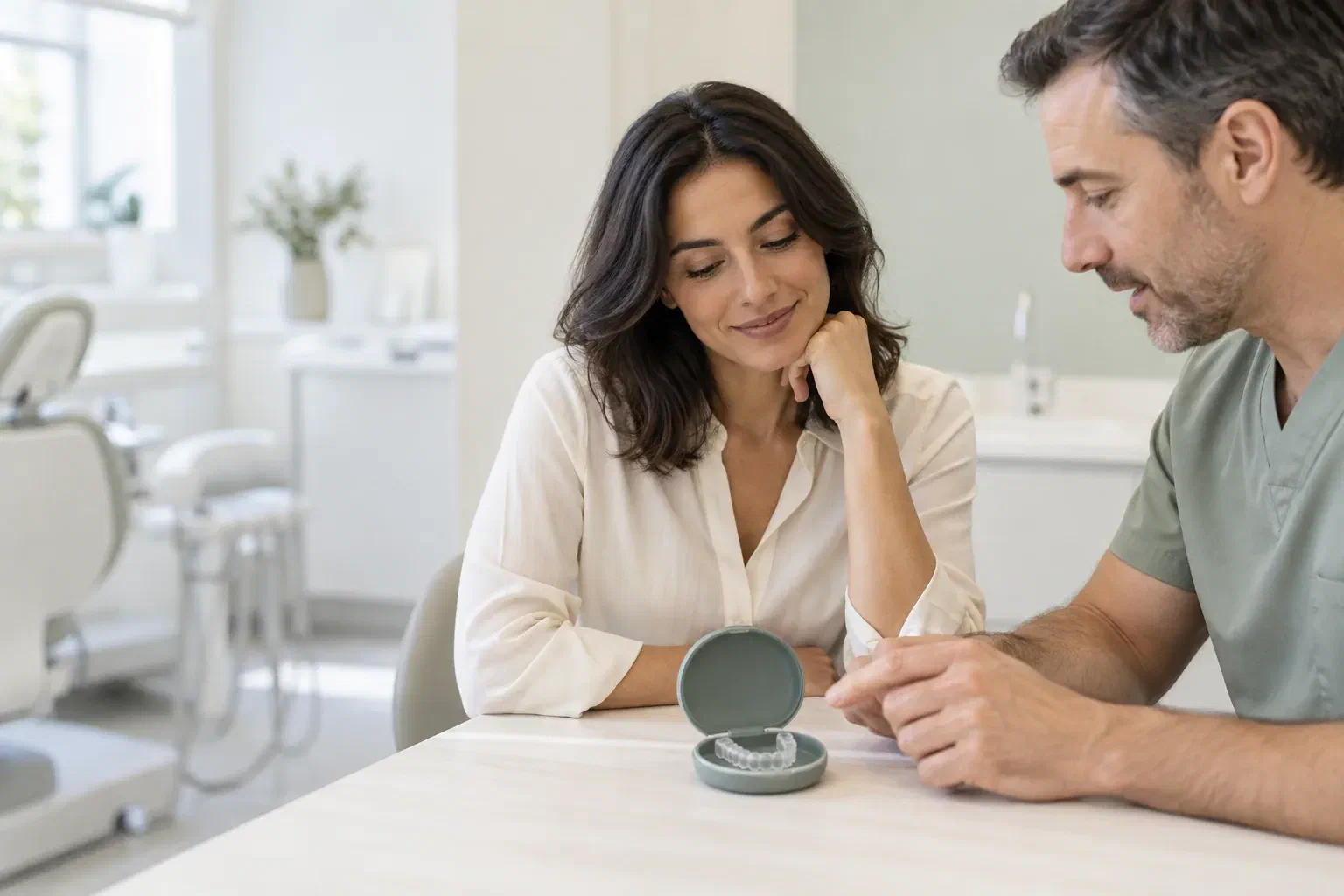
Illustrative patient and clinician reviewing a clear nightguard during a dental consultation
Specialized Care

Custom Nightguards in Burlington

Finishing a crown, veneer or bonding often raises a sensible question: should it be protected at night? For custom nightguards in Burlington, we review the new work, the forces that may act on it and whether a guard belongs in your overall plan.

After the restoration is done

New dental work, and an old habit that could test it.

Restorations take time and planning, so it makes sense to think about the forces they will face. If you clench or grind in your sleep, a crown, veneer or bonded edge takes some of that load. A custom nightguard, shaped to your teeth once the work is complete, is one way to shield those surfaces when protection is warranted.

Not every new restoration needs a guard. The clinician looks at the type of work, the wear on your other teeth and any history of chips or cracked fillings, then explains whether an appliance adds a reasonable benefit. Sometimes monitoring is enough for now; sometimes the guard is a clear part of the plan.

Timing matters most when you are coming from Burlington for several visits. Tell us early about restorations still in progress, so records for a guard are taken once the teeth have their final shape. Bring any retainer or older guard to the first appointment, and we will map out the remaining steps with you.

Ask about protecting your dental work
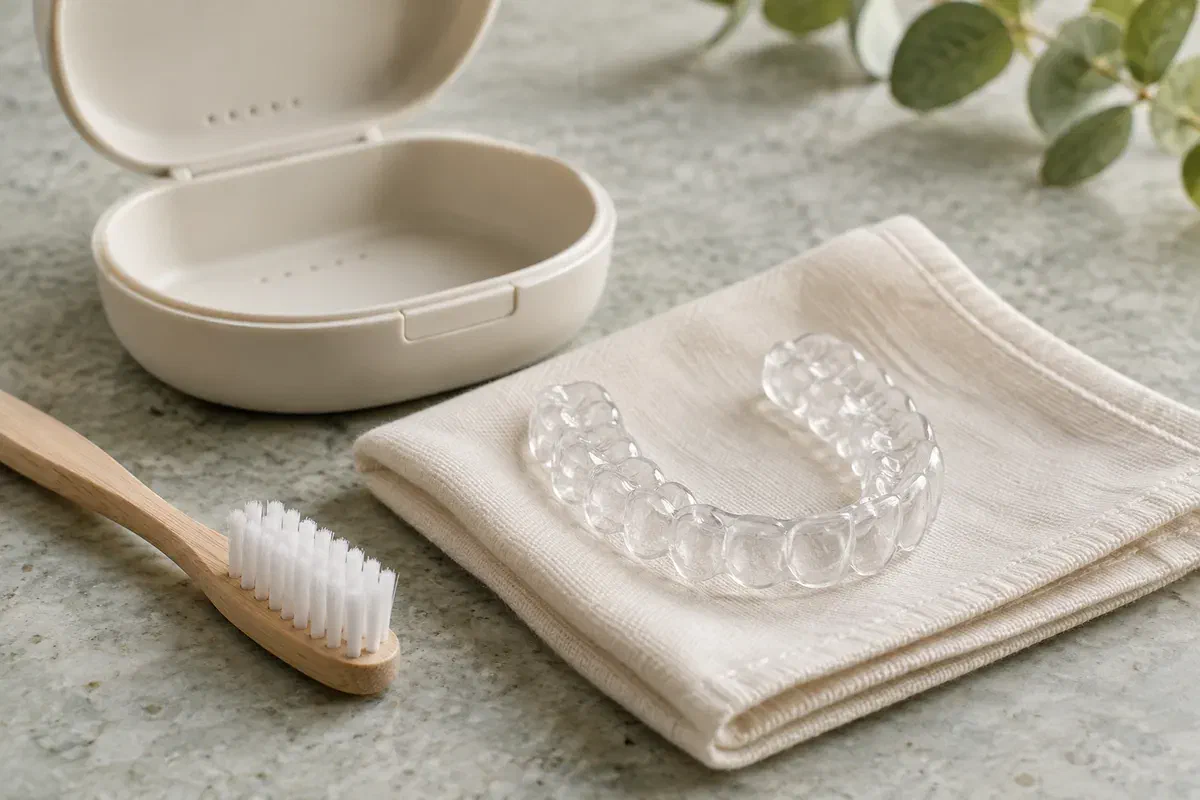
Illustrative clear upper nightguard beside a cream case and soft cleaning brush
Situations that prompt the conversation

Crowns, chips and the guard you used to wear.

The reason you are asking shapes the assessment. A freshly placed restoration, a history of breakage and a guard that no longer fits after treatment each point the clinician in a different direction.

Restorations that have chipped before

Tell us which fillings, crowns or edges have broken or been redone, and when. Ask whether the pattern suggests grinding forces or a single tooth that needs its own care. A guard covers surfaces; it does not repair a fracture or explain every case of wear.

Grinding noticed around the time of treatment

Maybe wear facets were spotted during your crown work, or you wake up clenching. Describe what has been noticed and any jaw ache or sleep concerns. Grinding in sleep is easy to miss, yet a guard should still follow assessment, and any sleep diagnosis should be shared.

An older guard that no longer matches your teeth

Bring it, even if it hasn't fitted since the new work went in. Explain whether it feels tight, rocks or presses on the restored tooth. The clinician can check it before deciding between adjustment, replacement or another plan.

A nightguard may lessen the effect of grinding on teeth and restorations, but it cannot guarantee the habit stops, that jaw symptoms improve or that dental work will never chip. Ask what it is meant to achieve first.

Why custom matters here

A guard shaped around the work you just finished.

Custom records capture the final contours of your crowns, veneers and fillings and the way your teeth meet afterward. Ask which arch the guard will cover, why, and how its material relates to the restorations underneath. The explanation should be specific to your mouth, not a general claim about quality.

When it is fitted, you will practise inserting and removing it without levering against a restored tooth. Ask how to clean it and what is normal to feel. A guard can only be judged if you use it, so flag any trouble early instead of leaving it in the case.

Design linked to what you're protecting

Ask which teeth and restorations the guard is meant to shield and how the chosen design does that. If several materials are reasonable, compare comfort, durability, care and their limits. Thicker or softer is not automatically kinder to dental work.

A fitting that looks at contacts, not just hold

The clinician checks how the guard seats and where your teeth touch it, including restored teeth, and asks how it feels. Ask which early sensations are expected and which need a call. Firm retention alone doesn't prove a suitable fit.

A routine that lasts beyond the first month

Confirm when to wear it, the cleaning and storage routine, and when it should be reviewed alongside your restorations. Mention work travel, irregular hours or anything else that affects your nights. Simple, clear steps make regular use more likely.

Sequencing it with your treatment

Finish the teeth, then fit the guard.

Visits and records depend on the appliance and on any treatment still underway. Ask about fees, preparation, fitting and what follow-up is included before you begin.

  1. Review the restorations and the reason for protection

    Go over recent and planned work, past breakages, symptoms and any guard you have used. The clinician examines the restored teeth and their neighbours and considers whether something needs attention first. Planned changes can affect fit, so mention them now.

  2. Settle the design and record the final tooth shapes

    If a guard is appropriate, its material, coverage and wearing pattern are discussed before records are taken. Ask whether impressions or a scan will be used, and when, relative to your other treatment. The plan shouldn't depend on a particular scanner or lab.

  3. Fit it and practise safely

    Seating, contacts and comfort are reviewed, including over restored teeth, with adjustments where appropriate. Practise inserting and removing it with the technique you are shown. Raise gagging, pressure or other trouble before you go.

  4. Check the guard and the restorations together

    Bring the guard to reviews and describe your nights. The team examines the appliance for wear or damage and looks at your teeth and restorations for change. Further dental work may mean the guard needs another assessment.

Looking after it

Simple habits that keep a guard fitting well.

Care depends on the guard's material and design. Ask what is safe to use on it, since products meant for dentures or retainers may not suit.

Rinse, brush and let it dry

Ask us to show you how to rinse and brush it, and which cleaning products, if any, are safe for the material. Keep it away from hot water and any heat source that could warp it. Check before using abrasive paste or chemicals, and look after your own teeth and restorations as usual.

Keep it safe and spot changes early

Store it in its case, away from pets, children and warmth. Look for cracks or a change in shape as you handle it. If it breaks or feels unstable, contact the clinic; don't glue it or try to reshape it.

Say so if something hurts

Stop wearing the guard if it causes pain, and call for advice. Mention a bite that feels different well after you remove it, especially around a restored tooth. Forcing it in or wearing it longer won't fix the problem.

Patient information: Dorset County Hospital — care and heat precautions for dental guards · NIDCR — advice about painful intraoral appliances

Which kind of protection

Choose the device by its job.

Ask how a proposed guard differs from anything you already wear. Protecting restorations from grinding, holding orthodontic results, sports protection and sleep-apnea care have separate requirements.

When grinding puts dental work at risk

A custom guard reviewed with your restorations

Discuss the design, how often to wear it and what it can't prevent. Ask about fitting and reviews, not only cost. Even a well-made guard needs maintenance and can't guarantee that a restoration will never chip.

When the evidence for a guard is limited

Watching closely for now

Observation, support with daytime clenching or a check of an existing guard may come first. Ask what signs would prompt a guard later. A new crown on its own doesn't always mean a device is needed.

When retention, breathing or a specialist is involved

Another appliance, or shared planning

Bring retainers or prescribed sleep appliances so their roles can be reviewed. A nightguard should not replace them without advice. Ask how care can be coordinated and whether another clinician needs to be part of it.

Burlington questions

What to know before protecting new work.

The fitting should leave you sure of the guard's purpose and how to use it. Bring questions about your restorations, comfort and cleaning.

(905) 876-4488
Does every crown need a nightguard?
No. Whether a guard is worthwhile depends on signs of grinding, your history of breakage and the type of restoration. The clinician can explain what the examination shows and whether protection or monitoring is more reasonable for you.
How soon after a crown can my guard be made?
Records are generally best taken once the final restoration is in place, so the guard matches the finished tooth. Ask the team how the timing fits your treatment plan and whether any interim arrangement is needed while work is underway.
Can a nightguard protect porcelain veneers?
It may help shield veneers from grinding forces, but it is not a guarantee against chipping. Ask whether your veneers and bite suggest a guard is worthwhile, and how the design takes them into account.
Is it normal for my guard to press on a newly restored tooth?
Mild pressure can be noticeable at first, but persistent pressure or pain over one tooth should be checked. Call the clinic and bring the guard in. Don’t adjust it yourself or keep wearing it through discomfort.
Can I soak my guard in mouthwash to keep it fresh?
Ask before you do. Some products may not suit the material, and the right cleaning routine depends on your guard. Follow the instructions you were given, avoid heat, and check with the team before trying anything new.
If my guard cracks, should I keep wearing it until my next visit?
Call instead of waiting. A cracked appliance may have sharp edges or a changed fit. Bring it in so the damage can be assessed, and don’t glue it. The team can say whether it can be repaired, replaced or should be set aside.
Planning from Burlington

Protect what you've had done, if protection is the right call.

Contact our Bronte Street practice about grinding, recent restorations or a guard that no longer fits after treatment. We'll examine your teeth, explain the appliance options and schedule fitting and review if a guard suits you.

Suitability, design, material, fitting visits, replacement needs and fees are set after assessment. A guard can't guarantee that grinding stops or that teeth and restorations won't be damaged later.

Visit Milton Dental Clinic
Unit 1, 342 Bronte St. S, Milton, ON L9T 5B7
Get directions Clinic hours
Monday–Thursday
11am–7pm
Friday–Sunday
By appointment only

Areas we serve

  • Milton
  • Oakville
  • Mississauga
  • Georgetown
  • Halton Hills
  • Acton
  • Campbellville
  • Brampton
  • Burlington
  • Puslinch
  • Rockwood
  • Erin
  • Caledon
  • Etobicoke
  • Old Milton
  • Bronte Meadows
  • Timberlea
  • Dorset Park
  • Dempsey
  • Clarke
  • Beaty
  • Coates
  • Harrison
  • Scott
  • Willmott
  • Ford
  • Bowes
  • Cobden
  • Walker
  • Mountain View
  • Milton Heights
  • Hawthorne Village
  • Valley View
  • Fallingbrook
  • Nassagaweya
  • Trafalgar
  • Esquesing
  • Nelson
  • Brookville
  • Moffat
  • Glen Williams
  • Norval
  • Limehouse
  • Stewarttown
  • Ashgrove
  • Hornby
  • Silver Creek
  • Speyside
  • Scotch Block
  • North Oakville
  • River Oaks
  • Glen Abbey
  • West Oak Trails
  • Palermo
  • Bronte Creek
  • College Park
  • Joshua Creek
  • Uptown Core
  • Preserve
  • Iroquois Ridge
  • Lisgar
  • Meadowvale
  • Meadowvale Village
  • Churchill Meadows
  • Erin Mills
  • Central Erin Mills
  • Streetsville
  • East Credit
  • Creditview
  • Heartland
  • Sheridan
  • Mount Pleasant
  • Credit Valley
  • Huttonville
  • Churchville
  • Springbrook
  • Northwest Brampton
  • Bram West
  • Fletcher's Meadow
  • Fletcher's Creek South
  • Alton Village
  • Orchard
  • Millcroft
  • Headon Forest
  • Tansley
  • Brant Hills
  • Tyandaga
  • Kilbride
  • Lowville
  • Aberfoyle
  • Morriston
  • Arkell
  • Hillsburgh
  • Freelton
  • Carlisle
  • Waterdown
  • Flamborough
  • Mountsberg

How can we help?

Milton Dental Clinic

Have a question about your smile? Choose the option that works best for you.

For urgent dental concerns, please call.
Messages are reviewed during clinic hours.