
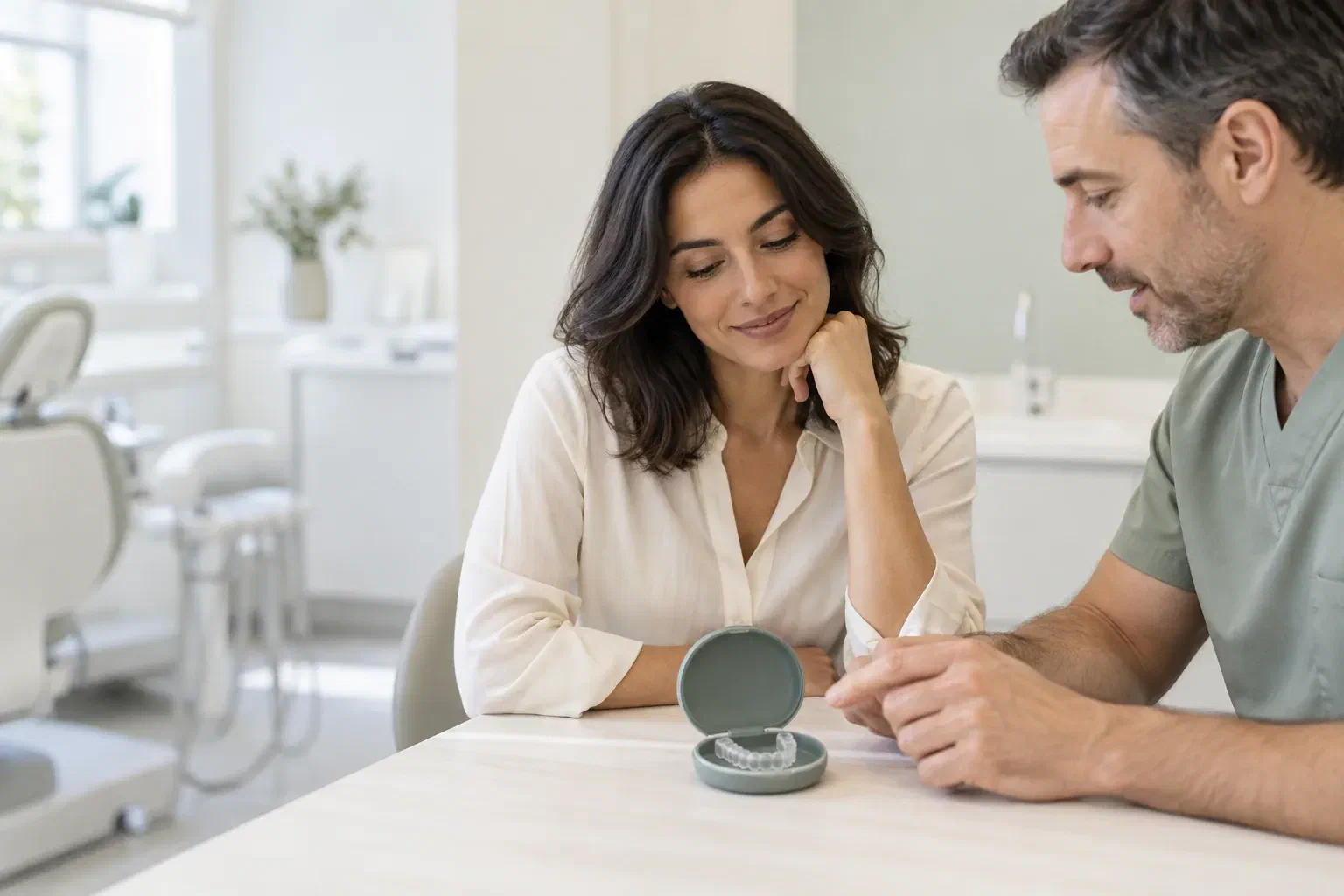
Illustrative patient and clinician reviewing a clear nightguard during a dental consultation
Specialized Care

Custom Nightguards in Campbellville

The first nights with a new appliance raise their own questions: is this pressure normal, will I get used to it, what if I gag? Custom nightguards in Campbellville cover the assessment and fitting, and the settling-in period that follows.

The first weeks with a guard

Getting used to it is part of the treatment.

A custom nightguard is a removable appliance built from impressions or scans of your teeth, meant to shield them from clenching or grinding. It is recommended when the examination points to that need, and its value depends partly on whether you can wear it comfortably night after night. That makes the settling-in period worth planning for.

Before any of that, the clinician looks at what led to the question. Worn edges, chipped fillings and a sore jaw on waking are examined, and older changes are separated from signs of grinding now. You'll hear whether a guard is a reasonable step, whether monitoring makes more sense, or whether another tooth problem comes first.

From rural Campbellville, within Milton's boundaries and northwest of the town centre, it helps to know in advance what to watch for at home, so a quick phone call can settle small questions. Bring along an old guard or retainer if you have one, mention planned dental work, and we'll explain the fitting and follow-up.

Ask about fitting and settling in
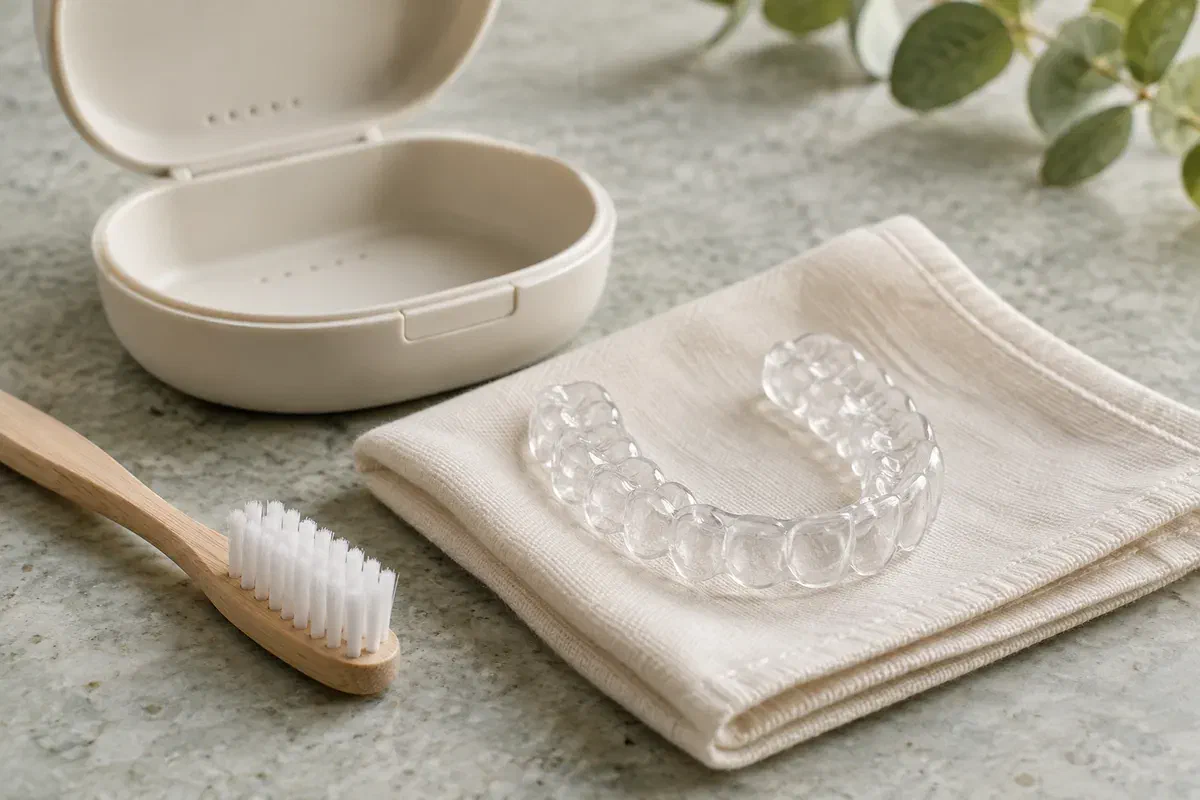
Illustrative clear upper nightguard beside a cream case and soft cleaning brush
Where the conversation starts

Wear, habit or an appliance you couldn't get used to.

Tell us what prompted the visit and how any earlier guard felt. Comfort problems with a past appliance are as useful to hear about as the wear on your teeth.

Worn or chipped teeth

Point out which teeth have changed and what has been repaired. Ask whether the findings suggest a need for protection or whether a tooth needs separate care. A guard helps shield surfaces; it doesn't rebuild what is lost or explain why each area wore.

Grinding or clenching during sleep

Describe any noise someone has heard, morning jaw stiffness or poor sleep. Sleepers rarely hear their own grinding, but an appliance should still follow an examination. Mention a sleep diagnosis so dental care fits around it.

A previous guard that felt wrong

Bring it if you still have it. Explain what bothered you: gagging, soreness, bulk, a tight feeling or a bite that felt odd in the morning. Knowing this helps the clinician judge whether adjustment, a different design or another approach would suit you better.

A nightguard may help protect teeth from grinding, yet it can't guarantee the habit stops or that jaw discomfort settles. Be clear on its purpose before agreeing to one.

Why a custom fit helps comfort

Shaped to your teeth, adjusted to your feedback.

A custom appliance follows the contours of your teeth, crowns and fillings, which gives the clinician room to fine-tune it. Ask which arch it is planned for, how much of each tooth it covers and why the material was chosen. Comfort and protection both deserve a clear explanation, not a brand claim.

The fitting is where settling in begins. You'll seat and remove the guard several times, hear how to clean it and ask what sensations are expected. Describe anything uncomfortable while you're still in the chair, and call if a problem persists at home.

Design chosen for need and comfort

Ask what the guard protects and how its thickness, coverage and material serve that aim. Where options exist, compare comfort, durability, cleaning and limits. The softest guard isn't always the most comfortable, and the thickest isn't always the most protective.

Adjustments based on what you feel

The clinician checks seating and how your teeth meet the guard, and your description of pressure or rubbing guides any adjustments. Ask which early sensations tend to fade and which deserve a call. Staying put is not the only sign of fit.

A routine that becomes automatic

Agree on when to wear it, where the case lives and when you'll be reviewed. Mention early starts, farm work or anything that affects bedtime. A consistent routine makes it easier to get used to the guard.

What to expect, start to finish

Examine, design, fit, then follow up as you adjust.

The number of appointments, and the records taken, will vary with the device and the condition of your mouth. Ask what fees and preparation are involved, and whether a check after the first few weeks is included.

  1. Review the teeth and past experience

    Discuss wear, repairs, symptoms and how any earlier guard felt. The clinician examines the relevant teeth and fillings and considers whether something needs attention first. Upcoming dental work could change the fit, so let us know.

  2. Agree on design and take records

    If a guard suits the findings, its coverage, material and wearing pattern are discussed before impressions or a scan. Ask how your teeth will be recorded. A sound plan doesn't rely on a particular piece of equipment.

  3. Fit it and practise until it feels manageable

    The clinician looks at how the guard settles, where your teeth meet it and how it feels, then fine-tunes it where that's appropriate. Practise seating and removing it, and go through cleaning. Gagging, rubbing or pressure should be raised before you head home.

  4. Check in as you settle

    Bring the guard to follow-up visits and describe how the nights have gone. The team checks it for wear or damage and looks at your teeth and jaw comfort. A new filling or crown later on may call for another adjustment.

At home, night by night

Small habits make a guard easier to live with.

The right cleaning routine is specific to your guard's material and design. Ask which products are suitable, since another appliance's instructions may not apply.

Keep it fresh

Rinse it after you take it out and clean it the way you were shown. Ask whether any cleaning product is appropriate. Hot water and other heat can warp it, so keep it cool, and check before using abrasive pastes. A clean guard is more pleasant to wear, though it never replaces brushing and flossing your own teeth.

Store it carefully and look it over

Between nights, the guard belongs in its case, somewhere pets, children and heat can't get to it. Every few days, check for cracks or warping. A broken or unsteady guard needs a phone call to us, not glue or bending.

Know when discomfort needs a call

Mild awareness may be part of adjusting, but pain is not something to push through. Stop wearing it and ring the clinic if it hurts, or if your bite feels different long after removal. Pressing harder or wearing it longer won't fix the fit.

Patient information: Dorset County Hospital — care and heat precautions for dental guards · NIDCR — advice about painful intraoral appliances

Options to discuss

Comfort matters, but so does choosing the right device.

Ask how a proposed guard differs from anything you already own. A guard against grinding, a retainer after braces, a sports mouthguard and a sleep-apnea device are designed for different purposes.

When grinding protection is the goal

A custom guard with adjustment visits

Talk about the design, when to wear it and what it won't protect against. Ask about fitting and follow-up, not only the fee. A custom guard still needs care and can't prevent every chip or symptom.

When the findings allow time

A slower start

Monitoring, daytime habit support or adjusting a guard you already have may come first. Ask which signs would bring a guard back into the plan. Reported clenching on its own isn't always a reason to make an appliance straight off.

When retention, breathing or another issue overlaps

Another appliance or shared care

Bring retainers and prescribed sleep appliances so their purposes can be reviewed. Swapping one device for another should only happen on a clinician's advice. Ask how your care can be coordinated with other clinicians.

Campbellville nightguard questions

Settling in, answered.

You should leave the fitting knowing the guard's purpose and how to wear it comfortably. Bring questions about gagging, pressure, cleaning and other appliances.

(905) 876-4488
What can I do if the guard makes me gag?
Mention it at the fitting or call afterward. The clinician can check the design and fit and see whether an adjustment is appropriate. Don’t trim the guard yourself, since that can affect how it fits and protects.
Is extra saliva normal when I first wear a guard?
Some people notice more saliva at first as they get used to having something in the mouth. If it continues to bother you, or comes with discomfort, mention it at your review.
My teeth feel a little different when I take the guard out in the morning. Should I worry?
A brief odd feeling can happen, but a bite that stays different, or pain, should be checked. Stop wearing the guard and call the clinic so the fit can be reviewed.
Can I take the guard out halfway through the night?
If it’s uncomfortable, it’s fine to remove it and tell us. Regularly waking to take it out is worth mentioning, since the fit or design may need attention. Ask the clinician how long it should ideally be worn.
Is a thinner guard more comfortable?
Sometimes, but comfort depends on the overall design and your teeth, not thickness alone. Ask the clinician why the proposed guard has its shape and material, and mention any comfort problems with past appliances.
If I have work planned on a tooth, should I wait for the guard?
Tell the clinician about any upcoming treatment. Because the shape of a tooth affects how a guard fits, it may make sense to finish that work first. The team can explain the best order for your situation.
Nightguards for Campbellville

A comfortable fit, and help while you get used to it.

Phone our Bronte Street practice if grinding, tooth wear or an uncomfortable old guard is bothering you. We'll assess your teeth, tell you plainly whether an appliance is worthwhile, and plan fitting, adjustment and reviews if it is.

Everything from suitability and design to material, number of visits, replacement and fees is settled after assessment. A guard can't guarantee that grinding stops or that future damage is prevented.

Visit Milton Dental Clinic
Unit 1, 342 Bronte St. S, Milton, ON L9T 5B7
Get directions Clinic hours
Monday–Thursday
11am–7pm
Friday–Sunday
By appointment only

Areas we serve

  • Milton
  • Oakville
  • Mississauga
  • Georgetown
  • Halton Hills
  • Acton
  • Campbellville
  • Brampton
  • Burlington
  • Puslinch
  • Rockwood
  • Erin
  • Caledon
  • Etobicoke
  • Old Milton
  • Bronte Meadows
  • Timberlea
  • Dorset Park
  • Dempsey
  • Clarke
  • Beaty
  • Coates
  • Harrison
  • Scott
  • Willmott
  • Ford
  • Bowes
  • Cobden
  • Walker
  • Mountain View
  • Milton Heights
  • Hawthorne Village
  • Valley View
  • Fallingbrook
  • Nassagaweya
  • Trafalgar
  • Esquesing
  • Nelson
  • Brookville
  • Moffat
  • Glen Williams
  • Norval
  • Limehouse
  • Stewarttown
  • Ashgrove
  • Hornby
  • Silver Creek
  • Speyside
  • Scotch Block
  • North Oakville
  • River Oaks
  • Glen Abbey
  • West Oak Trails
  • Palermo
  • Bronte Creek
  • College Park
  • Joshua Creek
  • Uptown Core
  • Preserve
  • Iroquois Ridge
  • Lisgar
  • Meadowvale
  • Meadowvale Village
  • Churchill Meadows
  • Erin Mills
  • Central Erin Mills
  • Streetsville
  • East Credit
  • Creditview
  • Heartland
  • Sheridan
  • Mount Pleasant
  • Credit Valley
  • Huttonville
  • Churchville
  • Springbrook
  • Northwest Brampton
  • Bram West
  • Fletcher's Meadow
  • Fletcher's Creek South
  • Alton Village
  • Orchard
  • Millcroft
  • Headon Forest
  • Tansley
  • Brant Hills
  • Tyandaga
  • Kilbride
  • Lowville
  • Aberfoyle
  • Morriston
  • Arkell
  • Hillsburgh
  • Freelton
  • Carlisle
  • Waterdown
  • Flamborough
  • Mountsberg

How can we help?

Milton Dental Clinic

Have a question about your smile? Choose the option that works best for you.

For urgent dental concerns, please call.
Messages are reviewed during clinic hours.