
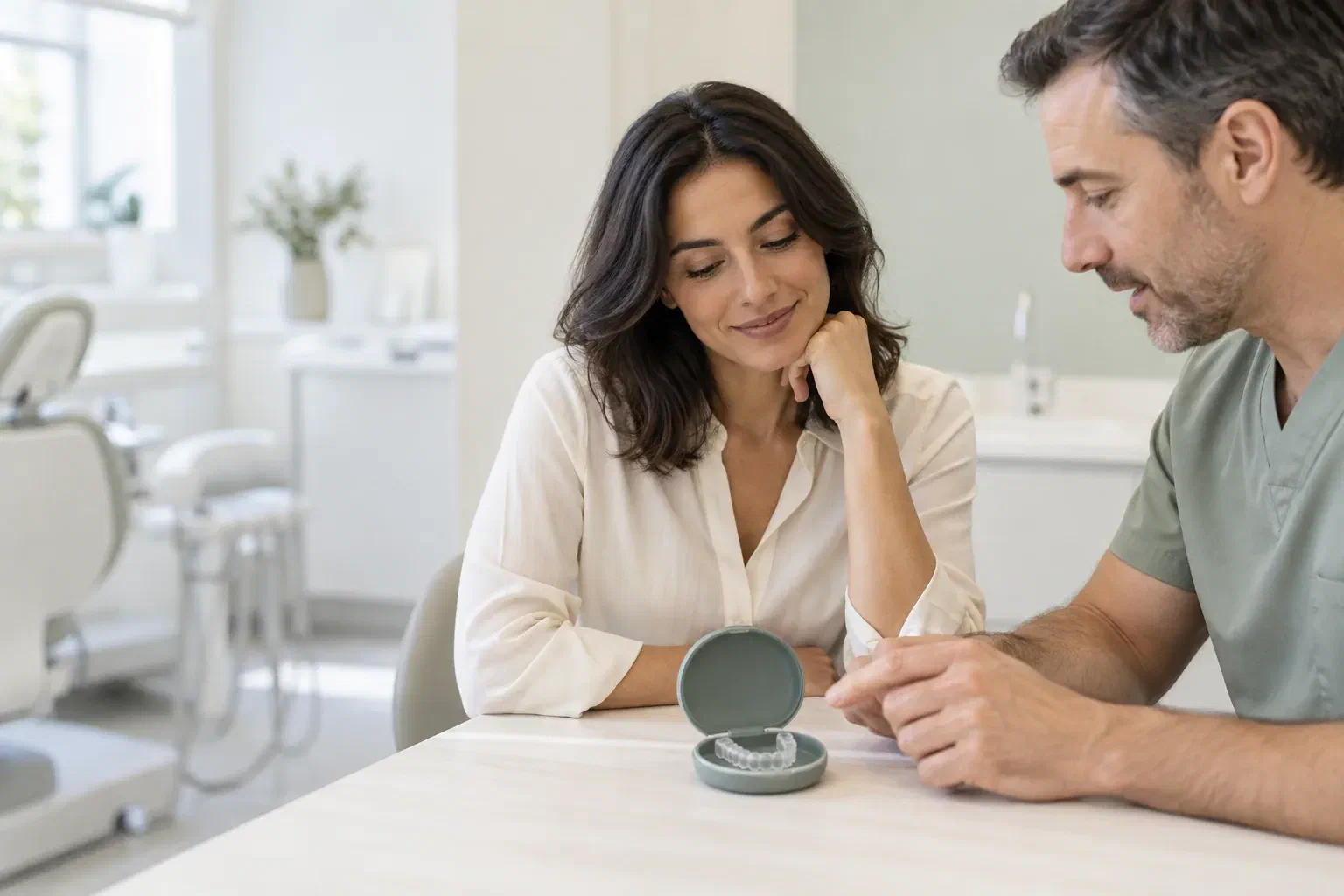
Illustrative patient and clinician reviewing a clear nightguard during a dental consultation
Specialized Care

Custom Nightguards in Etobicoke

Coming from Toronto's west end, you will want each visit to count. Custom nightguards for Etobicoke start with a focused look at wear and grinding, then a clear plan for records, fitting and review, plus advice on when to get urgent care nearer home.

Fewer trips, clearer plans

A guard is worth the trip only if its purpose is clear.

Shaped from records of your teeth, a custom nightguard is made for one job: protecting them when clenching or grinding is a real concern. Before you set aside time for several appointments, it is fair to ask what the examination shows and whether a guard is likely to be worthwhile.

The first visit sorts that out. The clinician looks at wear, past repairs and the symptoms you describe, and separates damage that happened long ago from signs of activity now. Sometimes the answer is an appliance; sometimes it is monitoring, or treating one tooth first.

From Etobicoke, the travel makes it worth planning the sequence at the outset. Ask how many appointments the guard is likely to need, whether records can be taken at your first visit when that is appropriate, and what to do if a problem comes up between visits.

Plan your nightguard visits
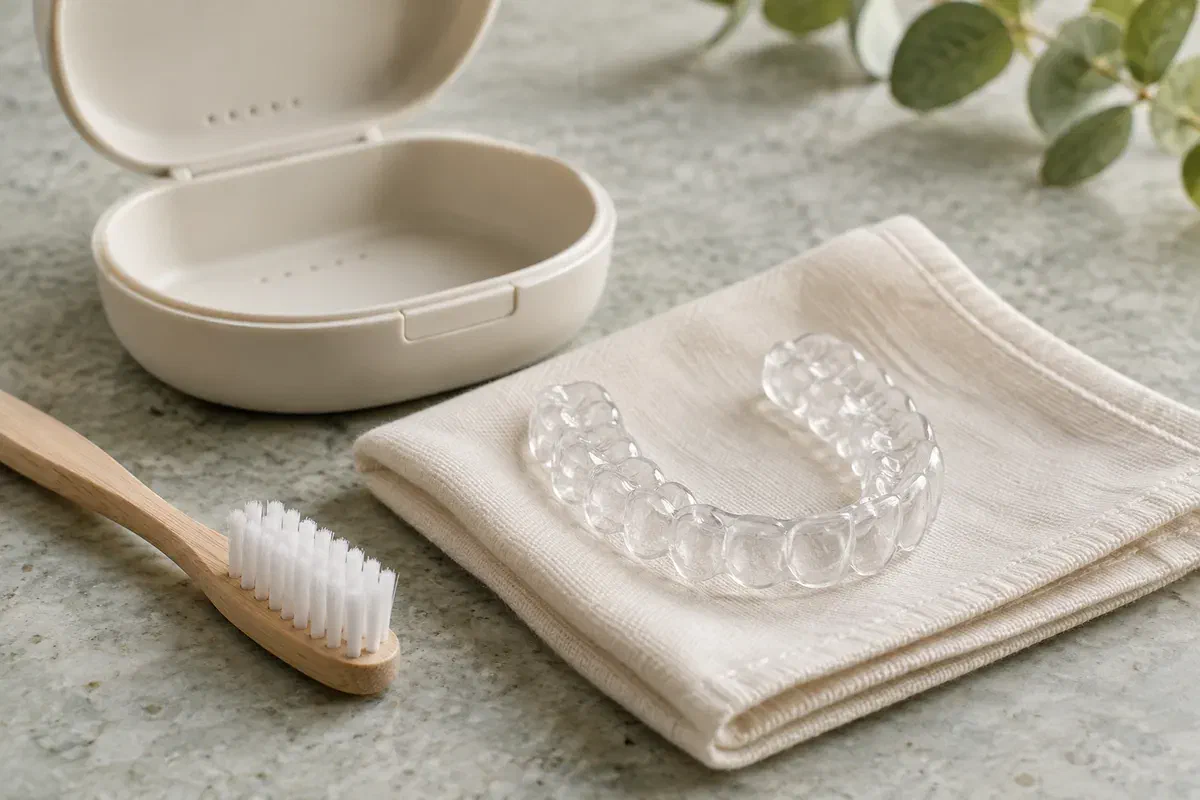
Illustrative clear upper nightguard beside a cream case and soft cleaning brush
Worth mentioning when you book

Tell us the whole story up front.

When travel is part of the picture, the more you share before the first appointment, the better each visit can be used. Wear, reports of grinding and old appliances all shape the plan.

Teeth that have chipped or worn down

Describe which teeth have changed and what repairs you've had, ideally when you call to book. Ask whether the wear suggests a need for protection or a separate treatment. A guard shields surfaces from contact but won't rebuild a tooth or explain every cause of wear.

Grinding, jaw ache or a sleep concern

Mention what someone has heard, whether mornings start with a tight jaw and how you sleep. Grinding during sleep is often missed by the sleeper, and a device should still come after an examination. Share any sleep diagnosis so dental and sleep care stay aligned.

A guard you'd like assessed or replaced

Bring it to the first visit rather than a later one. Say if it presses, slips or feels bulky, or seems different since dental work. Seeing it early lets the clinician decide sooner between adjustment, replacement or another approach.

Even a well-made nightguard is protection, not a guarantee. It can't ensure grinding stops or that jaw symptoms ease, so the purpose should be clear before you commit to the appointments involved.

What you gain from a custom process

A fit built from your records, and a plan you can follow from a distance.

A custom guard is made to match your teeth, crowns, fillings and the way they meet, which is the main reason to choose it over a ready-made one. Ask which arch it is designed for and why its material suits you. You should hear clinical reasons, not just a premium label.

The fitting is your chance to master the handling before you head home. Practise putting it in and removing it several times, ask how to clean it, and note which sensations to expect. If something feels wrong later, call before deciding it doesn't work.

A design that answers a specific need

Find out what is being protected and how this design achieves it. If more than one material is reasonable, compare comfort, lifespan, care and limits. The softest or bulkiest option is not automatically the best.

A fit checked carefully at one sitting

The clinician reviews seating and tooth contacts and asks how it feels, making professional adjustments where appropriate. Ask what is normal in the first nights and what warrants a call. Staying in place is only one measure of fit.

Instructions you can manage at home

Be clear on which nights to wear it, the care it needs and when your next review falls. Mention shift work, travel or anything else that affects your nights. A clear routine is easier to keep when the clinic isn't around the corner.

Keeping the visits organised

Assessment, records, fitting, review: mapped from day one.

The number of appointments and type of records depend on the appliance and your teeth. Ask early about fees, preparation and which reviews are included, so you can plan ahead.

  1. Assess the teeth and the reason for a guard

    Go over wear, repairs, symptoms and any guard you've used. The clinician examines the teeth and restorations concerned and decides whether something else should be treated first. Mention dental work planned elsewhere, since it could alter the fit.

  2. Confirm the design and take records

    If a guard is appropriate, material, coverage and intended use are agreed before records are made. Ask whether impressions or a scan will be used, and whether this can happen at the same visit when suitable. The recommendation shouldn't depend on any particular system.

  3. Fit it and rehearse before you leave

    At fitting, seating, contacts and comfort are reviewed and adjusted as appropriate. Practise inserting and removing it until it feels manageable, and ask about cleaning. Raise gagging or pressure on the day, so you aren't left guessing at home.

  4. Book reviews that suit your schedule

    Bring the guard to follow-up visits, ideally paired with your regular checkups, and describe your experience. The team checks for wear, damage and changes in your teeth or symptoms. New dental work can mean the guard needs another look.

Care between appointments

Look after it well, and know when to call.

Follow the care instructions for your guard's material. Ask which products are safe, since advice written for other appliances may not apply.

Clean it the way you were taught

Rinse and brush it using the method shown at your fitting, and ask whether any cleaner suits the material. Hot water and other heat can warp it. Check before using abrasive pastes or chemicals, and continue your own daily brushing and flossing.

Protect it from heat and damage

Keep the guard in its case, away from pets, children, car dashboards and other warm places. Look for cracks or warping whenever it's in your hand. A broken or loose guard calls for a phone call to us, not glue or home reshaping.

Stop and call if it hurts

If the guard causes pain, take it out and contact the team. Mention a bite that feels different long after removal. Forcing it on or extending wear won't fix a fit problem, and we can advise whether a visit is needed.

Patient information: Dorset County Hospital — care and heat precautions for dental guards · NIDCR — advice about painful intraoral appliances

Choosing a path

Is a new device the right use of the trip?

Ask how a proposed guard compares with what you already wear. Grinding protection, keeping orthodontic results, sports protection and sleep-apnea care each need a different appliance.

When protection from grinding makes sense

A custom nightguard with planned reviews

Talk through the design, the nights it should be worn and the damage it can't prevent. Ask what fitting and follow-up involve, as well as the fee. Even a custom guard needs upkeep and can't stop every chip or symptom.

When the findings support waiting

Monitoring and simpler steps

Observation, help with daytime habits or adjusting a guard you already have may be enough for now. Ask what would change that view. Reported clenching doesn't automatically mean a new device at the first visit.

When retention, breathing or another need overlaps

Another appliance or care with other clinicians

Bring any retainer or prescribed sleep appliance, so it's clear which device does what. A nightguard shouldn't stand in for another treatment without advice. Ask how plans can be coordinated, including with clinicians closer to you.

Planning questions from Etobicoke

Making each appointment count.

You should leave the fitting sure of your guard's purpose and how to handle it. Bring questions about scheduling, comfort, cleaning and damage.

(905) 876-4488
How many appointments does a custom nightguard usually take?
It depends on your teeth and the appliance. Often there is an assessment, a records step, a fitting and later reviews, and some of these may be combined when appropriate. Ask at your first visit so you can plan the trips.
What should I do if my guard breaks and I can't come in right away?
Stop wearing it and call us. Keep the pieces in the case, and don’t glue them. We can advise on next steps and arrange a visit. If a tooth is also broken or you are in pain, seek prompt care.
Can I keep wearing the guard after a dental procedure somewhere else?
Ask the dentist who did the work, and tell us about it. New fillings, crowns or extractions can affect how a guard fits. Bring the guard to your next visit so the fit can be checked.
Is soreness in the morning normal after starting a guard?
Mild awareness or pressure can occur as you adjust, but ongoing soreness, pain or a bite that stays different should be reported. Call the clinic and describe what you feel, since the guard may need checking.
Could I need guards for both my upper and lower teeth?
A nightguard commonly covers one arch, but the design depends on your findings. Ask the clinician which arch is recommended and why, and how that fits with any other appliances you wear.
Can my regular checkup double as a nightguard review?
Often it can, if you bring the guard along. Ask the team whether a separate review is needed. Pairing them can mean fewer trips while still letting us check your teeth, restorations and the appliance together.
Nightguards for Etobicoke

Plan the visits once, then focus on the fit.

Call our Bronte Street practice about worn teeth, grinding or a guard that needs attention. We'll examine your teeth, explain whether an appliance suits you and set out the fitting and review visits clearly from the start.

Suitability, design, material, appointment count, replacement and fees are worked out at assessment. No guard can promise an end to grinding or prevent every future problem.

Visit Milton Dental Clinic
Unit 1, 342 Bronte St. S, Milton, ON L9T 5B7
Get directions Clinic hours
Monday–Thursday
11am–7pm
Friday–Sunday
By appointment only

Areas we serve

  • Milton
  • Oakville
  • Mississauga
  • Georgetown
  • Halton Hills
  • Acton
  • Campbellville
  • Brampton
  • Burlington
  • Puslinch
  • Rockwood
  • Erin
  • Caledon
  • Etobicoke
  • Old Milton
  • Bronte Meadows
  • Timberlea
  • Dorset Park
  • Dempsey
  • Clarke
  • Beaty
  • Coates
  • Harrison
  • Scott
  • Willmott
  • Ford
  • Bowes
  • Cobden
  • Walker
  • Mountain View
  • Milton Heights
  • Hawthorne Village
  • Valley View
  • Fallingbrook
  • Nassagaweya
  • Trafalgar
  • Esquesing
  • Nelson
  • Brookville
  • Moffat
  • Glen Williams
  • Norval
  • Limehouse
  • Stewarttown
  • Ashgrove
  • Hornby
  • Silver Creek
  • Speyside
  • Scotch Block
  • North Oakville
  • River Oaks
  • Glen Abbey
  • West Oak Trails
  • Palermo
  • Bronte Creek
  • College Park
  • Joshua Creek
  • Uptown Core
  • Preserve
  • Iroquois Ridge
  • Lisgar
  • Meadowvale
  • Meadowvale Village
  • Churchill Meadows
  • Erin Mills
  • Central Erin Mills
  • Streetsville
  • East Credit
  • Creditview
  • Heartland
  • Sheridan
  • Mount Pleasant
  • Credit Valley
  • Huttonville
  • Churchville
  • Springbrook
  • Northwest Brampton
  • Bram West
  • Fletcher's Meadow
  • Fletcher's Creek South
  • Alton Village
  • Orchard
  • Millcroft
  • Headon Forest
  • Tansley
  • Brant Hills
  • Tyandaga
  • Kilbride
  • Lowville
  • Aberfoyle
  • Morriston
  • Arkell
  • Hillsburgh
  • Freelton
  • Carlisle
  • Waterdown
  • Flamborough
  • Mountsberg

How can we help?

Milton Dental Clinic

Have a question about your smile? Choose the option that works best for you.

For urgent dental concerns, please call.
Messages are reviewed during clinic hours.