
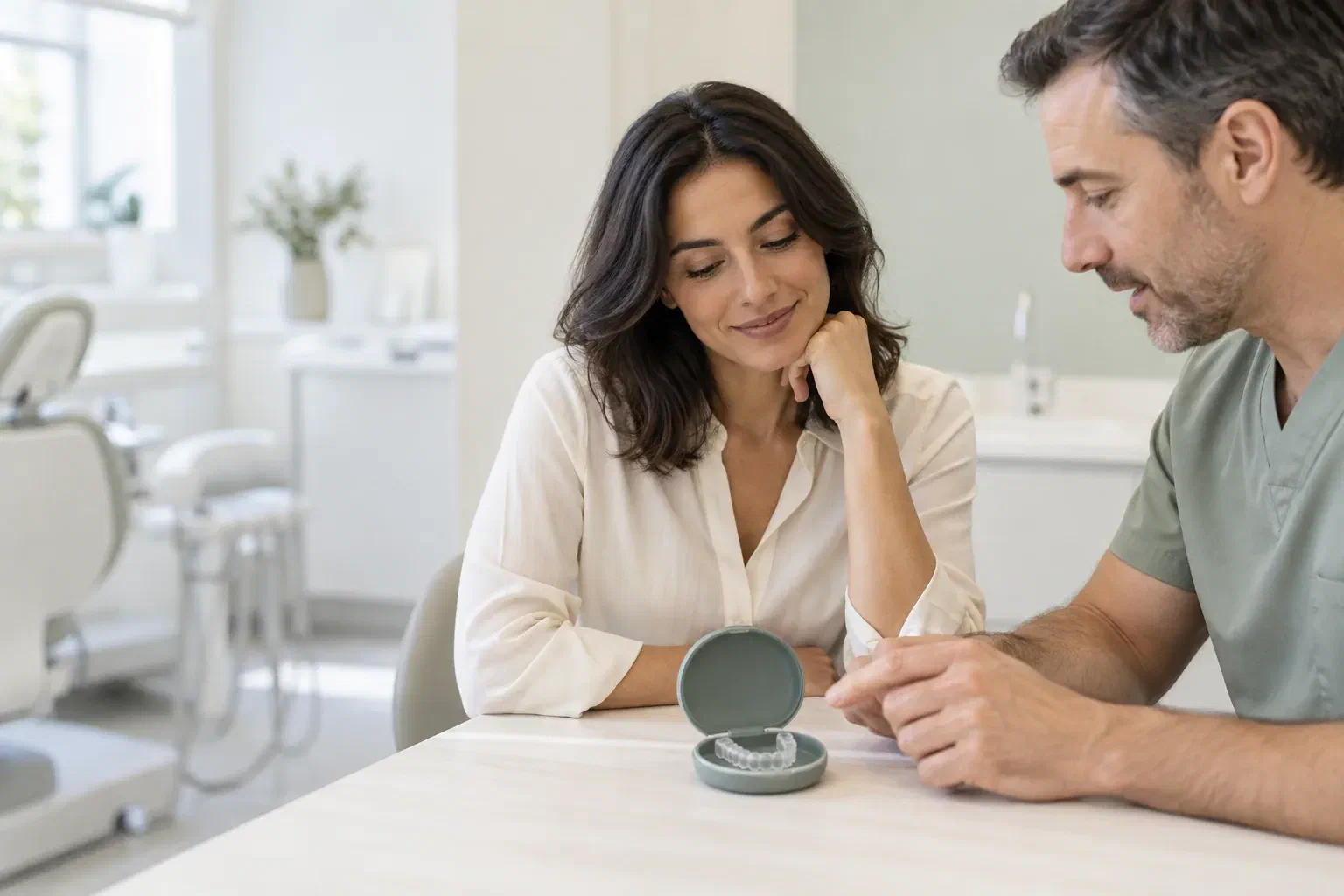
Illustrative patient and clinician reviewing a clear nightguard during a dental consultation
Specialized Care

Custom Nightguards in Milton

Maybe someone heard you grinding, or a checkup turned up flattened edges. A custom nightguard in Milton starts with finding out what is happening to your teeth, then deciding whether an appliance makes sense and how it is worn, cleaned and reviewed.

When someone else hears it first

Grinding is often noticed by a partner before it is ever felt.

Plenty of people learn about their grinding secondhand. A partner mentions a scraping sound in the night, or a hygienist points to worn edges during a cleaning. A custom nightguard is an appliance shaped to one person's teeth, and it is worth considering when protection suits what the examination actually shows.

The sound someone heard and the wear on your teeth are separate clues. One hints at what may be going on now; the other records what has already changed, possibly over years. Dr. Zoha Anjum and the team can examine both, explain what deserves monitoring, and tell you plainly whether a guard is likely to help.

Bring along anything you already wear at night, such as a store-bought guard, an orthodontic retainer or a sleep appliance, and mention any fillings or crowns that are planned. For a household in Milton, the assessment, fitting and review visits can be planned around school and work.

Ask about a nightguard
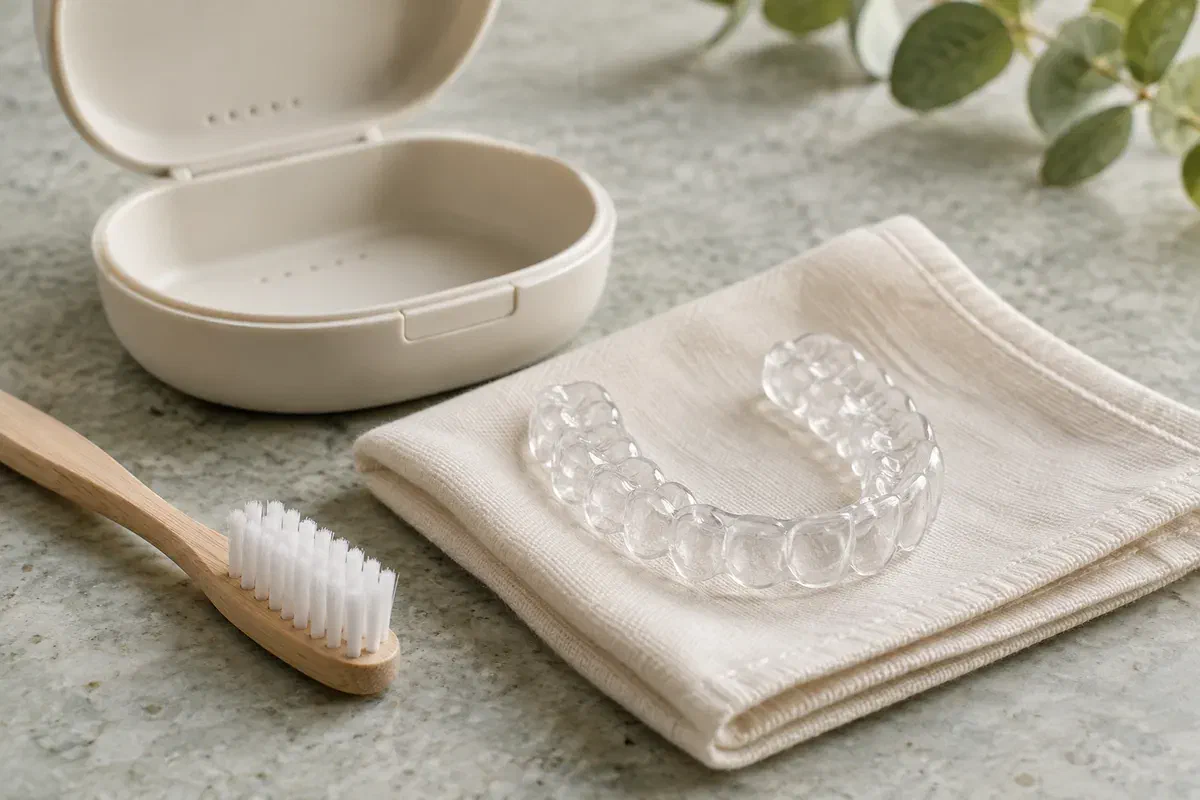
Illustrative clear upper nightguard beside a cream case and soft cleaning brush
What brought you in

Start with what was noticed, and who noticed it.

A comment from a partner, a chip found at a checkup and a guard that has stopped fitting are different starting points. Each one shapes the questions the clinician will ask.

Edges that look shorter or flatter

Show us the teeth that seem to have changed and tell us about earlier repairs. Ask whether the wear points to a protection need or whether a particular tooth needs treatment of its own. A guard can shield surfaces, but it will not rebuild a chipped tooth or explain every cause of wear.

Sounds or jaw tightness at night

Describe what your partner hears, how often, and whether you wake with a sore jaw or poor sleep. Even so, a device should come after an examination. If you have a sleep diagnosis, say so, so that tooth protection fits alongside that care.

A guard you gave up on

Bring it, even if it has been sitting in a drawer for months. Tell us whether it felt tight, loose, bulky or different after a filling or crown. The clinician can look at its condition and fit before suggesting an adjustment, a replacement or another plan.

A nightguard can help protect teeth from grinding forces. It cannot promise that the grinding stops or that jaw discomfort settles, so ask what the appliance is meant to do before you agree to one.

Why the fit is made for you

A guard shaped to your mouth, with reasons you can follow.

Because a custom appliance is made from records of your own teeth, it can take account of crowns, fillings and the way your teeth come together. Ask which arch it will cover and why that shape and material were chosen. The answer should be more specific than a brand name or a premium label.

The fitting visit is also a short lesson. You practise putting the guard in and taking it out and hear how to clean it. If something feels wrong in the first weeks, call rather than leaving it unused on the nightstand.

A clear link between need and design

Ask what the guard is protecting and how its design serves that aim. When more than one material would work, compare how each feels, how long it tends to last and how it is cleaned. Softer or thicker does not automatically mean better for your teeth.

Fit judged by more than grip

The clinician checks how the guard seats and where your teeth touch it, and your description of pressure or soreness counts as well. Ask what you might feel in the first few nights and what would be a reason to phone. Snapping firmly into place is only one sign of a good fit.

A routine you can keep up

Confirm when to wear it, how to rinse and store it, and when it will be checked. Raise anything that could interrupt use, such as night shifts, travel or a new baby in the house. Plain instructions make the appliance easier to live with.

How the appointments unfold

Settle the purpose first. Make the guard second.

How many visits you need, and which records are taken, depends on the appliance and the state of your teeth. Ask about fees, preparation and which follow-up visits are included.

  1. Talk through the history and examine the teeth

    Share what has been noticed, which teeth have been repaired and how any past guard worked out. The clinician examines the relevant teeth and restorations and considers whether something else should be treated first. Mention upcoming dental work, since it could change how a new appliance fits.

  2. Decide on a design and take records

    If a guard makes sense, its material, coverage and expected wear are explained before impressions or a scan are taken. Ask which recording method will be used and why. A sound recommendation does not depend on any particular scanner or laboratory system.

  3. Try it in and learn to handle it

    At the fitting, seating, contacts and comfort are checked, and professional adjustments are made where appropriate. Practise placing and removing the guard and ask about cleaning. If you gag, feel strong pressure or struggle with it, say so before you leave so it can be looked at.

  4. Return for reviews

    Bring the appliance to scheduled checks and describe how your nights have been. The team looks for wear and damage on the guard and for changes in your teeth or symptoms. A guard that fitted well at first may need another look after new fillings or other changes in your mouth.

Daily care at home

A clean, cool, well-stored guard serves you longer.

Cleaning advice varies with the material and design. Ask which products suit your guard instead of borrowing instructions meant for a retainer or a sports guard.

Rinse and brush it the way you were shown

Confirm how to rinse and brush the appliance each morning and whether any cleaner is suitable. Keep it away from hot water and other heat that can warp it. Check before trying abrasive toothpaste or household products, and keep brushing and flossing your own teeth as usual.

Keep it in its case and look it over

Store the guard in its case, out of reach of dogs, young children and sunny windowsills. Glance at it for cracks or a changed shape whenever you handle it. If it breaks or rocks on your teeth, call us instead of gluing it or trying to bend it back.

Speak up about pain or a bite that feels off

If the guard hurts, stop wearing it and contact the dental team. Mention a change in how your teeth meet that lingers after you take it out. Wearing it longer or pressing harder will not correct a poor fit.

Patient information: Dorset County Hospital — care and heat precautions for dental guards · NIDCR — advice about painful intraoral appliances

Comparing the paths

One appliance cannot do every job.

Ask how a new guard would differ from what you already own. Protecting teeth, holding orthodontic results, preventing sports injuries and treating sleep apnea each come with their own requirements.

When grinding protection is warranted

A made-to-fit guard with follow-up

Go over the proposed design, how often you will wear it and what it cannot protect against. Ask about fitting and reviews before comparing cost alone. Even a custom guard needs care and will not stop every future chip or symptom.

When the findings point elsewhere first

Watching and managing for now

Sometimes observation, help with daytime clenching habits or adjusting a guard you already own is a sensible beginning. Ask what changes would make a new appliance worth reconsidering. Not every report of grinding means a device is needed at the first visit.

When retainers, breathing or other needs overlap

A different appliance or shared care

Bring your retainer or any prescribed sleep appliance so the purpose of each can be reviewed. A nightguard is not a stand-in for another treatment unless a clinician advises it. Ask how the plans fit together and whether another provider should be involved.

Questions we hear in Milton

What people ask before their first guard.

By the end of the fitting you should know why you have the guard and how to use it. Bring your questions about comfort, cleaning, damage and other appliances.

(905) 876-4488
My partner says I grind, but I feel nothing. Is that enough reason to get a guard?
It is a good reason to have an examination. Grinding during sleep often goes unnoticed by the person doing it. The clinician looks for wear, damage and other signs before suggesting whether a guard, monitoring or another approach fits the findings.
How long does it take to get used to sleeping with a guard?
Some awareness of the appliance, extra saliva or mild pressure can be part of the first nights, so ask at the fitting what to expect with your design. Pain, or a bite that stays changed after removal, is a reason to call.
Will a drugstore guard do the same job as a custom one?
They are not the same thing. A custom appliance is made from records of your teeth and checked at a fitting, while a ready-made guard is shaped at home. Bring any guard you already use so the clinician can assess it and explain whether it suits your situation.
Why might my guard be made for the lower teeth instead of the upper?
The arch depends on your examination, existing restorations and any other appliances you wear. Some people are better suited to one arch, some to the other. Ask the clinician to explain the reasoning for your design rather than assuming there is one standard choice.
What should I do if the dog chews my nightguard?
Stop wearing it and bring it in, even if the damage looks minor. Bite marks can leave rough edges or change the fit. The team can tell you whether it can be adjusted or needs replacing, and suggest storage that keeps it out of reach.
Do I still need regular checkups once I have a guard?
Yes. Checkups let the team see how your teeth, restorations and the appliance itself are holding up. Bring the guard along so wear on its surface can be assessed together with any changes in your mouth.
Your Milton nightguard visit

Find out whether a guard suits you, then learn to live with it.

Call our Bronte Street practice about flattened teeth, grinding at night or a guard that no longer feels right. We will examine your teeth, explain the appliance choices, and arrange fitting and reviews if a guard is appropriate.

Suitability, design, material, the number of fitting visits, replacement timing and fees are set after assessment. No guard can promise that grinding ends or that future damage is avoided.

Visit Milton Dental Clinic
Unit 1, 342 Bronte St. S, Milton, ON L9T 5B7
Get directions Clinic hours
Monday–Thursday
11am–7pm
Friday–Sunday
By appointment only

Areas we serve

  • Milton
  • Oakville
  • Mississauga
  • Georgetown
  • Halton Hills
  • Acton
  • Campbellville
  • Brampton
  • Burlington
  • Puslinch
  • Rockwood
  • Erin
  • Caledon
  • Etobicoke
  • Old Milton
  • Bronte Meadows
  • Timberlea
  • Dorset Park
  • Dempsey
  • Clarke
  • Beaty
  • Coates
  • Harrison
  • Scott
  • Willmott
  • Ford
  • Bowes
  • Cobden
  • Walker
  • Mountain View
  • Milton Heights
  • Hawthorne Village
  • Valley View
  • Fallingbrook
  • Nassagaweya
  • Trafalgar
  • Esquesing
  • Nelson
  • Brookville
  • Moffat
  • Glen Williams
  • Norval
  • Limehouse
  • Stewarttown
  • Ashgrove
  • Hornby
  • Silver Creek
  • Speyside
  • Scotch Block
  • North Oakville
  • River Oaks
  • Glen Abbey
  • West Oak Trails
  • Palermo
  • Bronte Creek
  • College Park
  • Joshua Creek
  • Uptown Core
  • Preserve
  • Iroquois Ridge
  • Lisgar
  • Meadowvale
  • Meadowvale Village
  • Churchill Meadows
  • Erin Mills
  • Central Erin Mills
  • Streetsville
  • East Credit
  • Creditview
  • Heartland
  • Sheridan
  • Mount Pleasant
  • Credit Valley
  • Huttonville
  • Churchville
  • Springbrook
  • Northwest Brampton
  • Bram West
  • Fletcher's Meadow
  • Fletcher's Creek South
  • Alton Village
  • Orchard
  • Millcroft
  • Headon Forest
  • Tansley
  • Brant Hills
  • Tyandaga
  • Kilbride
  • Lowville
  • Aberfoyle
  • Morriston
  • Arkell
  • Hillsburgh
  • Freelton
  • Carlisle
  • Waterdown
  • Flamborough
  • Mountsberg

How can we help?

Milton Dental Clinic

Have a question about your smile? Choose the option that works best for you.

For urgent dental concerns, please call.
Messages are reviewed during clinic hours.