
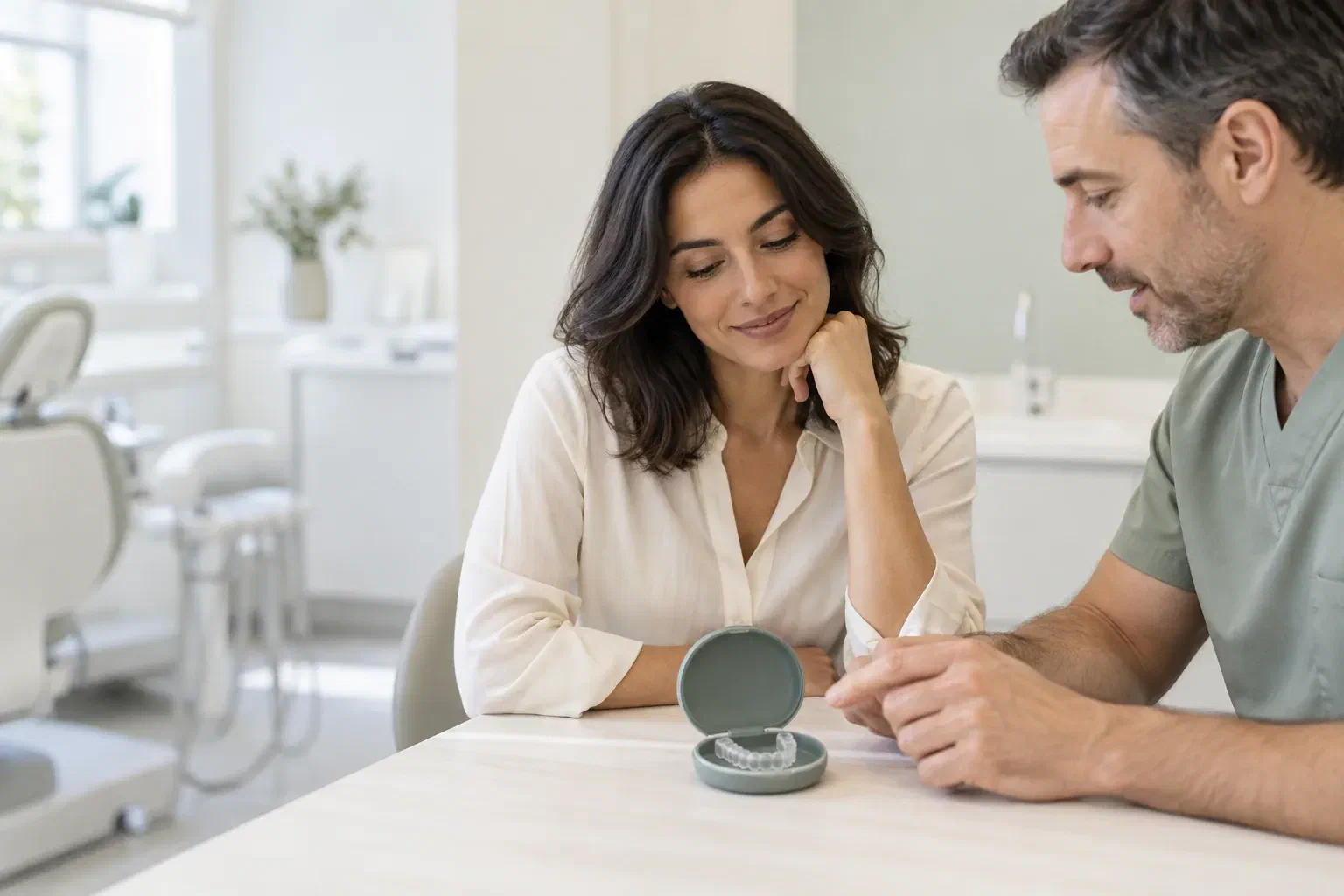
Illustrative patient and clinician reviewing a clear nightguard during a dental consultation
Specialized Care

Custom Nightguards in Mississauga

Sore jaw muscles at the end of a workday, or teeth that ache on waking, can make a guard sound like the obvious fix. Custom nightguards in Mississauga start with a careful look at what is really happening, because another first step sometimes makes more sense.

Before you assume a device is the answer

Clenching by day and grinding by night are not the same problem.

Many people first notice the habit while awake: teeth pressed together during a commute, a tight jaw after a long meeting. Sleep grinding is harder to catch, and it is the main situation in which a custom nightguard, an appliance made to fit your teeth, is considered. Telling the two apart is a useful first job for the examination.

Wear on the teeth adds another layer. Flattened edges might reflect years of habit, an old injury, diet or something else, and they do not prove that grinding happens every night now. The clinician can explain what the findings suggest, what can simply be watched and whether an appliance offers a sensible benefit.

From Mississauga, including western neighbourhoods such as Meadowvale and Churchill Meadows, it pays to come prepared. Bring any guard or retainer you own, note when your jaw feels worst, and list dental work you have planned. We can then explain the fitting and follow-up involved before you commit to anything.

Talk through your clenching
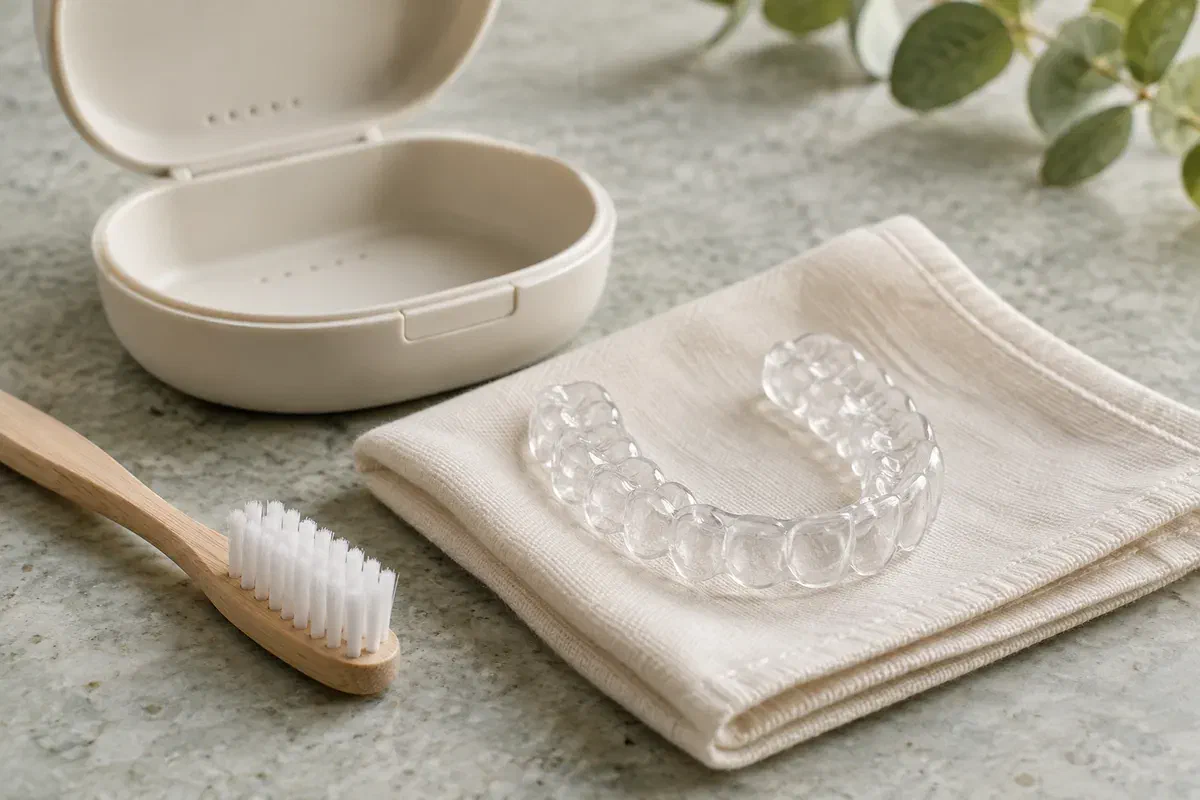
Illustrative clear upper nightguard beside a cream case and soft cleaning brush
Clues to describe at the visit

When does your jaw feel it most?

Timing is revealing. Morning tightness, afternoon soreness after desk work and a guard that never settled in each point the assessment somewhere different.

Worn, chipped or sensitive biting surfaces

Show us the teeth that look or feel different and mention past repairs. Ask whether the wear fits a grinding pattern or whether a tooth needs separate treatment. A guard may protect surfaces from further contact, but it cannot replace lost enamel or account for every change.

Morning jaw ache or reported grinding

Tell us whether you wake with sore muscles, a headache or a partner's report of noise. Night grinding is often silent to the person doing it, and a device should still follow assessment. Mention any sleep concerns or diagnosis so dental advice fits your wider care.

Daytime clenching you've caught yourself doing

Describe when it happens: at the screen, behind the wheel, during exercise. Daytime habits can sometimes be eased with awareness and other strategies, and a nightguard is not designed for every waking situation. Bring any appliance you have already tried.

A nightguard can help protect teeth from grinding at night, but it won't necessarily stop the habit or relieve every jaw symptom. Before agreeing to one, make sure you know what it is meant to do.

If a guard is recommended

Know what it protects and why it's shaped that way.

A custom guard is built from records of your teeth, so it can account for restorations, spacing and how your teeth come together at rest. Ask which arch it will cover and what led to that choice. The material should be explained in terms of your teeth, not just described as heavy-duty or top of the line.

The fitting visit teaches the practical side. You will seat and remove the guard, go over cleaning and hear what to expect in the first few nights. Because the appliance can only be judged when it is worn, raise problems early rather than giving up quietly.

Purpose first, design second

Ask what the appliance is protecting against and how the proposed design matches that. When more than one material would work, compare comfort, durability, cleaning and limits. The firmest or softest choice isn't automatically the right one.

Comfort and contacts, both checked

The clinician reviews how the guard sits on your teeth and how your bite meets it, and your feedback about pressure counts. Ask what is expected early on and what should prompt a call. Feeling secure is only part of a good fit.

Use that fits a working week

Confirm when to wear it, how to look after it and when the next check is due. Mention long hours, travel for work or broken sleep. A routine that matches your week is more likely to last.

The path to a fitted guard

Understand the habit. Then decide on the appliance.

The number of visits and the records required depend on the appliance and your dental condition. Ask about fees, preparation and what follow-up is part of the plan.

  1. Map the symptoms and examine the teeth

    Describe the timing of your jaw discomfort, any wear you've noticed, past repairs and earlier guards. The clinician examines the teeth and restorations involved and considers whether something should be addressed first. Planned dental work can affect fit, so mention it.

  2. Agree on a design and record your teeth

    Where a guard is a reasonable step, its material, coverage and intended wear are discussed before impressions or a scan. Ask which method will be used. A solid recommendation stands without relying on a specific brand of equipment.

  3. Fit and practise

    At fitting, seating, contacts and comfort are reviewed and professional adjustments made where appropriate. Practise inserting and removing the guard, and ask how to clean it. Speak up about gagging or pressure while you are still in the chair.

  4. Follow up on teeth, guard and symptoms

    Bring the appliance to review visits and describe how mornings have felt. The team checks it for wear or damage and looks for changes in your teeth and symptoms. New dental work or other changes can mean the fit needs another look.

Everyday upkeep

Rinse it, case it, check it.

Follow the instructions for your guard's material and design. Ask about cleaning products instead of assuming advice for another appliance applies.

Clean it the recommended way

Find out the right way to rinse and brush it, and whether any particular cleaner is suitable. Keep it out of hot water and away from heat that might warp it. Check before using abrasive toothpaste or strong chemicals, and keep your own brushing and flossing on track.

Store it out of harm's way

Use the case you were given and keep the guard away from pets, children and heat, including a hot car in summer. Look for cracks or a changed shape now and then. If it breaks or wobbles, call the clinic rather than gluing it or trying to reshape it.

Act on pain or a changed bite

If wearing the guard hurts, stop and contact the dental team. Mention a bite that still feels off well after removal. Pushing it into place or wearing it for longer won't correct a poor fit.

Patient information: Dorset County Hospital — care and heat precautions for dental guards · NIDCR — advice about painful intraoral appliances

Possible directions

A guard, a lighter start, or a different kind of help.

Ask how any proposed guard differs from what you already use. Grinding protection, orthodontic retention, sports protection and sleep-apnea care each need their own approach.

When night grinding needs tooth protection

A custom nightguard, followed up

Review the design, wear schedule and what the guard won't protect against. Ask about fitting and follow-up before looking only at cost. A custom appliance still needs care and won't prevent every future chip or symptom.

When daytime clenching or limited findings come first

Habit awareness and monitoring

Observation, help with daytime habits or a look at an existing guard may be the right starting point. Ask what would prompt a guard later. Feeling your jaw tighten at work doesn't automatically mean a device is needed.

When retention, breathing or another concern is involved

A different appliance or coordinated care

Bring retainers and prescribed sleep appliances so each role can be reviewed. A nightguard shouldn't take over another treatment without advice. Ask how care can be coordinated and whether another clinician should be involved.

Mississauga nightguard questions

Clenching, grinding and guards, answered plainly.

Leave the fitting knowing why you have the guard and how to wear it. Bring questions about jaw comfort, cleaning, damage and other appliances.

(905) 876-4488
Will a nightguard stop me from clenching during the day?
It isn’t designed to. A nightguard is made for wear during sleep, and daytime clenching is often approached through awareness and other strategies. Ask the clinician what might help with daytime habits and whether anything else is appropriate.
Could stress be behind my grinding?
Stress is one factor often discussed with grinding, but the causes vary and can be hard to pin down. The clinician can look at your teeth and symptoms and explain what is known. If stress or sleep is a concern, mention it so care can be coordinated.
How will I know if the guard is helping?
Ask at the fitting what the guard is meant to do and what will be checked. Reviews look at wear on the appliance, the condition of your teeth and how your symptoms have changed. Bring the guard and describe your experience honestly.
Does it matter which arch the guard covers?
It can. The choice depends on your examination, restorations and any other appliances. Ask the clinician to explain why one arch was chosen for your teeth instead of assuming there is a standard design.
Can I rinse my guard under hot tap water?
Use cool or lukewarm water instead, unless you’re told otherwise for your material. Heat can change the guard’s shape and fit. If it starts to look distorted, bring it in rather than forcing it onto your teeth.
My guard is for grinding. Could it also treat my snoring?
No. A grinding guard is not designed to treat snoring or sleep apnea, and it shouldn’t replace a prescribed sleep appliance. If snoring or breathing at night is a concern, mention it so the right assessment can be arranged.
Mississauga visits

Sort out the habit, then decide on the guard.

Contact our Bronte Street practice about jaw tightness, worn teeth or a guard you're unsure about. We'll examine your teeth, explain whether an appliance is suitable, and plan fitting and reviews when a guard makes sense.

Suitability, design, material, fitting appointments, replacement and fees depend on assessment. A guard can't promise to end grinding or to prevent every future problem.

Visit Milton Dental Clinic
Unit 1, 342 Bronte St. S, Milton, ON L9T 5B7
Get directions Clinic hours
Monday–Thursday
11am–7pm
Friday–Sunday
By appointment only

Areas we serve

  • Milton
  • Oakville
  • Mississauga
  • Georgetown
  • Halton Hills
  • Acton
  • Campbellville
  • Brampton
  • Burlington
  • Puslinch
  • Rockwood
  • Erin
  • Caledon
  • Etobicoke
  • Old Milton
  • Bronte Meadows
  • Timberlea
  • Dorset Park
  • Dempsey
  • Clarke
  • Beaty
  • Coates
  • Harrison
  • Scott
  • Willmott
  • Ford
  • Bowes
  • Cobden
  • Walker
  • Mountain View
  • Milton Heights
  • Hawthorne Village
  • Valley View
  • Fallingbrook
  • Nassagaweya
  • Trafalgar
  • Esquesing
  • Nelson
  • Brookville
  • Moffat
  • Glen Williams
  • Norval
  • Limehouse
  • Stewarttown
  • Ashgrove
  • Hornby
  • Silver Creek
  • Speyside
  • Scotch Block
  • North Oakville
  • River Oaks
  • Glen Abbey
  • West Oak Trails
  • Palermo
  • Bronte Creek
  • College Park
  • Joshua Creek
  • Uptown Core
  • Preserve
  • Iroquois Ridge
  • Lisgar
  • Meadowvale
  • Meadowvale Village
  • Churchill Meadows
  • Erin Mills
  • Central Erin Mills
  • Streetsville
  • East Credit
  • Creditview
  • Heartland
  • Sheridan
  • Mount Pleasant
  • Credit Valley
  • Huttonville
  • Churchville
  • Springbrook
  • Northwest Brampton
  • Bram West
  • Fletcher's Meadow
  • Fletcher's Creek South
  • Alton Village
  • Orchard
  • Millcroft
  • Headon Forest
  • Tansley
  • Brant Hills
  • Tyandaga
  • Kilbride
  • Lowville
  • Aberfoyle
  • Morriston
  • Arkell
  • Hillsburgh
  • Freelton
  • Carlisle
  • Waterdown
  • Flamborough
  • Mountsberg

How can we help?

Milton Dental Clinic

Have a question about your smile? Choose the option that works best for you.

For urgent dental concerns, please call.
Messages are reviewed during clinic hours.