
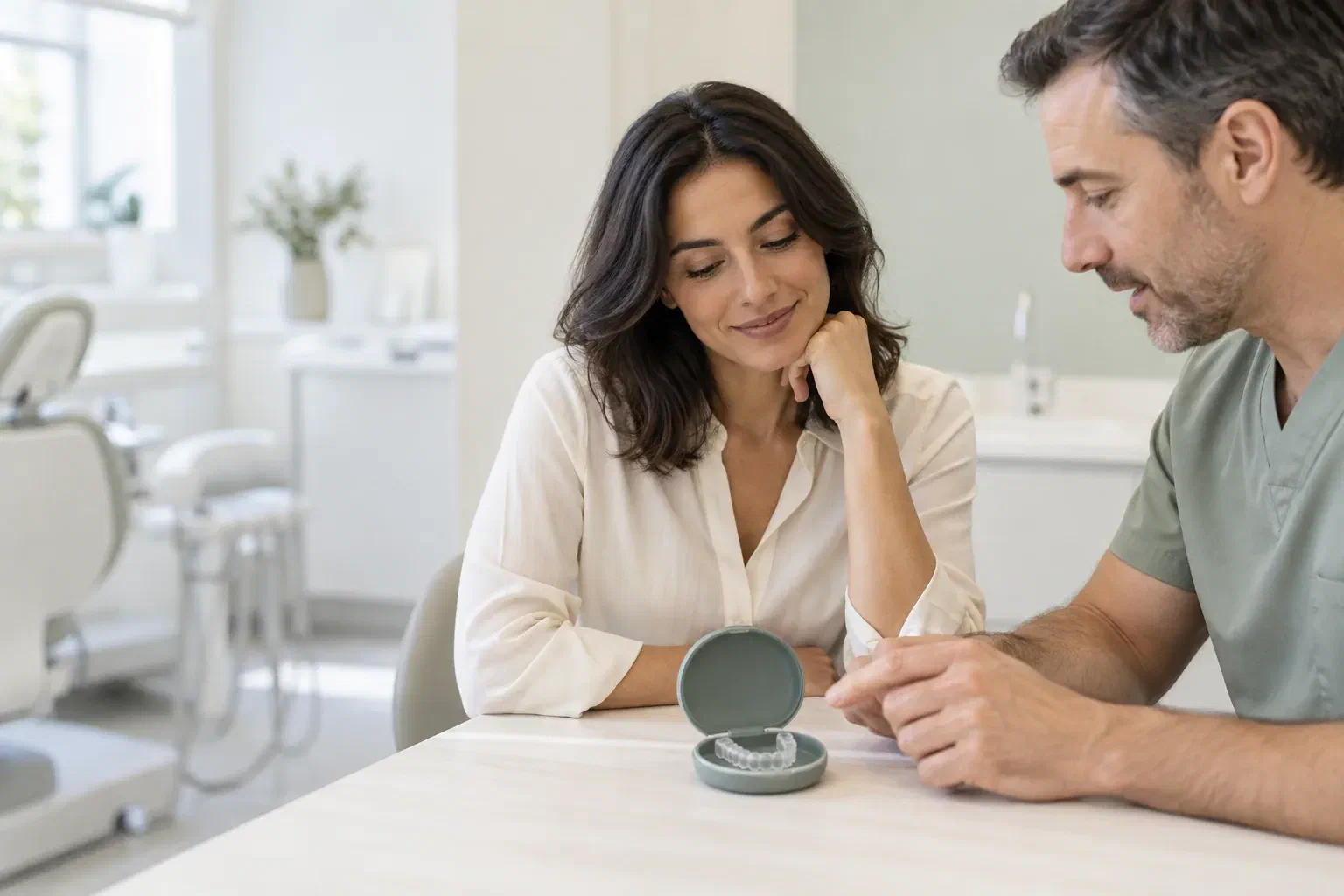
Illustrative patient and clinician reviewing a clear nightguard during a dental consultation
Specialized Care

Custom Nightguards in Puslinch

Hard or soft, upper or lower, more coverage or less: the design questions can feel technical. Custom nightguards in Puslinch begin with your teeth and the reason for protection, so the choice of material and shape has a clear clinical basis.

Design questions, plainly answered

Which kind of guard? That depends on what it has to do.

People often arrive having read about hard acrylic, soft and dual-layer guards, wondering which is best. There isn't a single answer. A custom nightguard is fabricated from records of your mouth to protect teeth from clenching or grinding, and its material, thickness and arch are chosen to suit what the examination finds.

That is why the examination leads. Worn surfaces, chipped fillings, crowns, spacing and any jaw discomfort all feed into the decision, as does the difference between old wear and signs of grinding now. Sometimes the real design question turns out to be whether a device is needed at all, or whether one tooth should be treated first.

For households in Puslinch, west of Milton, grouping appointments can save trips. Bring the guards or retainers anyone in the family wears, along with notes on planned dental work, and we can explain the records, fitting and follow-up that a particular design would involve.

Discuss guard design
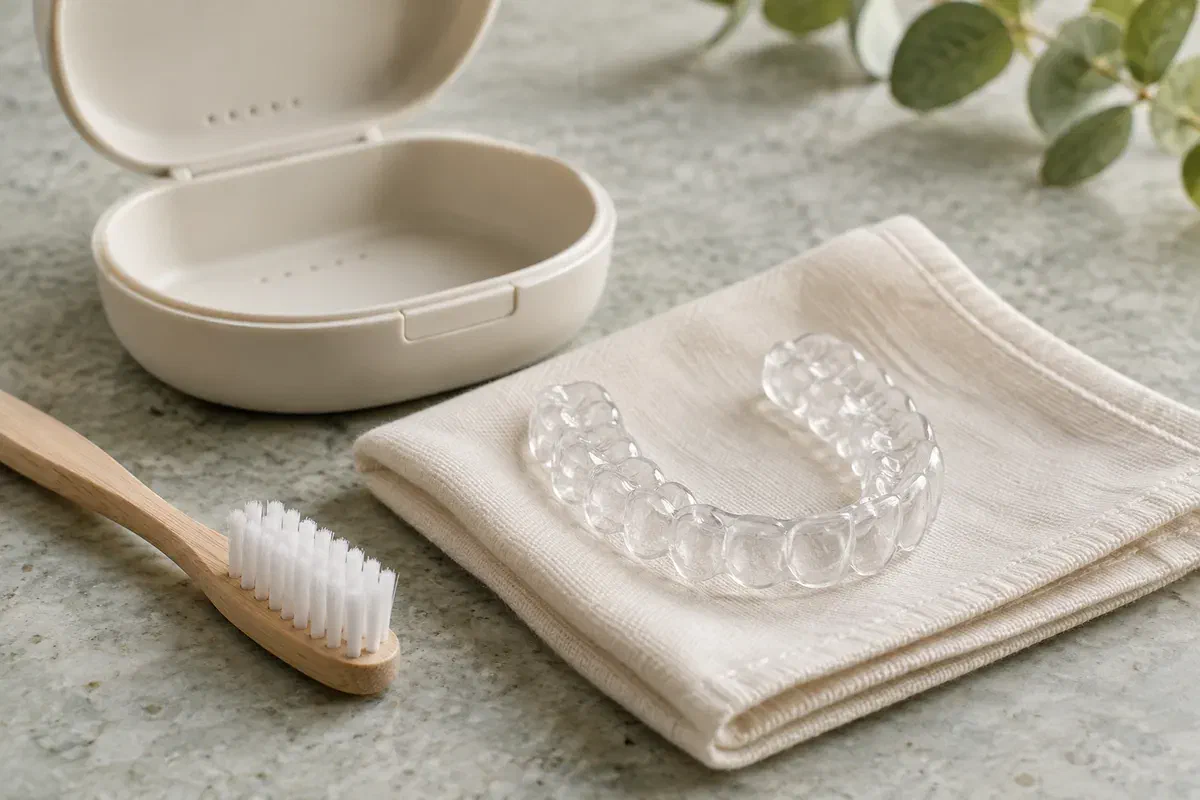
Illustrative clear upper nightguard beside a cream case and soft cleaning brush
What shapes the design

Your teeth, your habits and your history all count.

Before materials come up, the clinician needs to understand what the guard would be protecting and why. Share what prompted the visit and anything you've tried.

Wear patterns and past repairs

Show which teeth look flatter or have chipped, and mention fillings or crowns in that area. Ask whether the pattern suggests grinding or a single-tooth problem that needs separate care. No design can rebuild a worn tooth or reveal every reason for wear.

How and when you grind

Describe anything a partner hears, jaw tiredness on waking and how you sleep. Sleep grinding is easy to miss in yourself, but the design discussion should follow an examination. Tell us about any sleep diagnosis so the appliance fits with that care.

Guards you've worn before

Bring them, comfortable or not. Explain what worked and what didn't: thickness, softness, a tight or loose feel, or changes after dental work. That history helps the clinician decide whether to adjust, replace or try a different approach.

Whatever its design, a nightguard is protection rather than a cure. It can't ensure the grinding stops or that jaw symptoms improve, so ask what the chosen design is meant to achieve.

Why the design is individual

Material, thickness and arch, each with a reason.

Because a custom guard is built from your records, the clinician can decide how much of each tooth it covers, which arch it sits on and how your teeth meet its surface. Ask how those choices relate to your restorations and bite. You should hear specific reasons, not a ranking of premium and basic options.

At the fitting, you'll practise seating and removing that particular design and hear how its material should be cleaned. Different materials can have different care needs, so ask. If the guard feels wrong in the first weeks, report it early rather than abandoning it.

Hard, soft or layered, explained

Ask what the proposed material offers for your situation and what its limits are. If several would work, compare comfort, durability, cleaning and maintenance. A softer guard isn't automatically gentler, and a harder one isn't automatically better.

A fit checked at the surface

The clinician reviews how the guard seats and how evenly your teeth contact it, and your sense of pressure or rubbing is part of the check. Ask which early sensations are expected. A guard that grips firmly can still need refining.

Care matched to the material

Confirm the wear schedule, cleaning routine and review timing for your design. Mention seasonal work, travel or other things that disrupt your sleep. A routine that fits the material and your life is easier to maintain.

Getting to the right design

Assessment first. Material second.

The visits involved, and the type of records, depend on the design and your dental condition. Ask about fees, preparation and the follow-up included for the option you choose.

  1. Examine and discuss

    Talk through wear, repairs, symptoms and past guards. The teeth and restorations involved are examined, and the clinician considers whether any other treatment should happen first. Mention dental work you're planning, since it may affect the fit.

  2. Choose material and coverage, then record

    If a guard is appropriate, the options for material, thickness and arch are discussed before records are made. Ask whether impressions or a digital scan will be used. The recommendation should rest on your needs rather than any one manufacturing system.

  3. Fit and refine

    How the guard seats, how your teeth meet it and how it feels are reviewed at the fitting, with professional adjustments where appropriate. Practise handling the guard and ask about the care its material needs. Raise any gagging or pressure before the appointment ends.

  4. Review the design over time

    Bring the guard to follow-ups and describe how it has felt. The team looks for wear and damage on its surface and for any shift in your teeth or symptoms. New restorations may mean the design or fit needs revisiting.

Caring for your guard's material

Different materials, slightly different care.

Follow the instructions given for your particular guard. Ask about cleaners rather than assuming advice for another appliance or material will suit.

Use the cleaning method for your material

Ask how this guard should be rinsed and brushed and whether any cleaning product is safe for it. Avoid hot water or other heat, which can distort many materials. Check before trying abrasive pastes, and keep up your own daily oral care.

Store it properly and inspect it

Use the supplied case and keep the guard out of reach of pets and children and away from warm spots. Look for cracks, thinning or warping from time to time. If it breaks or rocks, phone us rather than repairing or reshaping it.

Report pain or a bite change

Stop wearing the guard if it hurts, and ring the clinic for advice. Tell us if your teeth meet differently for a long while after removal. Forcing the guard on or wearing it longer won't fix a poor fit.

Patient information: Dorset County Hospital — care and heat precautions for dental guards · NIDCR — advice about painful intraoral appliances

Other routes worth knowing

Sometimes the best design is a different device.

Compare any proposed guard with the appliances already in your home. Protecting teeth from grinding, retaining orthodontic results, protecting teeth in sport and treating sleep apnea call for different appliances.

When grinding protection is warranted

A custom nightguard, designed and reviewed

Go over the proposed material, coverage, wear schedule and limits. Ask about fitting and review visits as well as fees. A well-designed guard still needs care and can't prevent every chip or symptom.

When the findings suggest waiting

Holding off on a device

Monitoring, daytime habit support or adjusting a current guard can be reasonable first steps. Ask what would prompt a new design later. Mild findings don't always call for an appliance at the first visit.

When retention, breathing or another need is involved

Another appliance or joint care

Any retainer or prescribed sleep appliance should come along too, so each purpose is understood. Don't let a nightguard stand in for another treatment without professional advice. Ask whether another clinician should take part, and how the plans connect.

Puslinch nightguard questions

What people ask about guard design.

Leave the fitting knowing why your guard was designed as it was and how to look after it. Bring questions about materials, comfort, cleaning and other appliances.

(905) 876-4488
Is a hard or soft nightguard better?
Neither is better for everyone. The right choice depends on your teeth, restorations, habits and comfort. Ask the clinician to explain why a particular material is suggested for you and what its limits are.
What is a dual-layer guard?
It’s a design with a softer inner layer and a firmer outer surface. Whether it suits you depends on the examination. Ask how it would compare with other options for your teeth and how its care differs.
How thick will my guard be?
Thickness depends on the design and your bite. Ask the clinician to show you the planned shape, and mention it if a previous guard felt too bulky or too thin.
Does my guard need to cover every tooth in the arch?
Coverage is decided from your examination and the purpose of the guard. Ask the clinician to explain the proposed coverage and why it suits your teeth. Don’t trim or alter a guard yourself, since that can change how it fits and protects.
Does the arch matter if I already wear a retainer on my upper teeth?
It can. Bring the retainer so the clinician can see how the two appliances relate. The arch and design for a nightguard should be chosen with your other appliances in mind, and explained to you.
Does the material change how I should clean my guard?
Yes, it can. Some materials are more sensitive to heat or abrasives than others. Follow the instructions for your guard, avoid hot water, and ask before trying a new product.
Planning from Puslinch

A design you understand, a fit you can live with.

Ask our Bronte Street practice about grinding, tooth wear or a guard whose design never suited you. We'll examine your teeth, explain the material and coverage options and arrange fitting and reviews if a guard is appropriate.

Design, material, suitability, visits, replacement and fees all depend on assessment. A guard of any design is no guarantee that grinding will stop or that later damage will be avoided.

Visit Milton Dental Clinic
Unit 1, 342 Bronte St. S, Milton, ON L9T 5B7
Get directions Clinic hours
Monday–Thursday
11am–7pm
Friday–Sunday
By appointment only

Areas we serve

  • Milton
  • Oakville
  • Mississauga
  • Georgetown
  • Halton Hills
  • Acton
  • Campbellville
  • Brampton
  • Burlington
  • Puslinch
  • Rockwood
  • Erin
  • Caledon
  • Etobicoke
  • Old Milton
  • Bronte Meadows
  • Timberlea
  • Dorset Park
  • Dempsey
  • Clarke
  • Beaty
  • Coates
  • Harrison
  • Scott
  • Willmott
  • Ford
  • Bowes
  • Cobden
  • Walker
  • Mountain View
  • Milton Heights
  • Hawthorne Village
  • Valley View
  • Fallingbrook
  • Nassagaweya
  • Trafalgar
  • Esquesing
  • Nelson
  • Brookville
  • Moffat
  • Glen Williams
  • Norval
  • Limehouse
  • Stewarttown
  • Ashgrove
  • Hornby
  • Silver Creek
  • Speyside
  • Scotch Block
  • North Oakville
  • River Oaks
  • Glen Abbey
  • West Oak Trails
  • Palermo
  • Bronte Creek
  • College Park
  • Joshua Creek
  • Uptown Core
  • Preserve
  • Iroquois Ridge
  • Lisgar
  • Meadowvale
  • Meadowvale Village
  • Churchill Meadows
  • Erin Mills
  • Central Erin Mills
  • Streetsville
  • East Credit
  • Creditview
  • Heartland
  • Sheridan
  • Mount Pleasant
  • Credit Valley
  • Huttonville
  • Churchville
  • Springbrook
  • Northwest Brampton
  • Bram West
  • Fletcher's Meadow
  • Fletcher's Creek South
  • Alton Village
  • Orchard
  • Millcroft
  • Headon Forest
  • Tansley
  • Brant Hills
  • Tyandaga
  • Kilbride
  • Lowville
  • Aberfoyle
  • Morriston
  • Arkell
  • Hillsburgh
  • Freelton
  • Carlisle
  • Waterdown
  • Flamborough
  • Mountsberg

How can we help?

Milton Dental Clinic

Have a question about your smile? Choose the option that works best for you.

For urgent dental concerns, please call.
Messages are reviewed during clinic hours.