
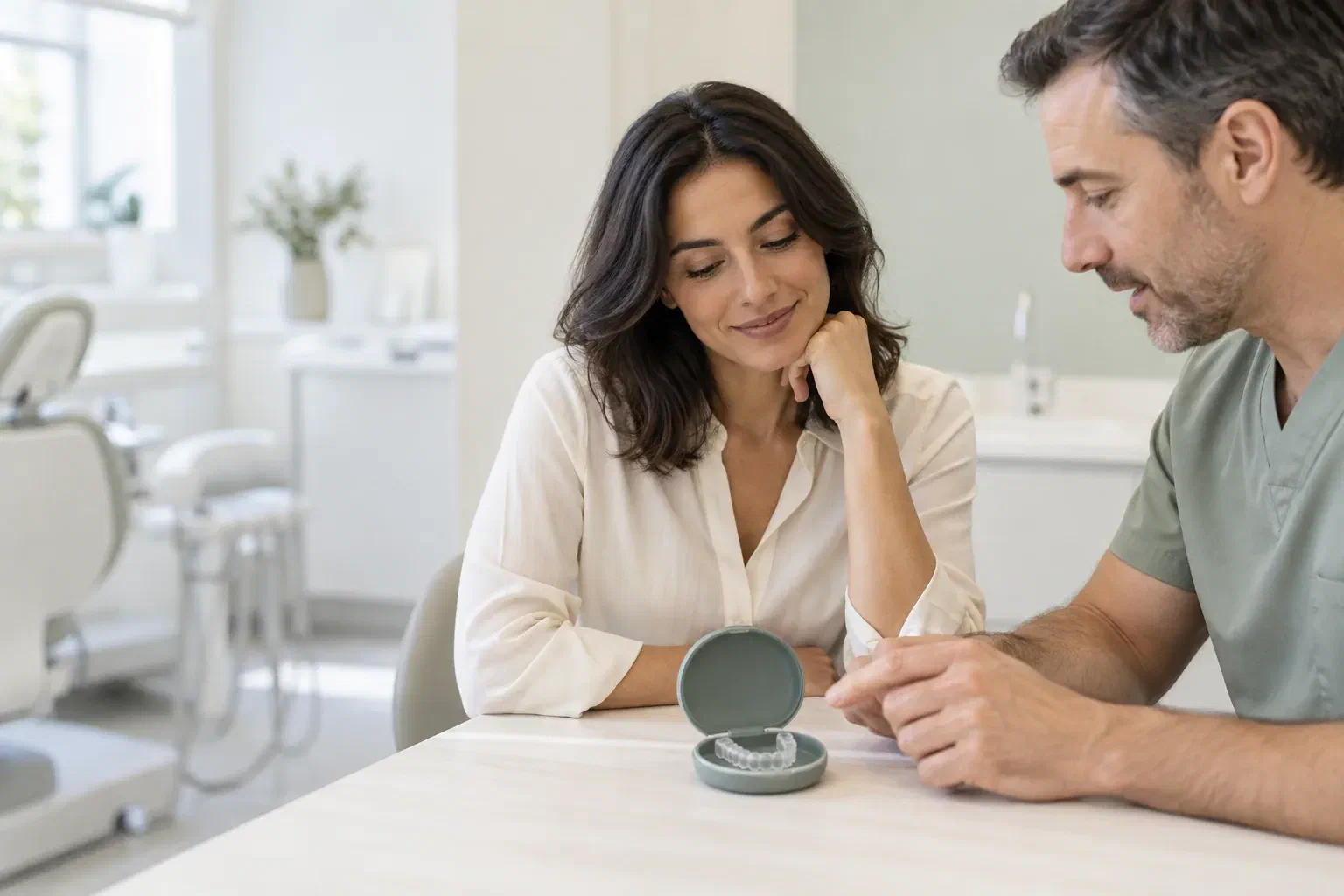
Illustrative patient and clinician reviewing a clear nightguard during a dental consultation
Specialized Care

Custom Nightguards in Rockwood

If you snore, use CPAP or have been told you stop breathing in your sleep, a grinding guard is a separate matter from that care. Custom nightguards in Rockwood start by sorting out which problem is which, and how tooth protection and sleep treatment fit together.

Teeth, sleep and the line between them

Two night-time problems, two different appliances.

Grinding and sleep-disordered breathing can turn up in the same person, and both may involve something worn in the mouth at night. They are not the same treatment. A custom nightguard is made from records of your teeth to protect them from clenching or grinding; it is not designed to keep the airway open or to treat snoring.

So the first conversation covers both. The clinician examines wear, chips and repairs, separates older damage from signs of current grinding, and asks about your sleep and any diagnosis you've received. If breathing during sleep is a concern that hasn't been assessed, you'll be advised to raise it with your physician.

Coming from Rockwood, bring every appliance you use at night, such as an oral sleep device, a retainer or an old guard, and note any CPAP equipment you use. Tell us who manages your sleep care. That way we can explain the fitting and follow-up for a nightguard and how it should sit alongside your other treatment.

Ask about grinding and sleep care
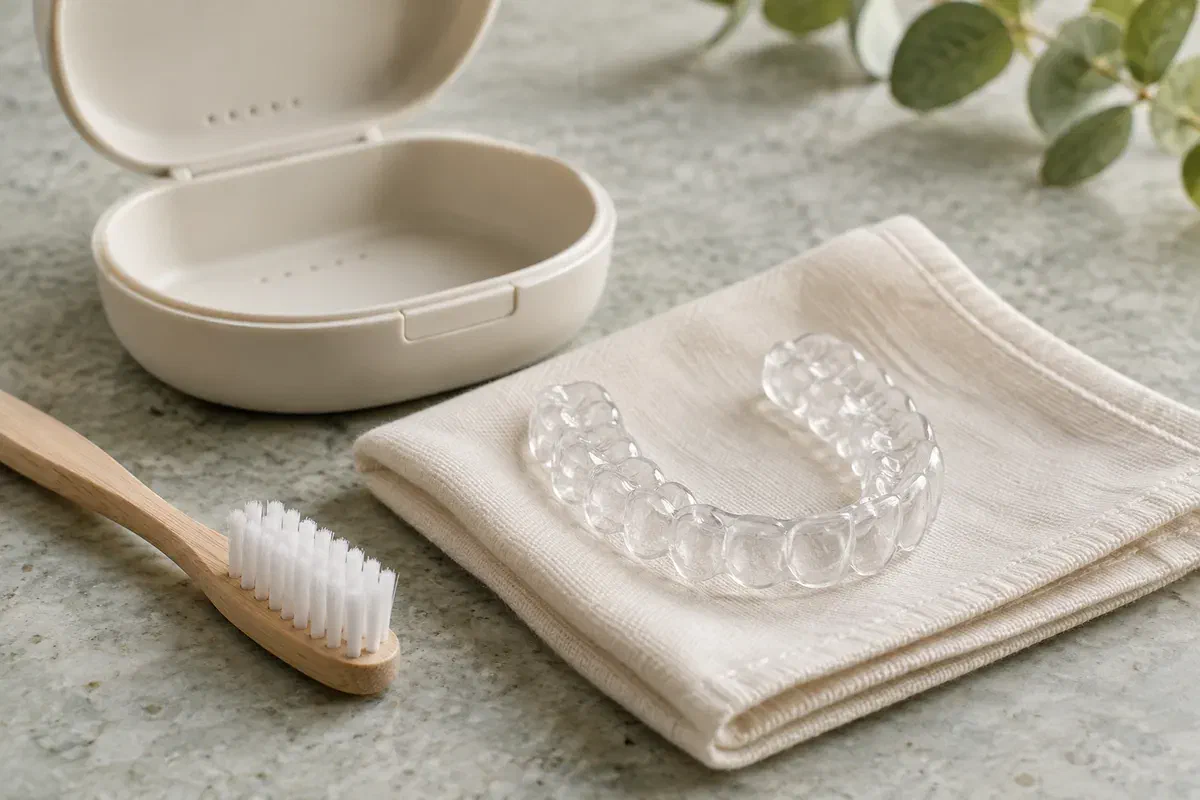
Illustrative clear upper nightguard beside a cream case and soft cleaning brush
What to share with us

Tell us about your teeth and how you sleep.

Wear on your teeth, what happens at night and the treatment you already receive all shape the plan. Even details that seem unrelated to dentistry can help.

Wear, chips or cracked fillings

Show us what has changed and describe earlier repairs. Ask whether the pattern suggests grinding or a tooth that needs its own care. A guard protects surfaces from contact but won't rebuild a damaged tooth or identify every cause of wear.

Snoring, pauses in breathing or restless sleep

Mention anything a partner has noticed, morning headaches or daytime tiredness, along with any grinding sounds. These clues matter beyond your teeth. A nightguard should follow assessment, and breathing concerns should be evaluated by the appropriate clinician.

Night-time appliances already in use

Bring a current guard, retainer or prescribed sleep device. Explain how each feels, whether any are uncomfortable together and whether anything changed after dental work. The clinician can review them before suggesting adjustment, a new guard or coordinated care.

A grinding guard may help protect teeth, but it cannot treat sleep apnea or guarantee that grinding or jaw symptoms stop. Make sure the purpose of any appliance is clear before you go ahead.

What a custom guard can and can't do

Protection for teeth, planned alongside sleep care.

Since a custom guard is made from your records, it can account for restorations and the way your teeth meet. Ask which arch is proposed and how the design relates to any sleep appliance you use. The reasoning should be specific to your situation rather than resting on a premium label.

At the fitting you'll practise inserting and removing the guard and hear how to clean it. If you also use CPAP or another sleep device, ask how the two should be managed on the same night, if at all. Raise any difficulty early rather than quietly giving up on either.

A purpose that's spelled out

Ask what the guard protects and how the design achieves that. If more than one material suits you, compare comfort, durability, cleaning and limits. A guard for grinding is not a substitute for a device prescribed to support breathing.

Fit reviewed with your other devices in mind

The clinician checks how the guard seats and how your teeth meet it, and you describe how it feels. Ask what early sensations are expected and when to call. Comfort alongside other night-time appliances matters too.

Routines that don't compete

Settle when to wear the guard, how to care for it and when it will be reviewed, and how that fits with any sleep treatment. Clear, compatible routines make it more likely that each appliance is used as intended.

How the plan comes together

Separate the problems, then coordinate the care.

What the visits and records look like will vary with the appliance and the health of your teeth. Check the fees, preparation and follow-up, and say whether your sleep clinician should be kept informed.

  1. Review teeth, sleep and existing treatment

    Talk about wear, repairs, symptoms, sleep concerns and every appliance you use. After examining the relevant teeth and fillings, the clinician considers whether other dental care or a medical referral should come first. Mention planned dental work, since it can change the fit.

  2. Decide whether a guard is appropriate

    If tooth protection is warranted, material, coverage and intended use are discussed before records are taken. Ask whether impressions or a scan will be used. The advice shouldn't hinge on any particular scanner or lab.

  3. Fit the guard and practise

    Seating, tooth contacts and comfort are reviewed, with professional adjustments where suitable. Practise handling the guard and ask about cleaning and how it relates to your other night-time devices. Mention gagging or pressure before you leave.

  4. Review, and keep sleep care in the loop

    Bring the guard to follow-ups and describe your nights. The team inspects the guard for wear or damage and asks how your teeth, jaw and sleep have been. New dental work or a change in your sleep treatment can mean the plan needs another look.

Looking after it

Care for the guard as carefully as the rest of your night kit.

Each appliance has its own cleaning instructions. Ask which products suit your guard rather than using what you'd use on a CPAP mask or a retainer.

Clean it as directed

Rinse and brush the guard the way you were shown, and ask whether any cleaning product is appropriate. Heat can warp it, so avoid hot water. Check before using abrasive pastes or chemicals, and keep up your own brushing and flossing.

Keep it in its own case

Store the guard separately from other appliances, out of reach of pets and children and away from heat. Look for cracks or warping now and then. If it breaks or feels loose, call the clinic instead of gluing or reshaping it.

Stop if it hurts

If the guard causes pain, take it out and let the dental team know. Mention a change in how your teeth meet that lasts after removal. Don't force it into place or increase wear to fix a fit problem.

Patient information: Dorset County Hospital — care and heat precautions for dental guards · NIDCR — advice about painful intraoral appliances

Which appliance for which job

Protecting teeth and supporting breathing are different goals.

Ask how a proposed guard would fit with what you already wear. Tooth protection, holding orthodontic results, sport safety and airway support during sleep are distinct purposes.

When tooth protection is the need

A custom nightguard for grinding

Discuss the design, wear schedule and limits. Ask about fitting and reviews as well as cost. A custom guard needs ongoing care and can't prevent every future chip or symptom.

When findings are mild or sleep care is still being sorted

Monitoring first

Observation, daytime habit support or a review of an existing guard may be a sensible start, especially while a sleep assessment is pending. Ask what would prompt a guard later.

When breathing during sleep is part of the picture

A prescribed sleep appliance or coordinated care

Bring any prescribed sleep device so its role can be reviewed. A nightguard should never replace it without advice. Ask how dental and sleep-care teams can coordinate, and who should be involved.

Rockwood sleep and grinding questions

Where grinding and sleep care overlap.

Leave the fitting knowing exactly what your guard is for. Bring questions about sleep appliances, comfort, cleaning and damage.

(905) 876-4488
Can I wear a nightguard with a CPAP mask?
Some people use both, but it depends on your guard, mask and sleep care. Ask your dental team and the clinician who manages your CPAP so they can advise on comfort and fit together.
Will a nightguard make my snoring worse?
Tell us if you snore or if snoring changes after you start wearing a guard. The clinician can review the design, and your physician or sleep clinician can assess any breathing concerns. Don’t ignore new or worsening symptoms.
Can a dentist make a sleep-apnea appliance instead of a nightguard?
Oral appliances for sleep apnea are a separate treatment that requires a medical diagnosis and specific assessment. Ask the team what is involved and who should be part of that decision. A grinding guard isn’t a substitute.
Should I tell my sleep doctor I'm getting a nightguard?
Yes, it’s a good idea. Letting both teams know about each appliance helps them coordinate care. Bring your sleep clinician’s details to your dental visit if you’d like information shared, with your consent.
Should my guard go on the upper or lower teeth if I also wear a sleep device?
That depends on your examination and the other appliances you use. Bring them so the clinician can assess how a guard would fit alongside them, and explain the reasoning for the proposed design.
If my sleep treatment changes, does my guard need checking?
It may. Changes to sleep treatment, dental work or symptoms can affect how a guard fits or whether it is still suitable. Mention any changes and bring the guard to your next review.
Nightguards for Rockwood

Clear roles for every appliance you wear at night.

Talk to our Bronte Street practice about grinding, tooth wear or questions about how a guard fits with sleep care. We'll examine your teeth, explain suitable options and arrange fitting and reviews if a nightguard is right for you.

Suitability, design, material, visits, replacement and fees depend on assessment. A nightguard can't treat sleep apnea and can't guarantee that grinding stops or damage is prevented.

Visit Milton Dental Clinic
Unit 1, 342 Bronte St. S, Milton, ON L9T 5B7
Get directions Clinic hours
Monday–Thursday
11am–7pm
Friday–Sunday
By appointment only

Areas we serve

  • Milton
  • Oakville
  • Mississauga
  • Georgetown
  • Halton Hills
  • Acton
  • Campbellville
  • Brampton
  • Burlington
  • Puslinch
  • Rockwood
  • Erin
  • Caledon
  • Etobicoke
  • Old Milton
  • Bronte Meadows
  • Timberlea
  • Dorset Park
  • Dempsey
  • Clarke
  • Beaty
  • Coates
  • Harrison
  • Scott
  • Willmott
  • Ford
  • Bowes
  • Cobden
  • Walker
  • Mountain View
  • Milton Heights
  • Hawthorne Village
  • Valley View
  • Fallingbrook
  • Nassagaweya
  • Trafalgar
  • Esquesing
  • Nelson
  • Brookville
  • Moffat
  • Glen Williams
  • Norval
  • Limehouse
  • Stewarttown
  • Ashgrove
  • Hornby
  • Silver Creek
  • Speyside
  • Scotch Block
  • North Oakville
  • River Oaks
  • Glen Abbey
  • West Oak Trails
  • Palermo
  • Bronte Creek
  • College Park
  • Joshua Creek
  • Uptown Core
  • Preserve
  • Iroquois Ridge
  • Lisgar
  • Meadowvale
  • Meadowvale Village
  • Churchill Meadows
  • Erin Mills
  • Central Erin Mills
  • Streetsville
  • East Credit
  • Creditview
  • Heartland
  • Sheridan
  • Mount Pleasant
  • Credit Valley
  • Huttonville
  • Churchville
  • Springbrook
  • Northwest Brampton
  • Bram West
  • Fletcher's Meadow
  • Fletcher's Creek South
  • Alton Village
  • Orchard
  • Millcroft
  • Headon Forest
  • Tansley
  • Brant Hills
  • Tyandaga
  • Kilbride
  • Lowville
  • Aberfoyle
  • Morriston
  • Arkell
  • Hillsburgh
  • Freelton
  • Carlisle
  • Waterdown
  • Flamborough
  • Mountsberg

How can we help?

Milton Dental Clinic

Have a question about your smile? Choose the option that works best for you.

For urgent dental concerns, please call.
Messages are reviewed during clinic hours.