
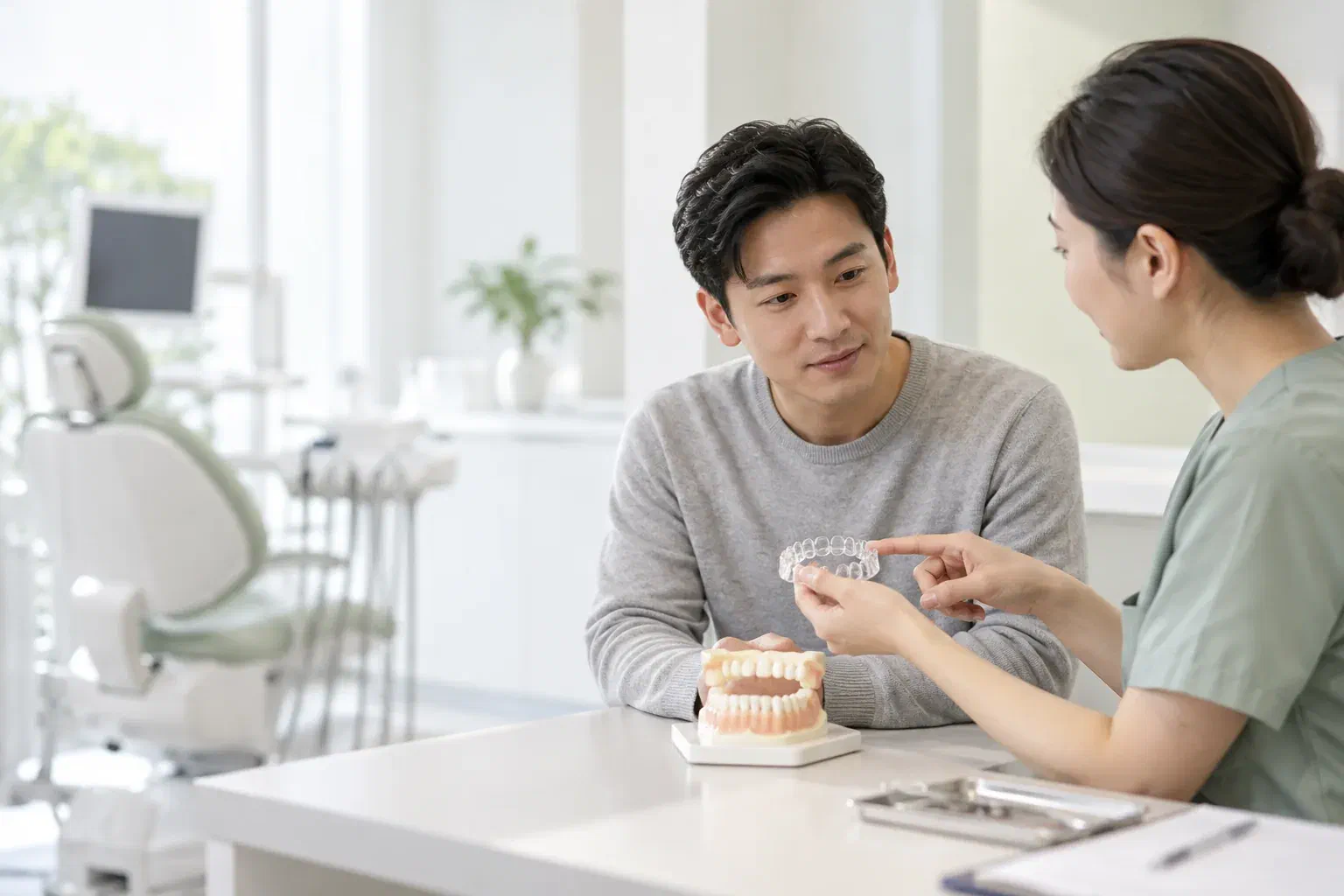
Illustrative patient and clinician discussing a fitted splint on a dental model
Specialized Care

Custom Occlusal Splints in Acton

Most of a splint’s life happens at home, between the nightstand, the bathroom sink and its case. For households in Acton, we explain what the appliance is for, how it is fitted, how to look after it day to day, and when it should come back for a check.

Everyday splint care, Acton

A small case on the nightstand, and a routine that has to last.

The appointment is an hour or two of the story. The rest is you, a toothbrush, and a piece of hard plastic that has to be rinsed, stored and remembered. A custom occlusal splint is a removable device shaped to your teeth for a particular clinical reason, and how well it is looked after affects whether that reason can be judged fairly.

That reason is not always the same. Sometimes it is guarding teeth and restorations; sometimes the splint is a single strand in a plan for jaw symptoms, where diagnosis and other choices deserve equal weight. Wearing it says nothing definite about whether your bite caused the trouble, and relief is never assured.

When you book from Acton, bring the appliance you have, if any, plus the recommendation and a few lines about your daily routine. We will go over the findings, describe the design we would suggest, show how it is worn and cared for, explain what it cannot do, and set a time to look again.

Ask about splint fitting and care
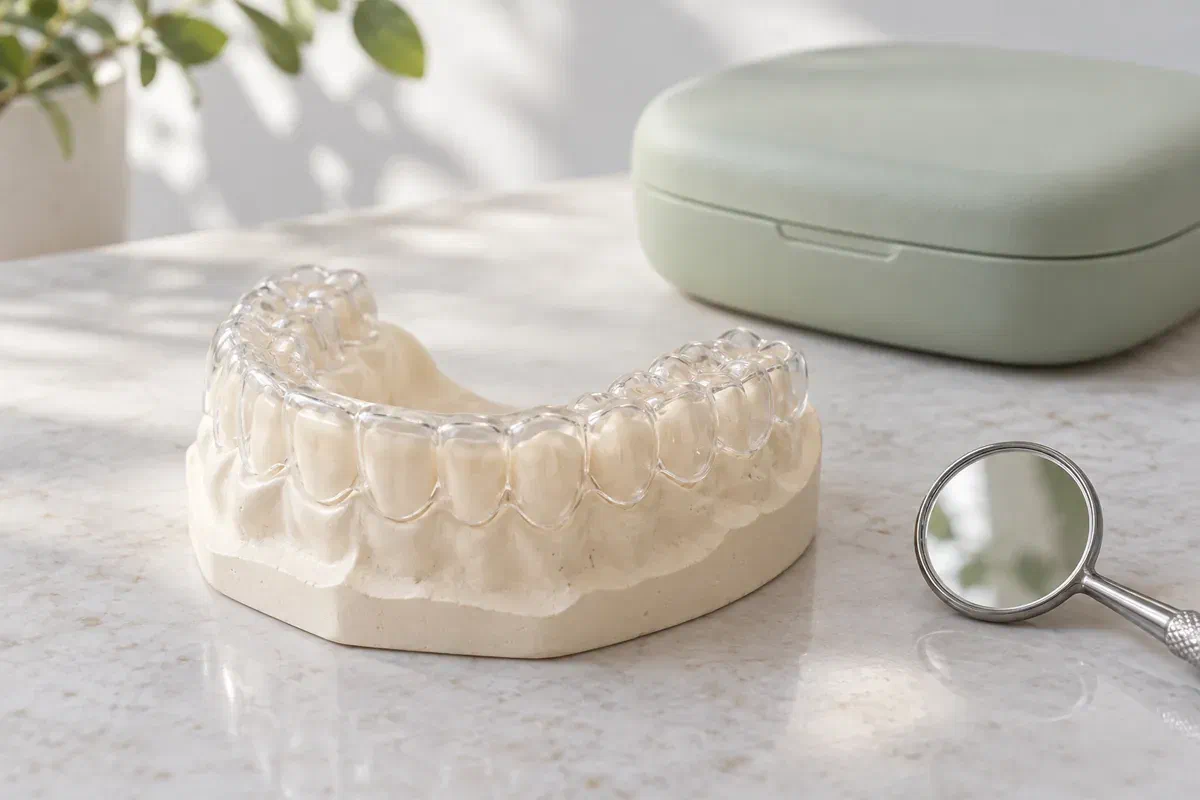
Illustrative transparent occlusal splint seated on a supported dental cast beside a mirror
Clarify these early

Why this appliance, for this problem, in this way?

Let us know what led to the idea of a splint and what you were promised or told to expect. The answer helps show whether the device on offer suits what is going on.

A recommendation that left you unsure

It is fair to ask what was observed and what the appliance should achieve, be that protecting teeth, managing a symptom or something else with a name. Settle what a good result would be, and when it gets checked, before anything is fabricated.

A jaw that aches, stiffens or sticks

Mention discomfort, tiredness, locking or reduced opening, and when you notice each. Because these can come from several places, the exam may not stop at your teeth. A device is never a reason to skip finding out why a symptom refuses to settle.

A guard that was hard to live with

If an old appliance was uncomfortable, awkward to clean or forgotten in a drawer, bring it and tell us what happened. That background helps, although a new material or shape is no promise that the next one will suit you better.

Limited evidence supports intraoral appliances for temporomandibular pain. Raise simpler options with us, and check that the splint on offer is not built to permanently change how your teeth meet as a routine treatment for jaw pain.

What good planning gives you at home

Confidence about how to use it, and when to ask.

Because it is shaped around your mouth, the splint can be judged against your teeth, any crowns or fillings, and the contacts its design aims to create. At the fitting, ask what is being checked and what may be refined. Tell the clinician how it feels, because comfort is one of the measurements that counts.

Good planning also covers how you will decide, together, whether to keep going. That may involve looking at the appliance and teeth, talking through your symptoms, or switching tack. Having a review on the calendar stops a splint from becoming a nightly habit long after anyone has asked why.

A clear reason you can recall

Ask for a short explanation of why the splint is suggested and what it cannot show. If it is muddled, ask again. A name like nightguard tells you very little about what benefit is expected or where the device stops being useful.

Wearing times that fit the aim

Check when it goes in, and whether that might shift after review. Ask how it works with breakfast, brushing and any other appliance. Wearing it for longer does not translate into more benefit.

Knowing your next step if something is off

Ask what to do if the splint will not seat easily, rubs, seems tied to worse symptoms, or leaves your teeth feeling odd after it comes out. A named contact means problems are dealt with early, not left for you to puzzle over alone.

The appointments in order

Explore, design, fit, revisit.

The records and visits involved depend on what the appliance is for and how it is built. Ask about the number of appointments, fees and any possible referral before it is made.

  1. Explain the background

    Share your symptoms, when they happen, and earlier care or appliances. The clinician examines your teeth, jaw and the tissues around them and decides whether anything else should be investigated. Ask which findings lead toward a splint and which remain uncertain.

  2. Decide how it will be built

    Talk through how many teeth it covers, the material, and how your bite should meet it. Impressions or scans are taken as needed. Mention any fillings, crowns or other appliances on the horizon that might affect the design.

  3. Collect it and learn the routine

    The splint is checked for fit, retention, tooth contacts and comfort, with professional adjustments if appropriate. You practise putting it in and taking it out, learn the cleaning and storage routine, and confirm when to wear it before you leave.

  4. Bring it back for a check

    At follow-up, describe how often you wore it, how symptoms changed, and any difference in fit or bite. The clinician may suggest continuing, adjusting, another approach or further evaluation. If the result disappoints, the plan is reconsidered rather than automatically made more involved.

The daily routine

Rinse, brush, case, and call if it hurts.

Use the care advice written for your particular splint. Materials and designs differ, so habits meant for someone else’s appliance might not fit yours.

Cleaning and storage

Find out which cleaning method suits your splint’s material and which products to avoid. Keep up your own brushing and flossing, and return the appliance to its case whenever it is out. Keep it away from hot water, pets and harsh chemicals, and bring it in if buildup or damage becomes a struggle.

Sticking to the schedule

Wear it only during the times you were given, and do not pair it with another appliance unless advised. If the routine clashes with your life, raise it at review. The team relies on knowing how you really use it.

When it hurts or no longer fits

Pain from the splint means it needs a check. Call and say where the pain is, when it started, and whether your bite feels changed. Do not reshape, bend or warm the appliance yourself, and do not force it onto your teeth if it stops seating.

Patient information: Dorset County Hospital — care precautions for removable dental guards

If not a splint, what else?

Three directions, chosen by the diagnosis.

Ask what alternatives fit your situation and how you would know whether each is working. Fancier construction does not by itself lead to a better result.

When the exam supports a clear purpose

A custom splint, regularly checked

Go over the expected benefit, its limits, the instructions and when it will be reassessed. Ask what would lead to tweaking or stopping it. A close fit still needs periodic checks of comfort, contacts and whether the reason for it still stands.

When an appliance is not the first move

Simpler, conservative steps

Depending on the diagnosis, learning about the condition, adjusting daily habits or other conservative care may be suggested first. Ask how it addresses your problem and when you will check progress. Waiting on a splint should still involve a plan.

When the cause or response is still unclear

Another opinion on lasting symptoms

A referral, whether to a dental colleague, your family doctor or a clinic focused on facial pain, may help explain a problem that has not cleared. Ask what that visit is supposed to answer. A splint that has not helped does not, on its own, justify permanent tooth or bite changes.

Patient information: FDA — temporomandibular disorders and nonsurgical care options

Questions about living with a splint

Cleaning, storage, damage and wear.

A full explanation should come before you agree to an appliance. Practical concerns about home care are as worth raising as clinical ones.

(905) 876-4488
What is the safest way to clean a splint each morning?
Follow the method you were given for your appliance’s material. Ask which products are safe and which to avoid, and keep it away from hot water. If deposits build up despite cleaning, bring it in for a look.
What should I do if my splint gets damaged or lost?
Stop wearing a splint that is cracked, sharp or no longer seats properly, and call to explain what happened. If it is lost, let us know so the plan can be discussed. Do not try to repair it at home.
Can I take my splint with me when I travel?
Usually, yes. Pack it in its case and keep it away from heat, such as a hot car. Ask whether the cleaning routine needs any changes while you are away, and keep to your usual schedule where possible.
Why does my splint look cloudy or discoloured?
Deposits and staining can build up over time, especially if cleaning is difficult. Ask which cleaning products are suitable for the material. Bring the appliance to your review so its condition can be checked, rather than scrubbing it harshly.
Does a splint need to be replaced every so often?
That depends on its condition, fit and whether it still serves its purpose. There is no automatic schedule. Bringing it to reviews allows the clinician to check for wear and decide whether adjustment, replacement or another approach makes sense.
Does wearing a splint mean my bite is what’s wrong?
No. Being prescribed an appliance does not establish that your tooth contacts caused your symptoms. Ask how the diagnosis was made and which other explanations were considered before relying on that conclusion.
Splint care for Acton

A clear purpose at the start, a routine you can keep.

Reach our Bronte Street practice to talk through a suggested splint, the one you already have, or how to look after it. We will review the concern and explain the assessment, fitting or further evaluation that fits.

What is designed, how it is worn, whether it suits you, adjustment, referral and fees all depend on assessment. A splint cannot promise symptom relief or identify the cause of jaw pain.

Visit Milton Dental Clinic
Unit 1, 342 Bronte St. S, Milton, ON L9T 5B7
Get directions Clinic hours
Monday–Thursday
11am–7pm
Friday–Sunday
By appointment only

Areas we serve

  • Milton
  • Oakville
  • Mississauga
  • Georgetown
  • Halton Hills
  • Acton
  • Campbellville
  • Brampton
  • Burlington
  • Puslinch
  • Rockwood
  • Erin
  • Caledon
  • Etobicoke
  • Old Milton
  • Bronte Meadows
  • Timberlea
  • Dorset Park
  • Dempsey
  • Clarke
  • Beaty
  • Coates
  • Harrison
  • Scott
  • Willmott
  • Ford
  • Bowes
  • Cobden
  • Walker
  • Mountain View
  • Milton Heights
  • Hawthorne Village
  • Valley View
  • Fallingbrook
  • Nassagaweya
  • Trafalgar
  • Esquesing
  • Nelson
  • Brookville
  • Moffat
  • Glen Williams
  • Norval
  • Limehouse
  • Stewarttown
  • Ashgrove
  • Hornby
  • Silver Creek
  • Speyside
  • Scotch Block
  • North Oakville
  • River Oaks
  • Glen Abbey
  • West Oak Trails
  • Palermo
  • Bronte Creek
  • College Park
  • Joshua Creek
  • Uptown Core
  • Preserve
  • Iroquois Ridge
  • Lisgar
  • Meadowvale
  • Meadowvale Village
  • Churchill Meadows
  • Erin Mills
  • Central Erin Mills
  • Streetsville
  • East Credit
  • Creditview
  • Heartland
  • Sheridan
  • Mount Pleasant
  • Credit Valley
  • Huttonville
  • Churchville
  • Springbrook
  • Northwest Brampton
  • Bram West
  • Fletcher's Meadow
  • Fletcher's Creek South
  • Alton Village
  • Orchard
  • Millcroft
  • Headon Forest
  • Tansley
  • Brant Hills
  • Tyandaga
  • Kilbride
  • Lowville
  • Aberfoyle
  • Morriston
  • Arkell
  • Hillsburgh
  • Freelton
  • Carlisle
  • Waterdown
  • Flamborough
  • Mountsberg

How can we help?

Milton Dental Clinic

Have a question about your smile? Choose the option that works best for you.

For urgent dental concerns, please call.
Messages are reviewed during clinic hours.