
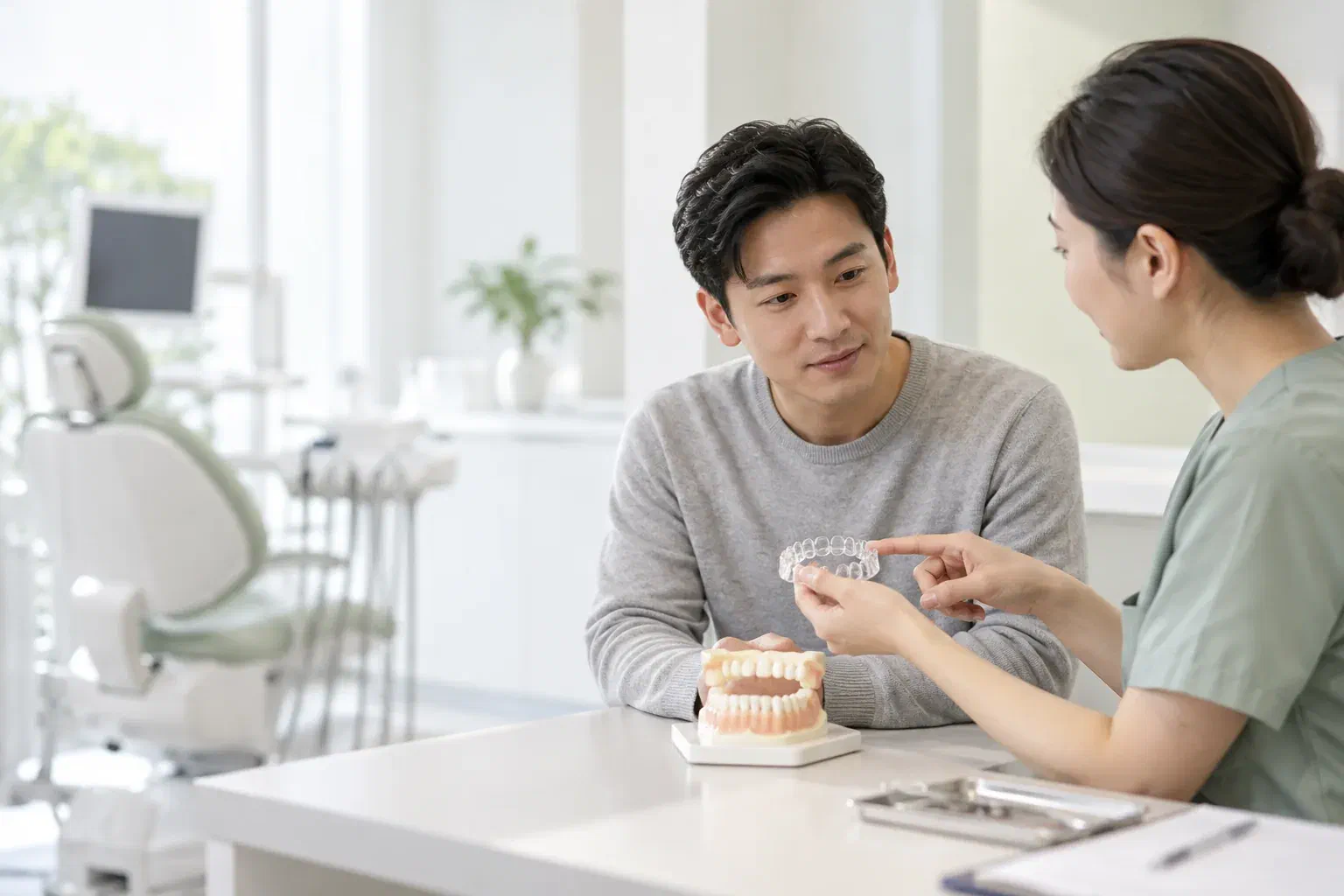
Illustrative patient and clinician discussing a fitted splint on a dental model
Specialized Care

Custom Occlusal Splints in Brampton

A splint only helps if its wear schedule makes sense for your life and your diagnosis. For households in Brampton, we explain why an appliance is proposed, when it should be worn, and how its usefulness will be judged at review.

Splint schedules for busy Brampton weeks

Night shift, school run, early alarm: when does the splint go in?

The question most people ask after the fitting is not about materials. It is about timing. An occlusal splint is a removable appliance worn over the teeth, designed around one clinical purpose, and that purpose is what should set the schedule. Whether the plan calls it a nightguard, a bite splint or a stabilization appliance matters far less.

If the goal is protecting teeth or restorations, the timing follows from that. If the appliance is part of a broader plan for jaw symptoms, diagnosis and alternatives deserve attention first, and the schedule fits inside that plan. Either way, a splint is not evidence that your bite caused discomfort, and it cannot guarantee relief.

Coming from Brampton, it helps to bring your recommendation, any current appliance, and an honest description of your daily routine, including shift work or broken sleep. We will go through the findings, explain the design we would suggest, how and when to wear it, its limits, and when it will be reassessed.

Plan a splint schedule that works
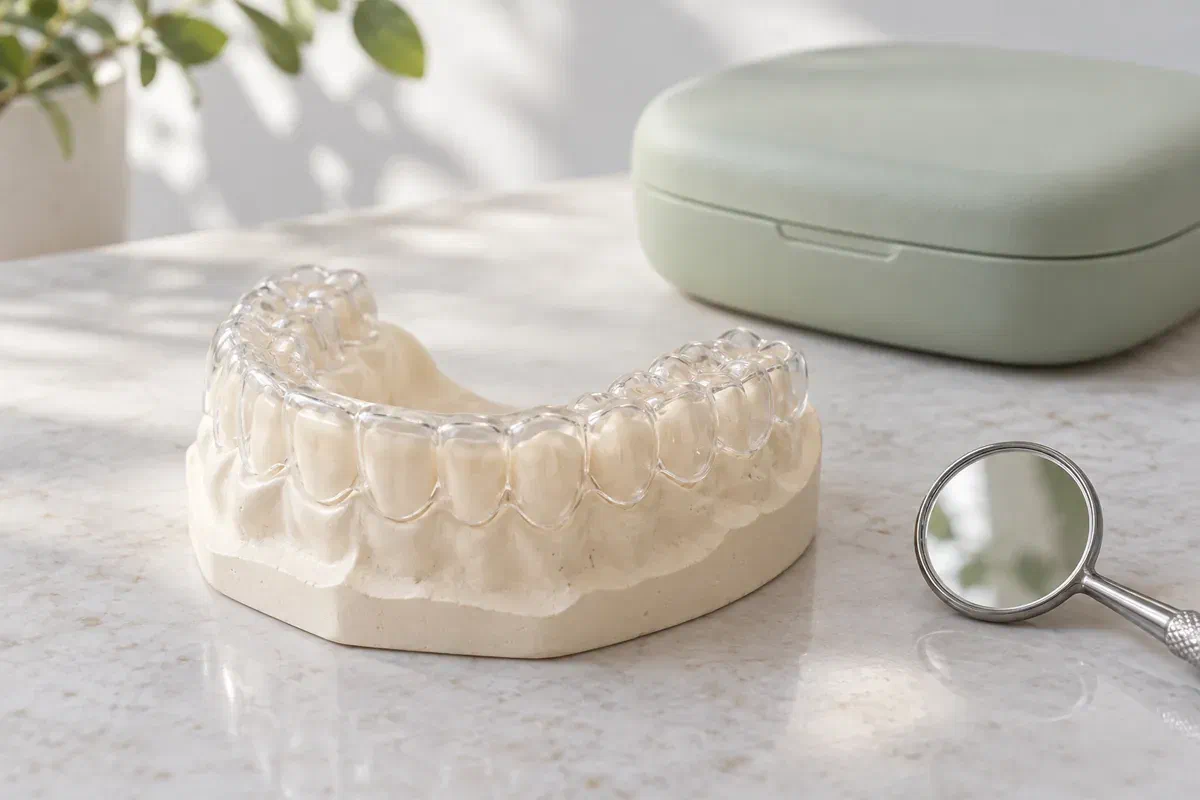
Illustrative transparent occlusal splint seated on a supported dental cast beside a mirror
Questions to answer first

Before the timing, the reason.

Let us know why the appliance was suggested and what you were told it would do. That history helps us see whether a device, and which schedule, suits your actual concern.

A splint suggested with no clear purpose

Ask which finding led to the suggestion and what it is meant to accomplish, for example protection or symptom management. A written plan is useful to bring. Settle what success would mean and when the choice will be revisited before you agree to have one made.

Jaw aching, tiring or catching during the day

Note whether discomfort, fatigue, locking or reduced movement shows up in the morning, at work or in the evening. The pattern may point to more than one source, so the examination can extend beyond your teeth. Wearing a device should not replace looking into a symptom that keeps coming back.

An appliance that never fit your routine

If an earlier splint stayed in its case, bring it and tell us why. Describe the schedule you were given and how it felt. That helps the discussion, though a replacement in a new material will not necessarily be easier to use or more effective.

Evidence that mouth appliances relieve temporomandibular pain is limited. Ask about simpler steps, and confirm that the appliance is not designed to make permanent changes to your bite as routine care for jaw pain.

What a well-planned schedule gives you

Hours that have a reason behind them.

Since it is made for you, the splint can be checked against your teeth, your existing dental work, and the contact pattern the design aims for. At the fitting, ask what is being assessed and what might be adjusted. Your comments on comfort are part of the assessment, so mention anything that feels off.

The plan should also say how ongoing wear will be judged: perhaps by re-examining the appliance and teeth, discussing your symptoms, or deciding whether another approach is better. Without a set review, a splint can slip into nightly use for years with nobody checking that the reason still applies.

A purpose you can repeat back

Ask the clinician to summarize why the appliance is proposed and what it does not establish. If it is still unclear, ask again. A device’s name tells you very little about the intended benefit or its limits.

A schedule linked to the goal

Confirm the hours of wear and whether review might change them. Ask how the appliance fits around meals, cleaning and other prescribed devices. Wearing it longer than advised does not mean it will help more.

A plan for awkward moments

Ask what to do if it is hard to put in, rubs, seems linked to worse symptoms, or leaves your teeth meeting strangely when removed. Knowing whom to contact means problems get handled promptly, rather than leaving you to decide whether discomfort is acceptable.

How visits are sequenced

Find the cause, fit the appliance, then check the routine.

Records and visit count depend on the purpose and design. Ask about the appointments involved, the fees and any referral before fabrication, so you can plan around work and family.

  1. Start with what you notice

    Talk us through the symptoms, the hours of the day they bother you, and whatever has been tried before. Your teeth, jaw muscles and joint are examined, and the clinician decides whether anything else needs a closer look. It is fair to ask which findings point toward a splint and which questions stay open.

  2. Choose the design

    Discuss coverage, material and the contacts the splint is meant to create. Impressions or scans of your teeth and bite are taken if the plan calls for them. Mention planned dental work or another appliance that might affect the design.

  3. Fit, adjust and practise

    The clinician checks how the splint sits and holds, where teeth meet it, and whether it is comfortable, adjusting it where appropriate. You practise putting it in and taking it out, and you leave with the schedule and cleaning steps confirmed.

  4. Check how it is really going

    At the review, be straightforward about the nights you wore it and the nights you did not, what your symptoms did, and whether the fit or your bite has shifted. That account guides the choice between carrying on, adjusting, trying something different, or looking further. A poor response means rethinking the plan, not automatically escalating it.

Making it part of the day

Keep the routine simple and the instructions yours.

Follow the advice supplied for your own appliance. Materials and designs differ, so a family member’s cleaning or wear routine may not suit your splint.

Daily cleaning

Your splint’s material decides how it should be cleaned, so ask which products are safe. Keep brushing and flossing as advised, and put the appliance in its case when it is out. Hot water and harsh cleaners can damage it; bring it in if deposits or wear become hard to manage.

Only the prescribed hours

Avoid adding daytime wear or combining it with another appliance unless advised. If the schedule clashes with shifts or childcare, tell us at review. The team can only interpret your results if they know how the device is really being used.

Pain? Remove it and call

Soreness caused by the appliance is a signal to have it checked. Phone and say which spot is sore, how long it has been going on, and whether your bite feels new. Home fixes with files, pliers or hot water tend to make things worse, and a splint that no longer seats should stay out.

Patient information: Dorset County Hospital — care precautions for removable dental guards

Choosing a direction

Is an appliance the right tool for this concern?

Ask which alternatives are sensible for your situation and how the team would judge each. Complex design is not, on its own, a sign that an appliance will work better.

When findings support a defined purpose

A custom splint with follow-up

Discuss the hoped-for benefit, the limits, the instructions and the reassessment plan. Ask what would lead to adjusting or stopping. A custom fit does not remove the need to keep checking comfort, contacts, and whether the reason for wear is still valid.

When simpler measures suit the diagnosis

Conservative care to begin with

For some concerns, information about the condition, changes to habits or other conservative approaches may be suggested first. Ask how this relates to what you are experiencing and when progress will be assessed. Holding off on an appliance should still come with a plan.

When the cause or the response is unclear

More assessment

Another dentist, a physician or an orofacial-pain specialist may help clarify an unresolved problem. It helps to know what question the referral is supposed to answer. An appliance that underdelivered is not, by that fact, a reason to make lasting changes to teeth or bite.

Patient information: FDA — temporomandibular disorders and nonsurgical care options

Wear-schedule questions

Timing, routine and the realities of daily use.

You can ask for a clear explanation before you accept an appliance. Bring the practical worries along with the clinical ones, including doubts about earlier advice.

(905) 876-4488
I work night shifts. When should I wear a night splint?
Tell the clinician about your sleep pattern, because a schedule written for typical nights may not fit. The timing should follow the appliance’s purpose. Ask how to adapt it to your hours and check again at review if it is not working.
What if I forget to wear the splint some nights?
Be honest about it at your review. Missed nights affect how the results are interpreted, and the clinician may discuss whether the schedule is realistic. Do not try to make up for missed time by wearing it longer on other days.
Can I wear my orthodontic retainer and my splint together?
Not without advice. Combining appliances can affect fit and tooth contacts. Tell the clinician about every device you use, including retainers, so the plan accounts for them and the instructions are clear.
Should I wear it longer on days my jaw feels worse?
Stick with the schedule you were given unless the clinician changes it. More hours are not automatically more helpful. Note when symptoms flare and what seems to help, and bring that record to the review.
Does a splint confirm that my teeth meet the wrong way?
No. A recommendation for an appliance does not establish that your bite is the cause of any symptom. Ask how the diagnosis was reached and which other explanations were considered before the splint was proposed.
Do I take the splint out to eat?
Splints are generally removed for meals, but follow the instructions for your appliance. Ask about drinks other than water, cleaning after eating, and how to store it while it is out, so the routine is clear from the start.
Custom splints for Brampton

Bring your routine. We will build the plan around the reason.

If a splint has been suggested, if you already wear one, or if the schedule simply does not fit your week, our Bronte Street practice can talk it through. We will look at the concern and explain the assessment, fitting or further evaluation that suits it.

The design, the wear schedule, whether a splint suits you, any adjustment or referral, and the fees are all settled after assessment. No splint can guarantee relief or prove what caused jaw pain.

Visit Milton Dental Clinic
Unit 1, 342 Bronte St. S, Milton, ON L9T 5B7
Get directions Clinic hours
Monday–Thursday
11am–7pm
Friday–Sunday
By appointment only

Areas we serve

  • Milton
  • Oakville
  • Mississauga
  • Georgetown
  • Halton Hills
  • Acton
  • Campbellville
  • Brampton
  • Burlington
  • Puslinch
  • Rockwood
  • Erin
  • Caledon
  • Etobicoke
  • Old Milton
  • Bronte Meadows
  • Timberlea
  • Dorset Park
  • Dempsey
  • Clarke
  • Beaty
  • Coates
  • Harrison
  • Scott
  • Willmott
  • Ford
  • Bowes
  • Cobden
  • Walker
  • Mountain View
  • Milton Heights
  • Hawthorne Village
  • Valley View
  • Fallingbrook
  • Nassagaweya
  • Trafalgar
  • Esquesing
  • Nelson
  • Brookville
  • Moffat
  • Glen Williams
  • Norval
  • Limehouse
  • Stewarttown
  • Ashgrove
  • Hornby
  • Silver Creek
  • Speyside
  • Scotch Block
  • North Oakville
  • River Oaks
  • Glen Abbey
  • West Oak Trails
  • Palermo
  • Bronte Creek
  • College Park
  • Joshua Creek
  • Uptown Core
  • Preserve
  • Iroquois Ridge
  • Lisgar
  • Meadowvale
  • Meadowvale Village
  • Churchill Meadows
  • Erin Mills
  • Central Erin Mills
  • Streetsville
  • East Credit
  • Creditview
  • Heartland
  • Sheridan
  • Mount Pleasant
  • Credit Valley
  • Huttonville
  • Churchville
  • Springbrook
  • Northwest Brampton
  • Bram West
  • Fletcher's Meadow
  • Fletcher's Creek South
  • Alton Village
  • Orchard
  • Millcroft
  • Headon Forest
  • Tansley
  • Brant Hills
  • Tyandaga
  • Kilbride
  • Lowville
  • Aberfoyle
  • Morriston
  • Arkell
  • Hillsburgh
  • Freelton
  • Carlisle
  • Waterdown
  • Flamborough
  • Mountsberg

How can we help?

Milton Dental Clinic

Have a question about your smile? Choose the option that works best for you.

For urgent dental concerns, please call.
Messages are reviewed during clinic hours.